Table of Contents (click to expand)
Most of Earth's water was delivered by water-rich asteroids from the outer asteroid belt, called carbonaceous chondrites, whose hydrogen chemistry matches our oceans. Some water was probably already locked inside the rocky building blocks that formed the early Earth, with comets contributing only a small share.
Billions of years ago, there was no such thing as Earth or the solar system, but only a gigantic cloud of gas and dust. The dense matter at the center of this mess ignited and became the Sun, the lone star of the solar system. Subsequently, it released incredibly hot solar winds, which caused most of the small particles in their path to either burn up or coalesce together to form the rocky objects that we refer to as ‘planets’.
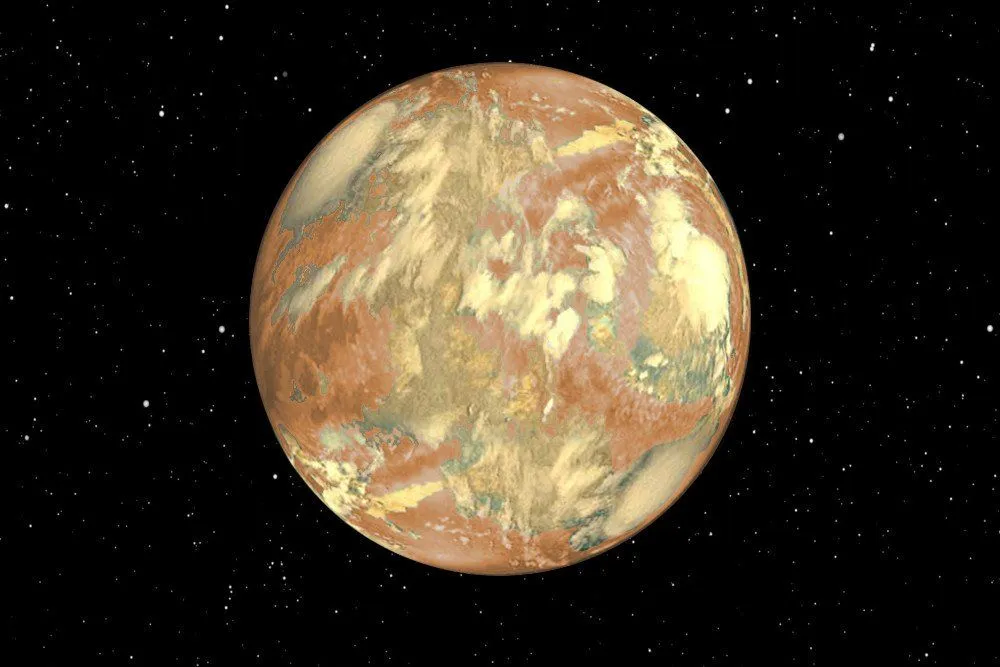
At that point, there was not a trace of water anywhere in the entire solar system, let alone our planet, due to the fierce solar winds that only left dense, solid objects in their wake.
How the heck did Earth get its water, in that case?
You might be surprised to learn that… we don’t know! That’s right, we don’t know the true origins of the liquid that covers roughly 71% of our planet’s surface, even to this day. However, we do have a few solid hypotheses about this life-giving phenomenon.
Earth’s Watery Past
Hydrogen was the first element to form after the Big Bang, followed by helium and a trace of lithium, all cooked up in the universe’s first few minutes. Heavier atoms like oxygen came much later, forged inside the cores of stars and flung out into space when those stars died. Once enough oxygen was floating around, it bonded with hydrogen to form water, much of which froze into thick layers of ice that coated the rocky objects swirling through young planetary systems. Those rocky bits bumped into each other, stuck together, and eventually grew into planets.
One hypothesis (often called the “wet origin” idea) holds that Earth formed from these ice-rich rocks in the first place, and so it always had at least some water locked inside its mantle. Under the punishing heat of the young Sun, any water sitting on the surface would have boiled off, but the water trapped inside the rocks beneath would have stayed put. Once the planet cooled, that interior water leaked back out through volcanic outgassing and condensed onto the surface as the atmosphere took shape. Recent measurements have given this idea a real boost: the hydrogen-isotope fingerprint of water deep inside Earth’s mantle closely matches enstatite chondrites, the dry-looking meteorites thought to have built most of the early Earth.
This hypothesis accounts for the abundance of water on the planet and the quick emergence of life on Earth after it acquired planetary stability.
Comets, Asteroids Or Water-rich Meteoroids?
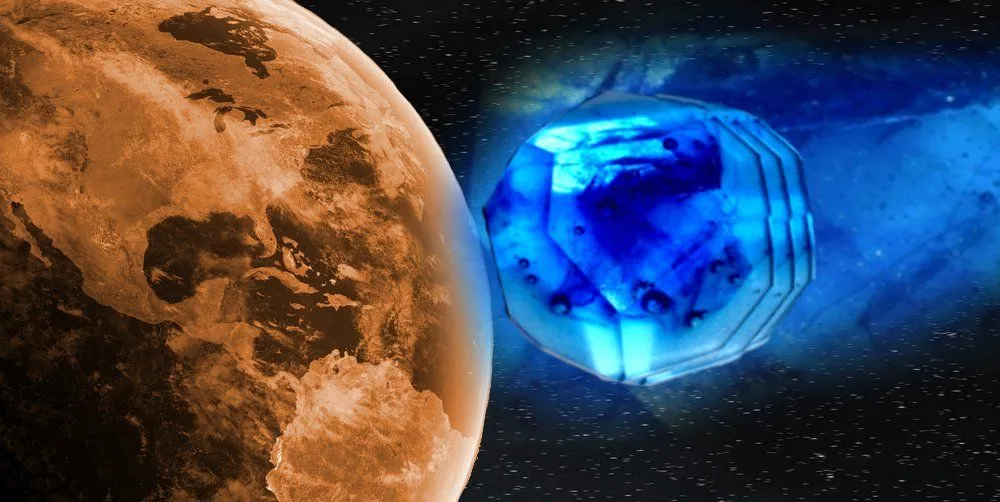
Going with the belief that water did not exist on Earth or any other planet at the birth of the solar system, it has been speculated that the water must have flown in from the outer reaches of the solar system, riding on comets, asteroids or meteoroids. Since they had been at such a great distance from the Sun, the water (in ice form) present on those celestial objects would have escaped the wrath of solar flares.
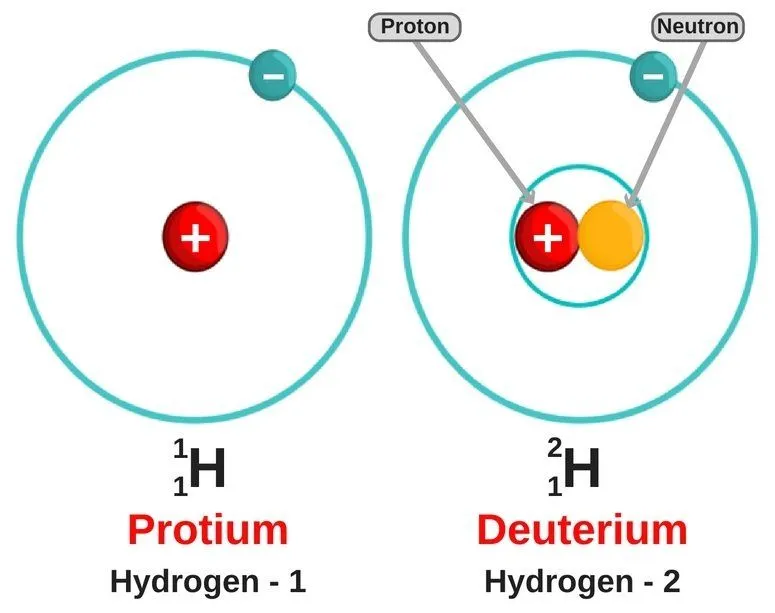
However, the water on most comets carries a tell-tale chemical fingerprint: a noticeably higher fraction of deuterium, the heavy isotope of hydrogen, whose nucleus contains both a proton and a neutron. Earth’s ocean water has a much lower ratio of deuterium to ordinary hydrogen (a proton-only nucleus). Scientists use this deuterium-to-hydrogen (D/H) ratio as a chemical “barcode” to trace where any given batch of water in the solar system came from.
Most of the comets we’ve actually measured (think Halley, Hale-Bopp, Hyakutake, and 67P/Churyumov–Gerasimenko, sampled up close by ESA’s Rosetta probe) carry roughly two to three times as much deuterium as our oceans do. That mismatch means comets like these can’t have been the main source of Earth’s water. A handful of comets, such as Jupiter-family comet 103P/Hartley 2, do show an Earth-like D/H ratio, so we can’t rule comets out entirely, but the leading suspects are now protoplanets that formed in the outer asteroid belt and carry water chemically almost identical to our oceans.
Carbonaceous Chondrite
Chondrites are a class of primitive, undifferentiated meteorites that still rain down on our planet today; carbonaceous chondrites are a specific, carbon- and water-rich subgroup. They hold on to their water because they likely formed out beyond the Sun’s ‘frost line’ (sometimes called the snow or ice line), the distance from the young Sun beyond which it was cold enough, roughly 150–170 K at about 3 AU in the early solar system, for volatile compounds like water, ammonia, and carbon dioxide to freeze into solid grains rather than stay as gas.
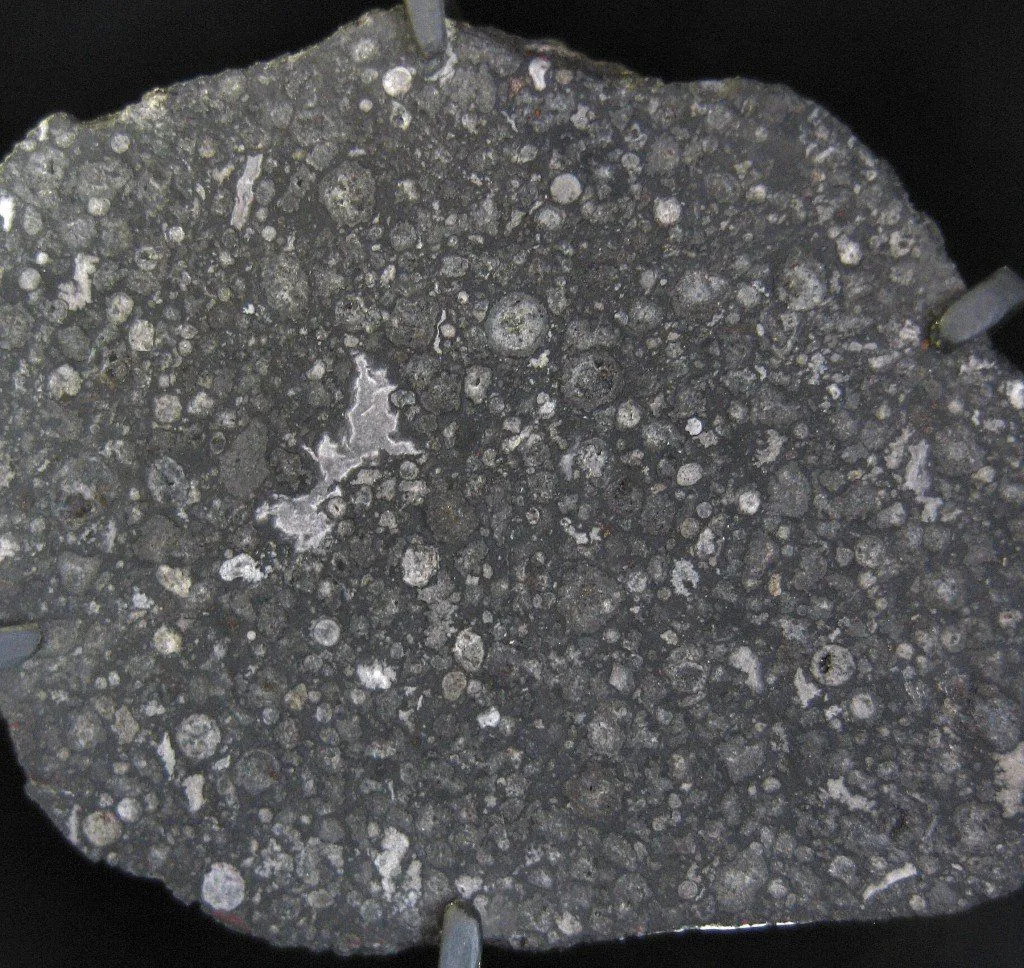
What’s more, the D/H ratio of water trapped in carbonaceous chondrites is a near-perfect match for ocean water on Earth. That single piece of chemistry is the strongest evidence we have today for the ‘water came from asteroids’ hypothesis, and most planetary scientists now treat carbonaceous-chondrite-like bodies as the prime suspects for delivering the bulk of our oceans.
A Watery Past Plus Delivery Through Asteroids
A third hypothesis splits the difference between the first two: it proposes that Earth started out with some water already embedded in its rocks during accretion, and then picked up most of the rest from multiple water-rich asteroid strikes over the planet’s first few hundred million years (a chaotic stretch that includes the disputed but often-cited Late Heavy Bombardment). A fourth, more recent contender adds the solar wind to the mix: laboratory work on dust grains brought back by Japan’s Hayabusa2 mission shows that hydrogen ions streaming off the Sun can react with silicate minerals to make trace amounts of water right on the dust’s surface, which then rained down on the young Earth.
Now that you know a bit more about the incredibly eventful past of the most common liquid in our daily lives, it seems pretty exotic, doesn’t it? The next time you sip a cold glass of water, remember: most of those molecules probably hitchhiked in on a rock from the outer asteroid belt billions of years ago. Ancient space water certainly beats regular old champagne, right?
References (click to expand)
- How did the first drop of water ever happen on Earth?. Washington State University
- How Did Earth Get Its Ocean? Woods Hole Oceanographic Institution.
- The origin of inner Solar System water. Philosophical Transactions of the Royal Society A. NCBI PMC.
- 67P/Churyumov-Gerasimenko, a Jupiter family comet with a high D/H ratio. Altwegg et al., Science (2015).
- Comet 67P/Churyumov-Gerasimenko. NASA Science.
- Origin of water on Earth. Wikipedia (overview with primary citations).