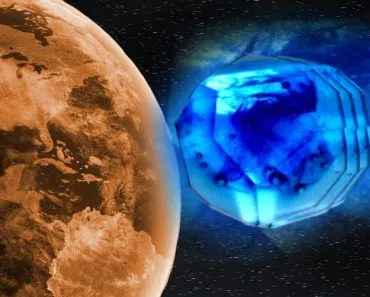
Making water by combining hydrogen and oxygen is technically possible but extremely dangerous. The reaction releases a tremendous amount of energy. Since hydrogen is highly flammable and oxygen supports combustion, mixing them in large quantities can result in a deadly explosion -- as the 1937 Hindenburg disaster demonstrated.
It is a well-known fact that water is scarce -- not just any water, but the freshwater we can drink. Although water covers about 71% of Earth's surface, roughly 97% of it is held by oceans and is saline, i.e., undrinkable. The remaining 3% is mostly locked in glaciers and ice caps. Indeed, accessible freshwater is scarce.
So why can’t we just make water chemically in laboratories? We know the formula, right? We know that it is formed by the combination of hydrogen and oxygen. So why don’t we do it already?
How Do You Actually Make Water From Hydrogen And Oxygen?
On paper, the recipe could not look simpler. Take two molecules of hydrogen gas, add one molecule of oxygen, and you end up with two molecules of water: 2H2 + O2 → 2H2O.

So why not just pour the two gases into a flask, give them a shake and bottle the result? Because hydrogen and oxygen are perfectly content sitting side by side doing nothing. Each molecule is locked together by a strong bond, and before any water can form, those bonds have to be pried apart. That initial push has a name, the activation energy, and at room temperature the mixture simply will not cross it on its own. You could leave hydrogen and oxygen mingling in a balloon for hours and absolutely nothing would happen.
Give the mixture a nudge, though, and it stops being polite. A single spark, a lit match, or even a fleck of platinum acting as a catalyst is enough to snap the first few bonds. The moment that happens, the reaction dumps out so much energy that it sets off the molecules next door, which set off the molecules beside them, and the whole thing races to completion in a fraction of a second. Chemists at Rutgers University show this off with hydrogen-filled balloons that go off with a startling bang. The product really is water. You just get it in the middle of a small explosion.
The Problem With Manufacturing Water
It is not as easy as it appears to be. Combination of hydrogen and oxygen atoms is accompanied by release of tremendous amount of energy.
Hydrogen, being the simplest element in the world, consists of only 1 electron in its orbit. Oxygen on the other hand, has 6 electrons in its outermost orbit, 2 short of a completely filled outermost shell. There is an energy barrier which has to be overcome to bring these two elements together.
Also hydrogen is a highly flammable gas and oxygen supports combustion, so what happens when they come together, that too in large quantities? Take a guess.
This chemical reaction, when occurs, produces a large amount of energy, which may amount to a full scale, deadly explosion. This is exactly what happened in the Hindenburg Disaster in 1937.
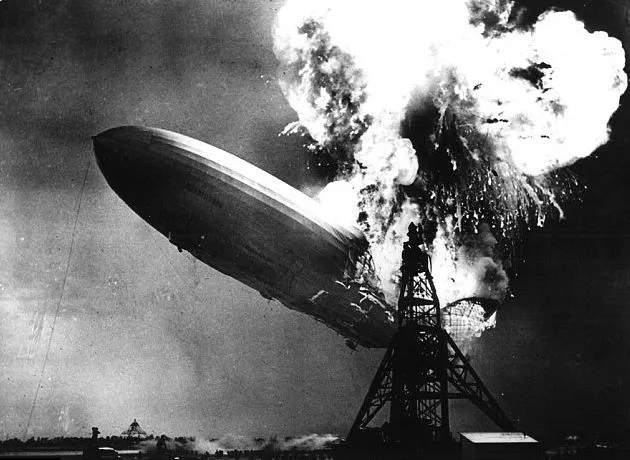
The Hindenburg disaster took place on May 6, 1937, when the German passenger airship LZ 129 Hindenburg caught fire and was destroyed during its attempt to dock at Lakehurst Naval Air Station in New Jersey. Investigations concluded that hydrogen leaking from a damaged gas cell mixed with the surrounding air, and an electrostatic spark -- likely caused by a difference in electric potential between the airship and the atmosphere -- ignited the hydrogen-air mixture. The resulting fire consumed the airship in roughly 34 seconds, killing 35 of the 97 people on board and one ground crew member.
But yes, as a byproduct of the hydrogen combustion, water was indeed created.
Where Would The Hydrogen Even Come From?
Here is the part that quietly sinks the whole idea. Pure hydrogen gas does not lie around waiting to be scooped up. It is the lightest substance in the universe, so any free hydrogen on Earth quickly drifts away or reacts with something else. That means we have to manufacture the hydrogen before we can ever burn it back into water.
So where does that hydrogen come from? About 95% of the hydrogen made in the United States is stripped out of natural gas in a process called steam reforming, which burns through fossil fuel and pumps out carbon dioxide in the bargain. The cleaner route is to pass electricity through water and split it into hydrogen and oxygen, a process called electrolysis. But read that sentence again: to get the hydrogen, you first have to take water apart. You would be destroying water in order to make the gas you need to make water.

The arithmetic makes the circle painfully clear. Producing about one ton of hydrogen by electrolysis swallows close to nine tons of water, plus a steep bill for electricity. Splitting water and then combining the hydrogen back into water can never hand you more water than you started with, and it always costs you energy on the round trip. Every mole of water that forms releases roughly 286 kilojoules of energy, and the laws of thermodynamics insist you put at least that much back in to break it apart again. Making water from scratch is not merely difficult, it is a guaranteed losing trade.
Is The Water You'd Make This Way Even Drinkable?
Suppose you ignored all of that, set off the spark safely behind thick glass, and collected the water that condensed out. Could you actually drink it? Surprisingly, yes. Burning pure hydrogen in pure oxygen produces nothing but pure water, with none of the minerals, chlorine or microbes you would find in tap water. It is essentially distilled water.
This is not just a thought experiment. NASA has been drinking it for decades. The Apollo spacecraft ran on hydrogen-oxygen fuel cells, which gently combine the two gases to make electricity instead of an explosion, and the command module's drinking water was simply the byproduct that trickled out of those cells. The same setup later kept the crews of the Space Shuttle supplied with water.

So the water you would make by marrying hydrogen and oxygen is perfectly safe to drink. The catch, yet again, is that you spent a small fortune in energy and courted an explosion to produce a glass of water you could have poured straight from the kitchen tap.
Any Solution?
In order to manufacture water on the scale a growing planet needs, the laboratories and facilities required to safely contain that much sudden energy would be far too expensive to be practical. Building water atom by atom is a dead end.
But yes, there is a smarter alternative, and it sidesteps the explosion entirely. Instead of assembling water from raw elements, we can pull out the water that is already drifting around us in the air. The atmosphere always holds some moisture as water vapor, and if you chill a surface below the dew point, that vapor condenses into liquid water, exactly the way droplets bead up on a cold glass of soda on a humid afternoon.
Machines that do this are called atmospheric water generators, and they genuinely work. Disaster-relief units and household models draw in air, cool it past the dew point and collect the runoff, and they earn their keep in warm, humid climates. They are not magic, though. Wringing water out of thin air takes a lot of electricity, typically somewhere between one and two kilowatt-hours for every liter collected, and the yield drops sharply when the air turns cool or dry. (Eye-catching claims for wind-powered designs such as the much-publicized Whisson Windmill, which was said to deliver thousands of liters a day at almost no cost, were never independently verified and run headlong into these same energy limits.)
The bottom line is simple. Whether you try to forge water from hydrogen and oxygen or coax it out of the air, water turns out to be far harder to make than its tidy three-atom formula suggests. So our best bet, by a wide margin, is to protect and conserve the freshwater we already have.
References (click to expand)
- Hindenburg disaster - Wikipedia. Wikipedia
- Explosive Reaction of Hydrogen and Oxygen Using Balloons | Chemistry Lecture Demonstration (CLD) Facility - cldfacility.rutgers.edu
- The Chemistry of Water: Electrolysis - Sweet Briar College (Archived). Sweet Briar College
- Water (enthalpy of formation) - NIST Chemistry WebBook, SRD 69. National Institute of Standards and Technology
- Hydrogen Production: Natural Gas Reforming. U.S. Department of Energy
- Hydrogen explained: Production of hydrogen. U.S. Energy Information Administration
- Apollo Experience Report: Potable Water System. NASA Technical Reports Server
- Performance analysis of atmospheric water generator under hot and humid climate conditions. Case Studies in Chemical and Environmental Engineering (2022)