Table of Contents (click to expand)
Plants know when to bloom by reading their environment: the length of the day (and especially the night), the quality of the light, the temperature and any cold spell they have lived through, and signals from plant hormones. All of these cues funnel down to a single mobile protein called florigen (FT), which travels from the leaves to the shoot tip and tells the plant to make a flower.
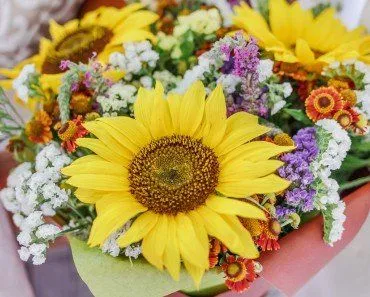
Daffodils flower in early spring, hydrangeas flower in summer, chrysanthemums flower in autumn, and ixoras (Ixora coccinea, sometimes called "jungle flame") bloom almost year-round in warm climates. How do plants know when it’s time to flower? It turns out that the plants respond to various environmental and developmental cues that inform them when it’s time to bloom.
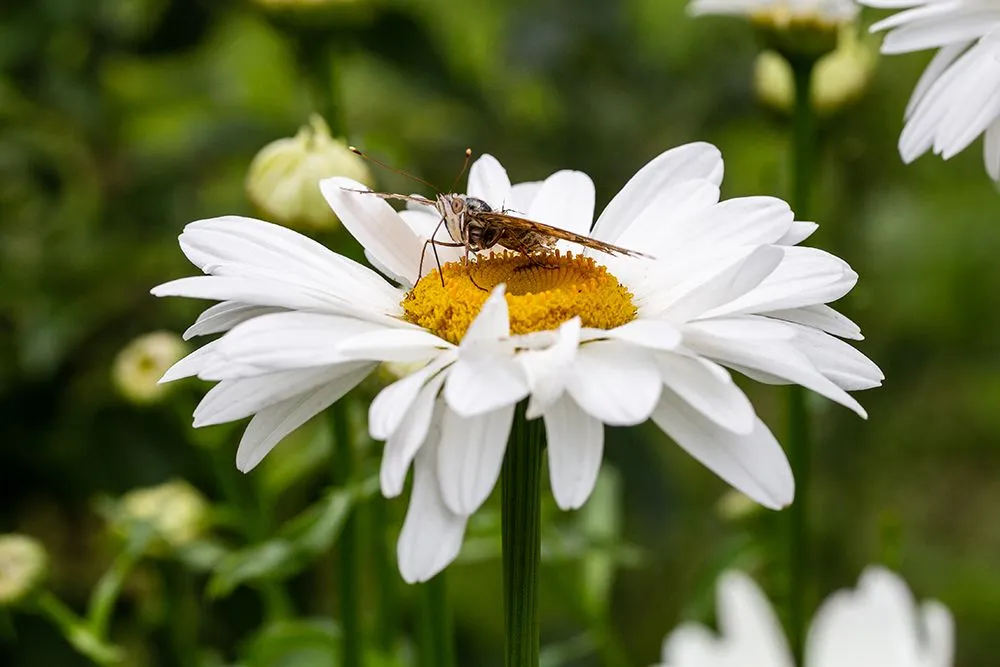
Plants need to produce flowers to reproduce and, hence, survive. When the flowers bloom, they are pollinated, which results in the mixing up of genes from other plants of the same species. Eventually, the flowers develop into fruits that contain seeds. The seeds dissociate from the parent plant and grow into new plants when the conditions are right. This maintains continuity of the species.
Plants invest a lot of resources into this entire process, so they must ensure that pollinators are available when the flowers bloom, and that the environmental conditions are favorable when fruits (and seeds) are ready so that they can grow into new plants. To do this, they need to make sure that the first step of the process—the flower initiation—happens at the right time.
Flower initiation happens in response to multiple signals, some of which come from the environment and some from within the plant. There are several signals that lead to flower formation, including day length, ambient temperature, overwintering, and hormones.
Obviously, not every species responds to every signal. However, plants often respond to multiple cues. For example, we might have a few warm days in winter, but the plant doesn’t get fooled into thinking that it is spring (time to flower) because it can detect the shorter day lengths.
Day Length
Day length or photoperiod is an important factor that determines flowering time in seasonal flowers. Plants detect changing seasons based on the length of the day.
Although plants are commonly categorized as long-day and short-day plants, they actually perceive the duration of darkness.
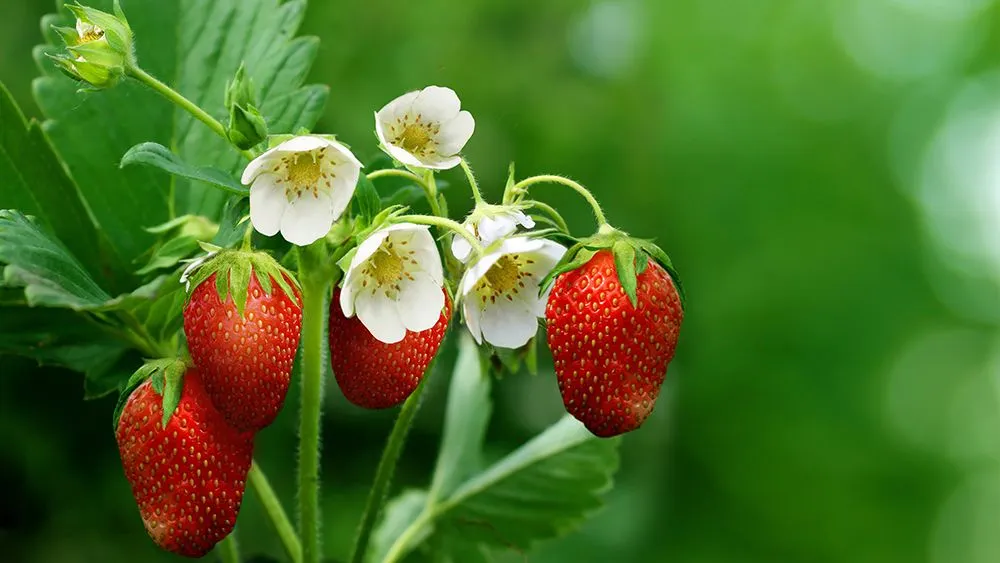
Short-day plants, such as chrysanthemums, flower in autumn in response to the shortening days (and lengthening nights) of late summer and fall. Long-day plants flower when nights are short enough; for instance, "everbearing" strawberries (which crop through summer) are long-day plants, whereas the more common June-bearing strawberries are short-day plants that actually initiate their flowers in the previous autumn for the following summer's harvest.
Quality Of Light
Plants perceive light quality through a pigment called phytochrome. Phytochrome is converted from an inactive form (Pr) to an active form (Pfr) in the presence of light. Pr absorbs red light and converts to Pfr, while Pfr absorbs far red light and converts to Pr.
Sunlight contains both red light (roughly 620-700 nm) and far-red light (roughly 700-800 nm). Leaves strongly absorb red light for photosynthesis and reflect or transmit most of the far-red, which means the light beneath a leaf canopy is enriched in far-red.
Far-red light tilts the phytochrome balance toward inactive Pr and triggers the "shade-avoidance" response: stems elongate to push the plant out from under its neighbors before it commits to flowering. A high red-to-far-red ratio (lots of active Pfr), conversely, promotes flowering in many plants. That is why plants growing in canopy shade tend to elongate first and only flower once they reach better light.
Hormones
Gibberellins, a type of plant hormone, are involved in flower induction. In general, they promote flowering in long-day plants. Growers spray gibberellins on their plants to induce flower formation, for example, if they want to stimulate greater seed production.
This is a common practice among lettuce seed producers in California.
However, gibberellins also inhibit flowering in some species, such as citrus plants.
Cold Temperatures (Vernalization)
Some plants are induced to flower after they have experienced the cold temperatures of winter. Such plants prepare for flowering in the upcoming spring season by overwintering for a specific duration and at a sufficiently low temperature in winter. This process is called vernalization.
The plants flower when they have spent a certain minimum time under winter conditions and are then re-exposed to warmer temperatures in the spring. Sugar beets are examples of plants that require vernalization to flower.
Autonomous Pathway
Let’s suppose that the plant is growing and waiting for the right environmental conditions, but the right conditions never happen. In such cases, the plant puts out flowers anyway to fulfill its evolutionary responsibility. This flower initiation pathway in the absence of any other environmental cues is called an autonomous pathway.
All Roads Lead To Two Integrator Genes
Although the pathways to induce flowering may differ between species, they converge into two ‘integrator genes’. These are FT (FLOWERING LOCUS T) and SOC1 (SUPPRESSOR OF OVEREXPRESSION OF CO 1), which control the transition from a vegetative to a flowering state. This integration of flowering signals and a transitional step is conserved across species.
The FT gene produces the FT protein in the leaves, which then moves to the shoot apex, where flower buds are formed.
For years, scientists hypothesized that a mobile flowering signal regulated flowering time. They hypothesized that this mobile signal carried the ‘message’ to induce flowering to the shoot tips, which then transitioned to flower buds.
Soviet plant physiologist Mikhail Chailakhyan proposed this hormonal flowering signal in 1936 and coined the name "florigen" shortly after.
Since then, scientists have tried to understand the identity and function of florigen. It was only in 2007 that the FT protein was identified as florigen.
All of the flower induction pathways — day length, quality of light, hormones, vernalization, and the autonomous pathway — send their signals to the FT protein. When FT receives the "go" signal from these pathways, it moves from the leaves to the shoot tip, where it joins partner proteins to switch on the genes that build a flower bud.
The molecular genetic control of flowering time is complex and involves numerous genetic and epigenetic factors that scientists are still uncovering. As recently as 2025, structural biologists in Nature resolved the atomic structure of the "florigen activation complex," showing exactly how FT, its partner FD and a 14-3-3 scaffold protein lock onto DNA to switch on the flowering genes (Collani et al., 2025).
Plants are immobile. They have to stay in one place and rough it out with the environmental conditions that surround them. Maybe that’s why nature has designed this intricate system involving multiple signals, with checks and balances in place, so that the flowers bloom when the environment is most conducive for them.
References (click to expand)
- Tsuji, H. (2017). Molecular function of florigen. Breeding Science. Japanese Society of Breeding.
- Kim, D.-H. (2020, February 21). Current understanding of flowering pathways in plants: focusing on the vernalization pathway in Arabidopsis and several vegetable crop plants. Horticulture, Environment, and Biotechnology. Springer Science and Business Media LLC.
- A Closer Look at Far-Red Radiation.
- Goldberg-Moeller, R., Shalom, L., Shlizerman, L., Samuels, S., Zur, N., Ophir, R., … Sadka, A. (2013, January). Effects of gibberellin treatment during flowering induction period on global gene expression and the transcription of flowering-control genes in Citrus buds. Plant Science. Elsevier BV.
- Rehman, S., Bahadur, S., & Xia, W. (2023, November). An overview of floral regulatory genes in annual and perennial plants. Gene. Elsevier BV.
- Collani, S. et al. (2025). Structural basis for FLOWERING LOCUS T function in floral induction. Nature.