Table of Contents (click to expand)
The Arctic Ocean freezes in winter because seawater freezes at about −1.8 °C (28.8 °F), and polar air pushes surface temperatures well below that. As the water chills, tiny needle-shaped crystals called frazil ice form at the surface, pushing their salt out into the water below. Those floating crystals knit together into a continuous ice sheet that blankets most of the ocean by March.
One can only feel morose while watching the tragic end of Jack and the other victims of the sinking ship in the movie Titanic. That cursed iceberg appeared out of nowhere in the North Atlantic Ocean and sunk that majestic ship. Most of the people died by falling in the freezing water, which was ice-cold, and were unable to hold on until the rescue boats arrived (although a few did survive and were rescued from the frigid water).
This one incident, and many more such incidents, demonstrate how ‘cold’ and deadly seawater can be. However, have you ever thought of how oceans might freeze? Have you ever considered how the Arctic Ocean, being such a vast body of water, manages to freeze?
Arctic Ocean: An Overview
The Arctic Ocean, also known as the Northern Ocean, is located in the Northern Hemisphere and is actually the smallest and shallowest of the five oceans on our planet, with a mean depth of about 1,205 m (3,953 ft) according to NOAA. It is the northern segment of the one water body that encompasses all of the world, the World Ocean. Most of the Arctic Ocean is encircled by Eurasia, North America, and Greenland.
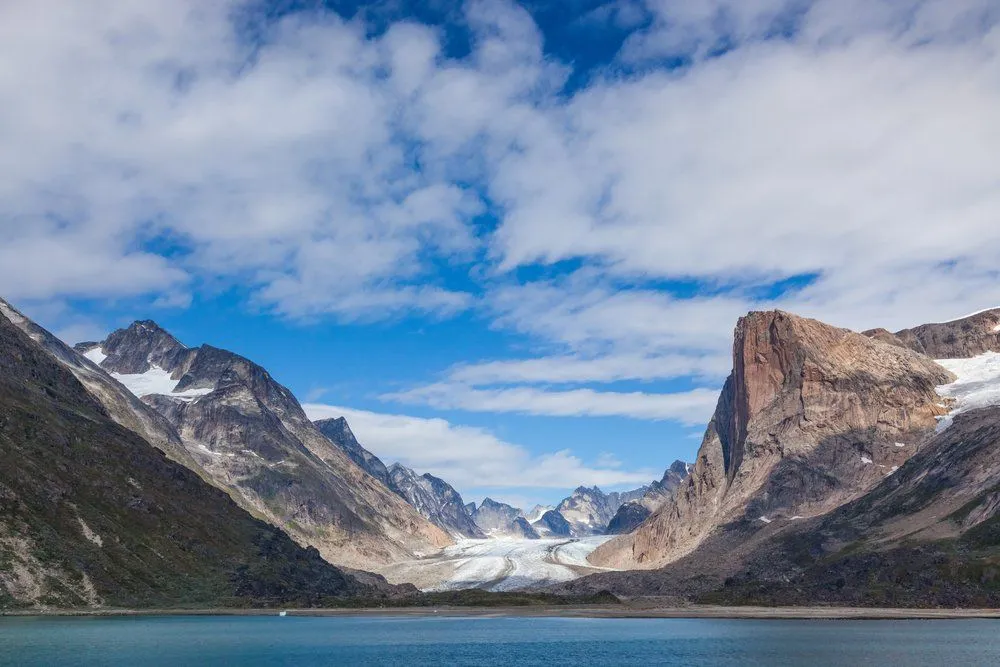
The most noteworthy thing about the Arctic Ocean is that it’s partly covered with ice throughout the whole year and almost completely covered by a layer of ice in the winter. How does such an enormous water body freeze and why doesn’t this happen with other oceans?
Lower Freezing Point
Pure water freezes at 0 °C (32 °F). Note that we are talking about ‘pure’ water, the kind that is free of impurities. World seawater, on the other hand, is loaded with impurities in the form of salts and other minerals, which amount to roughly 3.5% by weight of typical ocean water. Dissolving all that salt drags the freezing point down to about −1.8 °C (28.8 °F), because dissolved ions get in the way of water molecules trying to lock into an ice lattice.
The Arctic Ocean is the least saline of the five oceans, averaging roughly 32 g of salt per kg of water versus about 35 g/kg in the global ocean. Three things keep it that way: very low evaporation in the cold polar air, limited mixing with the saltier North Atlantic, and heavy freshwater inflow from rivers like the Ob, Yenisei, Lena, and Mackenzie. Less salt means a slightly higher freezing point, which is one reason the Arctic Ocean freezes over so readily.
The Process
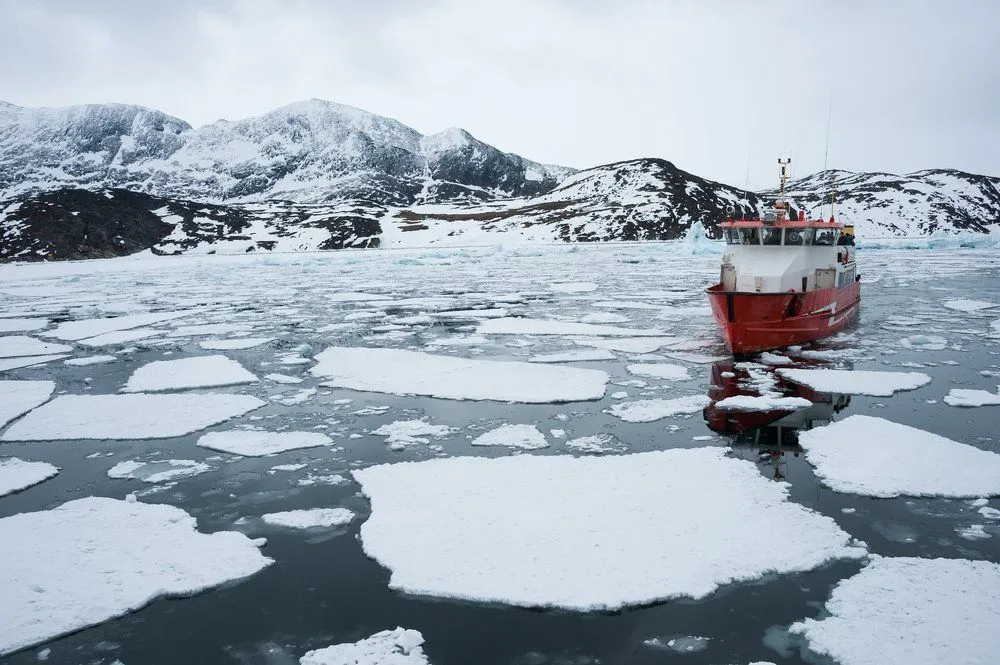
During the winter season, when the temperature of the water gradually falls, the top layer of seawater begins to develop tiny needle-shaped crystals called frazil ice. As more crystals form, the surface looks like a slushy soup (oceanographers call this stage grease ice). Here is the elegant bit: water molecules can only lock into an ice lattice if they leave their dissolved salt behind, so the growing crystals push the salt out into the surrounding water. That cold, briny water is denser than the rest of the ocean and sinks, while the floating crystals left at the top are nearly fresh. Being nearly fresh, those crystals freeze together easily as the cold deepens.
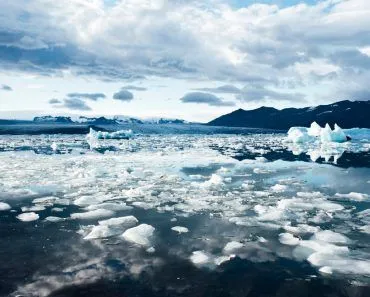
In calm water, the slushy crystals knit themselves into a smooth, thin sheet called nilas; in rougher seas, they bash into round, raised-rim discs called pancake ice. Either way, these floating pieces eventually merge into the continuous sheet that we picture when we think of the frozen Arctic. The area of that ice cover swings dramatically with the seasons. It peaks each March (about 14.33 million km² at the 2025 maximum, a record low, per NSIDC) and bottoms out each September (about 4.60 million km² in 2025), so even at its smallest the Arctic Ocean is never completely ice-free.
So no, the Arctic doesn’t freeze by magic. It freezes because seawater can be coaxed below its salt-suppressed freezing point, and because the freezing process itself is clever enough to spit the salt out and let the ice take over from the top down. If you want the curious detail of why the ice that forms ends up almost salt-free, we’ve unpacked that in why sea ice is made of freshwater even though oceans are salty.
Why Don’t Most Oceans Freeze?
If the Arctic can ice over, why doesn’t the rest of the world’s seawater do the same? After all, salty water freezes at about −1.8 °C (28.8 °F), and plenty of the planet gets colder than that. The short answer is that an ocean is an enormous, restless heat reservoir, and three things keep nearly all of it liquid.

The first is simply volume. As physicist Dr. Christopher Baird of West Texas A&M University puts it, the larger the body of water, the more heat has to be hauled out of it before it can turn to ice. The deep ocean holds a colossal amount of stored warmth and loses it slowly, so most of the water column never gets close to its freezing point.
The second is movement. Ocean currents act like a planet-sized central heating system, constantly pumping warm water out of the tropics toward the colder, higher latitudes. NOAA describes the deep branch of this system as thermohaline circulation, a global conveyor belt driven by differences in temperature and salinity: as polar surface water cools and freezes, the leftover brine makes the remaining water dense enough to sink, and that sinking helps pull warmer water in behind it. The net effect is that heat keeps arriving in places that would otherwise freeze solid.
The third is salt itself. Because dissolved ions push the freezing point down to roughly −1.8 °C, the whole ocean has to be chilled further than freshwater would before any ice can form at all. Put those three together (huge thermal mass, currents that ferry heat poleward, and a salt-suppressed freezing point) and it becomes clear why open ocean stays liquid almost everywhere outside the polar caps.
Which Ocean Stays Frozen All Year?
Of the five oceans, only one wears ice the whole year round, and that is the Arctic Ocean. That’s why it’s sometimes nicknamed the “frozen ocean,” and why quiz questions about the ocean that “remains frozen for most of the year” are pointing at the waters around the North Pole.

The ice cover breathes with the seasons. According to the National Snow and Ice Data Center (NSIDC), Arctic sea ice spreads to roughly 15 million km² (about 5.8 million sq mi) by late winter, and on average about a third of that survives the summer melt before the cover grows again in autumn. The ice that lasts more than one summer is called perennial or multiyear ice, while the part that melts and reforms each year is seasonal or first-year ice.
That mix is what sets the Arctic apart. The Antarctic, at the opposite pole, also grows a vast skirt of sea ice every winter, but almost all of it is seasonal and melts away each summer, because that ice sits in open water that can drift toward warmer latitudes. In the Arctic, the ocean is hemmed in by Eurasia, North America, and Greenland, so the ice has nowhere to escape to and a solid core can persist year after year. The Atlantic and Pacific can grow ice only along their coldest fringes, while the Arctic is the one ocean that is genuinely frozen across its heart for all twelve months.
References (click to expand)
- Can the ocean freeze? NOAA's National Ocean Service.
- What is the world's smallest ocean? NOAA's National Ocean Service.
- Science of sea ice. National Snow and Ice Data Center (NSIDC).
- Arctic sea ice has reached minimum extent for 2025. NSIDC.
- Arctic Ocean. Wikipedia.
- Sea-Ice Basics. Lamont-Doherty Earth Observatory, Columbia University (archived).
- Why don't the oceans freeze? Science Questions with Surprising Answers, West Texas A&M University.
- The Global Conveyor Belt. NOAA's National Ocean Service.