A coconut is all of these: a seed, a fruit and a nut! Coconut is a seed because it is the reproductive part of the tree, coconut is a fruit because it is a fibrous one-seeded drupe and coconut is a nut because a loose definition of a nut is nothing but a one-seeded ‘fruit’.
Some questions have common sense answers we learn over time. For example, ask any adult the answer of 2 times 2, and there is a minimal chance that they will say anything other than 4. However, ask most people the difference between Great Britain, Britain, and England, and they could probably tell you some dissimilarities, although I am not too sure they would answer correctly.
Then there are those questions, which at first glance seem quite simple, but become increasingly difficult the more you think about the details and possibilities. Do you know, for example, whether coconuts are fruits, nuts, or seeds?
Coconut
First, the word “coconut” is derived from the 16th century Portuguese and Spanish word ‘coco,’ which means ‘skull’ or ‘head.’ It got its name from the uncanny similarity of the three indentations with the facial features of a human being. Coconut trees belong to the Arecaceae family, better known as the palm family. What makes coconuts such great edible items is that the different parts can be used for different purposes, in addition to their ubiquitous availability in tropical and subtropical regions across the world.
Composition Of Coconuts
A coconut is unusual among fruits because it contains a significant amount of liquid endosperm (coconut water) inside it, which is why young, unripe coconuts can be harvested specifically for drinking. Upon ripening, it still contains some water, albeit a lesser amount.
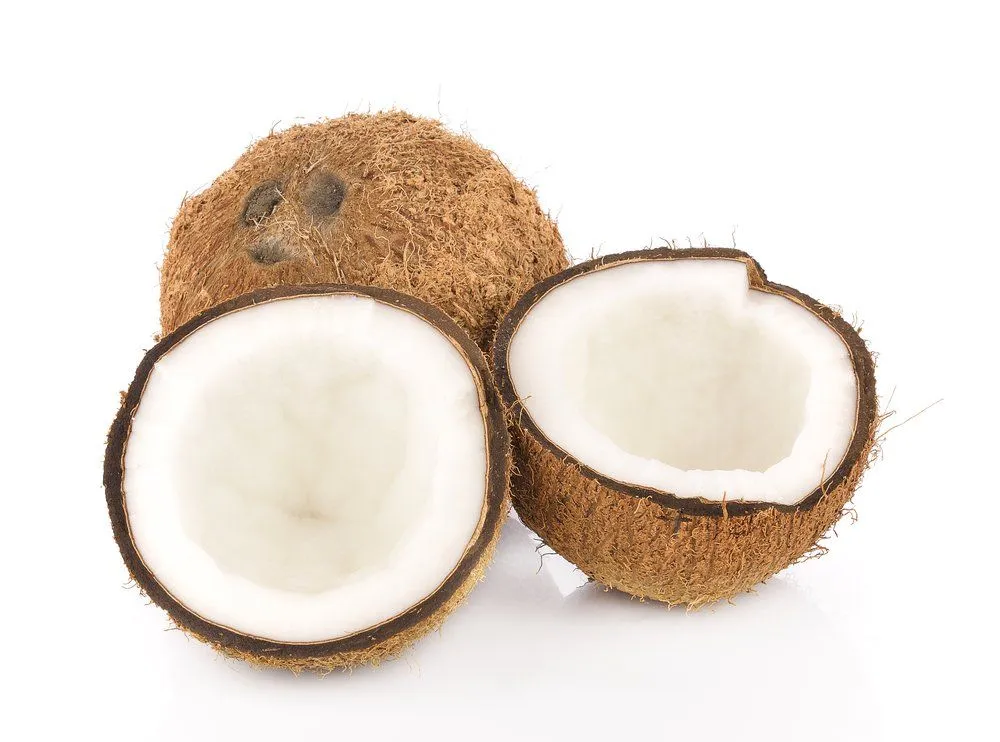
As a coconut ripens further, layers of endosperm are deposited on the insides of the walls of the coconut, making up the edible ‘flesh’ of coconuts. Therefore, coconut has many uses and applications throughout its various stages of development, which is why it is present in daily diets worldwide, in one form or another.
Is Coconut A Seed, Fruit, Or Nut?
Some would say that a coconut is basically a nut, as the name ‘coconut’ might suggest, while others claim that it is a fruit or a seed. But what is the right answer here?
Interestingly, a coconut is all of these: a seed, a fruit, and a nut! Confused? Let me explain…
From a strictly botanical point of view, a coconut is a fibrous one-seeded drupe; in other words, a dry drupe. Now, you might think – what on earth is a drupe? A drupe is basically a fruit in which a fleshy or fibrous middle layer is wrapped around a hard inner layer that protects a single seed. A drupe has three layers: the exocarp (the outermost ‘hardened’ layer), the mesocarp (the ‘fleshy’ middle part), and the endocarp (the hard layer surrounding the seed). Other examples of drupes are mangos, almonds, peaches, plums, and cherries.
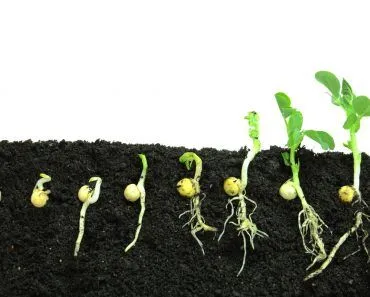
A coconut, however, can also be called a seed since the seed is the reproductive part of a flowering plant. A seed is essentially a ‘baby plant.’ If you look at one end of a coconut, you see three black pores, also called ‘eyes.’ One of these pores gives rise to the sprout. Thus, a coconut is by definition also considered a seed.
Finally, it is also a nut, as a loose definition of a nut is nothing more than a one-seeded ‘fruit.’ This definition gives coconuts a dual identity, allowing them to be classified as fruits and nuts.
Which Part Of A Coconut Is The Seed (And How Many Are There)?
Here is where a lot of people get tripped up. If a coconut is a one-seeded drupe, then which bit is the seed, and how many seeds does one coconut hold? The short answer: a coconut contains exactly one seed, and that seed is far bigger than most people expect. It is essentially everything inside the hard shell.

Working from the outside in, a drupe has three fruit layers: the thin exocarp (the smooth outer skin), the fibrous mesocarp (the thick husk, the source of coir rope and matting), and the hard, woody endocarp (the brown shell we crack open). Those three layers are all fruit. The actual seed begins just inside the shell: a thin brown seed coat, the testa, wraps the white endosperm (the meat and the water) along with a tiny embryo tucked beneath one of the three "eyes."
So the white flesh you eat and the water you drink are not separate snacks sitting next to the seed; they are the seed's food store. In flowering plants, endosperm is the tissue that nourishes the embryo as it sprouts, and the coconut is the classic textbook example of it. The water is liquid endosperm, and as the coconut ripens it lays down solid endosperm along the inside of the shell as the familiar layer of meat. Crack the nut open to hunt for a tidy little pip and you will not find one, because the whole interior, water and all, is the single seed.
Is A Coconut A "True" Nut Or A Tree Nut?
We said a coconut counts as a nut under a loose definition, but it is worth being precise, because "nut" means two different things. To a botanist, a true nut is a dry, hard, one-seeded fruit that does not split open at maturity, like an acorn, a hazelnut, or a chestnut. A coconut is none of that. Its fleshy, fibrous, water-filled drupe is a long way from a dry acorn, so strictly speaking a coconut is not a true nut at all. It only earns the name in the everyday, culinary sense, in which "nut" loosely covers any large, hard-shelled, oily seed, a bucket that also catches almonds, walnuts, and pistachios (all of which are likewise seeds of drupes rather than true nuts).
This botany-versus-kitchen split has real-world consequences. Food regulators long lumped coconut in with tree nuts for allergy labeling, even though it is a fruit. That is now changing: in January 2025 the US Food and Drug Administration issued the fifth edition of its food-allergen labeling guidance and quietly dropped coconut, along with nine other tree nuts, from its list of major food allergens. The reasoning is that a genuine coconut allergy is rare, and most people who react to tree nuts such as almonds or cashews can eat coconut without any trouble. In other words, the label "nut" never really fit the coconut, in the lab or on the plate.
So, once and for all, a coconut can be a nut, a seed, and a fruit, and all at the same time. Now that we’ve resolved the identity crisis of our beloved coconut, it’s time to grab one and pop a piece in your mouth as a delicious, healthy reward!
References (click to expand)
- Rana, M., Das, A., & Ashaduzzaman, M. (2015, June 22). Physical and mechanical properties of coconut palm (Cocos nucifera) stem. Bangladesh Journal of Scientific and Industrial Research. Bangladesh Journals Online (JOL).
- Coconut - Wikipedia. Wikipedia
- Is a coconut a fruit, nut or seed? Everyday Mysteries. Library of Congress.
- 9.1 Seed Morphology. The Science of Plants. University of Minnesota.
- Nut: Definition & Examples. Encyclopaedia Britannica.
- Hierarchical Structure of the Cocos nucifera (Coconut) Endocarp. Advanced Science. PMC, NCBI.
- Out with the coconut. In with all eggs and all milk. Institute for Food Laws and Regulations, Michigan State University.
- We're changing how we label coconut and tree nut allergens. Cornell University.