Only young sunflowers track the sun east-to-west each day; once a sunflower matures and blooms, it stops moving and faces east permanently. The daily tracking is driven by uneven, auxin-controlled growth on opposite sides of the stem. Locking east at maturity warms the flowers up earlier each morning, which attracts up to five times more pollinators than west-facing blooms.
Sunflowers are fascinating little specimens of nature, and they allow us to see firsthand that plants are not the static beings we believe they are. These particular flowers actually look toward the sun as it rises in the east and follow it across the sky until it sets in the west.
Why does this happen?
Heliotropism
This property of facing the sun is mostly observed in young flowerheads and generally stops once the flower starts to bloom (mature sunflowers generally face east). The fascinating phenomenon of flowers following the sun across the sky is called heliotropism.
Like humans, plants also have internal biological clocks, the so-called circadian rhythms. The circadian rhythm of a person produces several physiological and chemical changes in the body. Similarly, a plant’s circadian rhythm makes it possible to react to changes in approximately 24-hour cycles.
How Do Sunflowers Face The Sun?
Before sunrise, a young sunflower looks east – towards sunrise. As the sun moves from east to west, the flower also turns west. As the sun sets, the flower returns to its original position to the east to begin the cycle the next day.
According to an article published in the journal Science in 2016, researchers believe that sunflowers exhibit this type of heliotropism because their stems lengthen differently at different times of the day.
This is what researchers observed during their study: when the sun begins to move from east to west in the sky, the east side of the stem of a sunflower plant grows faster than the west side. Due to this uneven growth on both sides, the flower tends to lean toward the sun.
Similarly, when the sun finally sets, the growth on the west side of the stem is greater than the growth on the east side.
To make things even more interesting, researchers also tied the plant’s stem to a solid support so that they couldn’t move according to the sun’s position. In some cases, they turned the sunflower plants away from the sun. As a result, researchers observed that those plants had reduced biomass and less leaf area than those left undisturbed.
Sunflower plants’ response to light was also tested under artificial lighting conditions. According to the article published in Science, it was noted that the plants “could reliably track the movement and return at night when the artificial day was close to a 24-hour cycle, but not when it was closer to 30 hours.”
The stem of a sunflower plant experiences unequal growth on either side because of auxins, plant hormones that stimulate growth.
A Mature Sunflower DOESN’T Track The Sun
However, as a sunflower plant matures, it behaves differently, according to the study’s co-author published in Science. “As the overall growth of the plant slows down gradually, the circadian rhythm ensures that the plant reacts more strongly to sunlight early in the morning than the afternoon or evening. This is why a mature sunflower doesn’t move with the sun throughout the day; rather, it just faces east.”
Well, now we know how the sunflowers follow the Sun, but now it’s time to find out the reason behind this peculiar behaviour.
Why Do Sunflowers Face The Sun?
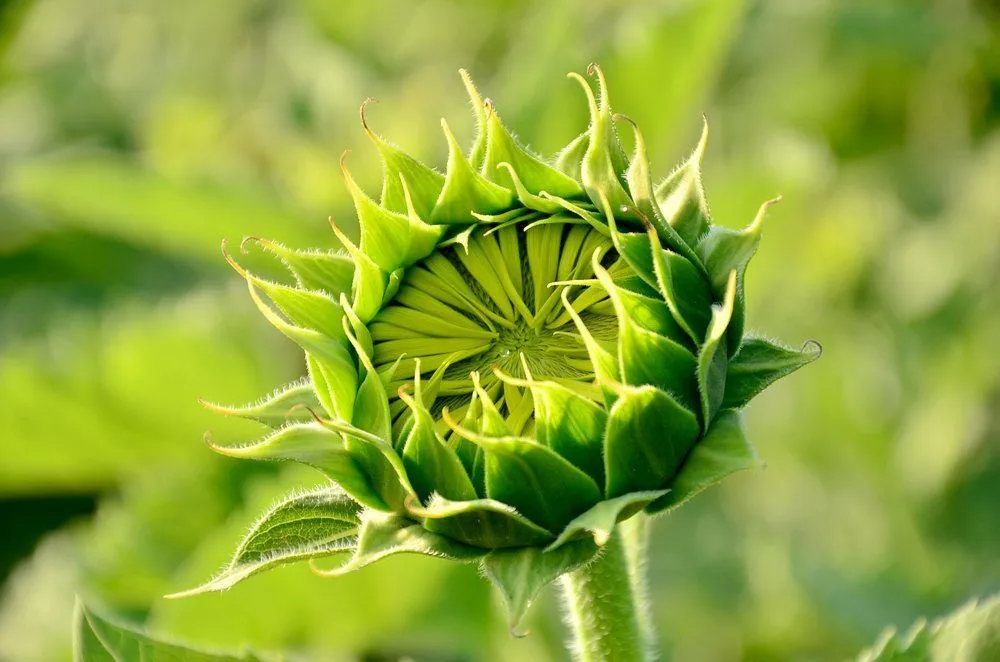
It is mainly young flower heads that exhibit this characteristic of heliotropism because younger flowers have green “bracts” that basically look like a mane; the plant also has leaves just below the flower that face the sun.
The obvious reason for the flower following the sun at this stage would be to maximize photosynthesis.
Each sunflower plant has only one flower on its stem. Therefore, during pollination, the plant’s only means of reproducing must get noticed by pollinators (mainly insects). Continuously facing towards the east also helps the flowers to heat up quickly.
This gives them an advantage in pollination, as warm flowers attract insects. Therefore, in the plant’s interest, the flower always faces the sun and is therefore always clearly visible to these important pollinators.
When researchers compared mature flowers facing east with flowers that they had turned to face west, they made a remarkable observation. East-facing blooms attracted five times as many pollinating insects as west-facing ones.
Sunflower has a clear advantage in terms of reproduction if it faces the sun.

While it would be amusing if these beautiful flowers required suntan, the prospect of photosynthesis and pollinator perception makes a little more sense.
Why Are My Sunflowers Not Facing The Sun?
Here is the part that surprises most gardeners: a mature sunflower in full bloom is supposed to look like it has given up on the sun. If you grew a row of sunflowers and they now seem to stare off in one fixed direction (or even turn their backs on the afternoon sun) they are not sick, and nothing has gone wrong. They have simply grown up.

So do sunflowers always face the sun? No. Only young, still-growing flower heads swing east-to-west across the day. As the plant matures, the stem turns stiff and woody and the daily tracking fades out, leaving the bloom locked toward the east. That is why a field of mature sunflowers all seems to face the same way at once, and why your own plants stopped pivoting once they fully opened.
According to researchers at the University of California, Davis, this eastward lock is not a failure to follow the sun; it is the better strategy. An east-facing head warms up in the first hour of morning light, and warm flowers draw far more bees than cooler, west-facing ones, which means more pollination and heavier, healthier seeds. In other words, a sunflower that has "stopped facing the sun" is actually facing the part of the sky that pays off most. If a young plant genuinely is not tracking at all, the usual culprits are too little direct light or a heavily shaded, leaning position, not a disease.
Is Sunflower Sun-Tracking Heliotropism Or Phototropism?
Sunflower sun-tracking turns up in a lot of biology quizzes, usually as a fill-in-the-blank: "the face of a sunflower turning to follow the sun is an example of ______." The clean answer is heliotropism, which is itself a type of tropism (a plant's directional growth response to a stimulus) and, more broadly, an example of a living thing showing a response to stimuli.

People often mix up heliotropism and phototropism, so it helps to separate them. Phototropism is one-way growth toward a light source: a seedling on a windowsill bending toward the glass and staying bent. Heliotropism is the back-and-forth, daily tracking of the sun's moving position across the sky, swinging east in the morning and west by evening before resetting overnight. Sunflowers can do both, but the famous "following the sun" behaviour is heliotropism.
The two are close cousins because they share the same engine. As shown above, both run on auxin, a growth hormone that pools on the shaded side of a stem and makes those cells elongate, so the shoot leans toward the light. In a young sunflower, this uneven, auxin-driven growth flips from the east side of the stem during the day to the west side at night, producing the slow daily sweep. It is the same underlying response to light that lets plants sense and react to their surroundings, just expressed as a clock-like daily rhythm rather than a one-off bend.
References (click to expand)
- Why Sunflowers Face East. University of California, Davis.
- How sunflowers follow the sun | Earth - EarthSky. earthsky.org
- Atamian, H. S., Creux, N. M., Brown, E. A., Garner, A. G., Blackman, B. K., & Harmer, S. L. (2016, August 5). Circadian regulation of sunflower heliotropism, floral orientation, and pollinator visits. Science. American Association for the Advancement of Science (AAAS).
- Horváth, G., et al. Sunflower inflorescences absorb maximum light energy if they face east and afternoons are cloudier than mornings. Scientific Reports (2020). NCBI PMC.
- Not all sunflowers follow the sun, and it's not evidence the sun has been swapped out. PolitiFact.
- Heliotropism. Wikipedia.