Table of Contents (click to expand)
- The Axial Tilt Of Our Planet
- Why Do Different Places Have Different Sunrise And Sunset Timings?
- Why Does The Sun Rise In The East And Set In The West?
- Analemma Phenomenon
- What Is The Difference Between Sunrise, Sunset, And Dawn, Dusk, And Twilight?
- Why Are The Durations Of Sunrise And Sunset Different In Different Locations?
- How Does Latitude Change Sunrise And Sunset Times?
- Why Does The Sun Never Set In Some Places?
- Conclusion
The Earth rotates from West to East, which causes the Sun to appear to rise in the East and set in the West. Its axis of rotation is tilted at an angle of 23.5 degrees from the perpendicular to its orbital plane. The orbit of the Earth around the Sun is elliptical. These phenomena are the main reasons for the different timings of the Sunrise and Sunset in different places on the planet.
The other day on FaceTime, it was quite interesting to see the sky a stark blue in Mumbai at 7:30 in the evening, although it was pretty dark for me in Delhi. I was immediately teleported to my grade 5 Environmental Studies class when the teacher told us about the differences in sunrise and sunset times throughout the world.
Why is it like that?
The Axial Tilt Of Our Planet
The debate about the shape of the Earth being flat or round had been around for several centuries before astronomers and mathematicians put an end to this exaggerated debate by citing appropriate data and facts. We have finally come to accept that the Earth is almost a sphere, more specifically, an irregularly shaped ellipsoid.
The Earth completes one rotation about its axis in 24 hours in the West to East Direction. The period of one complete revolution of the Earth around the Sun is 365 days, 6 hours, and 9 minutes.
The axis of rotation of the Earth is inclined at an angle of 23.5 degrees from the imaginary perpendicular line.
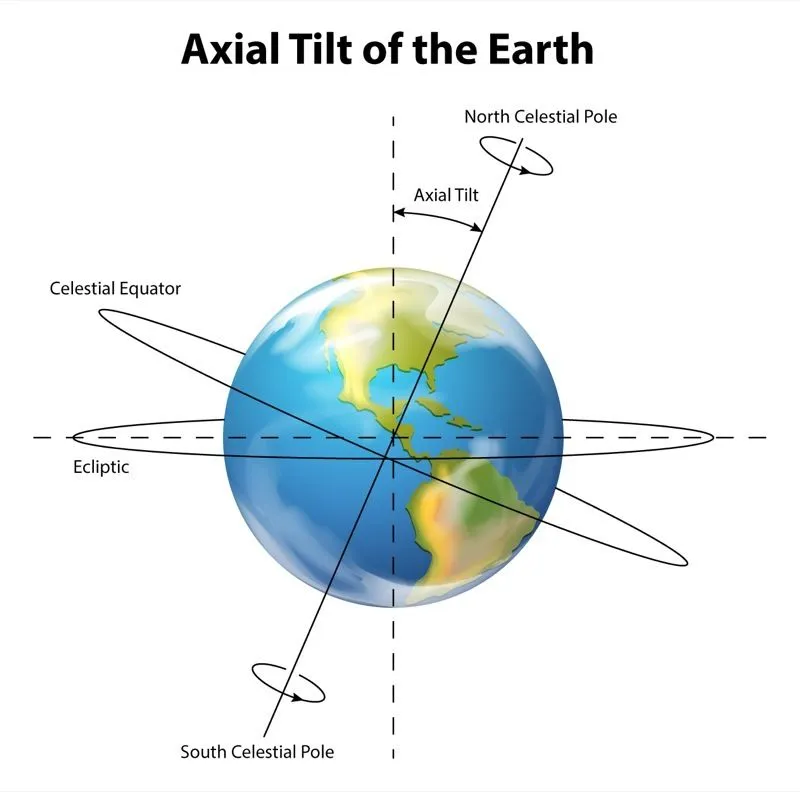
All these phenomena are collectively responsible for the peculiarity in the timings of sunrise and sunset.
How?
Why Do Different Places Have Different Sunrise And Sunset Timings?
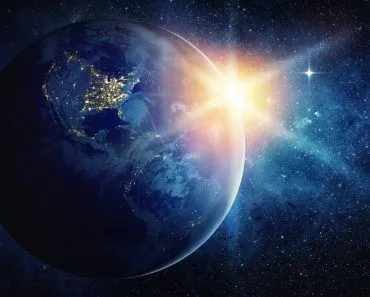
Due to the rotation of the Earth from West to East, the Sun rises from the East and sets in the West. Therefore, the places lying Eastwards on the Earth experience sunrise before the other regions, and the same is true for their sunsets.
This is why Japan is known as the ‘Land of the Rising Sun’. The Japanese name Nihon (日本) literally means ‘origin of the sun,’ a reference to Japan’s position east of mainland China. Meanwhile, American Samoa, lying near the International Date Line, is among the last places to experience sunrise and sunset each day.
Hence, different places have different sunset and sunrise times.
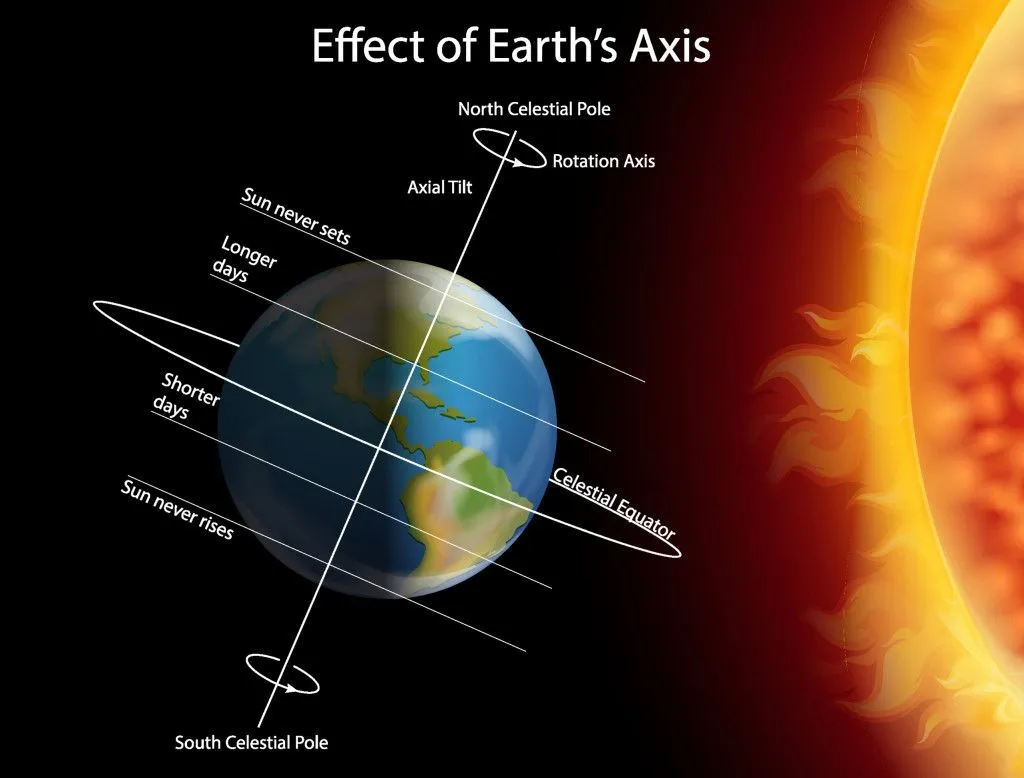
However, there’s more of a twist to this tale. Even the same place experiences different sunset and sunrise times each day. It sure would be convenient if the Sun rose and set every day at the same time, but things don’t work that way.
Why Does The Sun Rise In The East And Set In The West?
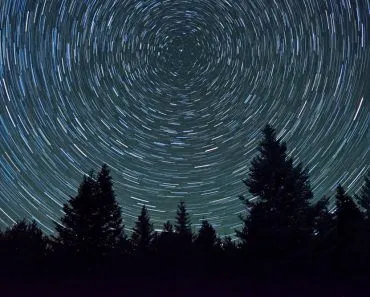
Here’s a small mind-bender: the Sun doesn’t actually travel across our sky at all. We do. The Earth spins on its axis toward the east, and that single fact is why the Sun, the Moon, the planets, and the stars all appear to rise in the east and drift across to set in the west. As your patch of ground is carried eastward by the rotation, whatever lies beyond the eastern horizon swings up into view, while whatever was overhead slides away toward the west. NASA puts it plainly: the Earth rotates toward the east, so everything in the sky seems to move from east to west. It is the same illusion you get on a merry-go-round, where the world outside appears to spin past you even though you are the one turning.

This is also why a place to your east always gets the day first. The Earth turns a full 360 degrees in roughly 24 hours, which works out to 15 degrees of longitude every hour, or about 4 minutes of clock time for each degree you move east or west. So a town sitting a few degrees east of you genuinely sees the Sun crest the horizon a few minutes earlier. It is the reason sunrise reaches the east coast of the United States well before the west coast, and why two cities in the same country (think New York versus Los Angeles, or Cape Town versus Johannesburg) can have noticeably different sunrise and sunset times.
There is one tidy exception worth filing away. The Sun rises due east and sets due west only on the two equinoxes, around 20 March and 22 September. For the rest of the year, the 23.5-degree tilt we met earlier nudges those rise and set points a little north or a little south of due east and west, swinging farthest at the summer and winter solstices. If you have ever wondered why we don’t feel the Earth spinning beneath us while all this is happening, it is because the motion is wonderfully smooth and unchanging, much like a passenger in a plane cruising at a steady speed.
Analemma Phenomenon
Since the orbit around which the Earth circles the Sun is elliptical and the axis of rotation of the Earth is tilted, the position of the Sun at a particular place is not the same every day. This is due to variation in the speed of Earth’s revolution.
Hence, the analemma phenomenon occurs and the pattern that the Sun’s position creates at a particular place throughout the span of one year is known as analemma.
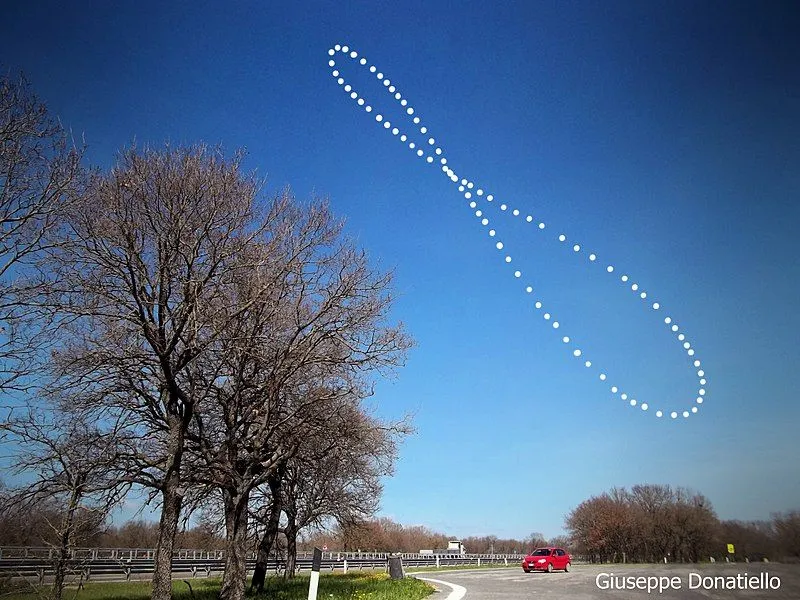
Hence, even the exact same location doesn’t have fixed sunrise and sunset times.
What Is The Difference Between Sunrise, Sunset, And Dawn, Dusk, And Twilight?
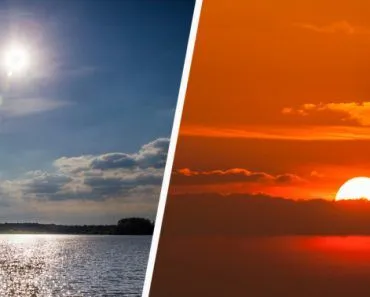
We toss these words around as if they all mean the same moment, but astronomers are fussier. Sunrise and sunset mark the instants when the upper edge of the Sun’s disk just touches the horizon, climbing into view at sunrise and slipping out of sight at sunset. The sky, however, does not snap from dark to bright (or back again) in that one moment. Even when the Sun is below the horizon, it still lights up the upper atmosphere, and that soft glow is twilight. The morning stretch of twilight is what we call dawn, and the evening stretch is dusk. In other words, dawn ends at sunrise, and dusk begins at sunset.

Twilight itself comes in three flavours, defined by how far the Sun has sunk below the horizon, according to the US National Weather Service. Civil twilight runs while the Sun is up to 6 degrees below the horizon; it is bright enough to read or walk outside without artificial light. Nautical twilight stretches from 6 to 12 degrees below; the horizon at sea is still faintly visible, which historically let sailors fix their position against the stars (hence the name). Astronomical twilight reaches from 12 to 18 degrees below, after which the sky finally counts as fully dark. So when someone asks "what time is dusk?", the honest answer is that it depends on your latitude and the date, because the Sun takes longer to drop those 6 to 18 degrees the farther you are from the equator. If you have noticed the sky blushing orange and pink during these in-between hours, that colour has its own story, which we cover in why the Sun looks red at sunrise and sunset.
Why Are The Durations Of Sunrise And Sunset Different In Different Locations?
Another peculiar observation is that the durations of sunrise and sunset are different in different locations.
The Earth is divided into the Northern and Southern Hemispheres by the equator, which goes around the center of the Earth. The sun rays are concentrated near the equatorial region and start reducing as we move towards the North and South Poles. Again, due to the inclination of the Earth’s axis, the two hemispheres exist in opposite seasons.
When the Northern Hemisphere experiences the Summer Solstice, marked by longer days and shorter nights, the Southern Hemisphere experiences Winter Solstice, marked by shorter days and longer nights, and vice versa.
How Does Latitude Change Sunrise And Sunset Times?
Latitude (how far north or south of the equator you are) is the big lever that decides how dramatically your sunrise and sunset times swing through the year. The reason traces back, once again, to the planet’s 23.5-degree tilt. Near the equator, every point spends almost exactly half of each rotation in sunlight, so the day stays close to 12 hours long all year round and the Sun rises and sets at roughly the same clock time every day. That is why, if you live on the equator, sunrise barely budges between June and December.

Travel toward the poles and the picture changes fast. The Stanford Solar Center notes that at a mid-latitude city like San Francisco (around 37 degrees north), the Sun is up for roughly 17 hours at the summer solstice but only about 6 to 7 hours at the winter solstice. Push higher still and the swing grows even wilder. This is exactly why the seasons feel so different at different latitudes: the higher your latitude, the earlier the Sun rises and the later it sets in summer, and the reverse in winter. The two equinoxes are the great equaliser, when nearly everywhere on Earth gets close to 12 hours of daylight at once, which is why "where does the Sun rise and set" has a clean answer (due east and due west) only on those two days.
Why Does The Sun Never Set In Some Places?
A combination of the above-mentioned phenomena also results in the Sun not setting for several days in the regions above the Arctic Circle and the regions below the Antarctic Circle. These regions experience continuous Sunlight for days or even months at a time!
I wish I had spent my summer vacations there as a child. I could have played all day without my mother telling me to return home by dusk!
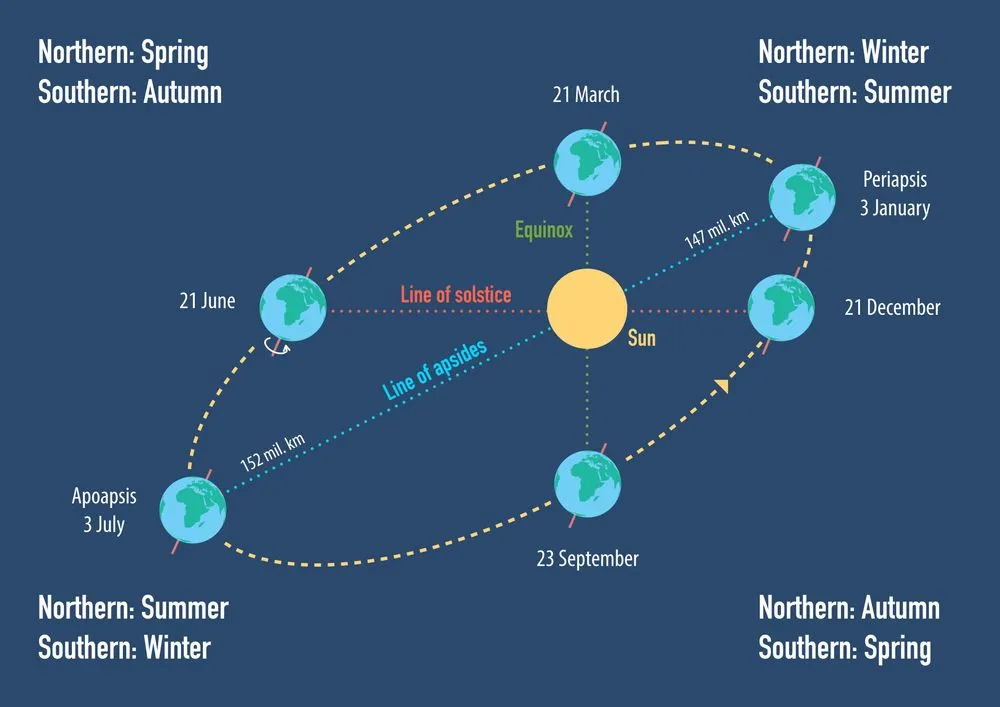
The Sun doesn’t set on the day of the Summer Solstice (June 21) above the Arctic Circle. These areas are often referred to as the ‘Land of the Midnight Sun’ and include the Northernmost regions of Canada, Greenland, Norway, Finland, Sweden, Alaska, Russia, and Iceland.
Svalbard, in Norway, truly does justice to the above name. The Sun doesn’t set there from about April 19th to August 23rd each year. Astonishing, right?
Conclusion
The Sun has been the ultimate source of energy and life for Earth for millions of years and will continue to stay that way for billions of years to come. Every phenomenon associated with the Sun and the Earth has found a special place of interest not only for astronomical experts, but also for ordinary people.
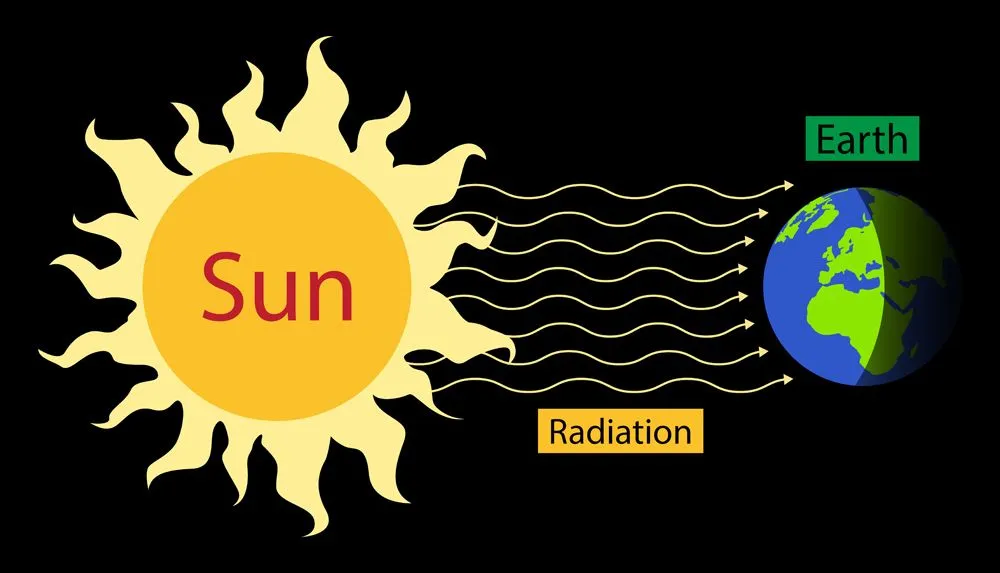
Be it the chirping of the birds at sunrise or the beautiful sky during sunset, the Sun signifies a new day and a fresh beginning. We shall always be indebted to the Sun and the scientific community will surely keep striving to unveil its mysteries and answer any questions associated with it. Until then, keep your thinking hats on and stay curious!
References (click to expand)
- axis - National Geographic Society. National Geographic
- Why the Earth has seasons | Earth | EarthSky - earthsky.org
- Milutin Milankovitch - NASA Earth Observatory. The National Aeronautics and Space Administration
- Times for sunrise and sunset in India - Worlddata.info. worlddata.info
- Sunset - Wikipedia
- Viewing and Understanding the Analemma. Stanford University
- Analemma - Wikipedia
- Midnight Sun: What It Is and How to See It. Space.com
- Why does the Sun rise in the east and set in the west? StarChild, NASA Goddard Space Flight Center
- Twilight Types. National Weather Service (NOAA)
- Rise, Set, and Twilight Definitions. U.S. Naval Observatory
- Where Does the Sun Rise and Set? Stanford Solar Center
- Time Zones. Geography, University of Hawaii