A flower bulb is a modified underground stem with fleshy leaf scales that stores food and holds a complete pre-formed plant, reproducing by cloning itself into offsets. A seed is the product of sexual reproduction: an embryo plus stored food inside a protective coat. So a bulb is not a seed, and bulbs grow into plants genetically identical to the parent, while seeds do not.
As spring awakens, so do the enchanting blooms of tulips and daffodils. The secret to these early-season blooms thrives deep in the soil in the form of bulbs! Certain flora, such as alliums, hyacinths and tulips, adopt a survival tactic to avoid death in the face of harsh weather! Sounds contradictory, right? Well, that’s how it may seem to us!
These plants die back to the ground and store their next generation as an underground bulb. As the weather begins to transition to the safer (warmer) side, these hidden beauties reveal themselves.
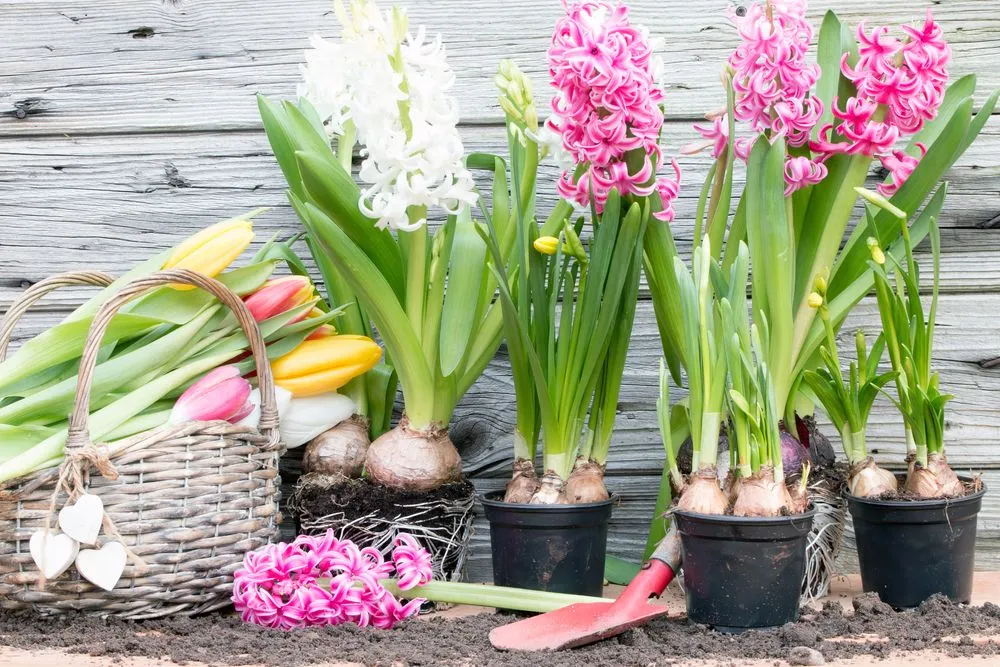
Let’s learn more about these flower bulbs and how they compare to more traditional seeds.
Components Of A Flower Bulb
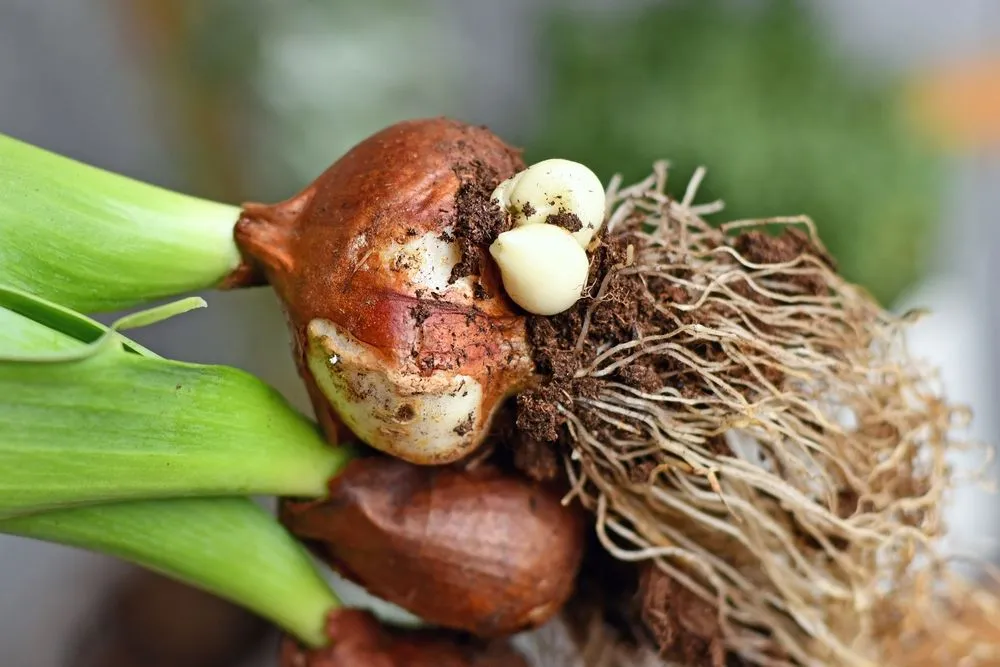
Don’t let the tiny structure of a flower bulb deceive you. Although it is comparatively smaller than a plant, it has all the plant’s complex systems, such as roots and stems. The only difference is that they exist in modified forms.
Below are a flower bulb’s essential structures.
The basal disc of a flower bulb is the compressed stem. Similar to any plant stem’s function, this basal disc forms the skeletal support. It interconnects all the parts of a bulb.
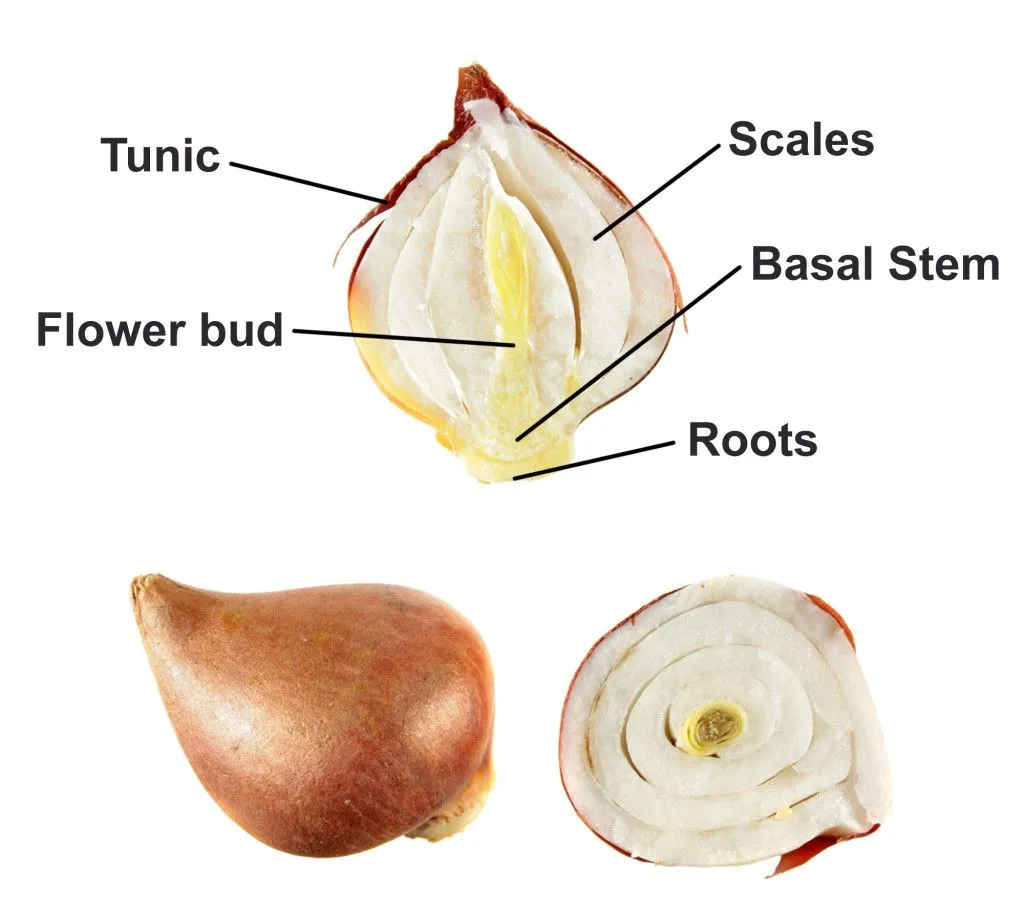
Below the stem, a tuft of roots arises, which is the nutrient and water supplier to the bulb parts above.
The scaly frame above the stem is made up of modified leaves, which are the food storage organs. Flower bulbs like tulips and hyacinths cover these scales with an outer papery tunic, and so are called tunicate bulbs. This tunic protects the underlying leaves and prevents them from drying out, whereas in imbricate bulbs, like lilies, this tunic is absent.
At last, the flower bud, which is the future bloom, is found deep in between the scales.
Components Of A Seed
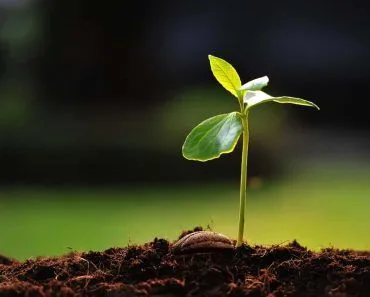
Seeds are much more complex than flower bulbs. They are mature ovules and represent the embryonic stage of a plant. One can view a seed as the fetus of the plant world!
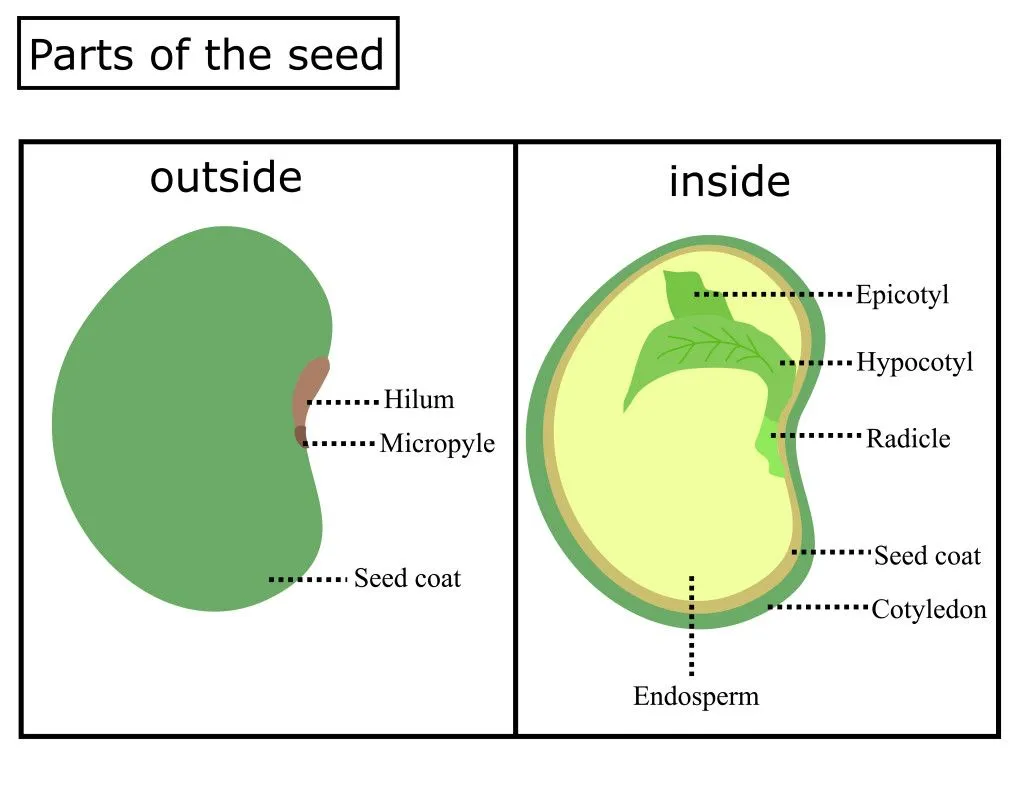
Seeds have an outer hard seed coat that protects the internal structures. The plumule and radicle are also present within its durable seed coat, representing the shoots and roots.
Additionally, cotyledons exist to function as embryonic leaves. In many seeds, the bulk of the food reserves sits in a separate tissue called the endosperm, which the cotyledons absorb to feed the germinating seed. Wheat, corn and other grasses are endosperm-rich (it's the starchy part we eat), while beans and peas pack their reserves into chunky cotyledons instead.
If you wish to know more about how tiny seeds develop into seedlings, read this article.
Flower Bulbs Vs. Seeds
The only thing in common between bulbs and seeds is that they grow into a new plant once sown in the ground. The following significant differences exist between seeds and flower bulbs.
Seeds are formed by the fusion of gametes from different plants’ flowers (self-pollinated plants are an exception). Since recombination occurs during gamete production, the gametes carry genetic information that is different from their parents.
Hence, offspring (seeds) have greater genetic diversity than their parents. However, flower bulbs are clones (genetically identical) of their parent plant, so there is no route for gene diversity.
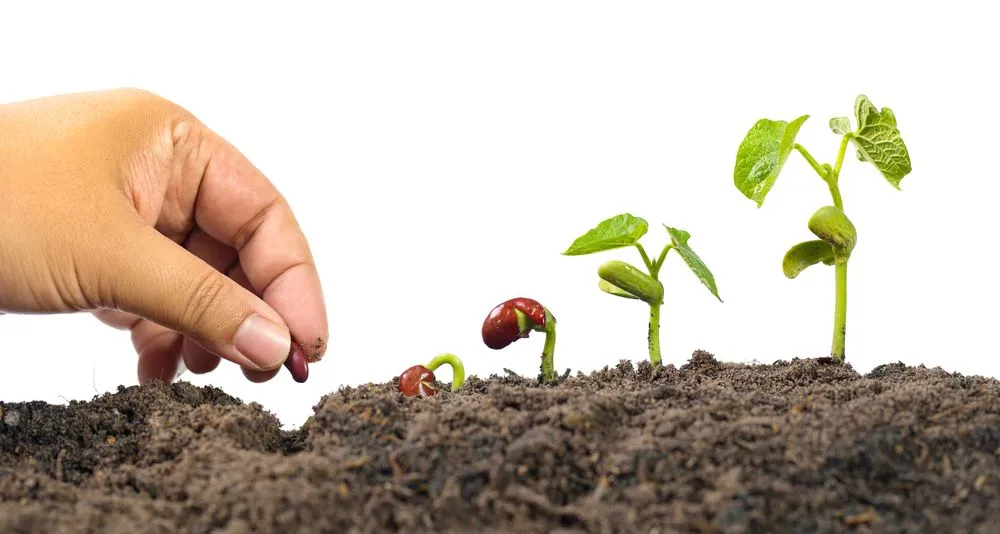
Additionally, a flower bulb is in itself the whole life cycle of a plant, meaning that it is both the vegetative and reproductive unit of the plant. On the other hand, seeds are the end product of the reproductive cycle.
Another difference is their dormancy period. Seeds undergo a period of dormancy to support their survival when being dispersed, because germination in the wrong environment essentially spells death for the “newborn”.
Hence, plants form seeds with increased dosages of hormones, such as ABA. This prevents hastened seedling formation. In usual cases, seed dormancy lasts for a few days to a few weeks, but in some extreme conditions, it can go on for hundreds, even thousands, of years. A date palm seed recovered from Herod the Great's fortress at Masada germinated after roughly 2,000 years of dormancy!
In contrast, flower bulbs are more of a seasonal dormant being. They undergo changes as a defense against harsh seasonal shifts. For example, spring bulbs enter an inactive phase to avoid the harsh summer period. After busily running photosynthesis through spring, they bank that energy and pack a pre-formed plant into the underground bulb. Once the unfavorable summer ends, the bulb sends a shoot out of the soil and grows into a new plant.
Finally, a seed represents a sexual form of reproduction. It is dependent on flowers and pollination to continue its life cycle. In comparison, flower bulbs are independent and majorly develop baby bulbs (offsets) to reproduce. However, bulbs can also produce flowers and seeds.
Not-so-true Bulbs!
Besides flower bulbs, some plants bear underground portions that mimic true bulbs. However, these don’t have all the well-defined structures of flower bulbs.
These bulb-like plants include corms, which don’t have leaf equivalents, like scales. The modified stem itself performs the food storage function.
You can see corms in plants like gladiolus and crocus.
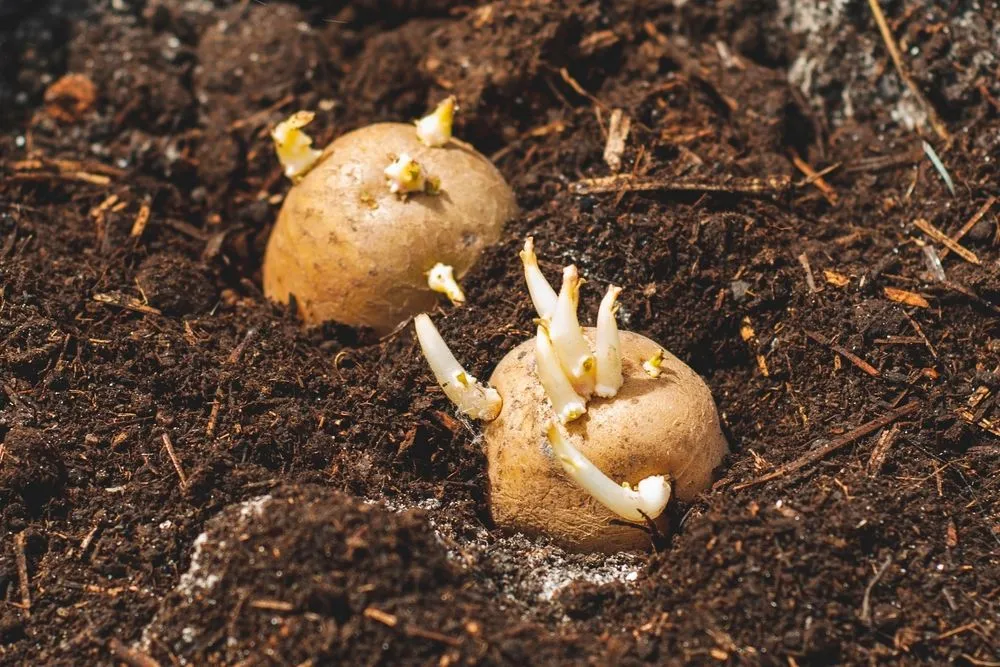
In addition, some plants develop tubers, wherein they don’t have a basal plate like a true bulb. Instead, they have buds that produce roots and shoots. The best example of such a flowering tuber is the potato (Yes, they do flower!). You have probably seen the eye-like build-up on older potatoes… those are its asexually propagating buds!
How Do Flower Bulbs Reproduce?
If a bulb is a clone of its parent and never sets seed, how does one bulb become a whole drift of daffodils? The answer lies in that compressed stem at the base, the basal plate. Buds tucked into the base of the mother bulb swell into brand-new bulbs of their own. These little newcomers are called offsets (you may also see them called bulblets or daughter bulbs), and they are simply the bulb cloning itself. As the University of Illinois Extension puts it, offsets “develop from buds within the base of the mother bulb and produce new plants.”

Year after year, the mother bulb keeps budding off these daughters until the clump grows crowded. Crowding is actually a problem: once a patch of tulips or daffodils gets congested, the blooms shrink and thin out, which is the plant’s way of telling you it is time to dig in. Gardeners simply lift the cluster after the foliage dies back, gently twist apart the daughter bulbs, and replant them with more elbow room. It is a free way to multiply your flowers!
There is one catch: a fresh offset is not yet big enough to bloom. It has to spend a season or two fattening up its scaly leaves and storing enough food before it can muster a flower. The Royal Horticultural Society notes that smaller bulbs may take roughly two to four years to flower from offsets, while the largest bulbs can need five to seven. Because every offset is genetically identical to its parent, though, the wait is rewarded with flowers that look exactly like the originals, which is precisely why prized varieties are passed along as bulbs rather than seeds.
Can You Grow Tulips From Seed?
Here is a question that puzzles a lot of gardeners: if tulips are flowers, and flowers make seeds, why does everyone plant tulip bulbs? Tulips really do set seed. After the petals drop, a pollinated tulip swells into a three-chambered capsule packed with flat, papery brown seeds, just like the wild tulip below.

So yes, you can grow tulips from seed. The trouble is time and predictability. A tulip seed has to start from scratch as an embryo, sprout, and then spend several seasons slowly building up an underground bulb before it has the energy to flower. The Royal Horticultural Society puts seed-grown tulip seedlings at roughly three to four years to reach flowering size, and other garden bulbs raised from seed can take even longer. A planted bulb, by contrast, is a fully stocked storage organ that can bloom the very first spring after you put it in the ground.
There is a second snag. Most garden tulips are hybrids, so their seeds carry a reshuffled mix of genes and will not come true to the parent. Sow seed from a flashy striped tulip and you have no guarantee the offspring will look anything like it. A bulb sidesteps both problems at once: it flowers fast and it flowers true. That is why nurseries sell bulbs and why growing tulips from seed is mostly the preserve of specialist breeders hunting for brand-new varieties.
Conclusion
Whether it’s a true flower bulb or corms and tubers, the primary function they share is the ability to store nutrients and use them during self-propagation.
Humans have learned to use various plants’ ability to propagate from bulbs or buds, and often employ them in place of seeds for food production. This skips the embryonic stage and saves time. Basically, it would take much longer for our favorite potato fries and chips to reach our plates if it weren’t for buds!
References (click to expand)
- Seed dormancy and ABA signaling: The breakthrough goes on. Plant Signaling & Behavior. NCBI PMC.
- Assessing Extreme Seed Longevity: The Value of Historic Botanical Collections to Modern Research. NCBI PMC.
- Bulbs | University of Maryland Extension. University of Maryland, College Park
- Bulb Basics | Bulbs & More - University of Illinois Extension. Urbana-Champaign
- Is This a Bulb? - UF/IFAS Gardening Solutions. University of Florida Institute of Food and Agricultural Sciences
- Bulbs | Flowers - Illinois Extension. University of Illinois Urbana-Champaign
- Caring for spring-blooming bulbs after flowering - Illinois Extension. University of Illinois Urbana-Champaign
- Bulbs: propagation - Royal Horticultural Society (RHS)
- How to grow tulips - RHS Growing Guide. Royal Horticultural Society (RHS)
- Tulip (fruit and seed structure) - Wikipedia