Table of Contents (click to expand)
No, Jupiter is not a star and cannot become one naturally. Although it shares the sun’s gas composition, it is far too light to fuse hydrogen. Jupiter would need to be roughly 80 times more massive (about 8% of the sun’s mass) to shine as a true star. Adding just 13 Jupiter masses would only make a brown dwarf, not a real star.
The universe is undeniably beautiful and filled with objects whose size transcends our comprehension. Even though we live on Earth and have seen so many pictures of it, there is no way for our minds to actually comprehend how huge our planet really is.
But there are objects exponentially bigger than our little planet, most of which are stars. There are stars of all sizes, but most of them are way bigger than planets.
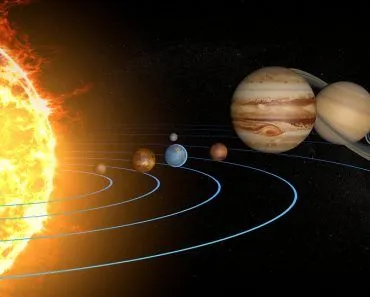
Our sun is more than one hundred times larger than any planet in our solar system. The Earth would appear as a small dot next to it.
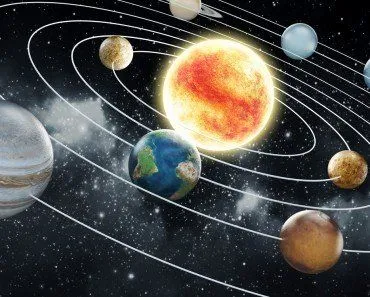
However, there is one member of our solar family that very closely resembles our favorite fiery giant: Jupiter.
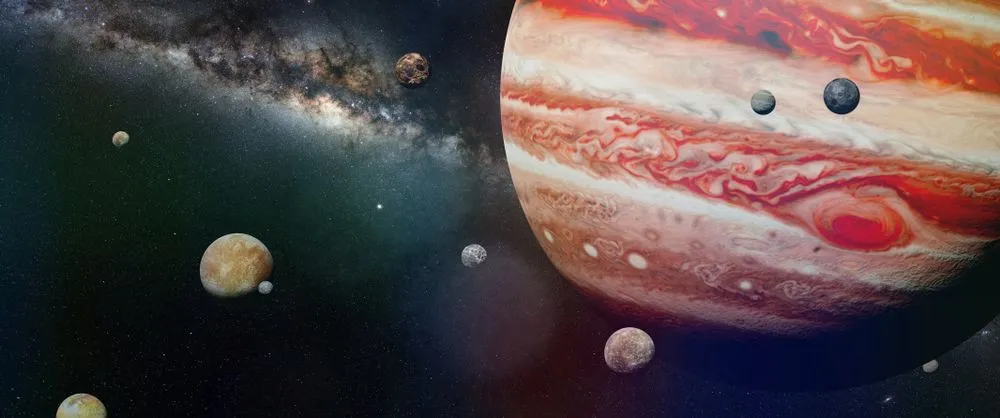
Jupiter is very similar to the sun in many ways, and it’s much much bigger than all of its sibling planets. Now, a question comes to mind: if Jupiter is so similar to the sun (a star), then why isn’t it a star itself? And even if it’s not, could it ever become a star?
What Exactly Is A Star?
In very simple words, a star is just a ball of hot gas that gives out light. The gas is mostly made of hydrogen and helium, and these gases are held together by gravity.
The light, heat, and energy of the star is produced in its core, where hydrogen atoms are fused to form helium atoms, a process known as nuclear fusion. This process gives out an immense amount of energy, which is why stars are so bright!
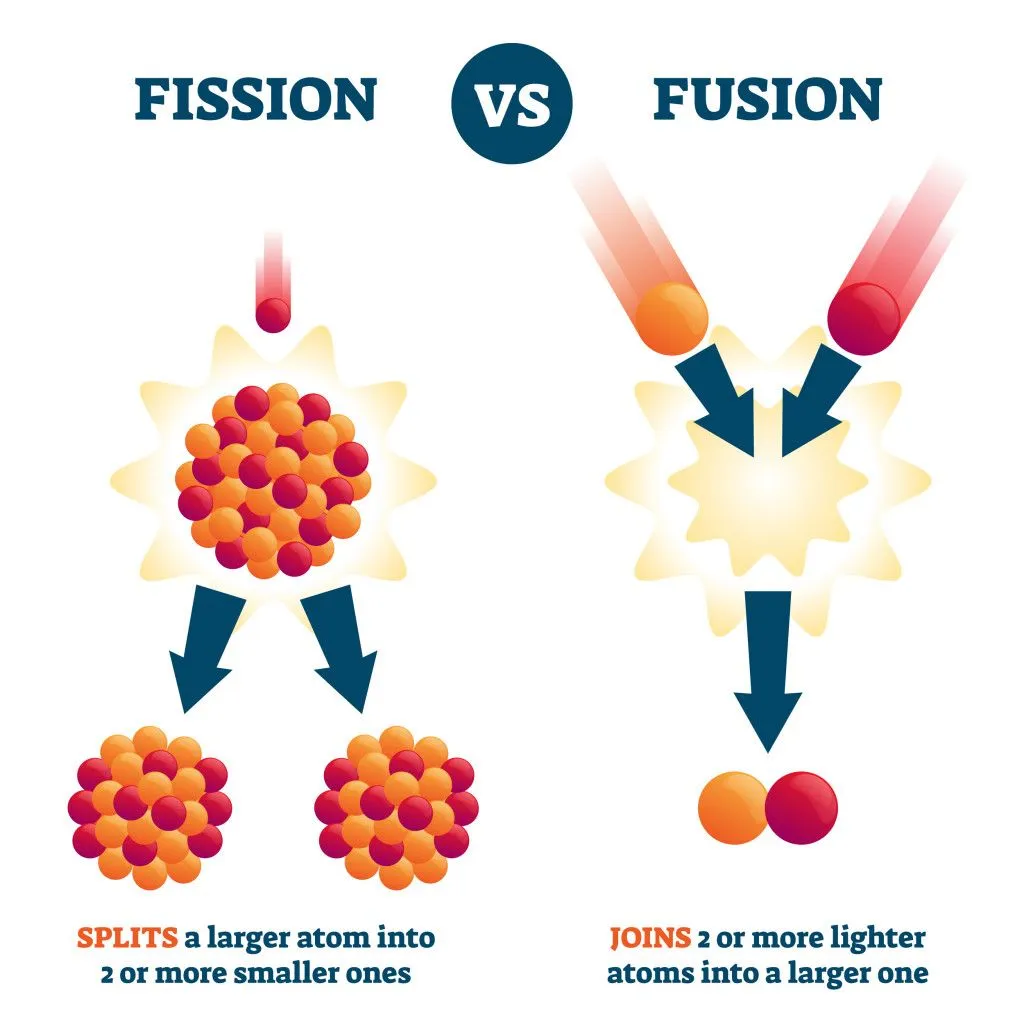
This energy-forming process is very important for the star and for the question posed by this article.
How Is A Star Born?
It’s believed that stars are born from the matter found in interstellar clouds. These clouds are composed of gases and dust, and sometimes they are overcome by their own gravity.
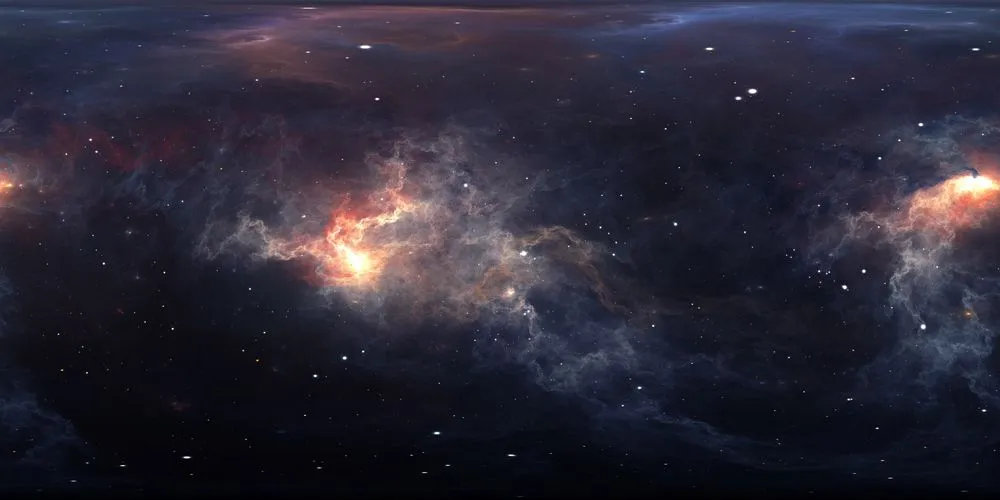
When this happens, the matter from the cloud starts spinning very fast. As the matter keeps spinning, it accumulates more and more of the gases and other materials let out by the cloud and forms a small core with a spinning disc of interstellar cloud matter around it.
The core is made of gases and when there is enough mass of hydrogen to support nuclear fusion, the outer disc is thrown away, while the core remains and continues to exist in the form of a star.
What About A Planet?
A planet is born from the matter that was present in the disc around the core. The small parts of this matter latch onto each other as they move around the newly formed star; eventually, they get big enough to turn into a planet.
How Similar Are The Sun And Jupiter?
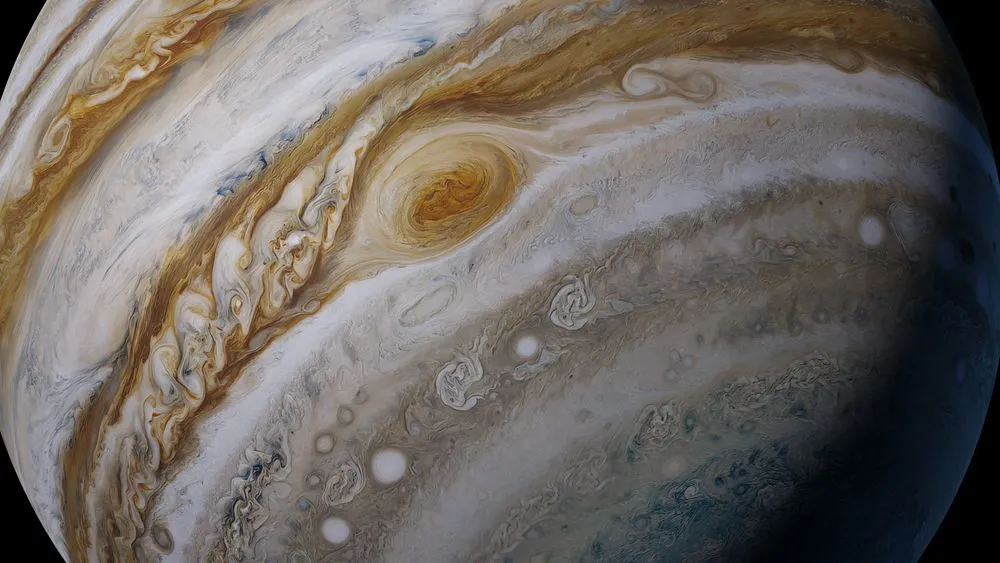
Jupiter is a gaseous planet. It does not have a firm surface like Earth. Similar to the sun (and most stars), it is made up of gases like hydrogen and helium.
Jupiter is huge, almost 11 times larger than Earth, and 318 times more massive. It’s not only more massive than our planet, but in fact, it’s more massive than all the planets in our solar system combined (specifically, it is around 2.5 times more massive than all the planets put together).
Stars have a low density. The sun has a density of 1.41 gram per cubic centimeter, while Earth has a much higher density of 5.51 gram per cubic centimeter.
The density of Jupiter is much closer to that of the sun at 1.33 gram per cubic centimeter.
Even the gaseous composition of the giant planet is similar to the sun. Our sun is made of 71% hydrogen and 27% helium, whereas Jupiter is made of 73% hydrogen and 24% helium.
Why Is Jupiter Not A Star?
So, if Jupiter is so similar to the sun, and if it’s also pretty big (Jupiter is actually bigger than some stars in the universe. One such star is only about 600 ly away and is roughly the size of Saturn.), then what’s stopping it from becoming a star?
Remember when I told you that the energy formation process in the star is very important? That’s what’s stopping Jupiter from becoming a star. Jupiter simply doesn’t have enough mass to form a core that can commence the nuclear fusion reaction; without this reaction, it would not become a star.
So, even if it’s similar to our sun in almost all aspects, its inability to commence nuclear fusion reaction in its core holds it back from crossing the line between a planet and a star.
Could Jupiter Ever Become A Star?
Naturally? Not very likely. Jupiter can’t gain that extra mass out of nowhere. There is no extra interstellar matter present in our solar system that the giant planet could suck up to increase its mass.
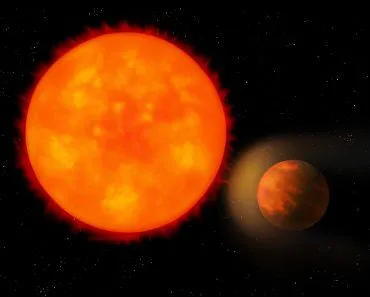
And even if there was some interstellar matter left after the formation of all the planets, it wouldn’t be enough. To switch on the hydrogen fusion that defines a real star, Jupiter would need to bulk up to roughly 80 times its current mass (about 8% of the mass of our sun). To put that in perspective, the smallest true star found so far, EBLM J0555-57Ab, weighs in at around 85 Jupiter masses, yet it’s barely larger than Saturn.
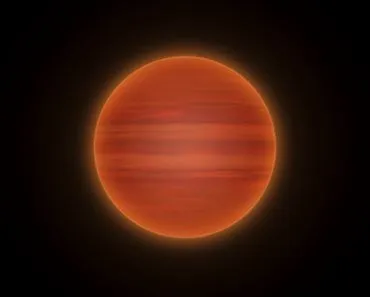
There is a smaller halfway mark, though. At about 13 times its current mass, Jupiter could ignite a limited reaction that fuses deuterium (a heavy form of hydrogen) instead of ordinary hydrogen. That would turn it into a brown dwarf, an object that sits in the gray zone between planets and stars. A brown dwarf is often called a “failed star,” because it never gets hot enough at its core for the steady hydrogen fusion that powers the sun. So even reaching 13 Jupiter masses wouldn’t make Jupiter a genuine star.
Conclusion
The big boy from our solar family is very similar to the sun and could have become a star if there was more matter for it to suck up during its formation process.
It could still become a star if it rounded up roughly 80 more of its lookalikes and convinced them to form one big combinatory cult.
In all seriousness, the bottom line is that Jupiter is a gaseous planet with properties that are similar to a star, but its lack of mass holds it back from commencing the nuclear fusion process, which makes it a planet, and not a star. It would need to be about 80 times more massive than it is now to fuse hydrogen and shine as a true star. (Pile on a more modest 13 Jupiter masses and you’d only get a brown dwarf, a “failed star” that never quite makes the cut.)
So, while Jupiter might never get the stardom it could have achieved, it will always be a star in our hearts!