Table of Contents (click to expand)
Not quite. A true star cannot become a planet. The closest thing is a brown dwarf, a "failed star" of roughly 13 to 80 Jupiter masses. Once it burns through its deuterium, it cools and dims until it looks much like a giant planet, though astronomers still classify it as a substellar object, not a planet.
Have you ever stared up at the stars on a clear night? It makes you wonder about a million things, and every once in a while, it can make a weird question pop into your head, such as whether stars can become planets. However, before we dive into answering the question, we’ll need to know a little something about stars and planets.
How Do Stars Die? And What Happens To Them After That?
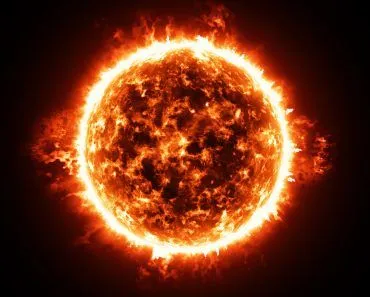
Let’s take the example of our Sun. The Sun falls into a category of stars called main-sequence stars. These stars produce their energy by the nuclear fusion of hydrogen to form helium inside their cores. This energy is released in the form of heat and light. The energy released also maintains the pressure required, so they don’t collapse inwards. In general, stars stay in this phase for about ten billion years.
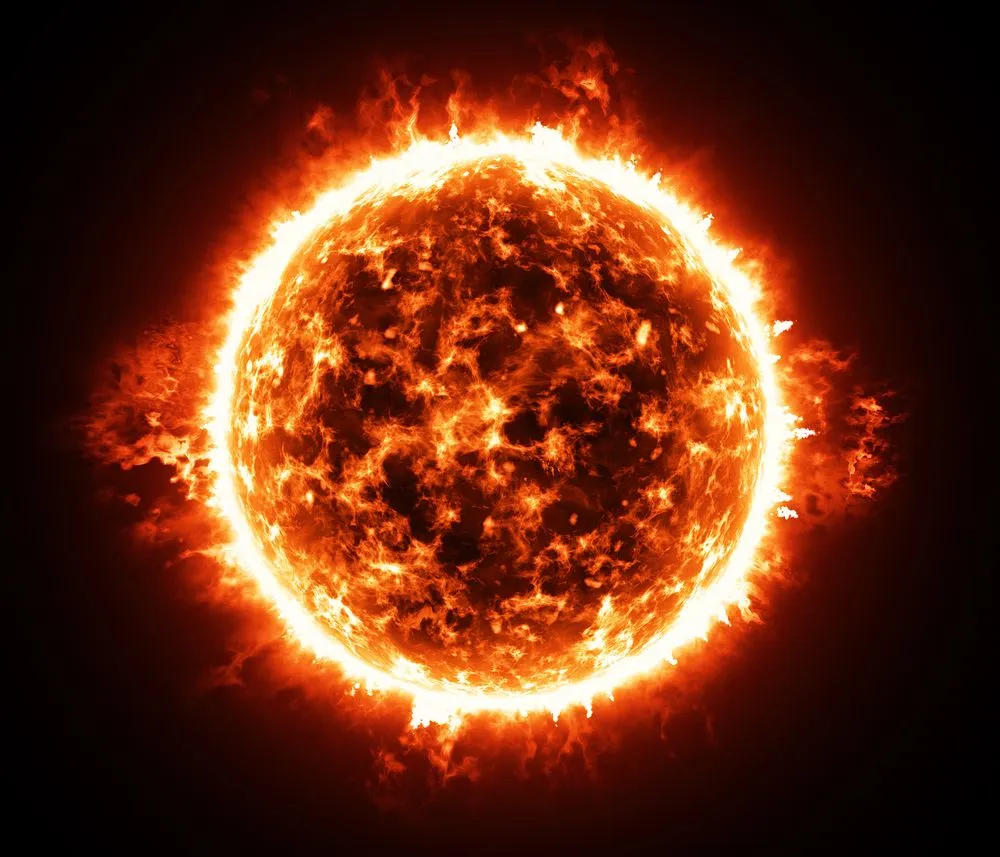
The amount of hydrogen that a star contains in its core is limited. Once it has exhausted all the hydrogen in its core, the nuclear fusion reaction in the core stops. The core starts collapsing inwards and its temperature increases. As the core becomes hotter, the star starts getting rid of its outermost layers. This causes the star to expand and its outer layers to become cool, giving it a reddish glow. The star is now called a red giant.
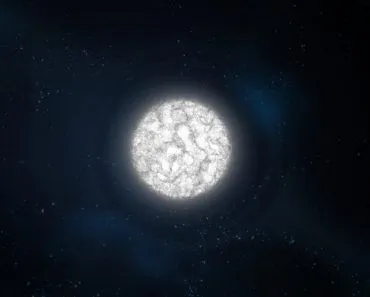
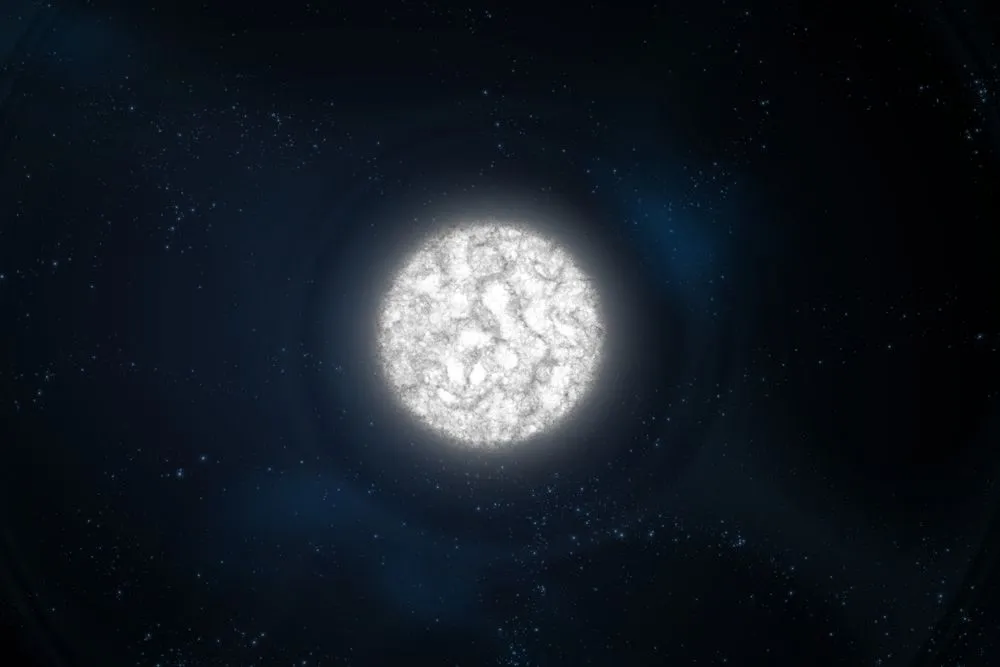
This red giant stage lasts for about 1 billion years. During this phase, the star tries to produce more energy to stay alive through complex nuclear reactions that use up the helium it contains. These reactions can only support the star temporarily. Gradually, these reactions start becoming unstable, so the star starts losing even more of its outer layers. Stars like the Sun continue this process until all the layers are shed and the core is exposed. At this stage, it is now called a white dwarf, and will slowly cool and fade away.
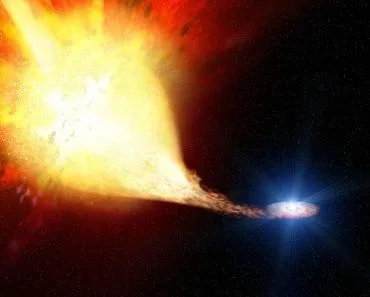
For a much heavier star, born with more than about 8 times the mass of our Sun, the ending is far more violent. Its core collapses inward and then blows up in a gigantic explosion called a supernova. A supernova releases such an enormous amount of energy that it can briefly shine brighter than an entire galaxy for a few weeks. Such an explosion leaves behind either a neutron star or a black hole. (The often-quoted figure of 1.4 solar masses is something different: it is the Chandrasekhar limit, the heaviest a white dwarf itself can be before it collapses.)
How Are Planets Formed?
When a star is formed, there is often a disc of gas, dust and debris around it. Particles of dust in this disc are the building blocks of rocky planets. Due to gravity and other forces, these particles collide with each other. If the collision is mild, these particles stick together. This process continues until rocks with slightly larger masses are formed. Now these rocks can pull even more particles towards them with the help of gravity. Through these processes, small planetary bodies called planetesimals are created. Similar to the smaller particles, these planetesimals collide and fuse to form planets.
If the distance between a planetesimal and its star is large enough, then its core is icy and it develops into a gaseous planet. This is due to the abundance of hydrogen and helium compounds in those regions. As a planetesimal grows, its gravitational pull also increases. As a result, it attracts all nearby material. In the case of a distant planetesimal, the surrounding materials are gases.
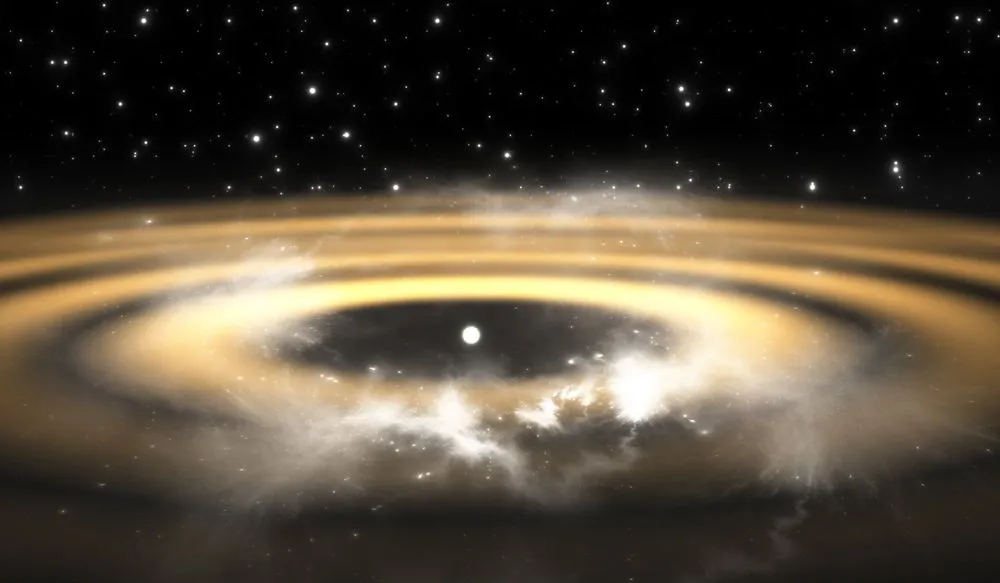
We can gather from this information that when a star dies, the debris it leaves behind is recycled to form new stars and planets. But, the question is, can a star turn into a planet directly?
The honest answer is… not really! A genuine star never gets reclassified as a planet. The closest thing nature offers is a borderline object called a brown dwarf, which begins life looking like a tiny star and ends up looking a lot like a giant planet. And no, the reverse does not happen either: a planet like Jupiter cannot bulk up and switch on as a star, because it would need to be roughly 80 times heavier to ignite hydrogen fusion.
What Are Brown Dwarfs?
Brown dwarfs are often called failed stars. They are objects that are too lightweight to be true stars, but too massive to be planets. They share features of both, and astronomers treat them as their own substellar class. Their masses run from roughly 13 to 80 times the mass of Jupiter. Some sit at the center of their own little system with companions orbiting them, much like a regular star. Unfortunately, their cores never get hot and dense enough to sustain the nuclear fusion of ordinary hydrogen.
Even though a brown dwarf cannot support the fusion of hydrogen, it can support the nuclear fusion of heavy hydrogen (deuterium). Thus, early in its life, it gets energy from this reaction and gives off heat and light, just like a regular star. However, deuterium is found in limited amounts in the universe. As a result, a brown dwarf exhausts its deuterium fuel very quickly. After this, all reactions stop, and the brown dwarf stops the emission of heat and light altogether. It dims and cools down until it looks much like a cold, giant planet. To an outside observer, you can end up with a system of smaller bodies orbiting a dark, planet-like object at the center, even though that central object is still a brown dwarf rather than a true planet.
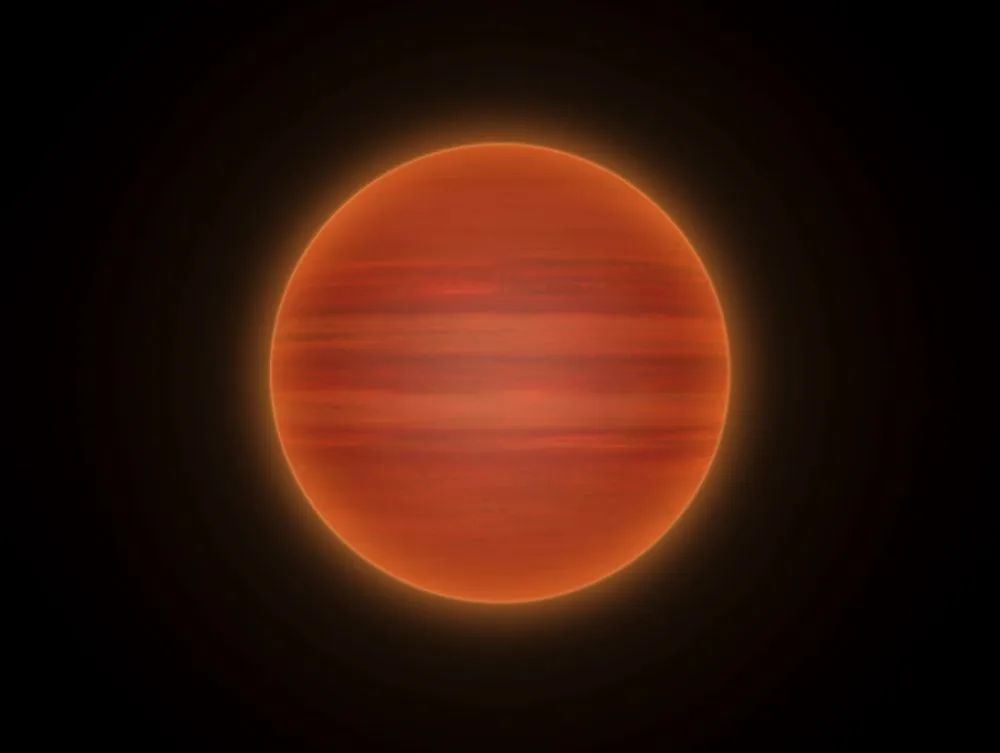
For a long time, only a few thousand brown dwarfs had been cataloged, but infrared sky surveys such as NASA's WISE mission and the citizen-science project Backyard Worlds have pushed that tally steadily higher. The count stayed small for so long because brown dwarfs stop emitting visible light very early on in their life cycle. They are cool and dark for almost their entire existence, which makes them tough to spot with conventional telescopes. Even so, astronomers now estimate the Milky Way alone may hold tens of billions of them, a population rivaling that of ordinary stars. Brown dwarfs were once even floated as a candidate for some of the universe's missing dark matter, though they fall far short of accounting for it.