Table of Contents (click to expand)
Hawking radiation causes death of black holes by reducing their mass. As black holes lose mass, they emit thermal radiation. Eventually, they lose all their mass and cease to exist.
Eventually, everything dies.
Why should black holes, those magnanimous light-sucking voids of darkness, be an exception?
For starters, black holes are not entirely black, as their name implies. Secondly, black holes do die, and when they do, it happens in a blaze of glory!
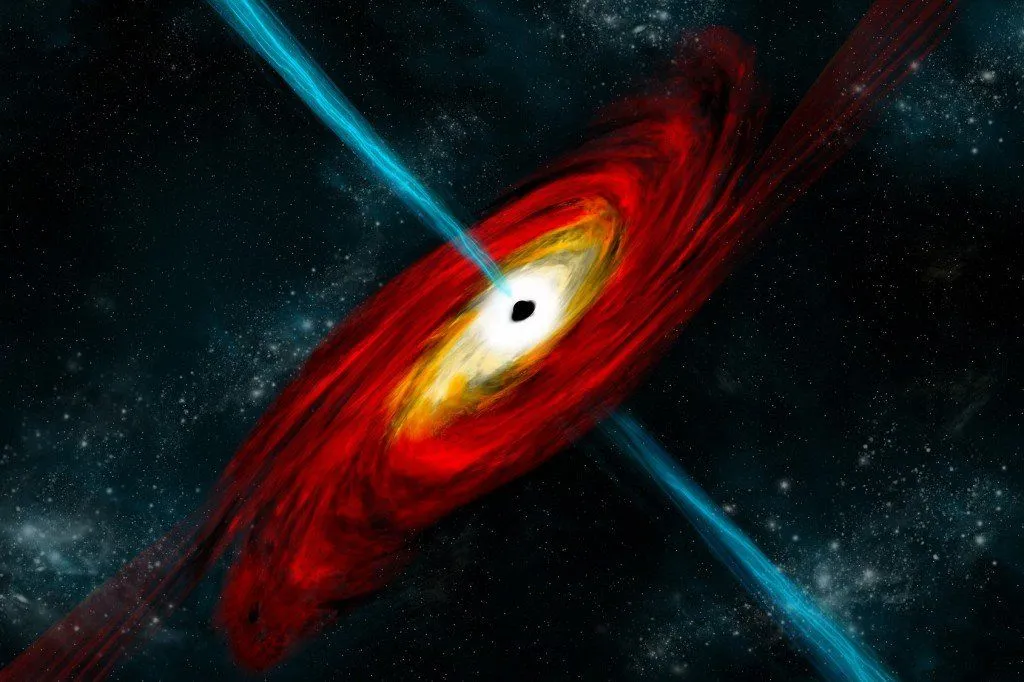
By emitting thermal radiation for millions or billions of years, black holes lose their mass, until the point where there is none left. These thermal radiation emissions are what we call Hawking radiation.
However, wait a second… What?
Isn’t a black hole supposed to suck all nearby matter and electromagnetic radiation? Why has it suddenly begun to emit now? Has it had its fill?
The simple answer is ‘Yes’ if you look at the scenario and apply only classical physics principles. However, on a quantum level, the case is a little different.
What Is Black Body Radiation?
These are objects that absorb all incident radiation and re-radiate them into the surroundings. These radiated emissions are black body radiations. The intensity of the black body radiation is directly proportional to the temperature of the black body. Now, for a body with a greater mass, the overall temperature of the body is lower, owing to the even distribution of heat energy across the entire body.
Hence, it can be said that only a black body of small mass would have temperatures high enough to emit a considerable amount of radiation.
Now, how do black holes relate to black bodies?
As you might know, black holes are sites of immense gravitational attraction. Classically, the gravitational pull of a black hole is so powerful that nothing, not even electromagnetic radiation, can escape from its grip.
Nevertheless, as you move farther away from the black hole, the gravitational effects grow weaker. Here, quantum physics kicks in. Quantum physics deals with effectively massless particles, so the effects of gravity are not prominent enough to consider. These quantum effects allow the black holes to emit black body radiation.
Quantum Theory
Quantum theory was largely ignored in cases that dealt with gravitational forces, but Stephen Hawking eventually came to an important realization. Quantum fluctuations, at the event horizon (the boundary of no return, where the gravitational pull of a massive object becomes so great that escape is impossible) of a black hole, give rise to virtual particles (which exhibit certain properties of normal particles, yet whose existence is limited by the uncertainty principle, discussed later in the article). These virtual particles give rise to the Hawking radiation.
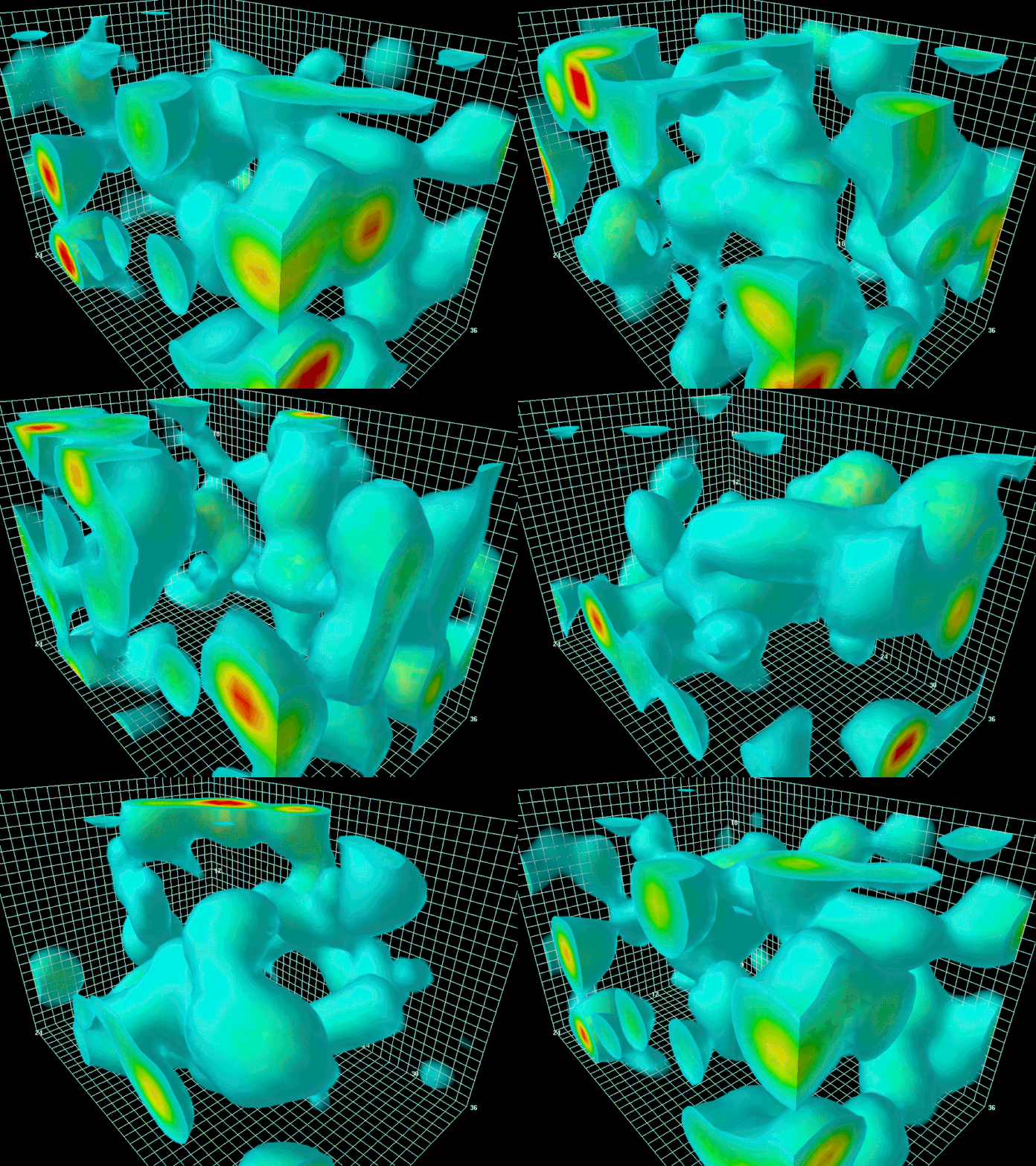
Quantum physics states that empty space is anything but a void.
Now, this might seem hard to digest, but thanks to the uncertainty principle, vacuum space buzzes with particle-antiparticle pairs popping in and out of existence.
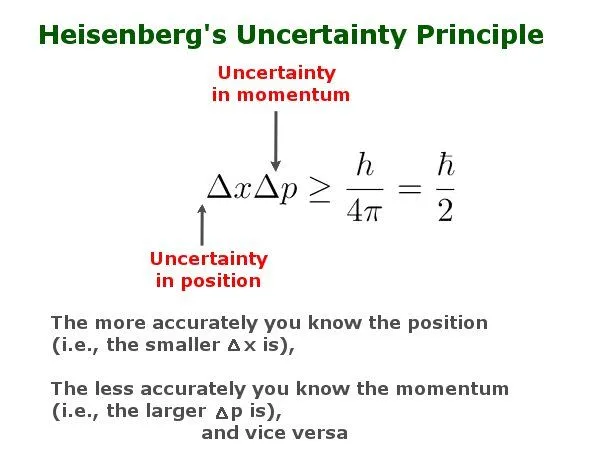
Werner Heisenberg, a German theoretical physicist, presented this breakthrough theory of uncertainty. It stated that, for a particle at the microscopic level, having a negligible mass, its position in space and the momentum it possesses cannot be simultaneously measured to high accuracy. This became the basis of modern quantum physics.
However, how does it help our case?
Well, it certainly does. Or should I say, ‘uncertainly’.
Transitioning From Virtual To Real
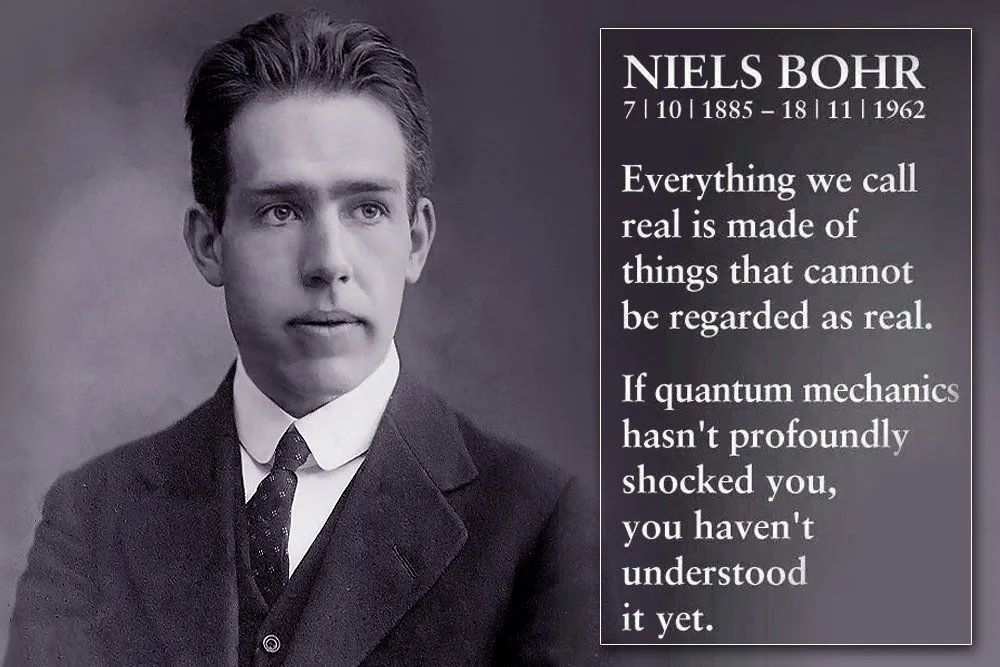
Heisenberg’s Uncertainty Principle proves the existence of “virtual” particles that cannot be observed directly, according to the law itself, and yet, in every aspect of quantum physics, these particles are fully capable of existing.
To maintain stability in space, these virtual particles occur in pairs of positive and negative-energy particles (particles and antiparticles). These particles are created and annihilated in pairs at exponential rates.
But at what point do they become a reality?
It is that instance, when one of the pair particles, being in close proximity to the event horizon, gets sucked in, while the other escapes. This releases the other particle from the fate of being annihilated. It is at this point, when the escaped virtual particle, becomes a real particle. Owing to the conservation of total energy, the partner that was sucked in must carry negative energy, since the escaped particle flies away with positive energy and the pair started from nothing. That negative energy, measured by a distant observer, is the key to the whole story.
Hence, Hawking radiation is nothing but escaped positive particles. We perceive objects when light bounces off their surface, or when they themselves emit radiation. Similarly, black holes glow slightly with Hawking radiations. That is why a black hole is not entirely black, after all.
Evaporation Of A Blackhole
Hopefully, you’re now convinced that black holes aren’t black after all, but how do they decrease in mass?
Well, if the escaped particle made our black hole “less black”, then the negative particle that got sucked in must have something to do with the reduced mass.
The trick is energy, not some exotic “negative mass”. The partner particle that falls in carries negative energy, at least as measured by an observer watching from far away. When it drops past the event horizon, that negative energy is added to the black hole, so the black hole’s total mass-energy goes down. (Remember Einstein’s E = mc2: shed energy and you shed mass.) The escaping partner, meanwhile, flies off as a genuine photon with positive energy. Run this bookkeeping over and over, and the black hole steadily loses mass.
A quick word of caution, since this is where pop-science explanations often go astray. The picture of little particle-antiparticle pairs literally splitting at the horizon is a useful cartoon Hawking himself used, but the real calculation is subtler. There are no tiny billiard balls being yanked apart. What is genuinely real is the steady stream of thermal radiation escaping from just outside the horizon, and the equally real drain of energy from the black hole that feeds it.

Conclusion
Now that you know how black holes can perish, allow me to add one more thing. The verification of Hawking’s prediction is probably impossible.
This is due to the fact that the massive black holes we actually observe have extremely low temperatures. As mentioned earlier, black body radiation depends on the temperature of the body, so for these cold giants the radiation is far too faint to pick out. The black holes that would glow brightly are tiny, low-mass ones, but the only way to make a black hole the ordinary way is to crush an enormous amount of mass into a small volume, which is why small black holes are not expected to form through stellar collapse in the first place. The hypothetical exceptions are primordial black holes, lightweight relics that may have formed in the dense early Universe, and these have never been detected.
Astronomers, on April 10, 2019, unveiled the first ever photo of these star-devouring monsters scattered throughout the Universe and obscured by impenetrable shields of gravity. The image of a dark core encircled by a flame-orange halo of white-hot plasma and gases, looks nowhere similar to any of the artist renderings, to much dismay of the general masses. Because this time, it’s the real deal. This supermassive black hole, now immortalised by a far-flung network of radio telescopes, is 53.5 million lightyears away in a galaxy known as M87. Having a mass of around 6.5 billion times, that of our Sun, this titan can fit our solar system in its cavity.
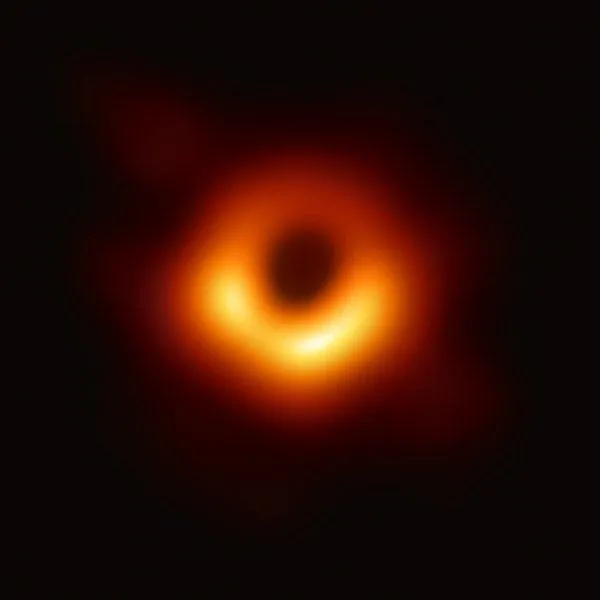
If you feel unhappy with the image captured, you are not alone.
Let me tell you though, to get an image of this resolution, a telescope, the size of our earth is required. That being impractical, scientists used 8 telescopes spread across the globe, to simultaneously observe the radio waves emitted by the black hole. As the earth rotated, the overlapping of captured images helped simulate the outcome, that the earth sized telescope would have rendered. But M87 was not the only black hole they observed. Sagittarius A* (Sgr A*), located around 27,000 light-years away at the center of our own galaxy, was next on the list. Although much closer, this black hole is only about 4 million times as massive as our Sun and far less active, which made it harder to pin down. The wait paid off: on May 12, 2022, the same Event Horizon Telescope collaboration released the first image of Sgr A*, a glowing orange ring around the dark heart of the Milky Way.
Directly observing Hawking radiation, however, remains out of reach. The radiation from a stellar-mass or supermassive black hole is fainter than the cosmic microwave background that fills all of space, so there is simply nothing for our telescopes to detect. There is a deeper reason for patience too: the evaporation is staggeringly slow. A black hole with the mass of our Sun would take roughly 1064 years to evaporate completely, and a supermassive giant like the one in M87 closer to 10100 years, vastly longer than the current age of the Universe (about 13.8 billion years). So while black holes really do die, none has had anywhere near enough time to do so yet. To learn more, check out this video:
References (click to expand)
- Blackbody Radiation - Hyperphysics. Georgia State University
- Hawking Radiation - UCR Math. The University of California, Riverside
- Spindel, R. (2011). Hawking radiation. Scholarpedia. Scholarpedia.
- Signals from empty space: direct detection of vacuum fluctuations. ScienceDaily / University of Konstanz.
- Why Do Black Holes Lose Mass When They Emit Hawking Radiation? National Radio Astronomy Observatory.
- Astronomers Reveal First Image of the Black Hole at the Heart of Our Galaxy. Event Horizon Telescope.