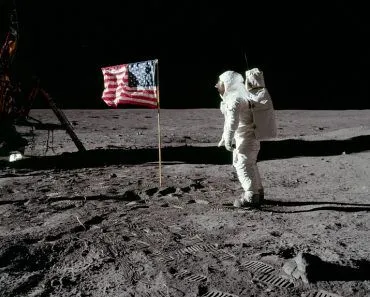
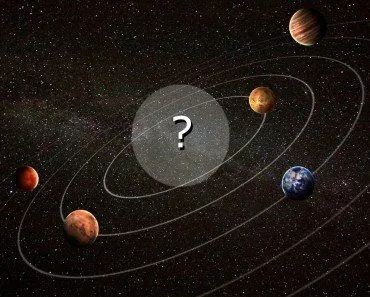
Without a space suit you’d last 10-30 seconds in the vacuum of space, under 2 minutes on Mercury, less than a second on Venus, 80 years on Earth, about 3 minutes on the Moon, roughly 2 minutes on Mars, and less than a second on Jupiter, Saturn, Uranus, Neptune and frigid Pluto. A modern spacesuit can stretch that to hours on airless worlds like the Moon and Mars, but it cannot save you near the Sun or on Venus and the gas giants, where heat or pressure would destroy the suit too.
Let’s begin by stating the obvious…. it’s never a good idea to go into space without some kind of protection.
However, for the sake of argument, what if someone decided to jump into space without a space suit?
You might think that your death would be instantaneous, but that isn’t always the case. There are some places where you could survive…. for a brief time at least. If you’re lucky, you might get yourself a few minutes in some truly out-of-this-world places.
Neil deGrasse Tyson, an astrophysicist working with the American Natural History Museum, analyzed exactly how long it would take you to meet your (unfortunate) demise on the other planets of our solar system if you had no space suit.
Obviously, visiting other planets comes with all sorts of other complications. For example, apart from the threat of suffocation, the low pressure experienced outside of our protective atmosphere would also cause you to suffer from ebullism, whereby the boiling point of all bodily fluids drops to a point below the normal body temperature, thus turning our internal fluids into a reservoir of bubbling liquids. Suffice to say, it wouldn’t be pretty. 
Before worrying about the planets, let’s see if we even stand a chance in the vacuum of space surrounding us on all sides.
The answer is NO. There is no chance of surviving in the scary cosmic void. In science fiction movies, we often see people’s heads exploding or being frozen by the apparent pressure differential or lack of heat, respectively. As long as you don’t try to hold your breath, you could remain conscious for about 10–15 seconds before passing out from oxygen deprivation. Exposure of up to about 30 seconds is unlikely to cause permanent physical damage, though those seconds certainly won’t be comfortable. The main cause of your death will be asphyxiation, not getting compressed by the sudden bursts of pressure or being set ablaze by the extreme galactic temperatures.
What about elsewhere in the solar system?
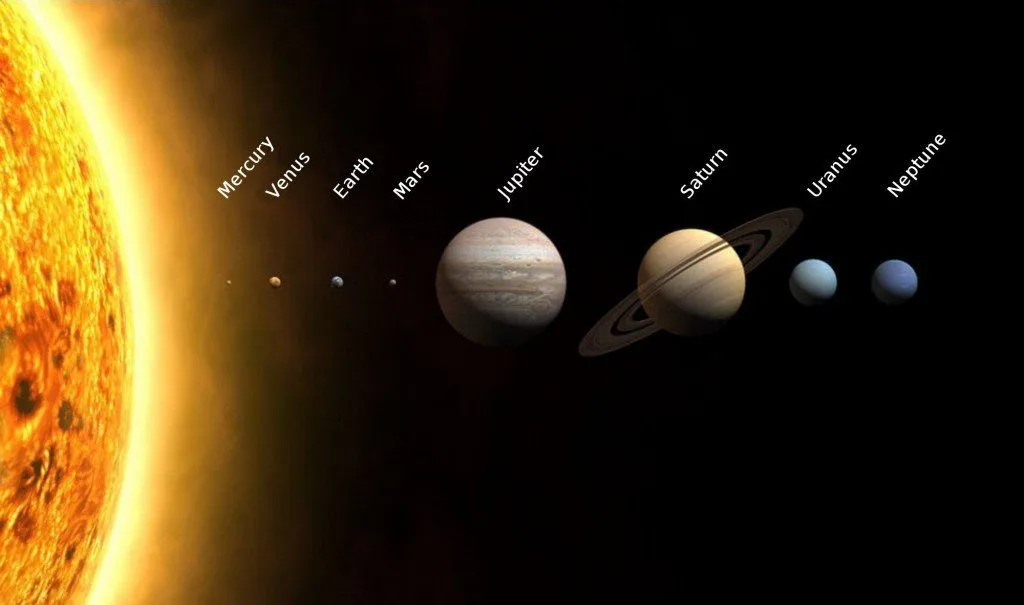
1) The Sun
Humans stand absolutely no chance near the sun. We would get vaporized in less than a second, even with a spacesuit on, let alone without one! To put things into perspective, Earth receives enough solar energy in an hour to satisfy the entire world’s energy requirements. Imagine going anywhere close to that deadly ball of superheated plasma!
2) Mercury
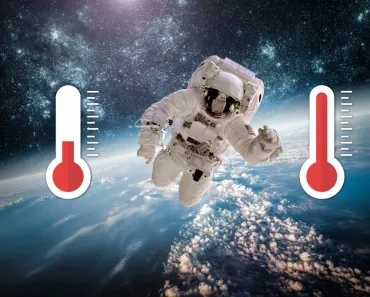
Mercury is a planet of extremes. The side facing the sun is extremely hot, whereas the other side is incredibly cold. The temperatures range from -180°C to 430°C. To top that off, the lack of air will cause serious problems on this planet. Mercury has only a thin exosphere composed of atoms blasted off the surface by solar wind, including sodium, potassium, hydrogen, helium, and oxygen.
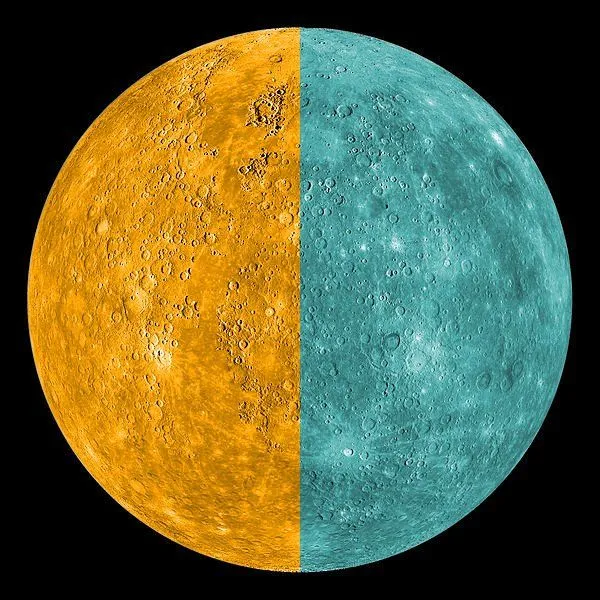
Without your spacesuit, you’d either freeze or instantly turn into a carbon brick, depending on which side of the planet you were standing on. If you were to venture there without any gear, you would survive for less than 2 minutes, provided that you held your breath!
3) Venus
Visiting Venus would be like landing inside of an oven. The temperature on its surface is approximately 465°C (about 870°F). Its surface pressure is also about 92 times greater than that of Earth. A spacesuit designed for Venus would need to be constructed of titanium.
Without a spacesuit, one would get squashed in seconds, if you didn’t get turned into dust before that. The time period of survival is roughly a second, even though the gravity force is equal to that of Earth (the more you know!)
4) Earth
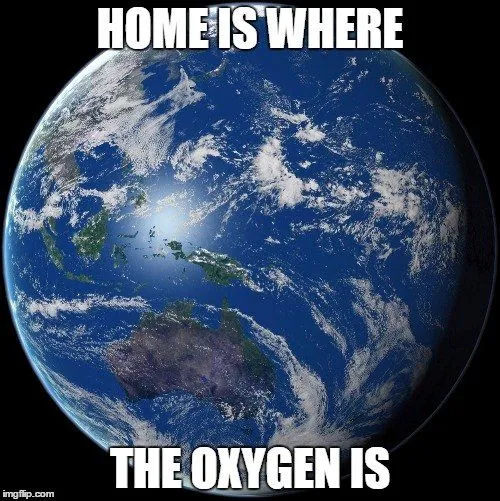
Without holding our breaths, or donning any kind of spacesuit, we can survive for about 80 years… not bad!
5) Moon
Unfortunately, Earth’s moon has uninhabitable temperatures. The temperature ranges from -133°C to 121°C at the equator (with extremes reaching -246°C in polar craters), and the surface pressure is around 3 x 10^-15 bar. The atmosphere is extremely thin, and is composed of helium, neon, argon, and trace amounts of sodium and potassium, which are not commonly found in Earth’s atmosphere.
Ebullism and lack of oxygen would inevitably kill you, so without a suit, a person could survive for about 3 minutes.
6) Mars
Although Mars is often considered a candidate for future human colonization, the surface conditions there are quite treacherous. Mars is full of deserts, it is extremely cold, and has very little atmosphere and only about 38% of Earth’s gravity. The most serious immediate impact would be from the low atmospheric pressure, which is nearly a vacuum compared to Earth.
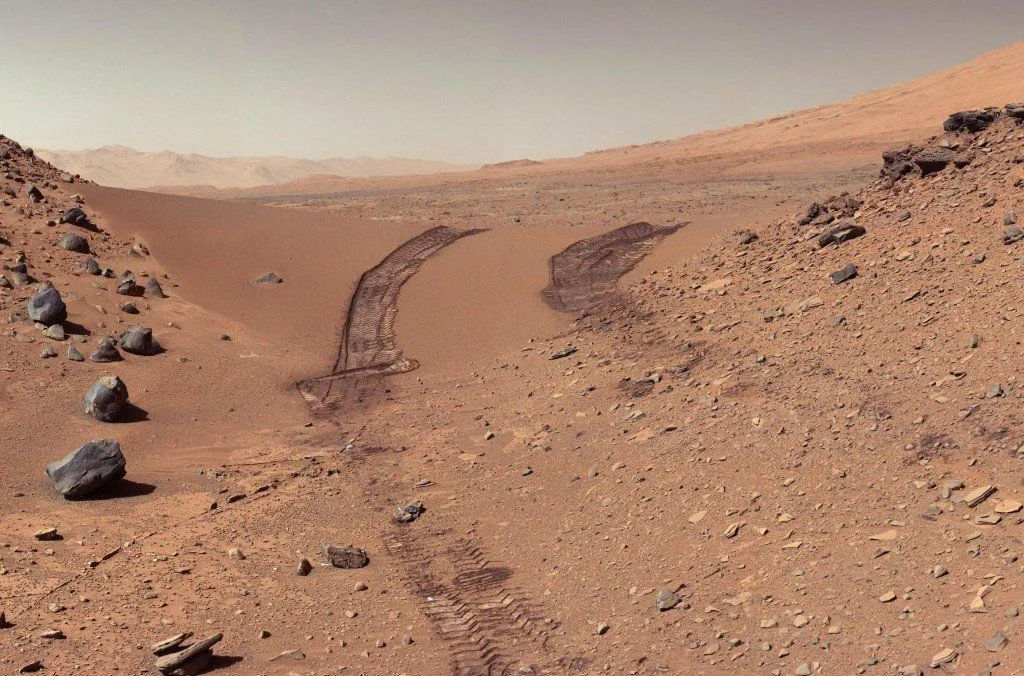
The surface pressure is well below the Armstrong limit for the unprotected human body. The Armstrong limit, often called Armstrong’s line, is the pressure threshold below which water boils at the normal temperature of the human body (37°C). On Earth, this occurs at about 19 km altitude, but on Mars the surface pressure is already well below this limit. Essentially, all your bodily fluids, such as mucus, saliva, and sweat would get evaporated, leaving you completely dried out. It sounds quite “petrifying”.
Therefore, without any protective gear, you would only get about 2 minutes to explore the planet.
7) Jupiter
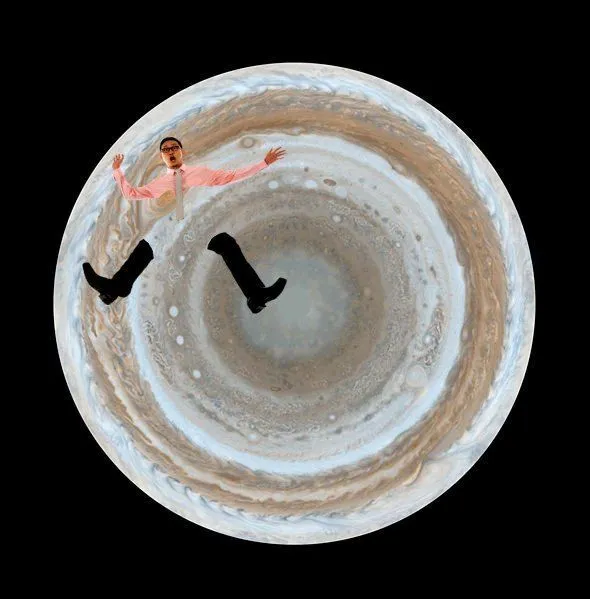
Jupiter is literally just a ball of gas, so there’s nothing to land on. If you were to jump on it, you would just descend into nothingness. It’s just a big ball of nothing (until you reach the core). The gases inside this giant are highly pressurized, so without any gear, you would get crushed instantly, i.e., in less than 1 second.
8) Saturn, Uranus And Neptune
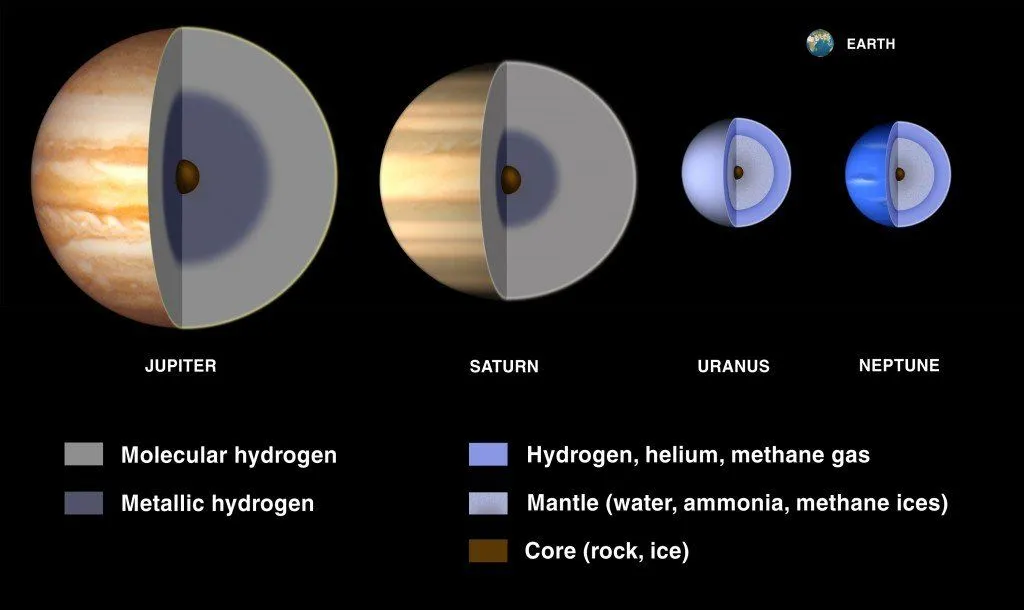
Just like Jupiter, Saturn, Uranus and Neptune are enormous balls of gas. One would get crushed almost instantly if you attempted to stand on these planets in any condition, let alone without a space suit. The rings on Saturn are actually droplets of frozen water or ammonia, so that wouldn’t really make a big difference for your survival.
9) Pluto
Pluto lost its status as a full-fledged planet back in 2006, but it’s still the place everyone asks about, so let’s give the little world its due. The bad news is that it’s the coldest stop on the whole tour. NASA pegs Pluto’s surface at roughly -232°C (about -387°F), which is cold enough to freeze the nitrogen in your own breath solid. On top of that, the atmosphere is almost not there: when New Horizons flew past in 2015, it measured a surface pressure of only about 1 pascal, roughly 1/100,000th of Earth’s sea-level pressure. That’s effectively a vacuum as far as your body is concerned.

That thin shroud is mostly nitrogen, with traces of methane and carbon monoxide boiled off the surface ices. With essentially no pressure to keep your fluids liquid, the same ebullism we talked about earlier would set in within seconds, while the brutal cold would do its work soon after. Without a spacesuit, you’d have roughly the same grim window you’d get in open space: a handful of seconds of consciousness, and well under a couple of minutes total. If you’re curious about how Pluto fell out of the planetary club in the first place, we covered that whole saga in the journey of Pluto.
Would A Space Suit Change Your Odds?
Most people don’t actually want to know how long they’d last without a suit. What they really want to know is whether a suit would save them, and the honest answer is: it depends entirely on where you’re standing. A modern spacewalking suit, NASA’s Extravehicular Mobility Unit (EMU), isn’t magic, but it’s a remarkable little spaceship for one. It holds a breathable pressure of about 4.3 psi (29.6 kPa) around your body and carries enough oxygen, cooling water and battery power for roughly 8.5 hours of work, including about 30 minutes of emergency reserve if the main system fails.

So on a body where the only thing trying to kill you is the lack of air and pressure (the Moon, Mercury’s shaded side, or the near-vacuum of Mars) a suit flips your survival time from a couple of minutes to hours. That is the whole reason astronauts can stroll on the Moon at all. But a suit only buys time against problems it’s built to solve. It does nothing against the conditions that overwhelm it outright: near the Sun you’d be vaporized regardless, and on Venus the 465°C heat and crushing 92-bar pressure, or the immense pressures deep inside Jupiter, Saturn, Uranus and Neptune, would destroy a suit just as readily as bare skin. A suit is brilliant insurance against a vacuum; it’s useless armor against being cooked or crushed. We dug into one fun version of this question in whether a spacesuit could keep you alive on the Moon forever.
What Actually Happens To Your Body In The Vacuum Of Space?
Hollywood loves to show people exploding, freezing solid, or having their eyes pop the instant a helmet comes off. The reality is grimmer in a quieter way. Your skin is tough and stretchy enough to hold you together, so you won’t burst, and space isn’t hot or cold so much as empty, meaning your body actually loses heat slowly. What gets you is the vacuum itself. With no outside pressure, the water in your saliva, your eyes and the lining of your lungs starts to vaporize. That’s ebullism, and it makes your soft tissues puff up uncomfortably, though the blood sealed inside your veins stays liquid because your circulatory system keeps it under pressure.

The real killer is your brain running out of oxygen. You stay usefully conscious for only about 10 to 15 seconds, the time it takes the last oxygen-starved blood to reach your head, before you black out. We actually know this from a near-miss: in December 1966, NASA technician Jim LeBlanc was testing a suit in a vacuum chamber when his pressure hose came loose and the suit dropped to about 0.1 psi. He later recalled feeling the saliva on his tongue start to boil right before he passed out. Quick-thinking colleagues repressurized the chamber within about 87 seconds and he recovered with no lasting harm. The grimmer proof came in 1971, when the three cosmonauts of Soyuz 11 died after their capsule lost pressure during re-entry, the only humans ever to die from exposure in space. For the full play-by-play of what each organ goes through, see our deep dive on what happens to a human body exposed to the vacuum of space.
Long story short…. stay on Earth, people. You probably wouldn’t stand a chance anywhere else. That’s not just because of the extreme conditions, either…. remember, Earth is the only planet that has life-giving chocolate!
References (click to expand)
- Mercury - www.sanandres.esc.edu.ar
- Why can't we live on Venus? - How It Works. howitworksdaily.com
- Can We Survive on the Moon? | DiscoverMagazine.com - discovermagazine.com:80
- What Would It Be Like to Live on Mars? - Space.com. Space.com
- Why can't we live on Jupiter? - | How Things Fly. The Smithsonian Institution
- Living on Other Planets: What Would It Be Like? - Space.com. Space.com
- Pluto Facts. NASA Science.
- Spacewalk Spacesuit Basics. NASA.
- Life Support Systems: Extravehicular Activity (EVA). National Space Society.
- Highest Equivalent Altitude Exposure Survived (Jim LeBlanc). Guinness World Records.
- 50 Years Ago: Remembering the Crew of Soyuz 11. NASA.