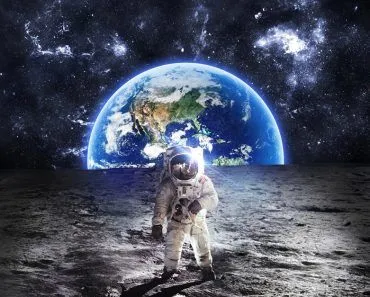
Not forever. A spacesuit only keeps you alive on the moon for as long as its onboard oxygen, water, and power last, which is roughly 8 hours for a single spacewalk. Its backup oxygen pack buys about 30 extra minutes if the main supply fails. Surviving indefinitely would need a continuously resupplied lunar base, not a suit alone.
NASA aims to establish a lasting human presence on the moon, and a next-generation moonwalking spacesuit packed with state-of-the-art life support systems is one of the keys to getting there.
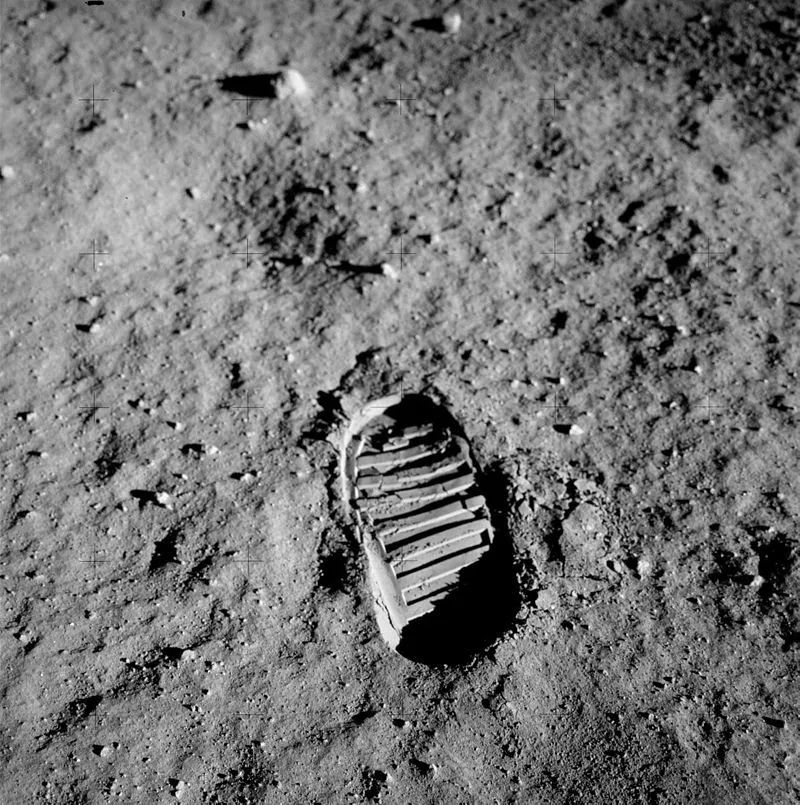
“That’s one small step for man, one giant leap for mankind”, were the words that Neil Armstrong uttered when he set foot on the lunar surface, becoming the first human (Buzz Aldrin was the second) to do so on July 20, 1969 as part of the Apollo 11 mission.
Since then, 12 people have walked on the lunar surface.
Moon missions have mostly involved orbiters and landers, without establishing any permanent human presence. However, NASA's ambitious Artemis program aims to change that, building a lasting presence on the lunar surface for scientific investigations, as well as a staging point for future Mars missions. The effort is already underway: in April 2026, the crewed Artemis II mission flew four astronauts around the moon and back, the first time humans had ventured beyond low Earth orbit since Apollo 17 in 1972.
Having a permanent presence on the lunar surface is quite a different ballgame than just walking around on the moon for a few days and returning to Earth. This requires the development of new launching rockets, new spacesuits, and modular infrastructure to support a long-term human presence.
Let’s dive deeper into the challenges that life on the lunar surface presents.
Challenges Of Staying Alive On The Moon
The human body is like a machine adapted to function optimally on Earth. The following challenges hinder our permanent presence on the moon.
- The moon’s gravity is about 6 times weaker than the Earth’s. This results in a low gravitational force holding the molecules near the surface. As a consequence, the moon lacks an atmosphere comparable to the Earth. This results in a low atmospheric pressure (3.0 x 10⁻¹⁵ bar, almost a vacuum, in comparison to Earth).
- In a vacuum, the boiling points of liquids fall drastically, which means that liquids spontaneously form gases. Thus, the air in our lungs would expand and bodily fluids would expand, pushing against the organ tissues and blood vessels, causing bloating. Exposure for long durations (>90s) have been fatal (Soyuz 11 depressurization incident, 1971).

- A lack of atmosphere also translates to a lack of O2 gas. The previously existing O2 gas in the lungs would quickly diffuse out of the lungs due to a lack of atmospheric pressure. Also, a lack of O2 gas would mean that breathing doesn’t deliver more oxygen to the lungs. Organs stop receiving oxygenated blood, and the person would pass out due to their brain shutting down. Continued O2 deprivation would be fatal.
- Also, the lack of a strong magnetic field and an ozone layer means that the body would be exposed to the harmful ionizing radiation of outer space. This could lead to its own set of problems.
- On the Earth, the human musculoskeletal system is tuned to resist gravity. A lack of gravity would accelerate muscle atrophy (loss) and a weakened skeletal system, somewhat akin to bedridden patients.
- The lunar temperature varies drastically from 120oC (250oF) at the day side to -130oC (-208oF) on the night side.
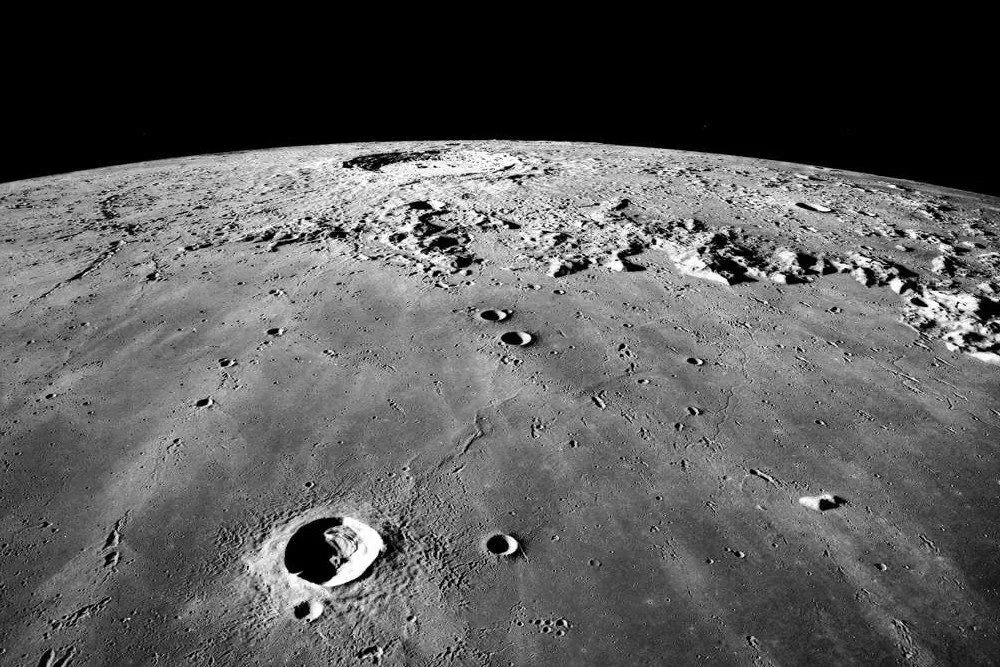
- Millions of meteorite strikes per year, high diurnal temperature variation (difference between day and night temperature) and a lack of air have made the lunar surface an aggregation of very fine grains, akin to glass shards. These shards can damage instruments and spacesuits.
New Technology Developments In Rockets & Spacesuits
A permanent human presence requires huge amounts of payload (food, water, spare parts, oxygen, and other necessary items required for functioning) to be delivered regularly to the moon. This prompted NASA to develop novel technologies, the most prominent being:
- A deep-space transportation system, consisting of the Orion Spacecraft, Space Launching System (SLS) and Exploration Ground System.
- The xEMU spacesuit.
Let’s go deeper into the xEMU spacesuit.
Requirements To Be Fulfilled By A Spacesuit
1) Primary Requirements
These are basic survival requirements.
- To provide a stable, simulated atmospheric pressure comparable to that on Earth.
- To provide breathable O2 and remove CO2 (CO2 scrubbing).
- To maintain an ambient temperature for thermoregulation.
- To provide radiation shielding.
- To provide cosmic dust and space debris shielding.
2) Secondary Requirements
These enable the astronaut to be productive in space.
- To provide unobstructed movement of limbs.
- To remove/recycle bodily waste.
- To provide communication systems.
- Accessories suited to the specific mission. For example, during a spacewalk, repairing and attaching modules to the space station requires specialized tools, some of which must be embedded within or on the suit.
- Pouches for snack bars and liquids.
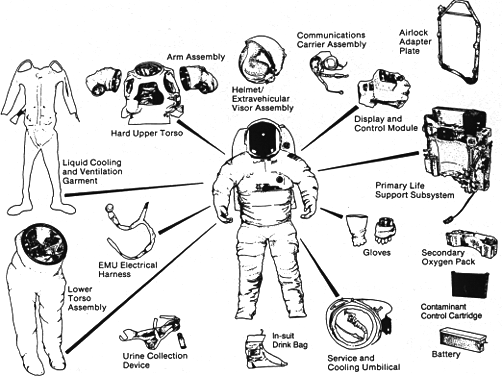
USA: Exploration Extravehicular Mobility Unit (xEMU)
Since the early 1980s, NASA has been using an extravehicular mobility unit (EMU) for extravehicular activity in outer space, first on the Space Shuttle and later on the International Space Station. The Artemis program spurred the development of a new generation suit, the xEMU, designed for walking on the lunar surface rather than floating in microgravity. NASA never finished building the xEMU in-house, though. After funding shortfalls, the COVID-19 disruption, and technical hurdles, the agency handed off suit production to commercial vendors in 2022, picking Axiom Space and Collins Aerospace. The suit now slated to carry astronauts back to the moon is Axiom's AxEMU, which is built directly on the xEMU design described below.
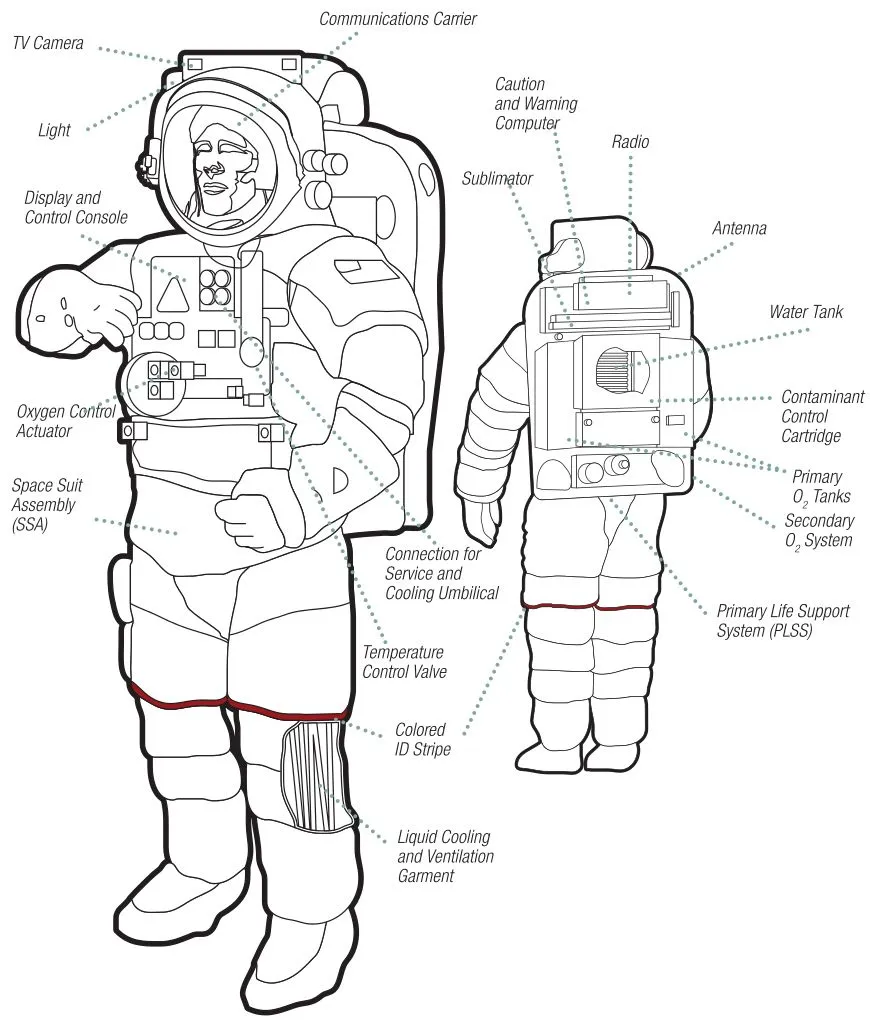
Components Of xEMU
1. Exploration Portable Life Support System (xPLSS)
The xPLSS is the system responsible for maintaining livable conditions inside the suit. It is a backpack that contains the necessary systems for survival. The system contains a primary O2 supply (Primary Oxygen Loop) and a backup O2 supply (Secondary Oxygen Loop). The gas is contained in cylinders (~20,700 kPa or 3,000 psi) attached on the xPLSS backpack.
The following functions are performed by the Primary Loop: Supply O2 gas to the helmet for breathing, supply O2 gas throughout the suit to maintain pressure against the body and maintain ventilation (removal exhaled CO2 from the helmet).
2. Breathing Oxygen Supply
The helmet is a bubble that exerts 20.7 kPa (~3 psi) evenly on the head. The O2 from the cylinder enters the Hard Upper Torso (upper body component of the space suit) via a system of pipes that eventually lead to the rear portion of the helmet. The oxygen flows at a rate of 0.17 m3/min. As the oxygen flows to the front, it also displaces the exhaled CO2 in the helmet towards the collection pipes (CO2 washout).
3. Maintaining A Constant Pressure
The suit consists of a bladder layer that is inflated with O2 gas supplied from xPLSS. The bladder exerts a pressure of 20.7 kPa evenly against the torso.
4. Thermoregulation
This design aspect consists of two parts.
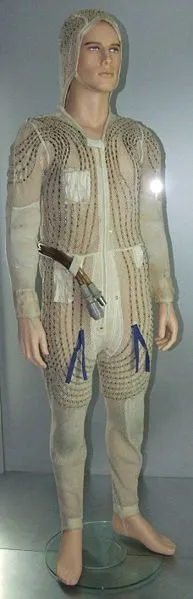
The first is a form-fitting (fit to body shape) Liquid Cooling Garment that receives cold water from the xPLSS and circulates it around the whole suit, maintaining a temperature near 20oC. After the water absorbs heat, it moves back to the Spacesuit Water Membrane Evaporator (SWME) in the xPLSS, which is the second part of this system.
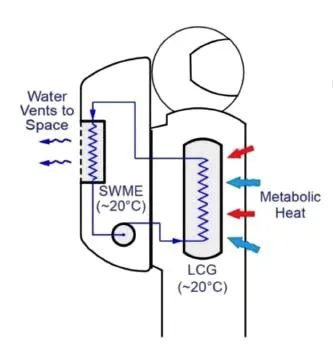
The SWME consists of micropores (~10-6 m). The outer part of the SWME is maintained at a low pressure. When the hot water comes into contact with the pores, it evaporates due to the low pressure on the other side and loses heat. The remaining water passes under the SWME and cools down, where it is then ready to be injected back into the suit.
5. Food And Water Supplies
The Hard Upper Torso (HUT) mentioned previously contains pouches for carrying a food bar and a water bag. The primary supply source is the mothership (the moon base) and astronauts would plan meals before embarking for extravehicular activity.
The first crewed lunar landing of the Artemis era, Artemis III, is now targeted for later this decade, as the spacesuits, landers, and other technologies are still at various developmental stages. The schedule keeps slipping, but considering NASA’s track-record and the collaborative nature of the program, it would be safe to say that a permanent presence on the moon is indeed possible. The ISS (International Space Station) was once thought impossible, but now it orbits above us as one of mankind’s greatest achievements. A lunar base just may be next!
References (click to expand)
- (2020) Jeremy Paul Stroming - DSpace@MIT. dspace.mit.edu
- (2019) Testing of the NASA Exploration Extravehicular Mobility Unit .... The National Aeronautics and Space Administration
- Spacewalk Spacesuit Basics - NASA. The National Aeronautics and Space Administration
- NASA Moon Mission Spacesuit (AxEMU) Nears Milestone - NASA. The National Aeronautics and Space Administration
- NASA's Lunar Exploration Program Overview. The National Aeronautics and Space Administration
- NASA's Coating Technology Could Help Resolve Lunar Dust .... The National Aeronautics and Space Administration
- Axiom Space reveals next-generation spacesuit (AxEMU) for astronauts returning to the lunar surface. Axiom Space
- Space Suit Portable Life Support System Oxygen Regulator History, Development, and Testing Results. The National Aeronautics and Space Administration