Table of Contents (click to expand)
Magnetic fields are invisible because they give off no light of their own, but astronomers know they are there from their effects. Charged particles spiraling along field lines emit radio waves (synchrotron radiation), polarized light twists as it crosses magnetized gas (Faraday rotation), and the Zeeman effect splits a star's spectral lines.
In the cosmos, magnetic fields (although not visible through telescopes) play a crucial role, influencing celestial bodies ranging from stars and planets to entire galaxies. These magnetic forces remain hidden from direct view, which is a challenge for astronomers, since studying them becomes harder the closer you get to a star. To tackle this, astronomers employ clever tools involving charged particles, polarized light, and radio astronomy.
Magnetic fields exist throughout the universe, surrounding objects like planets, stars and galaxies. Unlike stars that shine brightly or galaxies that form beautiful patterns, magnetic fields don’t give off visible light. This scientific puzzle means that astronomers must use practical methods to understand these hidden magnetic forces.
Radio Waves
Radio waves, a form of electromagnetic radiation, share characteristics with visible light, but possess longer wavelengths and lower frequencies. These attributes make radio waves well-suited for navigating the vast expanses of space and penetrating even the densest cosmic clouds.
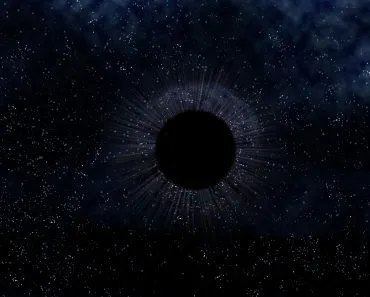
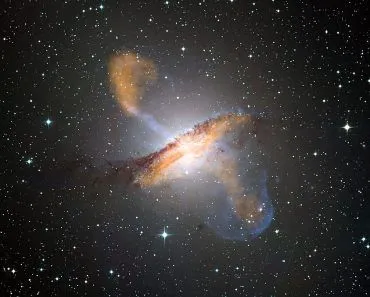
Unlike visible light, which is easily scattered or absorbed by interstellar dust and gas, radio waves sail right through these clouds. The reason is simple: dust grains are far smaller than a radio wavelength, so they barely scatter the radiation, leaving the dusty interstellar medium nearly transparent at radio frequencies. That is how radio astronomers can peer through the dusty disk of our own galaxy, all the way to Sagittarius A*, the supermassive black hole at its center.
Charged Particles And Magnetic Fields
While magnetic fields themselves can’t be seen directly, they have a big impact on how charged particles behave in space. This interaction between magnetic fields and charged particles gives scientists a useful way to study them.
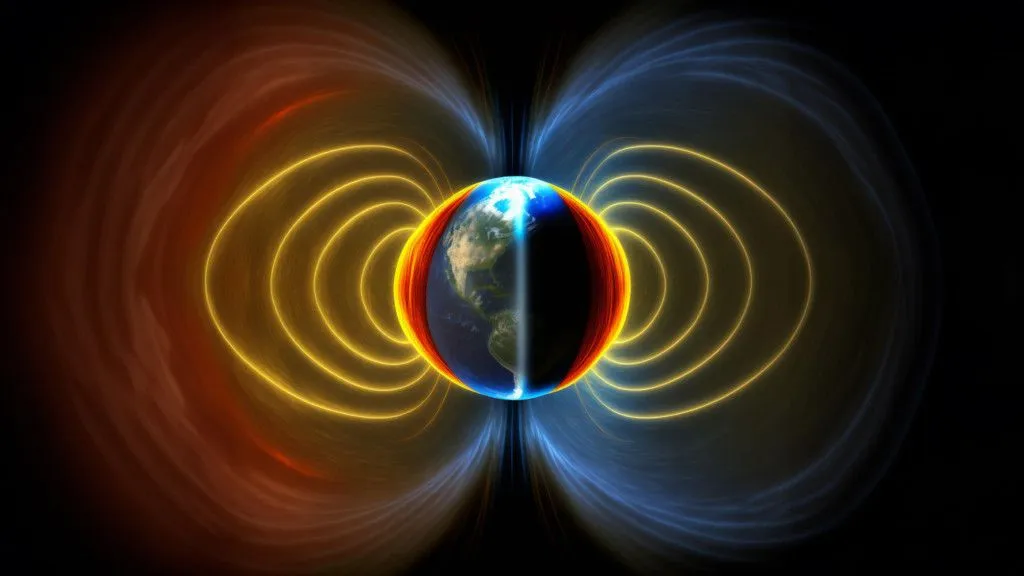
Think about the auroras on Earth, those beautiful lights you can often see in the polar regions. They happen when charged particles from the Sun’s solar wind interact with Earth’s magnetic field. These particles follow the lines of this magnetic field and sometimes crash into gases in our atmosphere. When this happens, they produce visible light (what we see as the aurora). The same particles, spiraling along the field lines high above the atmosphere, also pump out radio waves called auroral kilometric radiation, which we can’t see but spacecraft can detect. Both signals trace out the shape of the magnetic field.
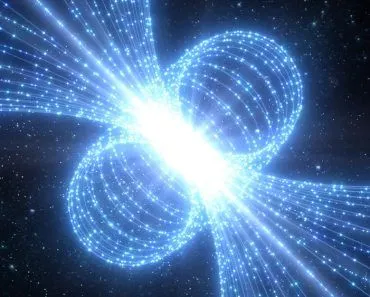
Similarly, magnetic fields around stars and other cosmic objects can capture charged particles, which then emit light as they spiral along these magnetic pathways. This is called synchrotron radiation, and it occurs when electrons moving at nearly the speed of light are bent by a magnetic field. As they corkscrew around the field lines, they emit highly polarized radiation across a broad range of wavelengths, including radio waves. The stronger the field and the faster the electrons, the brighter and higher in frequency the glow, so the signal itself reveals the field’s strength.
Spectroscopy Of Stars Combined With The Zeeman Effect
Spectroscopy is a technique that splits light into its constituent colors, or wavelengths, and it is one of the most fundamental ways to study celestial bodies. Astronomers capture light emitted by a star and pass it through a prism or diffraction grating to generate a spectrum. Within this spectrum, scientists study specific spectral lines that get reshaped by the Zeeman effect when a magnetic field is present. The displacement and splitting of these lines yield critical insights into the magnetic field’s strength and orientation.
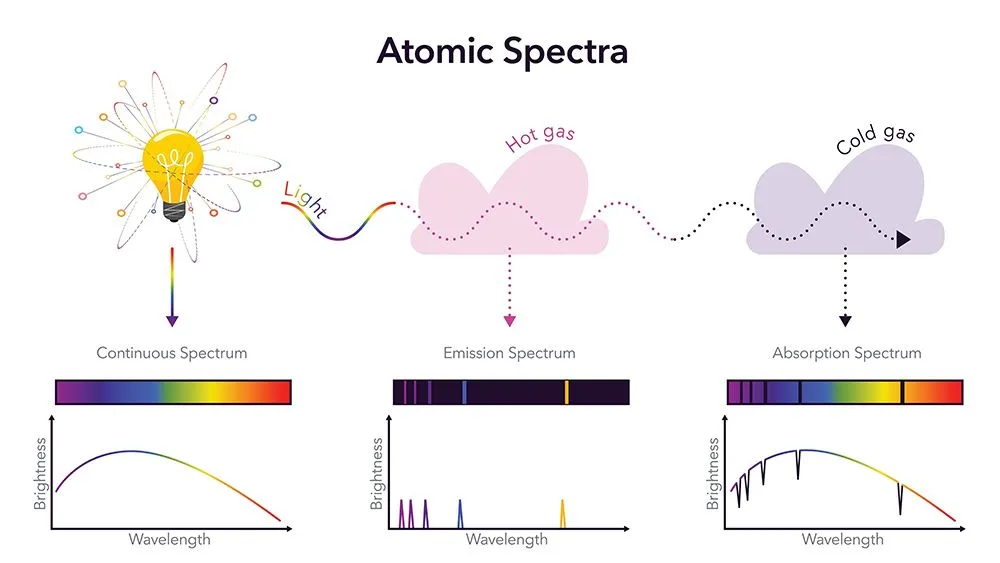
In 1896, Dutch physicist Pieter Zeeman observed that when an atom’s electrons shift between energy levels in the presence of a magnetic field, the spectral lines produced by the atom split into multiple components. This phenomenon was later named the Zeeman effect, and it earned Zeeman a share of the 1902 Nobel Prize in Physics. When applied to the study of stars, it lets astronomers detect the presence of a magnetic field and measure its strength.
Mapping Magnetic Fields In Galaxies
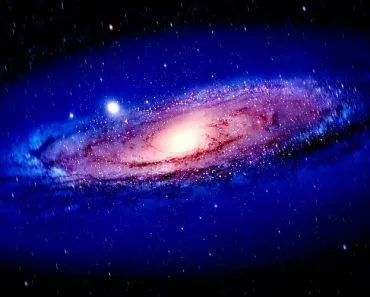
While studying individual stars and black holes is fascinating, radio astronomy lets scientists look at whole galaxies and the vast areas of space they fill. In our Milky Way galaxy, magnetic fields extend into the space between stars, which is full of ionized gas and dust.
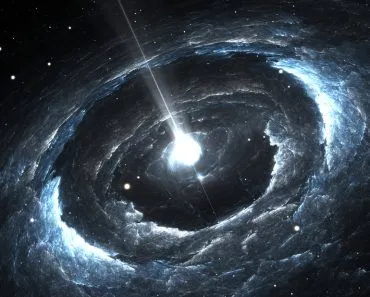
Ionized gas, even though it doesn’t give off much light on its own, has an interesting property when it interacts with polarized light. As polarized light from sources like pulsars passes through ionized gas, its direction changes. We call this Faraday rotation, and how much it changes depends on the frequency of the light and how much ionized gas is present.
By studying the changes in polarized light from pulsars at different frequencies, scientists can make maps that show where the ionized gas is found in our galaxy. Since ionized gas tends to align with magnetic field lines, this helps us map the galactic magnetic field.
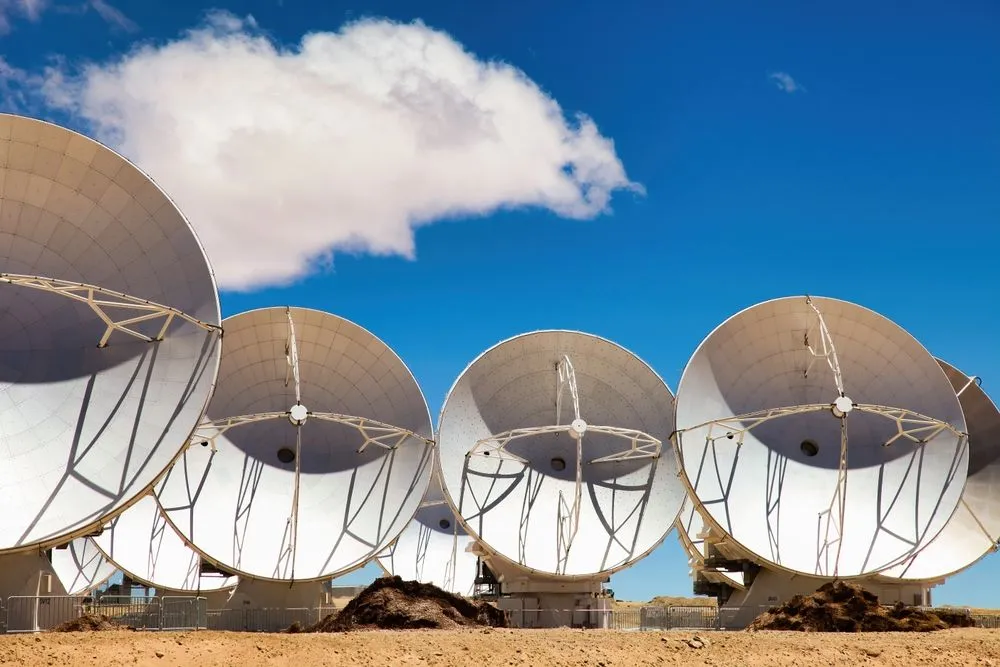
We can even measure the magnetic fields of galaxies billions of light-years away. In 2023, the Atacama Large Millimeter/submillimeter Array (ALMA) measured the magnetic field of a galaxy called 9io9, so far away that its light had already traveled for more than 11 billion years to reach us. We see that galaxy as it was when the universe was only about 2.5 billion years old, yet it already had a fully developed field stretching some 16,000 light-years. This galaxy is rich in dust, and the light its dust emits is polarized, lining up with the orientation of the grains. Since dust grains tend to align with magnetic field lines, astronomers can use this polarization to map the magnetic field of galaxies in even the farthest reaches of the universe.
A Final Word
The things we can’t see in space are the very things that help us understand the universe better. From the mysteries of dark matter and dark energy to the hidden secrets of black holes and the unseen magnetic fields around stars and galaxies, radio astronomy is a powerful tool for uncovering the hidden truths of the universe.
By using charged particles, synchrotron radiation, and polarized light, astronomers are able to explore the complex world of cosmic magnetism. Workhorse instruments like the Karl G. Jansky Very Large Array in New Mexico already map these fields in detail, and the giant Square Kilometre Array, which began collecting its first data in 2024, has cosmic magnetism as one of its flagship goals. They decode the magnetic signals of stars, track how magnetic fields change across galaxies, and look back in time to study ancient ones. As radio astronomy advances, we’re steadily solving the mysteries of magnetic fields around stars, giving us a practical understanding of the universe’s tucked-away treasures.