Table of Contents (click to expand)
Dark matter is an invisible, non-baryonic form of matter that has mass but emits, absorbs, and reflects no light or any other radiation. It makes up roughly 27% of the universe (against about 5% ordinary matter), yet no one knows exactly what it is made of. We infer its existence from its gravitational pull on galaxies.
Of all the branches of science, one of the most popular is astronomy, and for good reason. Who on Earth has ever wondered about twinkling stars, the shining Moon, and the occasional meteors that light up our night sky! Since the invention of the telescope, our curiosity about the world beyond our planet has only ever increased.
With advanced space telescopes like Hubble, we can now peer deep into the cosmos and detect even those ancient galaxies that formed right after the Big Bang. In fact, it was by studying the motion of galaxies that one of the biggest mysteries of the universe was first conceived: dark matter!
Origins Of Dark Matter
In the early 1600s, Johannes Kepler figured out that the further a planet was from the Sun, the slower it revolved around the Sun. Some decades later, Newton came along and laid down the fundamental laws of gravity, which allowed us to measure this incredibly important force.
Using Newton’s law of gravitation, we calculated the Sun’s gravity, which in turn gave us details about the Sun’s mass. With the further advancement in telescopes and other astronomical technology, scientists started applying Newton’s law of gravitation on rotating galaxies to study them too.
Fritz’s Discovery
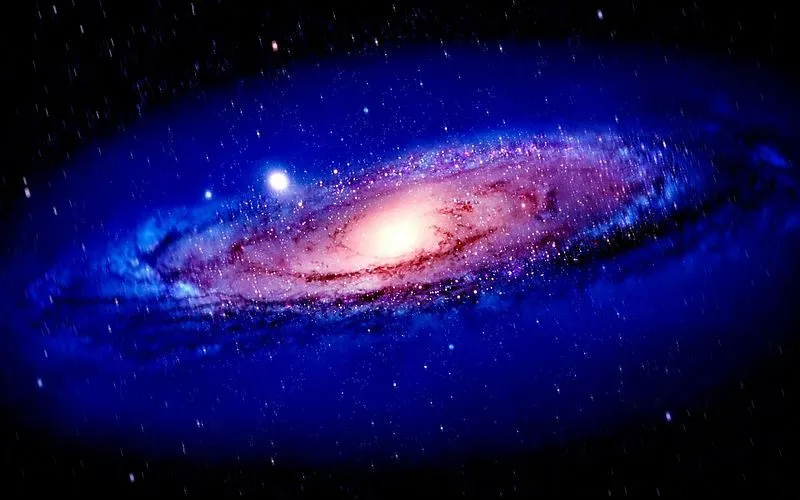
In 1933, a Swiss astronomer named Fritz Zwicky, while studying galaxies in the Coma cluster, noticed that the galaxies were whizzing around far too quickly. In fact, they were so quick that Zwicky felt that they could no longer remain gravitationally bound and should have flown apart long ago.
Crunching the numbers, he surmised that the cluster must contain vastly more mass than its visible galaxies could account for, by a factor of hundreds, to keep itself from flinging apart. He was suspicious of this missing mass, but was sure that it was not visible like ordinary matter. He called it dunkle Materie, German for dark matter. Unsurprisingly, the scientific community at the time wasn’t convinced by Fritz’s idea.

Rubin’s Confirmation
It took another 40 years for his idea to be taken seriously. In the 1970s, another astronomer named Vera Rubin was studying spiral galaxies. Just like Zwicky, she also expected to see that farther out from the center of the galaxy, the gas clouds should be moving slower, according to the laws of gravity laid down by Newton.
What she observed, however, was the opposite. She saw that for many galaxies in the cluster, the further out from the center they were, the faster they were moving. For others, moving further away from the center did not affect their speed, i.e., there was no slow-down in their rate. This observation implied that instead of being concentrated at the center, the mass of the galaxy would have been distributed throughout the disk to justify such speeds. Despite the numbers, there was not enough VISIBLE matter to account for this speed.
The only explanation that could justify this anomaly was some “unseen” matter that had “mass”. This mysterious matter was proposed to be invisible, as it was not detectable like stars, gas, dust, and other known celestial bodies. Furthermore, this matter had to be distributed throughout the disk to get the rotation right. Rubin reckoned that this invisible dark matter had to be roughly five to ten times more massive than all the ordinary, visible matter in a galaxy.
Dark Matter: The Mystery Continues
After Rubin’s observation, many more studies were undertaken to discover the secrets of dark matter. We now know that it is no minor ingredient of the cosmos either. According to precision measurements of the cosmic microwave background by the European Space Agency’s Planck satellite, ordinary matter (everything made of atoms, including you, the stars, and the planets) accounts for only about 5% of the universe. Dark matter makes up roughly 27%, and the remaining 68% is an even stranger entity called dark energy. In other words, the matter we can actually see is the cosmic minority, outweighed about five to one by dark matter.

Ironically, the most notable thing about dark matter is that we barely know anything about it! From our studies, we have confirmed that dark matter has mass, but unlike ordinary matter, it doesn’t emit or absorb heat, light, or any other electromagnetic waves.
The material that we are familiar with in the cosmos is fundamentally made of baryonic matter, i.e., composed of protons, neutrons, and electrons. However, most scientists reckon that it’s unlikely for dark matter to be baryonic, as it does not exhibit properties of ordinary matter. Most likely, dark matter is non-baryonic.
Galaxy rotation curves are not the only reason we are confident dark matter is real. Massive clumps of it bend the path of light passing nearby, a phenomenon called gravitational lensing, which lets astronomers map the invisible mass by how it distorts the galaxies behind it. The most striking case is the Bullet Cluster, where two galaxy clusters smashed together. The hot gas (most of the ordinary matter) was slowed by the collision and lagged behind, while the bulk of the mass, traced by lensing, sailed straight through, exactly as you would expect if it were dark matter that barely interacts with anything. On the largest scale, the faint afterglow of the Big Bang, the cosmic microwave background, carries a pattern of ripples that only fits if about five-sixths of the universe’s matter is the unseen, non-baryonic kind.
Contenders For Dark Matter
The question therefore arises… if it’s non-baryonic, then what is dark matter made of? Several studies are working to answer that question, but thus far, we have had little success. That being said, there are a few hypotheses that attempt to speculate; the first is a hypothesized subatomic particle called the axion.
Axion
An axion is a proposed particle that has its roots in quantum mechanics theory. Its existence hasn’t been directly verified, but the properties of axions are quite similar to what dark matter exhibits. Axions have mass, and they don’t seem to emit much light. As a result, their physical structure will be bereft of luminescence and thus “dark”. Studies are underway to confirm their presence, but axions continue to remain elusive.
WIMP
Another proposed particle that could be the basic building block of dark matter is WIMP. WIMP stands for weakly-interacting massive particles. It is also a hypothesized idea, i.e., it is not empirically verified. This proposed particle has no electrical charge. They are called “weak” because they faintly interact with ordinary matter. Their interaction is so weak that many scientists posit it could pass through us without us knowing or sensing!
Using WIMP, astrophysicists tried to explain a few mysteries of the cosmos, including why the outer edges of some galaxies rotate faster than expected. In fact, in the scientific community, the WIMP idea is preferred to other competing ideas. Although WIMP helps in solving quite a few mysteries in the cosmos, it doesn’t solve all of them.
For example, when scientists tried to apply the WIMP model and make computational simulations of galaxies like the Milky Way, the simulation predicted the presence of a few hundred small satellite galaxies around the outer periphery of the Milky Way. However, when astronomers tried to ascertain this empirically, they could only detect about twenty of them. These anomalies have exposed the weakness in the WIMP theory; astrophysicists across the globe are trying to come up with an improved model of WIMP theory that could eliminate these discrepancies.
Now, let’s look at some of the larger ongoing efforts to uncover the mysteries of dark matter.
In Search Of Dark Matter
LUX-ZEPLIN (LZ)
One of the most famous efforts related to dark matter takes place at the Sanford Underground Research Facility in South Dakota. It began with the Large Underground Xenon experiment, or LUX, which has since been succeeded by a much bigger detector called LUX-ZEPLIN, or LZ. To hunt for WIMPs, these experiments run in a lab roughly 1,480 m (4,850 ft) beneath the Earth’s surface.
It is located underground because an isolated environment is needed to detect dark matter; there cannot be much influence from external noise or the cosmic-ray radiation that constantly bombards Earth’s surface. Thousands of feet of rock acts as a virtual shield, screening the lab from this interference as much as possible.
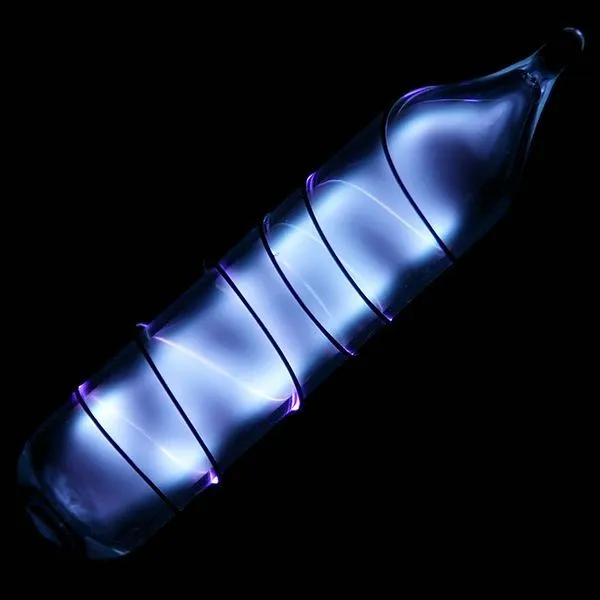
At the heart of LZ is a tank filled with about 7 tonnes of supercooled liquid xenon, all of it surrounded by an instrumented tank of ultra-pure water that mops up stray radiation.
The idea is that if a particle of dark matter passes through and strikes a xenon atom in this exquisitely quiet environment, the sensors lining the tank would register the tiny flash and recoil. Despite this massive effort, we have yet to come across a single WIMP. In December 2025, LZ reported the most sensitive WIMP search ever performed, based on 417 days of data, and still saw nothing, tightening the net without catching the prey. Many scientists posit that because WIMPs are inherently so deceptive and weak, they are almost impossible to detect using sensors made of ordinary matter.
CERN
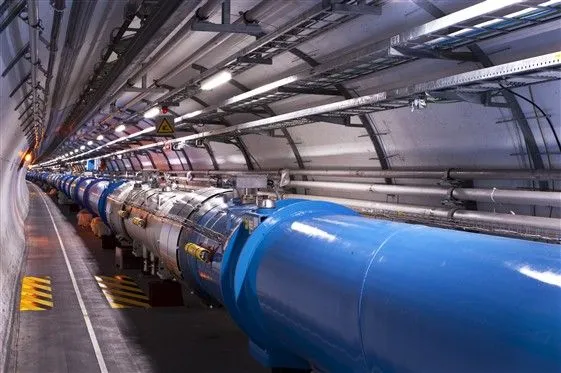
Since we can’t capture/detect these mysterious particles, how about creating them in a lab? At CERN in Switzerland, a project is ongoing to create dark matter by recreating the Big Bang. At CERN, there is a vast network of pipes/tunnels that intersect at some points along miles and miles of track.
The basic idea behind this project is to fire a beam of protons from one direction through one of these long pipes, and then fire another beam of protons from the opposite end. The design of this setup is such that there are four points where these two proton-carrying pipes intersect.
When the beams collide head-on at nearly the speed of light, the energy of the smash-up condenses into a spray of new particles, scattered all around. Researchers comb through this debris hoping that dark matter particles are hiding among them. In short, one of the biggest machines in the world is being used to uncover one of the tiniest particles ever theorized, by briefly recreating the searing conditions of the Big Bang. So far, though, the collisions have produced no confirmed sign of dark matter either.
A Final Word
The hunt is far from over. In July 2023, the European Space Agency launched Euclid, a space telescope built to map the geometry of the dark universe by surveying billions of galaxies and charting how dark matter is distributed across cosmic history. On the ground, the NSF-DOE Vera C. Rubin Observatory in Chile, named after the very astronomer whose rotation curves cemented dark matter, released its first images in June 2025 and will spend the next decade scanning the entire southern sky to weigh dark matter with unprecedented precision.
Not everyone is convinced dark matter exists at all. A minority of physicists favor an alternative called Modified Newtonian Dynamics (MOND), which proposes that gravity itself behaves differently on galactic scales, so no unseen matter is needed. MOND neatly explains many galaxy rotation curves, but it struggles to account for evidence like the Bullet Cluster and the cosmic microwave background, which is why most astronomers still back dark matter.
Despite all our efforts, anything that could be considered a definitive success has been very limited, and dark matter has never been detected directly. However, if we can manage to solve this puzzle, it would fundamentally transform physics as we know it, the same way Isaac Newton’s laws of motion or Albert Einstein’s theories of relativity changed everything. Perhaps then we would have a better answer to certain fundamental questions, including what kind of universe are we living in?!
References (click to expand)
- Dark Matter. NASA Science.
- Rubin, V. C. (2000). One Hundred Years of Rotating Galaxies. Publications of the Astronomical Society of the Pacific.
- Connecting Quarks with the Cosmos (2003). National Academies Press.
- Dark matter. CERN.
- LZ Sets a World’s Best in the Hunt for Galactic Dark Matter. Berkeley Lab News Center.
- 1E 0657-56: NASA Finds Direct Proof of Dark Matter (Bullet Cluster). Chandra X-ray Observatory.
- Euclid. European Space Agency.
- First Imagery From NSF-DOE Vera C. Rubin Observatory.