Table of Contents (click to expand)
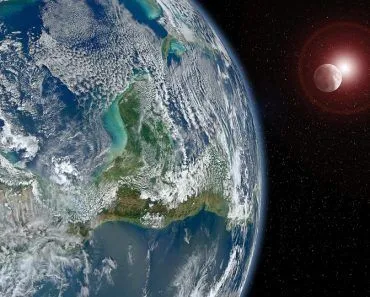
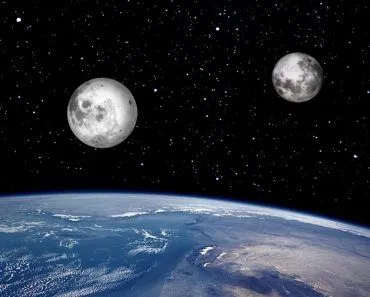
The moon looks unusually big and bright during a supermoon, which happens when a full moon coincides with perigee, the moon's closest point to Earth (about 363,300 km, or 226,000 mi). At perigee, the full moon can appear up to 14% larger and 30% brighter than a distant full moon. Supermoons occur a few times a year.
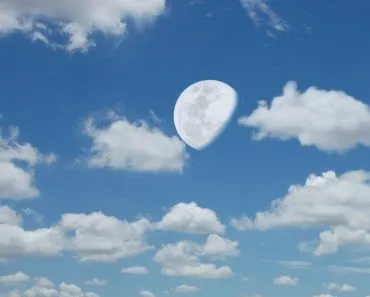
If you have ever robbed a moment of respite by looking up at the taciturn night sky, you may have found yourself gaping at the moon in all its glory, abnormally larger and brighter than you remembered it.
No, you weren’t hallucinating. On certain nights the moon really is much larger and brighter, and it looks unbelievably splendid. This occurrence is popularly dubbed a supermoon, and a single supermoon often lingers for a couple of nights running because the moon stays close to full for more than a day.
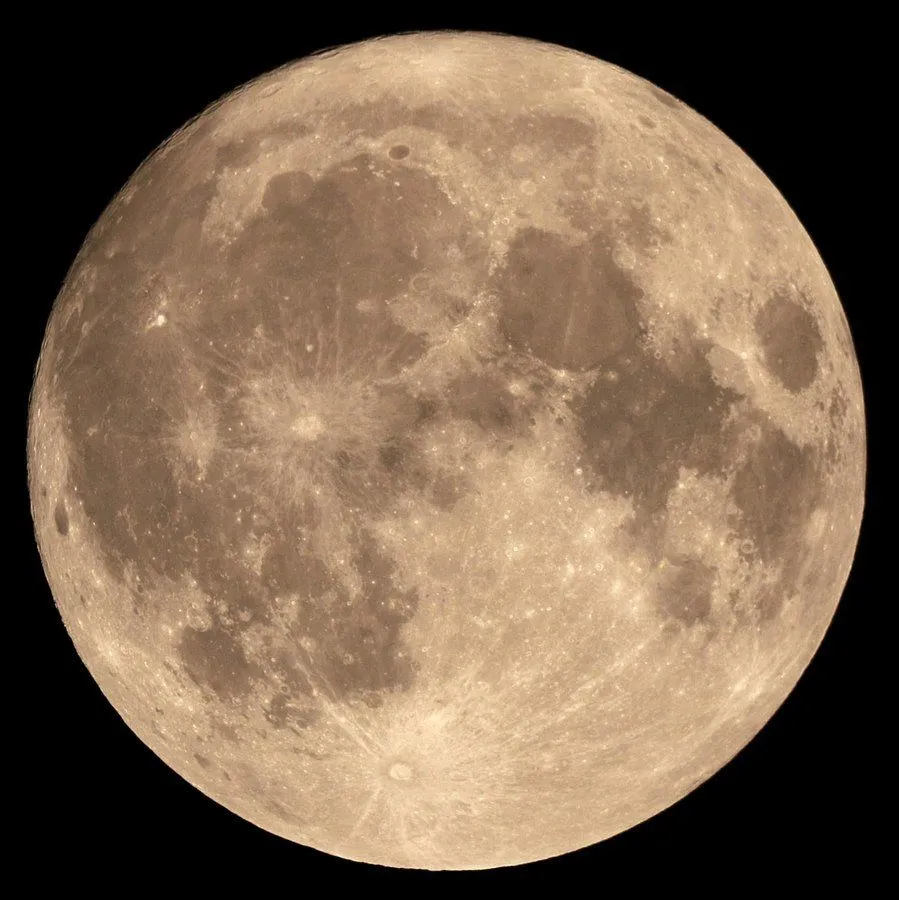
But why and when do supermoons occur?
When Does A Supermoon Occur?
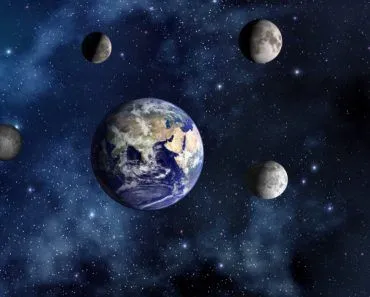
The moon’s orbit around Earth is not a perfect circle. It is similar to a point tracing the perimeter of a coronally cut egg around its yolk. The reason behind this stretched, elliptical orbit is gravity itself: the moon settles into an ellipse under Earth’s pull (as Kepler’s laws predict), and that ellipse is constantly tugged out of shape by the gravity of the sun and, to a lesser degree, the other planets.
This stretched shape causes the moon to pursue a certain path, such that at one point it is observed to be farthest from the Earth, formally known as apogee (about 405,500 km, or 251,000 mi), and at one point nearest to it, known as perigee (about 363,300 km, or 226,000 mi). The average distance between the moon and the Earth is roughly 384,400 km (238,900 mi). The moon sweeps past both of these points once every lunar month, in the course of its roughly 27-day orbit.
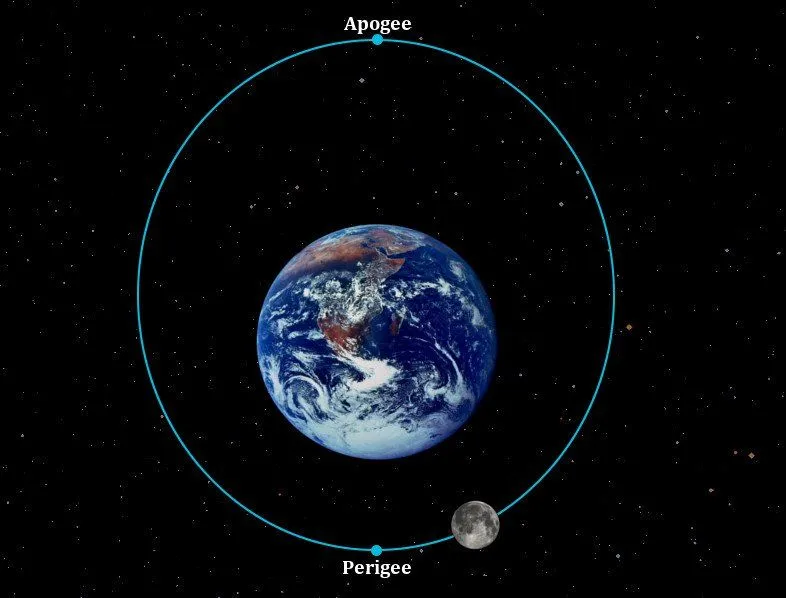
However, a supermoon cannot merely occur if only the moon is at its perigee. The other necessary condition is the occurrence of a full moon. The full moon occurs every 29.5 days when the sun fully illuminates our celestial neighbor. A supermoon is the embodiment of the coincidence when a full moon occurs when it is simultaneously closest to us.
At this precise coinciding point, the full moon can look up to 14% larger and 30% brighter than a full moon at apogee (its farthest, faintest point of the year). However, this is a very subtle difference and would go unnoticed unless you are a meticulous moon watcher. Some people report the supermoon to be conspicuously large during its occurrence, and it has become a popular celestial occurrence to watch around the world.
That size boost is real and it holds wherever the moon sits in the sky, but there is a second, entirely separate effect that often gets tangled up with it: the Moon illusion. A full moon near the horizon looks dramatically bigger than the same moon riding high overhead, even though it is not. If anything, the horizon moon is fractionally farther away (and so very slightly smaller) than the overhead one. Astronomers have never fully pinned down why our brains perceive objects on the horizon as much bigger, but it is a trick of perception, not a change in the moon itself. A supermoon and the Moon illusion can stack, which is why a supermoon rising over rooftops can look truly enormous.
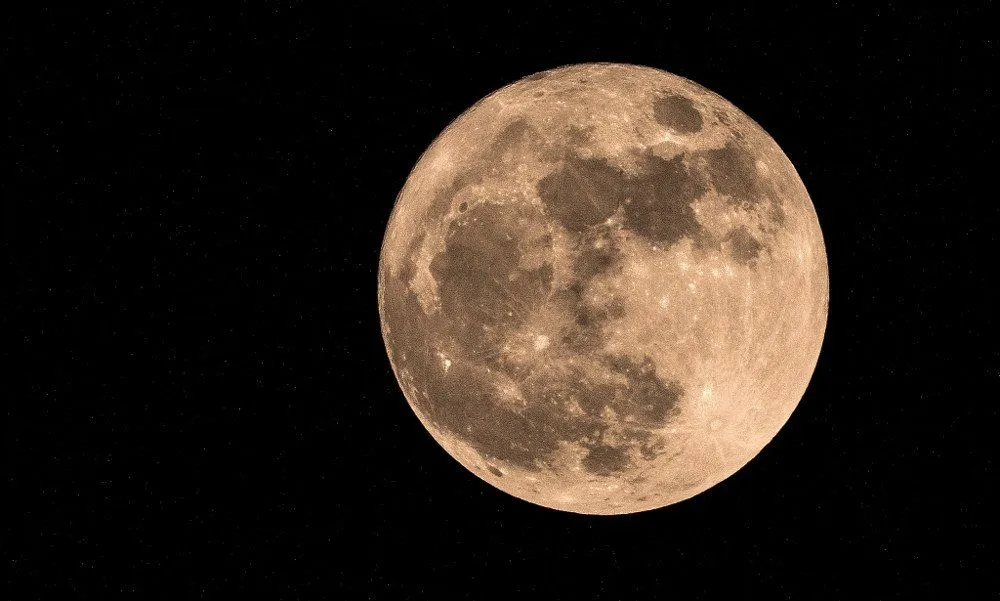
Surprisingly, the term supermoon was coined by an astrologer, Richard Nolle, back in 1979. Scientifically, such an occurrence is known as a perigee full moon. He defined it (somewhat loosely) as a full or new moon that falls when the moon is within 90% of its closest approach to Earth, and that 90% threshold is still the rule of thumb most almanacs and astronomers reach for today.
According to this description, every perigee full moon is a supermoon, but technically, not every supermoon is a perigee full moon. The term’s usage is still derided by astronomers due to its misleading nature, but despite their contempt, the term has acquired immense popularity due to its catchy name (it is no doubt that supermoon sounds cooler than perigee full moon).
A supermoon does nudge the oceans a little harder than usual. When the moon is full and near perigee, its pull lines up with the sun’s to raise slightly larger-than-normal high tides, known as perigean spring tides. The effect is modest, on the order of a few centimeters to perhaps a foot (30 cm) above an ordinary spring tide, so a supermoon by itself causes no floods or disasters. It is only when a perigean spring tide coincides with a storm surge that coastal flooding becomes a real concern.
How Often Does It Occur And When Will It Next Occur?
A full moon lands close to perigee roughly once every 14 lunar months, a period of about 413 days (a little over a year and six weeks). That neat rhythm exists because 14 lunar (synodic) months almost exactly equal 15 anomalistic months, the time the moon takes to swing from one perigee to the next. Because the cycle is so regular, astronomers can predict supermoons years into the future and trace them back into the past.
Even though the term was coined back in 1979, public interest in supermoons spiked in November 2016, when the full moon swung closer to Earth than it had at any time since January 26, 1948. At that moment the centers of the moon and Earth were just 356,509 km (221,524 mi) apart, and the moon will not come quite that close again until 2034.

Supermoons still arrive in clusters of two or three in a row, because the moon stays near perigee for several consecutive full moons before drifting away again. The year 2025, for instance, closed with three supermoons; the brightest of them, the Beaver Moon of November 5, 2025, came within about 356,980 km (221,818 mi), making it the closest full moon since February 2019. The next batch falls in 2026, with supermoons on January 3, November 24 and December 24. The Christmas Eve supermoon of December 24, 2026 (about 356,740 km, or 221,667 mi) will be the closest and most impressive of that trio.
Stargazers are in for an even bigger treat further down the line. On November 25, 2034, the moon will close to within 356,445 km (221,484 mi), the nearest a full moon comes to Earth in the entire 21st century up to that point. The record for the century, however, belongs to December 6, 2052, when the full moon will sit a hair closer still at 356,425 km (221,472 mi).
An even rarer coincidence is the occurrence of a supermoon with a lunar eclipse. This remarkable event is known as a perigee lunar eclipse. It is the combination of three conditions precariously stacked one upon the other: a moon at its perigee, in its full phase, while it slips directly through the shadow that Earth casts into space on the side facing away from the sun. The vicious red-brown radiated by the moon during a lunar eclipse is intensified during a perigee lunar eclipse.
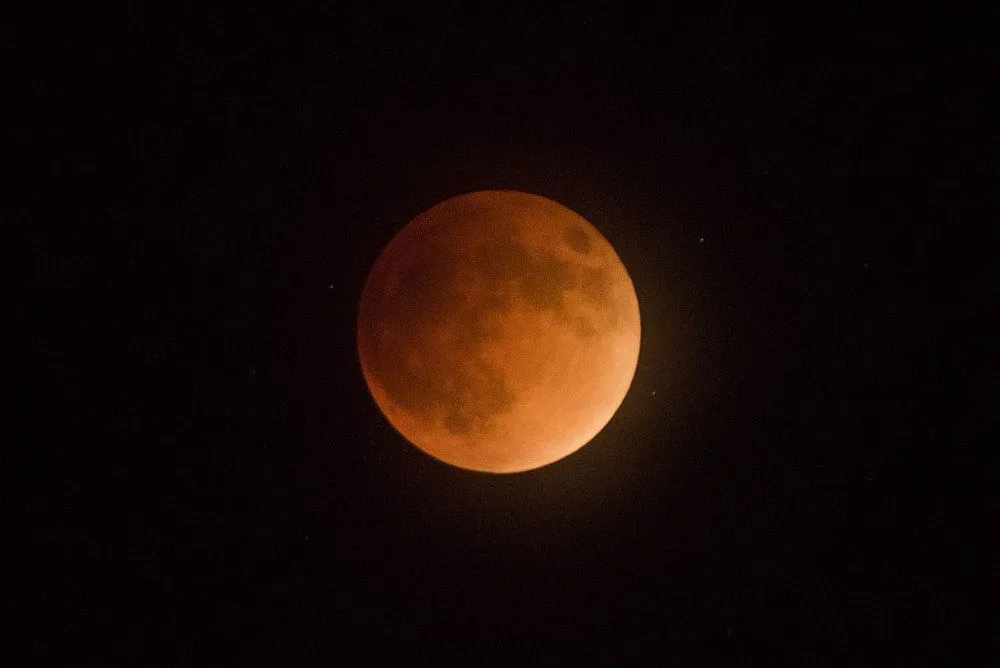
A widely watched example was the "super flower blood moon" of May 26, 2021, a total lunar eclipse that fell barely half a day after the moon reached perigee. Lunar eclipses themselves repeat in a rhythm called a saros, a cycle of 18 years, 11 days and 8 hours after which the sun, Earth and moon return to nearly the same alignment, so a near-identical eclipse comes around again.