Table of Contents (click to expand)
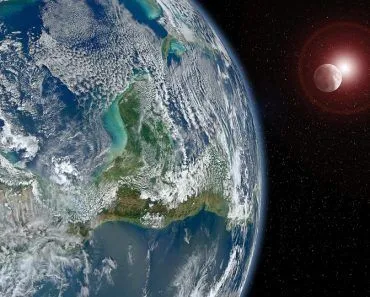
Earth has only one true natural Moon, but it shares its orbit with several small asteroids that act like temporary, second moons. These quasi-satellites, including 3753 Cruithne and Kamoʻoalewa (2016 HO3), are gravitationally bound to the Sun, not Earth, so astronomers don’t count them as true natural satellites.
Pick a person out at random and ask him/her a basic question… How many moons does our planet have? In most cases, people will give the obvious answer: Earth has only one moon. And yes, you’d be correct most of the time, but not all the time.
Let me explain.
What Is Cruithne, And Is It Really Earth’s Second Moon?
The asteroid Cruithne (officially 3753 Cruithne) was actually picked up much earlier, on October 10, 1986, by Duncan Waldron at Australia’s Siding Spring Observatory. What nobody realized at the time was just how cozy its relationship with Earth was. Cruithne scuttles around the inner solar system in what’s called a horseshoe orbit. Its motion is “choreographed” in such a way that it remains stable and avoids colliding with our planet. That weird co-orbital dance was finally revealed in 1997, in a paper by Paul Wiegert, Kim Innanen and Seppo Mikkola published in the British-based science journal Nature.
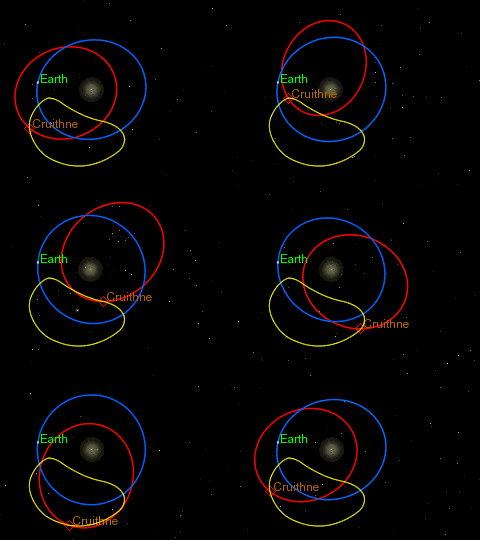
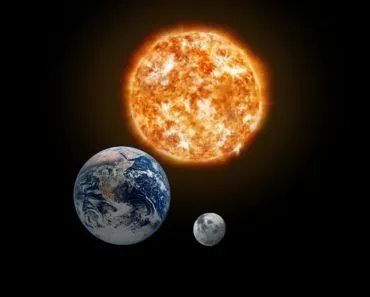
Here’s the catch, though: Cruithne doesn’t really orbit Earth at all. It actually loops around the Sun, once every 364 days or so, locked in a 1:1 resonance with our planet. What looks like a single horseshoe-shaped orbit around Earth, traced out in Earth’s rotating frame of reference, takes a leisurely 770 years to complete. The reason is that this mini-moon is far more gravitationally bound to the Sun than to Earth. Our own Moon, by contrast, is firmly tied to Earth: it orbits us once every 27 days and tags along with us around the Sun once every 365 days. So technically, Cruithne is a moon of the Sun. As tempting as the headline is, we can’t really justify Cruithne as being Earth’s second moon.
What Is 2016 HO3, NASA’s Mini-Moon?
However, don’t be too disappointed just yet… there’s more. It turns out that Earth really does have another rocky companion looping along beside it. Back in 2016, NASA announced the presence of a new mini-moon, catalogued as 2016 HO3 and later given the official Hawaiian name Kamoʻoalewa, meaning roughly “the oscillating fragment.”
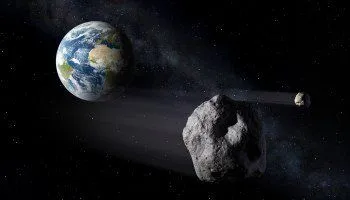
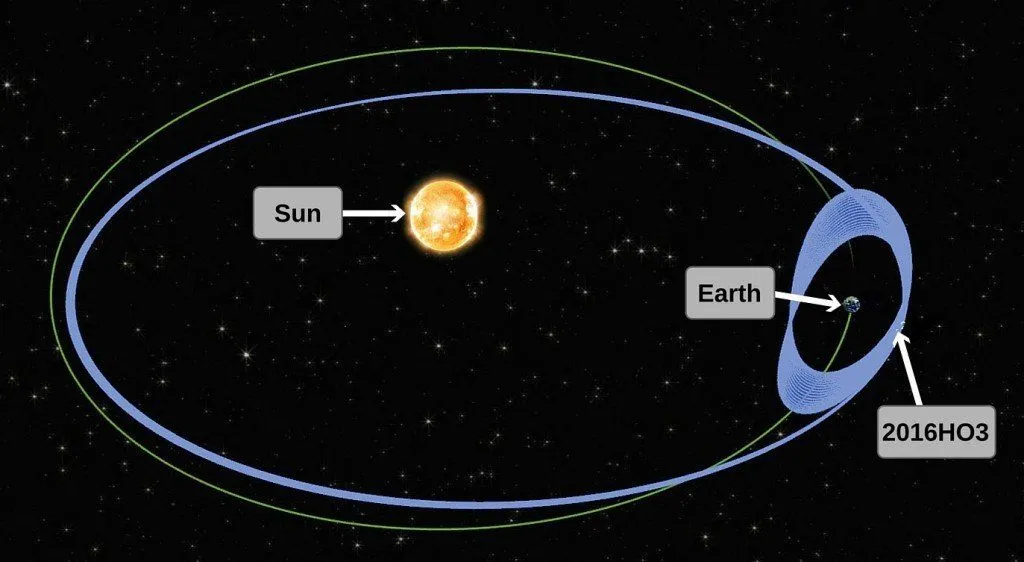
This second “moon” is actually a tiny asteroid, somewhere between 40 and 100 meters (about 130 to 330 feet) across, that is currently locked into “a little dance” with Earth. It has been at it for well over a century and, according to NASA, will keep dancing alongside us for several more centuries to come. Its orbit is tilted and slightly elliptical, so it bobs up and down across Earth’s orbital plane while never coming closer than about 38 times the Earth–Moon distance, or wandering farther than about 100 times that distance. NASA scientists say Kamoʻoalewa cannot be considered a true natural satellite; the more accurate label is quasi-satellite, or near-Earth companion.
What this really means is that 2016 HO3 doesn’t loop around Earth in a tidy ellipse like the Moon we know and love, or like the artificial satellites we boost into orbit. It was first spotted on April 27, 2016 by the Pan-STARRS1 (Panoramic Survey Telescope and Rapid Response System) telescope on Haleakalā, Hawaii.
Why 2016 HO3 Is A Quasi-Satellite, Not A True Moon
According to Dr Paul Chodas, the manager of NASA’s Center for Near-Earth Object Studies, 2016 HO3 is the most stable example of a quasi-satellite near Earth’s orbit. Its position relative to Earth drifts a little ahead or behind from year to year, but when it drifts too far forward or backward, Earth’s gravity is just strong enough to reverse the drift and rein the asteroid back in. As a result, it never wanders farther away than roughly 100 times the distance of the Moon, and it never sneaks any closer than about 38 times the lunar distance.
Kamoʻoalewa’s orbit is tilted by about 8° to the ecliptic, and it circles the Sun in roughly 366 days, just a hair longer than Earth’s 365.24-day year. That tiny mismatch is what produces the wobbling, looping path we see from our perspective; essentially, this small asteroid is caught in a slow-motion dance with Earth, and we only realized it was there in 2016.
NASA has assured the world that 2016 HO3 isn’t any kind of threat to Earth or the Moon, and models suggest it will stay locked in this quasi-satellite pattern for hundreds of thousands of years before drifting away. So, technically, it’s a moon and not a moon at the same time.
There’s an even stranger twist. In 2021, astronomers using the Large Binocular Telescope in Arizona found that Kamoʻoalewa reflects sunlight in a way that looks almost identical to weathered lunar rocks brought back by the Apollo missions, hinting that this tiny rock might actually be a chunk of our own Moon, blasted off the lunar surface long ago by an asteroid impact. One leading candidate for that impact is the relatively young Giordano Bruno crater on the Moon’s far side.
That lunar-fragment idea is so intriguing that China’s space agency built an entire mission around testing it. The Tianwen-2 spacecraft launched in May 2025 with Kamoʻoalewa as its primary target. It is set to rendezvous with the asteroid in 2026, scoop up a small surface sample, and bring it back to Earth around 2027 for laboratory analysis. If those samples really do match Moon rocks, our beloved Moon will turn out to have a tiny, wandering companion that was once a piece of itself, which is about as poetic as orbital mechanics ever gets.
References (click to expand)
- Small Asteroid Is Earth’s Constant Companion. NASA Jet Propulsion Laboratory
- Wiegert, P. A., Innanen, K. A. and Mikkola, S. “An asteroidal companion to the Earth.” Nature 387, 685–686 (1997)
- Lunar-like silicate material forms the Earth quasi-satellite (469219) 2016 HO3 Kamoʻoalewa. Communications Earth & Environment (Nature)
- 469219 Kamoʻoalewa. Wikipedia
- 3753 Cruithne. Wikipedia