Table of Contents (click to expand)
The Great Attractor is not a black hole. It is the gravitational centre of a region of space 150–250 million light-years away in the direction of the constellation Centaurus, towards which the Milky Way and the rest of our local universe are being pulled at about 600 km/s. The mass doing the pulling is the Norma Cluster and—on closer inspection—the far more massive Shapley Supercluster sitting behind it. Cosmic expansion driven by dark energy means we will never actually arrive.
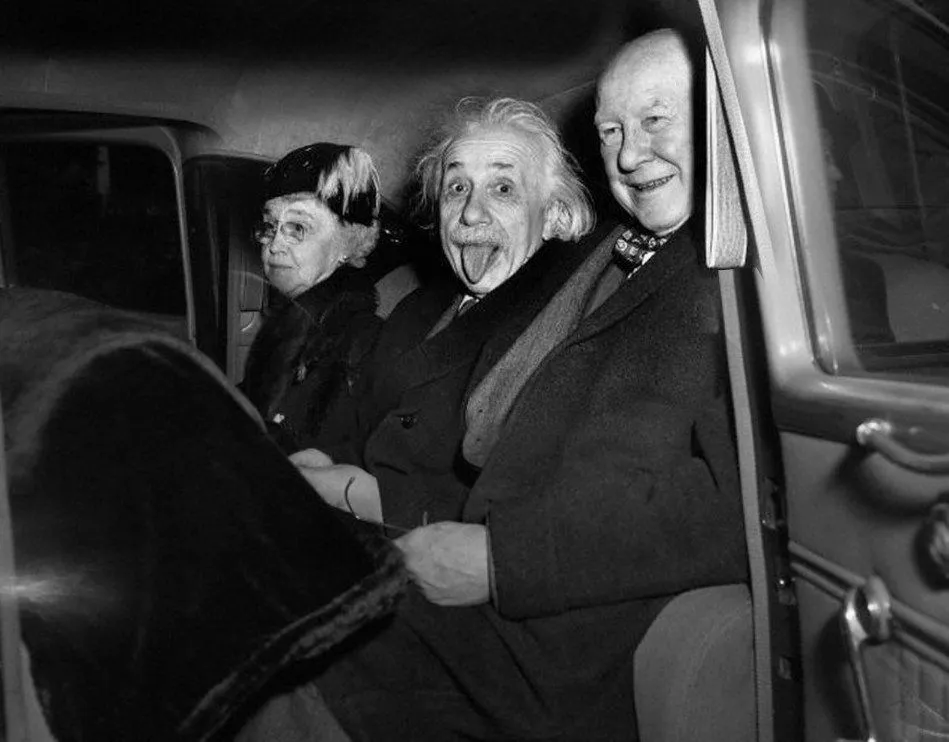
When Albert Einstein put forward his theory of General Relativity in 1917, conforming to the then existent views on the structure of the Universe, he inserted a constant in his expression that signified a repulsive force that would nullify the expansive forces, rendering the Universe static and bounded. He called it the cosmological constant.
However, contrary to what everyone believed, the eminent astronomer Edwin Hubble later found that the Universe wasn’t stationary at all, but continually expanding at an enormous velocity! Einstein rightfully abjured his constant and deemed it to be the “biggest blunder” of his life.
And like a twig in a gushing stream of water, our entire Milky Way galaxy too moves with it. In fact, the Milky Way galaxy swifts at 600 km/s! However, another mysterious phenomenon pulls our galaxy in the opposite direction, towards our neighboring galaxies.
Yet even this is not the complete story. It seems that every galaxy in our neighborhood is currently being sucked gradually towards a mystical region beyond the dust and gas, a region that no telescopic eye has illuminated. This gravitational anomaly, this hidden beast stomping in the dark, was named the Great Attractor.
The Zone Of Avoidance
Gravity seems to be the most obvious answer. Gravity is the only force in the Universe that can influence objects placed so astronomically distant from one another. It seems that our massive cloud of matter and dust is being pulled towards another celestial entity of a formidable mass and size due to the pull of gravity.

Astronomers have been fairly competent when it comes to exploring distant objects that lie far away in our Universe. All we have to do is point a telescope – a really good one.
However, a sleight of misfortune, like a hand accidentally blocking your face in a picture, the dust and vagrant matter between us and the unknown that we’re headed towards blocks the illuminating light and denies us the opportunity to characterize it.
All we know is that the object lies in the direction of the constellation Centaurus. However, the tumultuous part of our galaxy dances right across our view. This path is full of gas, dust, stars and whatnot, which blocks or absorbs the light darting our way.
Just like the hiddenness of our own nose, ironically, we can map the distant, but not galaxy itself. Astronomers call this unviewable region the Zone of Avoidance.
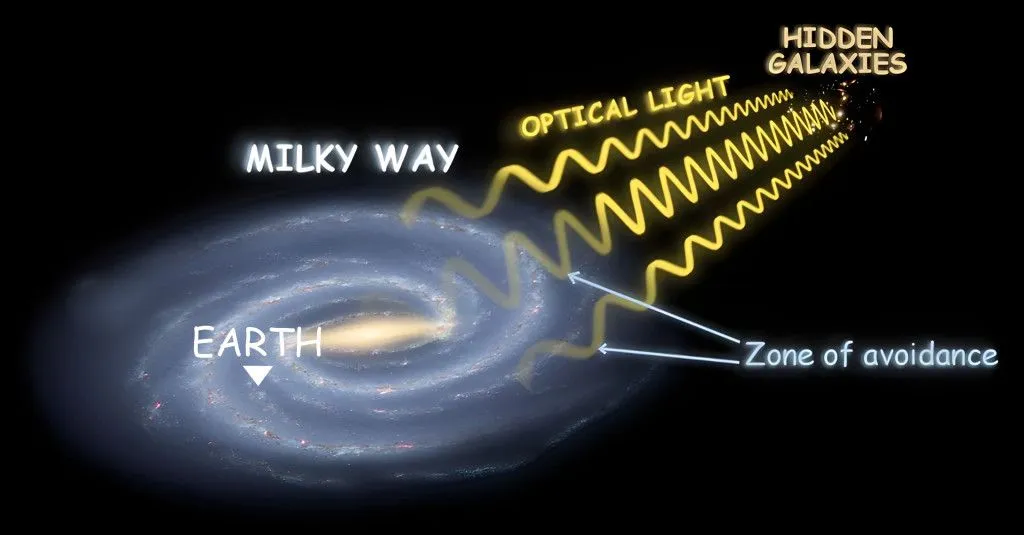
However, these constraints only limit the utility of optical telescopes. With the help of X-ray and radio telescopy, astronomers have painted a resplendent, approximate picture of the patch that contains this mysterious object.
This entity was finally dubbed The Great Attractor (10/10 recommend it for a Myspace username). The peculiar bulk flow of nearby galaxies was first noticed in the late 1970s, but the name and the detailed picture came from Donald Lynden-Bell and the “Seven Samurai” team in 1988.
Coming Together
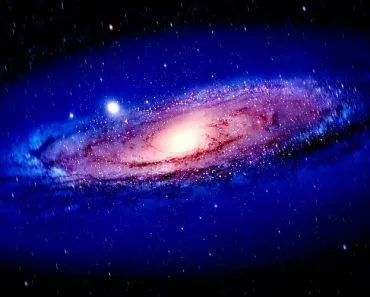
Our nearest neighbor is the Andromeda Galaxy, which lies around 2.5 million light years away from us. In astronomical scales, that’s just round the curb. Along with another few dozen galaxies, including the Triangulum Galaxy, we form a fruit basket of giant galaxies bounded by gravity about 10 million light years across in diameter. We call this the Local Group.
A similar cluster of galaxies hangs around with each other about 65 million light-years away from us and is known as the Virgo cluster. The members of this group, like our own group, are gravitationally bound.
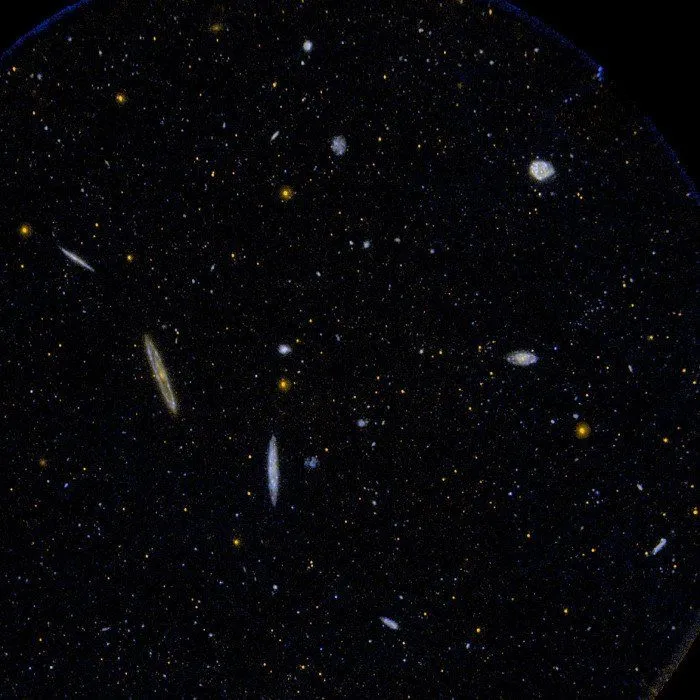
Furthermore, the clusters, in conglomeration with other clusters, form super-clusters! For instance, the Virgo cluster lies in the center of the Virgo supercluster. Similarly, our local group of galaxies (cluster) resides in the Laniakea Supercluster.
The Merger And The Great Attractor
Gravity is a fundamental property of matter. Mass cannot help but attract other mass. Following the Big Bang and the formation of our Universe, small lumps merged to form larger lumps, which merged to form larger lumps and even larger lumps… you get the picture.
Our Local Group is also condensing. It has been estimated that the Andromeda Galaxy will spiral into our galaxy in around 5 billion years. Moreover, our small get together, along with a few adjacent small clusters is gradually on its way towards the Virgo supercluster.
In fact, all the matter — the Milky Way, Virgo, Andromeda are heading towards, yes, you guessed it, the Great Attractor. Therefore, the Great Attractor is not a supermassive celestial body – a thing – but rather a volume of space that embodies the center of attraction – a place. It is the bottom of the basin where every blob of matter and dust ends up being aggregated.
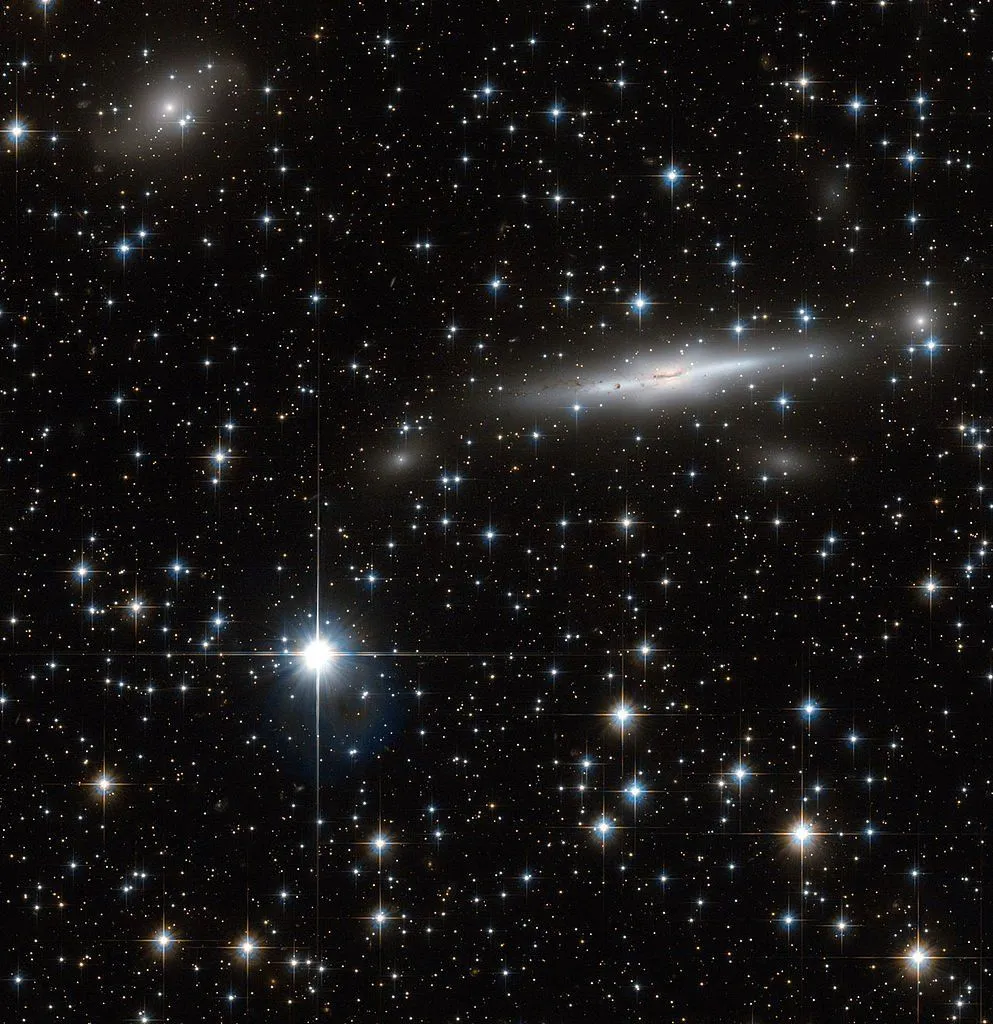
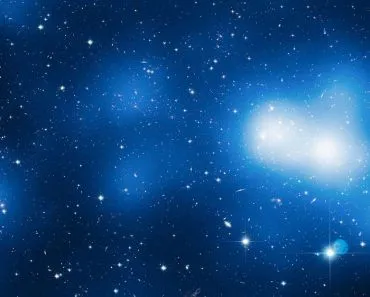
The Great Attractor lies in the vicinity of the Norma Super Cluster. When astronomers finally acquired a vantage point to this region, they discovered thousands of galaxies tethered to each other. The cluster has a mass of a 1000 trillion Suns and resides some 220 million light-years away from us!
However, this mass does not account for the strong pull and the inward motion of these galaxies, which means that something else was pulling the strings the entire time.
Further exploration of this patch resulted in a profound discovery.
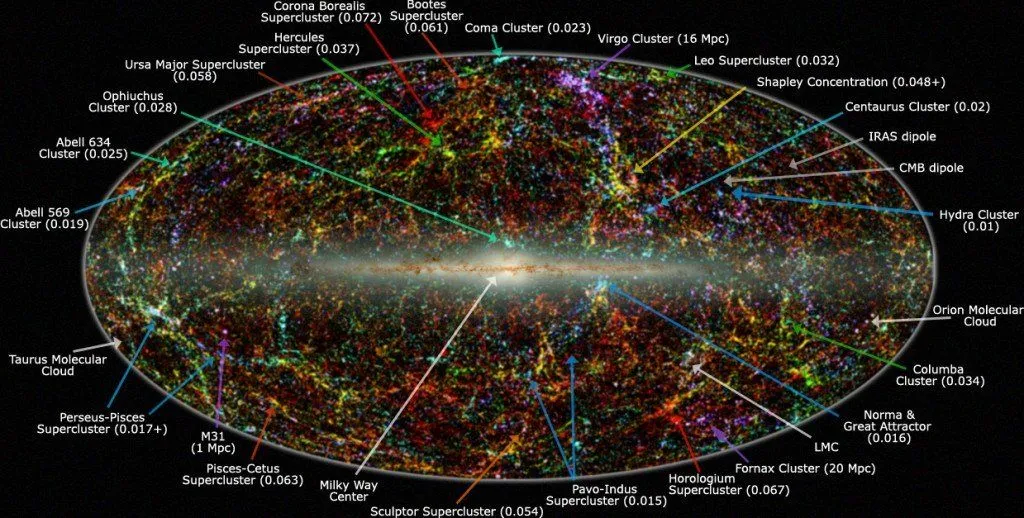
Astronomers discovered an even larger supercluster known as the Shapley Supercluster towards which we, the Norma and everything else wafts. The Shapley Supercluster contains a mind-boggling 8000 galaxies and weighs around ten million billion Suns! It is the easily the most massive cluster within a billion light-years.
Is The Great Attractor A Black Hole?
Picture this: a name like “the Great Attractor” practically begs you to imagine a monstrous black hole out there, quietly slurping up galaxies. It is the single most common question people ask about it, and the answer is a flat no. The Great Attractor is not a black hole, and it is not even a thing in the way a black hole is.

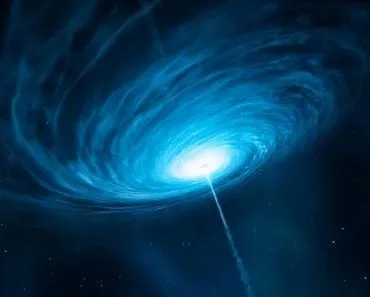
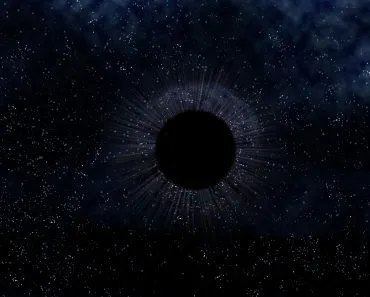
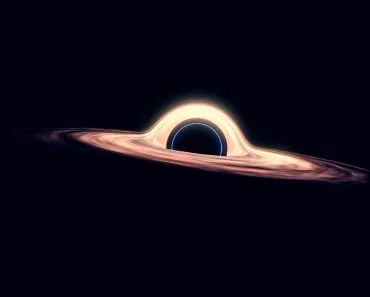
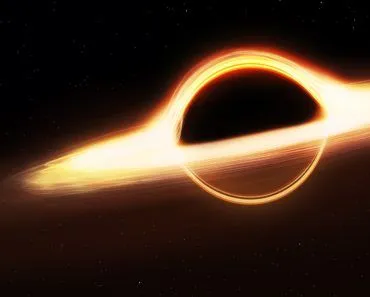
A black hole is matter crushed into a single point, a singularity, wrapped in an event horizon so steep that not even light can climb back out. We have actually photographed two of them: the glowing orange ring around the heart of galaxy M87, and our own Milky Way’s central black hole, Sagittarius A*. They are extraordinarily compact: a black hole packs its entire mass inside that event horizon, a mere speck on cosmic scales rather than something smeared across hundreds of millions of light-years.
The Great Attractor is the exact opposite of compact. As we have seen, it is a place, the gravitational basin where the Norma Cluster (about 220 million light-years away) and the far heavier Shapley Supercluster behind it pile up thousands of galaxies, gas, and dark matter across hundreds of millions of light-years. Early estimates put the mass tugging on us at roughly 1016 Suns, a figure later revised down about tenfold. Even the smaller number is tens of thousands of times greater than the most massive black hole ever found, the ultramassive TON 618, which holds more than 60 billion solar masses. The biggest black holes known top out in the tens of billions of Suns, so an object of the Great Attractor’s mass simply cannot be one black hole.
So is the Great Attractor “stronger than a black hole”, or could it “destroy” one? The question mixes up two different ideas. The Great Attractor is not a rival object squaring off against a black hole; it is a sprawling crowd of galaxies, each of which already hosts its own central black hole. And here is the reassuring part: gravity does not care whether a mass is a black hole or a swarm of galaxies. From 150 to 250 million light-years away, the pull of all that matter is exactly what it would be if the same mass were packed into a black hole. A black hole only acts like a cosmic vacuum cleaner if you drift close to its event horizon, and we are nowhere near. There is also no tell-tale blaze of X-rays pouring from a single point, which is exactly the signature a black hole of that scale would give away.
Will The Collision Destroy Us?
As it turns out, the Great Attractor is nothing lugubrious, but rather a perfectly conventional collection of galaxies that only came to our notice now, but even so, could the accumulation annihilate us in a colossal collision?
Well…no. The Great Attractor won’t stay around for long — superclusters are ephemeral. Like a tower of Jenga, small clusters will sustain themselves, but superclusters will eventually fall apart and fail to justify their name.
In the contest between expansion and contraction, expansion triumphs. The expansion of the Universe, now credited to what is known as Dark energy will rip these superclusters apart and drive them away from each other. We will never reach the focal point in the first place.
References (click to expand)
- Great Attractor - Wikipedia. Wikipedia
- Explainer: What is the Great Attractor and its pull on the Milky .... Phys.org
- Hubble Focuses on "the Great Attractor" - NASA. The National Aeronautics and Space Administration
- NASA Animation Sizes Up the Universe's Biggest Black Holes. NASA
- TON 618 - Wikipedia. Wikipedia