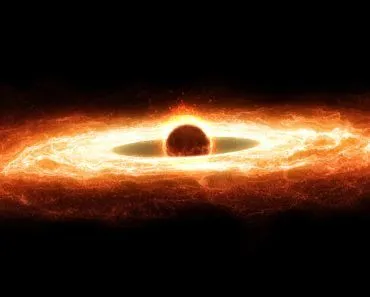
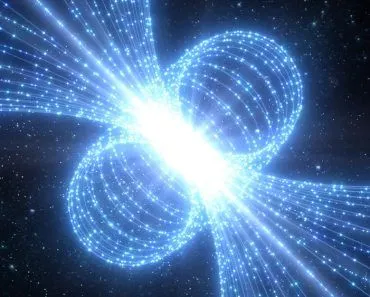
Yes. A supermassive black hole at a galaxy's center can silence star formation by driving powerful winds and jets that heat and blow away the cold gas stars need to form, a process called AGN feedback. Yet the same jets can sometimes compress gas and trigger new stars, so black holes both quench and spark star birth.
Imagine the universe as a giant puzzle, with galaxies and stars as its pieces. The puzzle not only contains pieces of galaxies and stars, but also objects like quasars, black holes and many such weird-sounding distant objects! One of the most mysterious objects in the Universe, black holes, are studied by taking observations of stars that revolve around them.
But what would happen if there were no stars present in a galaxy? It’s extremely challenging to study the light traveling from distant objects in the Universe, but scientists study nearby stars in our Galaxy and acquire information about how the Galaxy has evolved over long periods of time.
Types Of Galaxies
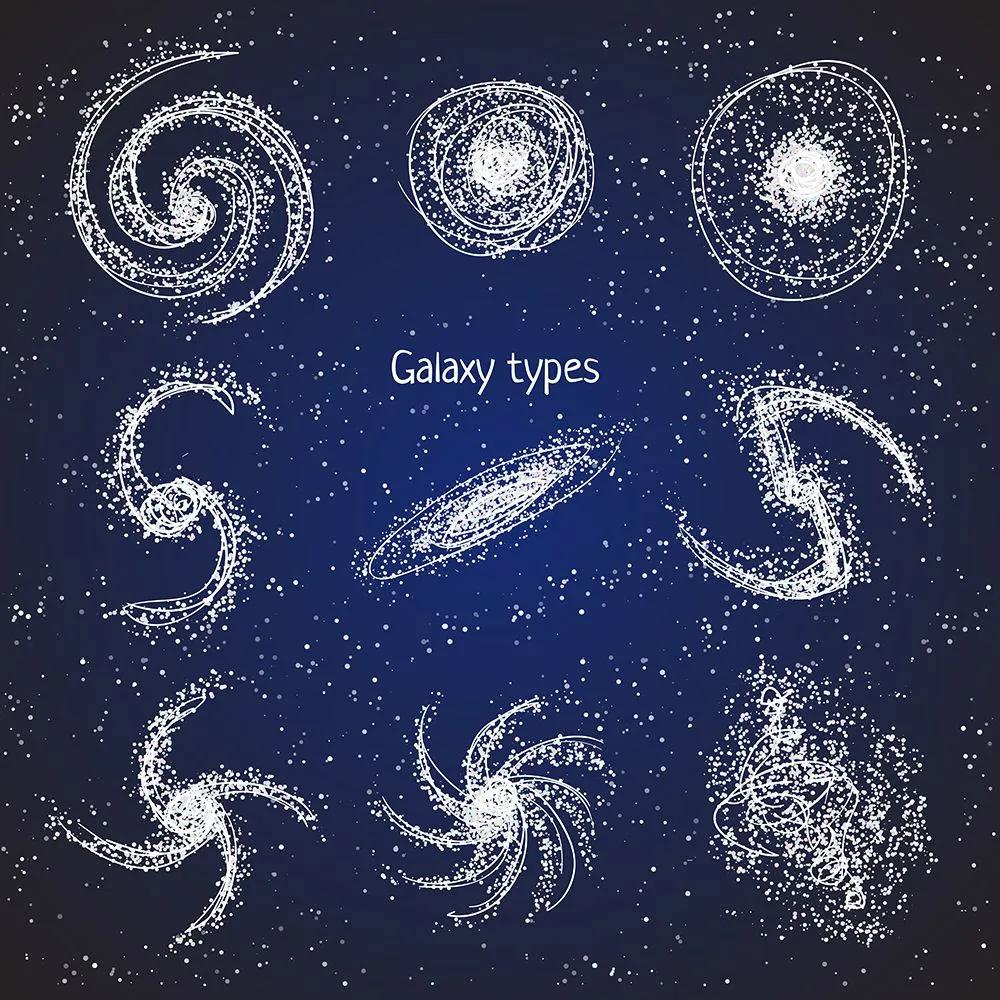
Galaxies vary from each other in many ways. There are multiple means through which one can distinguish galaxies from each other, such as gas content, age of the stellar population, and many more. One of the key factors involved in this distinction is the rate at which new stars are formed within a galaxy. Some galaxies (spiral galaxies) show a faster star formation rate than other types (Elliptical galaxies).
Eventually, star formation is inhibited as the galaxy evolves. Due to this, the stellar population in that particular galaxy will include a higher number of older stars than younger ones. The question remains, what factors could possibly lead to the cessation of star formation?
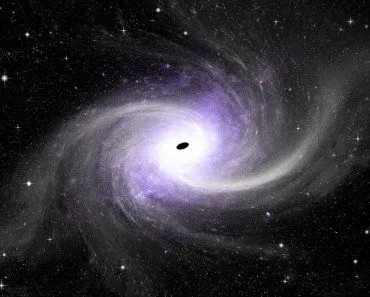
Astronomers believe that nearly every large galaxy has a supermassive black hole at its center. Even our Milky Way hosts one, called Sagittarius A*, which the Event Horizon Telescope imaged in 2022 and weighed in at about 4.3 million times the mass of our Sun. Studies increasingly suggest that star formation across a galaxy is shaped by the supermassive black hole at its core. These insanely dense objects, with masses ranging from millions to billions of times that of our Sun, exert gravitational influence on not only nearby stars, but the surrounding gas as well.
The relationship between supermassive black holes and star formation seems counterintuitive. A black hole can sometimes choke off the birth of stars, yet at other times it can actually push star formation along. So how do we figure out which case happens when?
How Can Supermassive Black Holes Prevent Star Formation?
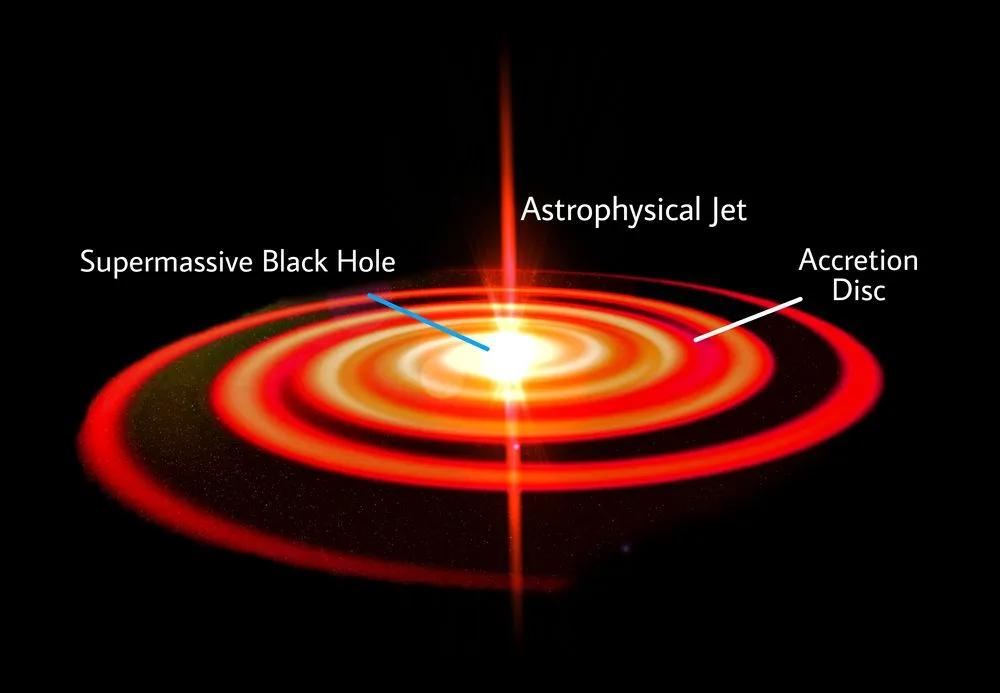
When gas falls onto a supermassive black hole, it does not fall straight inside the black hole. It follows a concentric circular path due to the presence of angular momentum. This leads to the formation of an accretion disk consisting of dust particles, gas and matter.
The matter in this accretion disk is exceedingly hot and can easily reach extreme temperatures. The hotter an object is, the higher the amount of energy that is radiated from it in the form of winds. These winds flow at high speeds, scattering surrounding matter particles and even sweeping gas right out of the galaxy.
Various classes of black holes have an accretion disk surrounding them. Some of the most prominent disks are found in active galaxies powered by an energetic Active Galactic Nucleus (AGN).
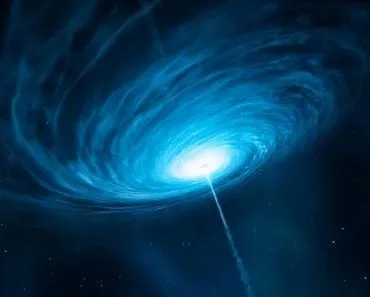
Supermassive black holes power this central engine, the AGN. The galaxies that host an AGN are called active galaxies, and they can remove the cold gas and dust required to initiate star formation. This happens in two main ways: at high accretion rates, intense radiation and winds heat and push gas outward, while at low accretion rates, powerful jets dump energy into the surrounding halo. Astronomers call this AGN feedback, and it is the leading explanation for why massive galaxies stop forming stars and "redden" into quiescence. Studies in different wavelengths enable scientists to understand the specific behaviors of each class of AGN.
Tellingly, a 2023 study found that it is the mass of the central black hole, rather than how fast it is currently feeding, that best predicts whether a galaxy has shut down its star formation. And in 2024, the James Webb Space Telescope detected widespread black-hole-driven outflows of cold neutral gas in massive, distant galaxies, ejecting gas faster than it could ever be turned into stars. This was some of the strongest evidence yet that supermassive black holes silence star formation in galaxies far across the Universe.
How Can Relativistic Jets Of A Supermassive Black Hole Induce Star Formation?
Certain AGNs also have relativistic radio jets emitting from them. These jets are generally formed when the black hole is spinning along with the accretion disk around it. Galaxies with these radio jets emitting from the AGN are called radio-loud AGN, whereas no relativistic jet classifies it as a radio-quiet AGN.
Investigation of the interplay between supermassive black holes and their host galaxies has also revealed that jet outflows can induce star formation. As a jet plows into a dense cloud of gas, the shock it drives can compress that gas and tip it over into collapse, lighting up a fresh burst of young stars. A textbook example is Minkowski's Object, a small star-forming clump sitting in the path of a radio jet from the nearby galaxy NGC 541, where almost all the stars are only about 10 million years old, far younger than the galaxies around it. A more thorough analysis of these systems will help scientists understand when jets quench star formation and when they kick-start it instead.
By estimating the rates of star formation in different types of galaxies, one can better recognize the effects of both low- and high-radiation winds on stars and the gas surrounding these stars.
Summing Up
In space, supermassive black holes and star formation are linked in a fascinating way. These big black holes don’t simply destroy things; they also help make new stars and shape their journey. With improved technology and our growing knowledge, scientists, physicists and astrophysicists are gradually figuring out how this collaboration between black holes and stars actually happens. Every time someone learns something new, we’re getting a better idea of how everything in space fits together.
With every revelation, the path to understanding the complex evolution of galaxies becomes easier and astronomers move one step closer to unraveling the cosmos. Thus, black holes, despite being a destroyer, also play a significant role in enhancing or accelerating the birth of stars. A harmonious balance is maintained by laws yet unknown to mankind. One can only hope that these mysteries don’t remain hidden forever.
References (click to expand)
- CM Harrison. (2017) Impact of supermassive black hole growth on star formation.
- Supermassive black holes control star formation in large ....
- Blandford, R., Meier, D., & Readhead, A. (2019, August 18). Relativistic Jets from Active Galactic Nuclei. Annual Review of Astronomy and Astrophysics. Annual Reviews.
- Bluck, A. F. L., et al. (2023). The fundamental signature of star formation quenching from AGN feedback: a critical dependence of quiescence on supermassive black hole mass, not accretion rate. The Astrophysical Journal.
- New JWST observations reveal black holes rapidly shut off star formation in massive galaxies. Swinburne University of Technology.
- Salome, Q., Salome, P., & Combes, F. (2015). Jet-induced star formation in 3C 285 and Minkowski's Object. Astronomy & Astrophysics.