Table of Contents (click to expand)
The Sun was born about 4.6 billion years ago inside a stellar nursery alongside thousands of sibling stars, then drifted apart as the cluster dissolved. So far, only one strong solar sibling has been found: HD 162826, a star about 110 light-years away in the constellation Hercules that matches the Sun in age, chemistry, and orbit.
People who grew up with siblings will likely relate to the fact that there’s only one person with whom they share such a strong and unique emotional bond. In the many instances of sibling rivalry, jealousy, affection, and trust, there comes a certain point where we wonder what we would ever do without them. They form an integral part of our lives, from childhood right on up to adulthood.
While many of us have had our moments with siblings, there is a particular entity who was separated from its siblings a very long time ago: our own Sun.
The Birth Of Our Sun
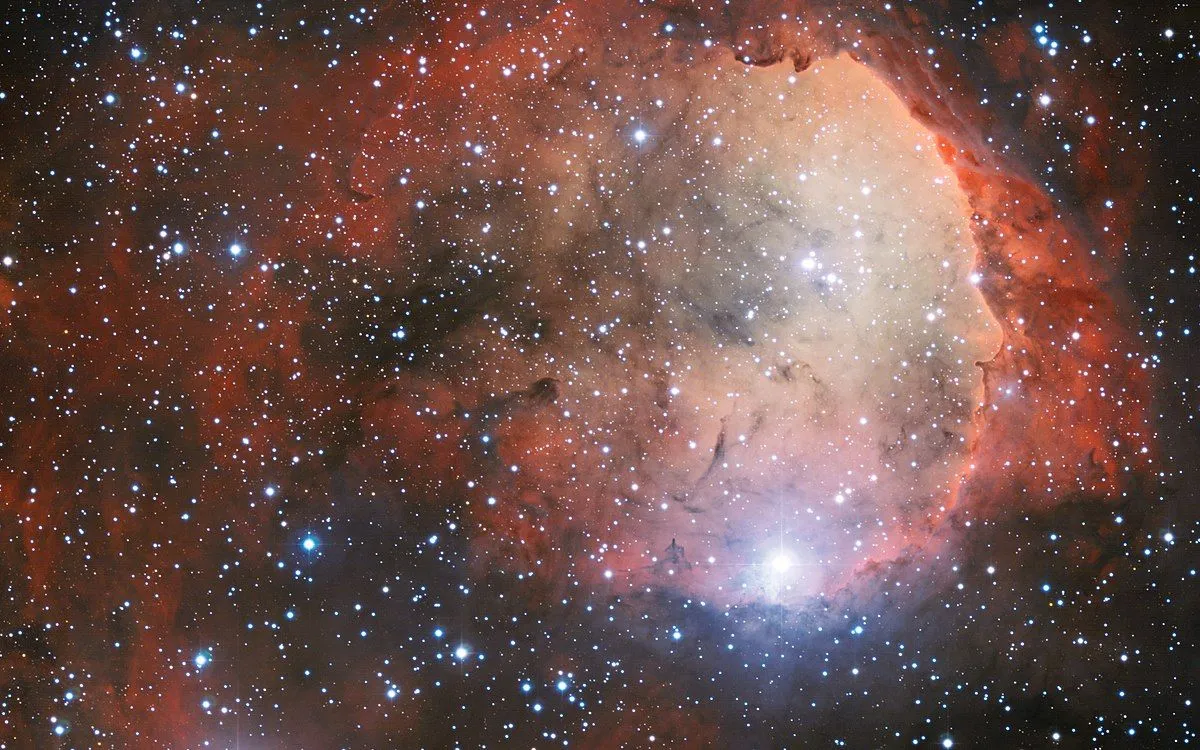
To provide some context here, the Sun was not born alone. In the astronomical world, it is a widely accepted fact that stars are most likely to be created in clusters. Star formation happens when an accumulation of gas and dust, abundant in molecular hydrogen, collapses under its own gravity. This takes a long time (millions of years), and there are usually multiple centers where this collapse occurs. The gaseous clouds in which stars are born are called stellar nurseries, and the largest of them, often hundreds of light-years across, are giant molecular clouds (GMCs) embedded in the interstellar medium (ISM).
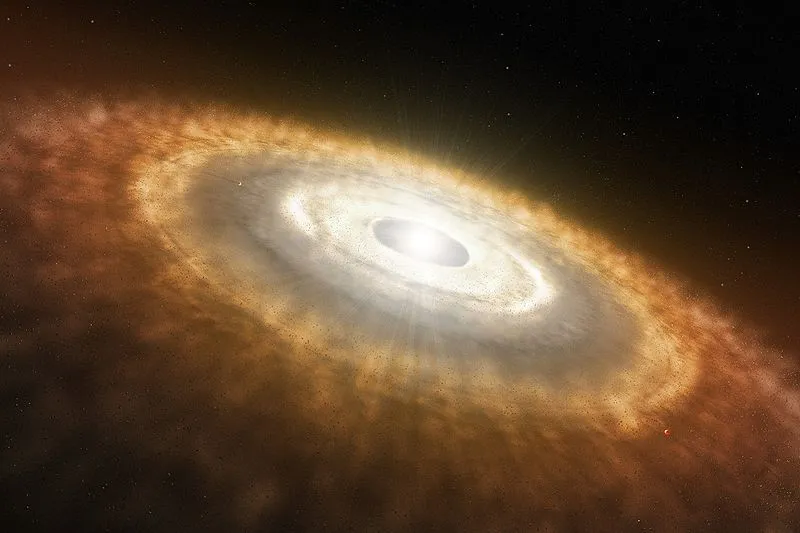
The very existence of our planetary system tells us that the Sun was not born in an extremely dense cluster. A star passing within roughly 100 astronomical units of a young Sun would have easily stripped away the surrounding disk of gas and dust, leaving nothing from which planets could form. The sharp outer edge of the Kuiper Belt, at about 50 AU, even hints that a star may have grazed past at a distance of 150 to 200 AU during the solar system's infancy. Even so, the size and character of the Sun's birth cluster remain debated, and it is not yet clear whether that cluster dissolved completely or whether some of its remnants still drift through the galaxy today.
If the Sun’s birth cluster has dissolved, N-body simulations by Simon Portegies Zwart and others suggest that a handful of its former members should still lie within about 100 parsecs (roughly 326 light-years) of the Sun. If the cluster still exists somewhere, the open cluster M67, around 2,900 light-years away in the constellation Cancer, has long been floated as a candidate, since several of its stars share the Sun’s age and chemistry.
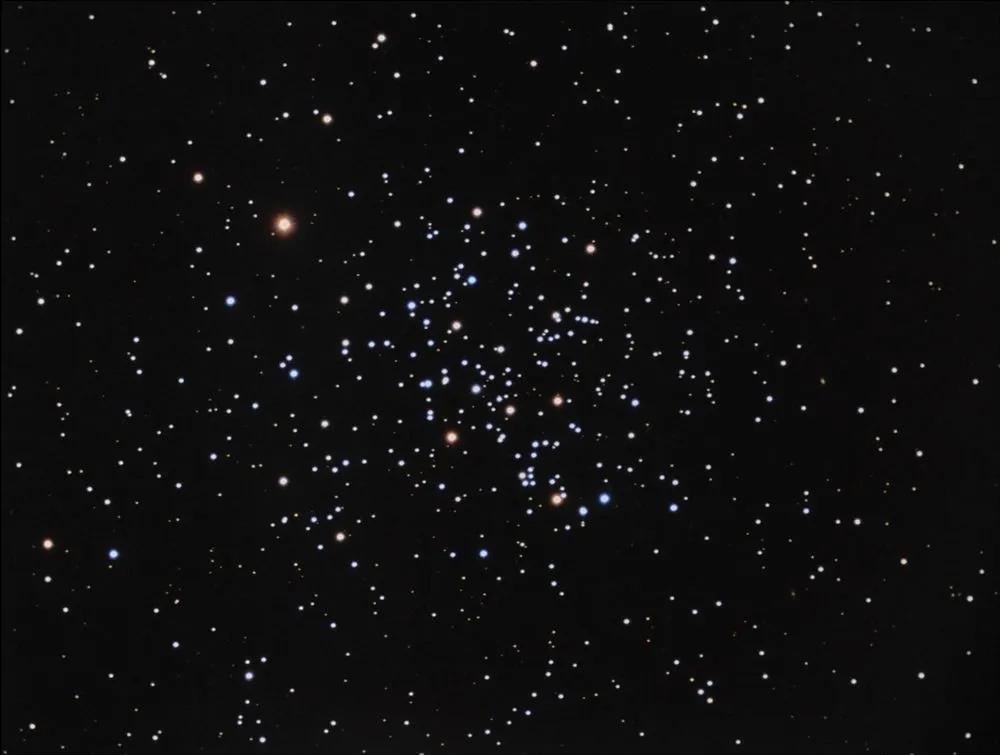
However, dynamical studies make M67 a difficult fit. To have escaped from M67 and ended up on the Sun’s current orbit, the young Sun would have needed an ejection kick of more than 20 km/s, which is fast enough to have torn apart its proto-planetary disk or scattered any already-formed planets. So while M67 still turns up in popular accounts as the Sun’s likely nursery, most recent work argues that the Sun and M67 did not form from the same giant molecular cloud.
About Solar Siblings
We will now come to what actually qualifies as a solar sibling. As mentioned, stars born with the Sun in the same gas cloud are called solar siblings. They should share the Sun’s age (about 4.6 billion years) and its chemical composition, because they formed at the same time from the same well-mixed material. They should also share roughly the same motion through the galaxy. Their masses, luminosities, and surface temperatures, on the other hand, are not expected to match the Sun’s, since each star’s mass is set by how much gas its individual clump happened to gather. That distinguishes siblings from solar twins, a separate category of stars that simply look spectroscopically near-identical to the Sun, regardless of where in the galaxy they were born.
Ways To Find Solar Siblings
The hunt for solar siblings relies on two main strategies. The first is to simulate the orbits of the Sun and each candidate star backward in time. This uses the star’s velocity vector (its speed and direction of motion through the galaxy), the galactic potential (a mathematical description of the Milky Way’s overall gravitational field), and the equations of motion to retrace its trajectory and estimate where it was born. If two stars end up at the same place at the same time, they make a plausible pair.
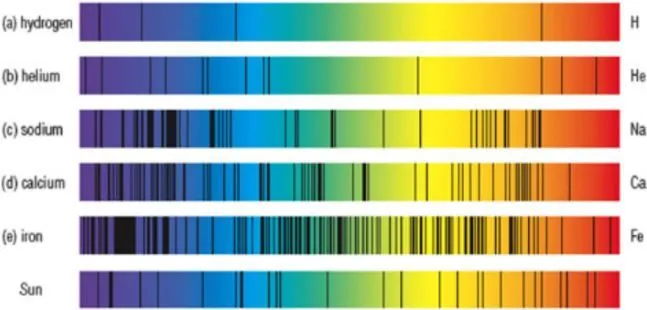
The second strategy is called chemical tagging. When a star forms, it locks in the elemental fingerprint of its parent gas cloud. By breaking starlight into its spectrum, astronomers can read off which elements (and in what proportions) a star is made of. Comparing those fingerprints between the Sun and a candidate star tells us whether they could have shared a birth cloud.
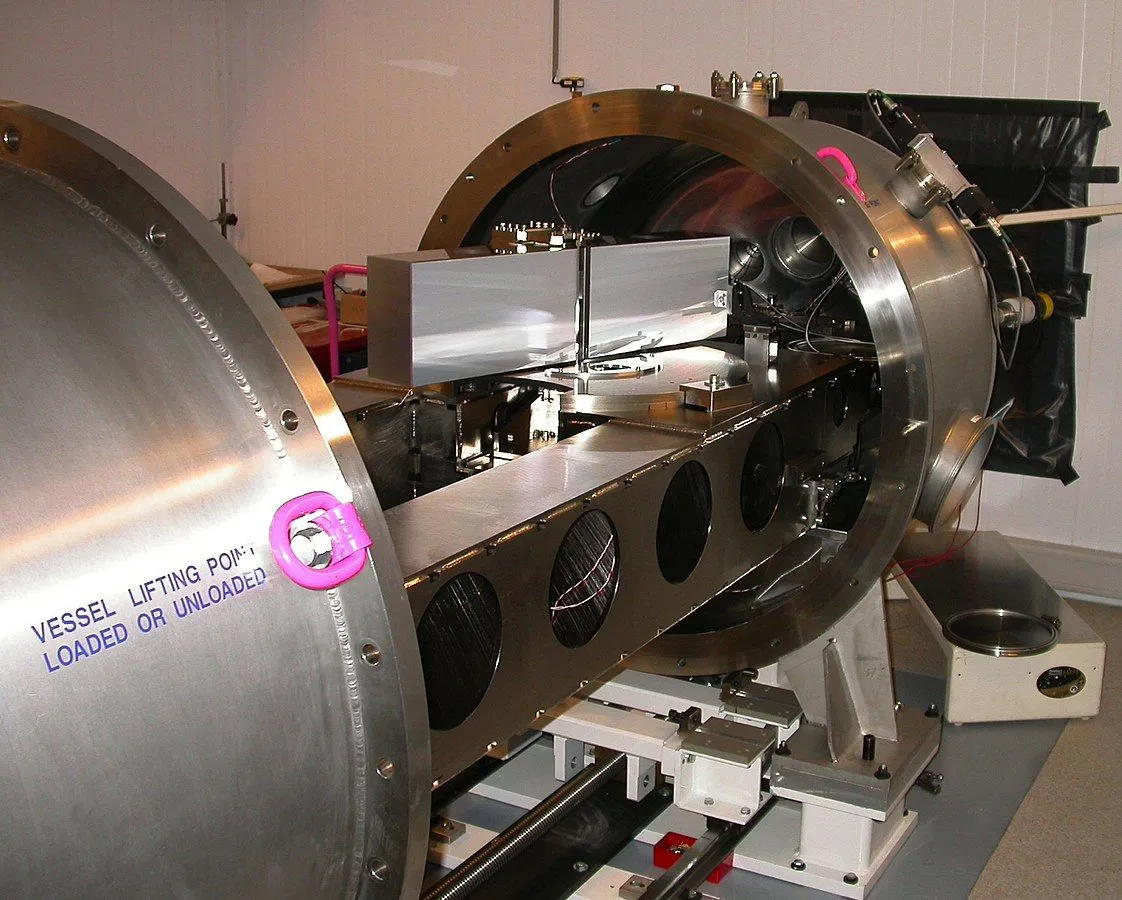
Several large observational surveys have been built to map both the motions of stars in the galaxy and their chemical fingerprints. The Apache Point Observatory Galactic Evolution Experiment (APOGEE), one of the programs under the Sloan Digital Sky Survey, has collected high-resolution infrared spectra for hundreds of thousands of Milky Way stars and has been mined for potential solar siblings. Other major spectroscopic surveys used in the hunt include GALactic Archaeology with HERMES (GALAH) at the Anglo-Australian Telescope and the High Accuracy Radial velocity Planet Searcher (HARPS) on the ESO 3.6-meter telescope at La Silla in Chile.
When it comes to measuring the stars’ positions and motions through space (astrometry), surveys and satellites like Hipparcos, ESA’s Gaia mission, and the Geneva-Copenhagen Survey (GCS) do the heavy lifting. Gaia in particular has charted the precise distances, motions, and brightnesses of nearly two billion stars, and astronomers now use its data releases to rewind stellar orbits and pinpoint where each star likely formed.
Difficulties In Finding Solar Siblings
While these two methods are the techniques currently being used, there are still uncertainties in the studies. For example, chemical tagging assumes that the gas cloud in which the stars were born had a uniform distribution of elements. It also presumes that each birth cluster has a unique chemical composition that makes them distinguishable.
That assumption does not always hold. There are systematic differences even between sub-giants and main-sequence stars inside the same cluster. The good news is that several open clusters do turn out to be broadly chemically homogeneous, so the method is not hopeless. It just means astronomers have to account for how a star’s surface composition drifts over its lifetime, and often restrict their comparisons to stars at the same evolutionary stage as the Sun.
A problem with modeling past stellar trajectories is that accurately measuring the motions of distant stars is very difficult. The Sun’s exact position and motion within the Milky Way are also not perfectly known, which feeds error into any attempt to rewind its orbit to its birthplace. We can soften that by working only with the relative positions of the Sun and candidate stars. Even then, both the Sun and its long-lost siblings will have had their paths nudged over billions of years by encounters with passing clusters, molecular clouds, and the galaxy’s spiral arms, all of which are notoriously hard to model.
For an accurate determination of possible solar sibling candidates, a combined approach consisting of chemical tagging and orbit simulations will provide the conditions to help us find them. A confirmation for such candidates consists of obtaining higher resolution spectroscopic measurements to find the abundances of rarer elements, like lead and bismuth, and determining an accurate estimate of their ages.
The Sibling Candidates
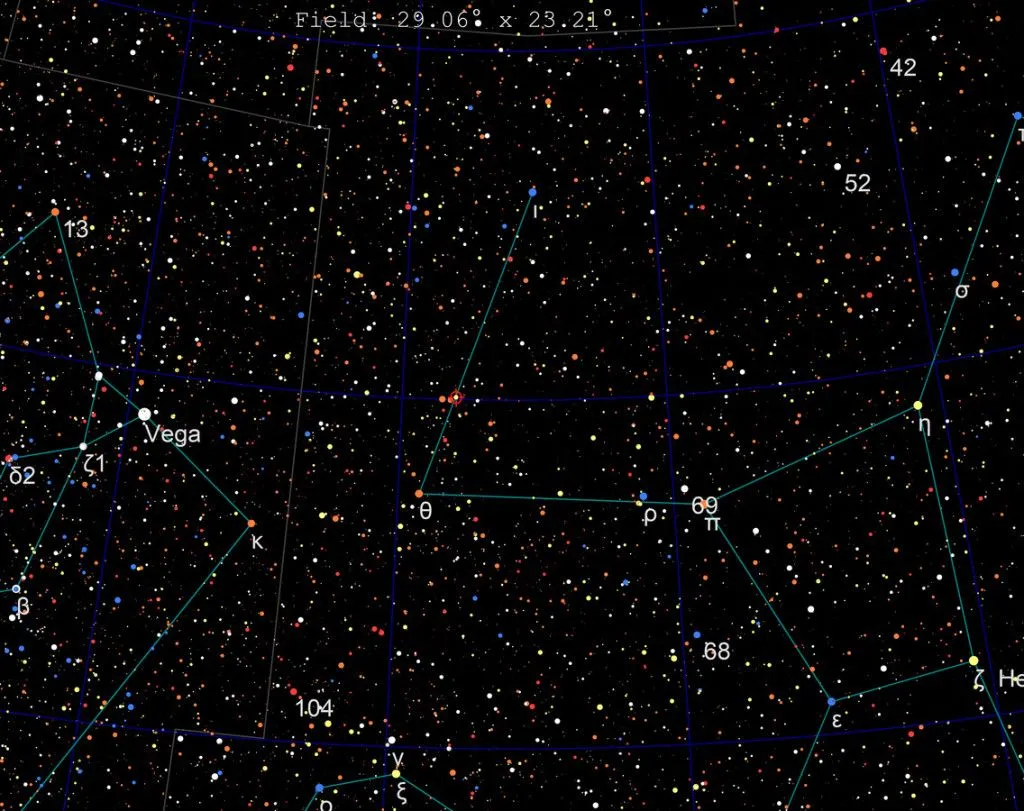
So, how many solar siblings have actually been found? Despite years of searching, only one star has comfortably satisfied both the chemical and the dynamical conditions: HD 162826, about 110 light-years from Earth in the constellation Hercules, not far from the bright star Vega. It is roughly 15% more massive than the Sun, slightly hotter, and was identified as a likely sibling by Iván Ramírez and colleagues in 2014 after matching the Sun in age, orbit, and trace-element fingerprints like barium and yttrium. There have been other tantalizing candidates, most notably HD 186302 in the southern constellation Pavo, hailed in 2018 as a possible solar sibling. A 2019 study, however, found its galactic orbit too different from the Sun’s for the two to have shared a birthplace, and a follow-up using Gaia DR2 data reached the same conclusion. Earlier ex-candidates like HD 147443 and HD 196676 traced back to plausible birth locations, but their chemical compositions did not match the Sun’s.
That same line of work has not been a dead end, though. The 2020 N-body simulation study by Webb and colleagues, which used APOGEE chemistry and Gaia DR2 orbits, flagged a fresh list of 4 high-confidence and 13 secondary solar sibling candidates that still need their detailed elemental abundances measured before they can be confirmed or ruled out.
Why does it matter? Pinning down the Sun’s siblings would sharpen our picture of where our own star came from. Despite being the most studied star in the Universe, the size, density, and chemistry of the cluster that birthed it are still poorly constrained, with a 2023 reassessment even arguing that the Sun’s nursery may have held anywhere from a few thousand to tens of thousands of stars depending on how long star formation lasted there. Nailing that down would tell us not just about the Sun, but about how stars and planetary systems generally take shape in the Milky Way, and which environments are friendly to worlds capable of harboring life.
References (click to expand)
- Portegies Zwart, S. F. (2009, April 7). The Lost Siblings Of The Sun. The Astrophysical Journal. American Astronomical Society.
- Ramírez, I., Bajkova, A. T., Bobylev, V. V., Roederer, I. U., Lambert, D. L., Endl, M., … Wittenmyer, R. A. (2014, May 14). Elemental Abundances Of Solar Sibling Candidates. The Astrophysical Journal. American Astronomical Society.
- Webb, J. J., Price-Jones, N., Bovy, J., Portegies Zwart, S., Hunt, J. A. S., Mackereth, J. T., & Leung, H. W. (2020, April 9). Searching for solar siblings in APOGEE and Gaia DR2 with N-body simulations. Monthly Notices of the Royal Astronomical Society. Oxford University Press (OUP).
- Batista, S. F. A., Adibekyan, V. Z., Sousa, S. G., Santos, N. C., Delgado Mena, E., & Hakobyan, A. A. (2014, April). Searching for solar siblings among the HARPS data. Astronomy & Astrophysics. EDP Sciences.
- Arakawa, S., & Kokubo, E. (2023). Number of stars in the Sun’s birth cluster revisited. Astronomy & Astrophysics, 670, A105.
- Solar Sibling HD 162826. McDonald Observatory, University of Texas at Austin.