Table of Contents (click to expand)
The Moon is called “the Moon” because it was the only known natural satellite for most of human history. The English word “moon” derives from Old English mōna, related to the Latin word mensis (month), since the Moon was used to measure the passing of months. It is also known by its Latin name Luna and its Greek name Selene.
Since the first human beings looked up into the night sky and noticed the bright, silvery orb overhead, people have been fascinated by the moon. In the past, it has been linked to birth rate, menstruation, the tidal movements of the planet, human behavior, sleep quality, and even law and order, and while some of those have been discounted as being affected by the moon, it still remains a powerful part of our collective global awareness. It also happens to be incredibly beautiful!
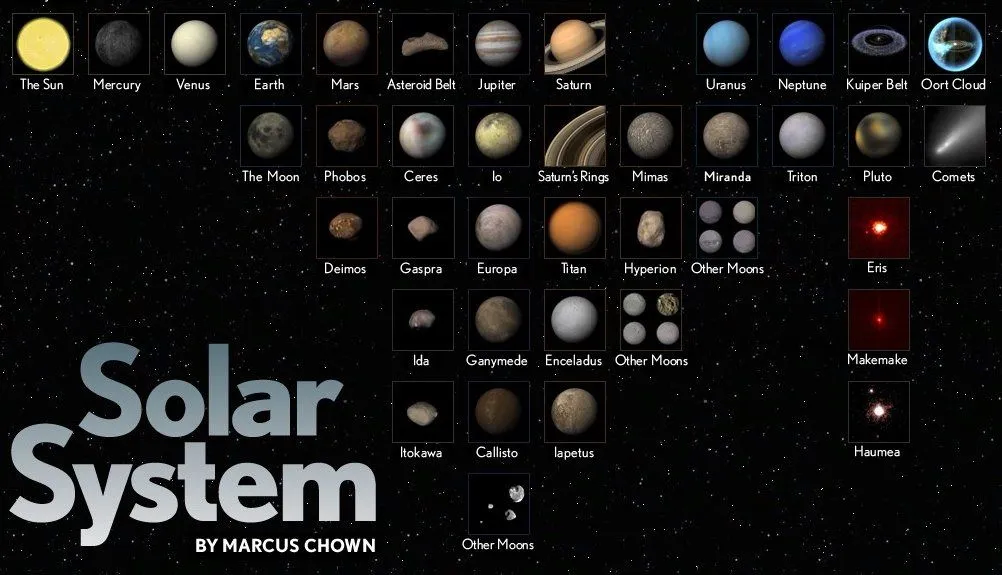
However, there are hundreds of other “moons” identified in our solar system alone, and all of them have different names – Io, Titan, Triton, Callisto, Europa, Mimas, and Phobos, just to name a few. If all those other planetary moons have cool names, why is the moon of Earth, the most famous of them all, simply called “the moon”?
First Come, First Named
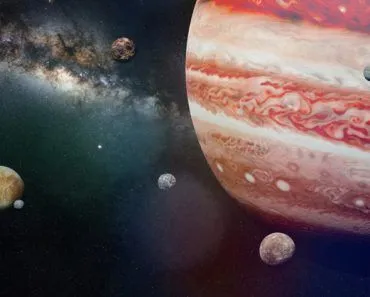
Although human beings have been aware of our planet’s Moon for thousands of years, it wasn’t until 1610 that Galileo Galilei discovered four moons orbiting Jupiter, proving that Earth was not unique in having a natural satellite. In that sense, our Moon only got that name because it was the first of such objects to be known. The English word “moon” derives from Old English mōna, related to the Latin mensis (month), since ancient people used the Moon to measure the passing of months. Since Galileo’s discovery, many large objects have been found orbiting other planets, and since they behave in the same way as our lunar companion, they too are called “moons”.
Furthermore, the name “the Moon” is only the English version of the word, and in fact, the Moon has been known by many names throughout human history, including Luna, perhaps its most famous name. Luna is the Latin name for our closest celestial neighbor, while the Greeks called it Selene. In Chinese, the Moon is called Yuè (月), while the Chinese moon goddess is Chang’e. The ancient Egyptian moon god was Khonsu, while Thoth, the god of wisdom and writing, also had strong lunar associations. The Moon has been called Tsukiyomi by the Japanese, Sin by the Mesopotamians, and Máni in Norse mythology.
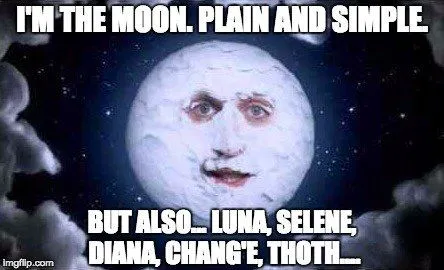
Most of these primitive (and current) names for the moon are derived from gods and goddesses, because in the early millennia of human civilizations, the moon was highly present in origin stories, pagan traditions, and other polytheistic cultural ideas.
However, remnants of those older names for our planet’s moon are still a part of our language to this day. Have you ever considered the word “lunatic”? This has its origins in the belief that the moon could control human behavior, and even drive people mad in certain situations. Even selenology – the scientific study of Earth’s Moon – takes its name from Selene, the Greek name for the Moon.
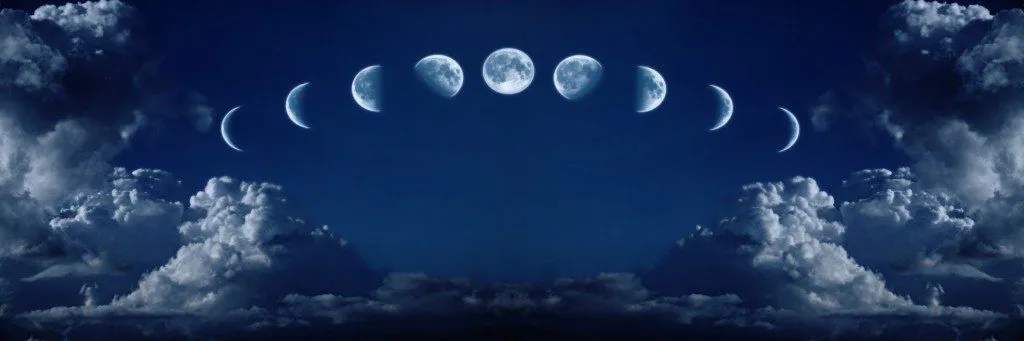
Therefore, next time someone questions you about why our Moon has such a boring name (or a lack of one entirely), you can calmly explain that our Moon simply set the precedent for others we hadn’t discovered yet. Furthermore, the Moon actually has many names in different languages, stretching all the way back to the very beginnings of human language!
What Are the Names of the Moons in Our Solar System?
If our own Moon got stuck with the plainest name in the sky, the rest of the solar system more than makes up for it. Astronomers have now confirmed more than 890 moons orbiting the planets and other bodies of the solar system, and the count keeps climbing as new surveys sweep up tinier and fainter satellites. Here is how the named (and counted) moons break down, planet by planet, according to NASA’s latest tallies.

- Mercury and Venus: zero moons each. The two innermost planets travel through space entirely alone.
- Earth: one moon, the one we simply call the Moon (or Luna).
- Mars: two small, lumpy moons, Phobos and Deimos, named after the Greek personifications of fear and dread.
- Jupiter: 101 recognized moons. The four giants Galileo spotted in 1610, Ganymede (the largest moon in the entire solar system), Callisto, Io and Europa, are known as the Galilean moons.
- Saturn: 274 confirmed moons, far more than any other planet. Its standout is Titan, the second-largest moon in the solar system and bigger than the planet Mercury, alongside familiar names such as Rhea, Iapetus, Dione, Tethys, Enceladus and Mimas.
- Uranus: 28 moons, including the five major ones, Miranda, Ariel, Umbriel, Titania and Oberon.
- Neptune: 16 moons. The largest, Triton, is unusual for orbiting backwards relative to Neptune’s spin.
- Pluto (a dwarf planet): five moons, Charon, Styx, Nix, Kerberos and Hydra. Charon is so large relative to Pluto that the pair almost behaves like a double system.
So while Earth’s companion holds the unglamorous title of the Moon, it sits in a crowd of hundreds of named worlds, from the volcanic surface of Io to the hazy, methane-soaked skies of Titan.
How Do Moons Get Their Names?
Spotting a new moon is only half the job. Before a satellite gets a real name rather than a clunky provisional label like S/2025 U1, the discovery has to be confirmed and the name has to be approved by the International Astronomical Union (IAU), the same global body that decides what counts as a planet. Since 1973, the IAU’s Working Group for Planetary System Nomenclature has been the official referee for the names of moons and other bodies across the solar system.
To keep things from descending into chaos, each planet’s moons are named from a fixed theme rather than at random:
- Jupiter: moons are named after lovers and descendants of Zeus/Jupiter, which is why you find names like Io, Europa and Ganymede drawn from Greek myth.
- Saturn: moons are named for the Greco-Roman Titans, their descendants and giants from various mythologies, giving us Titan, Rhea and Iapetus.
- Uranus: uniquely, its moons are named after characters from the plays of William Shakespeare and from Alexander Pope’s poem The Rape of the Lock, hence Titania, Oberon, Miranda and Umbriel.
- Neptune: fittingly for the sea god, its moons are named after figures from Greek and Roman mythology linked to Neptune, Poseidon or the oceans, such as Triton.
Our own Moon never went through this process, of course. It was named long before there was an IAU, or even a written language to record it, which is exactly why it carries the oldest and simplest name of them all.
References (click to expand)
- Moon - Wikipedia. Wikipedia
- Why Doesn't the Moon Have a Name? - Live Science
- Where did the Moon come from? - Starchild (NASA). The National Aeronautics and Space Administration
- How Many Moons Does Each Planet Have? - NASA Space Place
- Saturn Moons - NASA Science
- Jupiter Moons - NASA Science
- Pluto Moons - NASA Science
- Moons of Our Solar System - NASA Science
- Planet and Satellite Names and Discoverers - Gazetteer of Planetary Nomenclature (USGS / IAU)
- Triton - NASA Science