Table of Contents (click to expand)
We keep going back to the Moon to mine its water ice (which can be split into breathable oxygen and rocket fuel) and to prospect for helium-3, a possible clean fusion fuel. The Moon is also a science lab, a proving ground for new technology, and a refueling stop on the way to Mars. National prestige and private profit keep the race going too.
“That’s one small step for a man, one giant leap for mankind.”
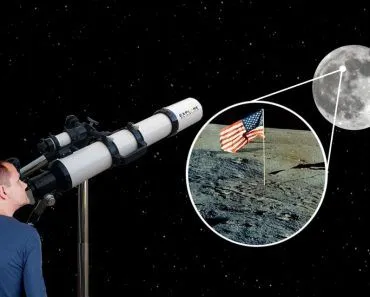
Since Neil Armstrong, Buzz Aldrin and Michael Collins became the first people to set foot on the moon in 1969, humanity has made many such ventures to our lunar neighbor. We’ve collected rocks from the moon, found water, and developed a dozen conspiracy theories (did any actually go up to the moon?).
If we’ve already done all this, why are we still venturing to that tiny grey orb with its pockmarked surface that follows us around at night?
Why Did Humans Go To The Moon Initially?
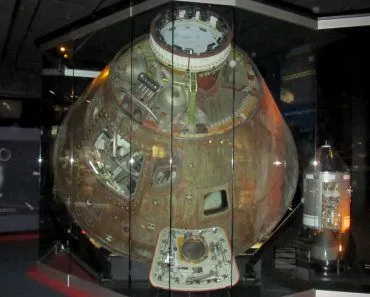
The US created NASA in 1958, after the Soviet Union launched Sputnik 1 the year before and Americans worried they were falling behind in the Space Race. NASA was to be in charge of all non-military space exploration. It ran three crewed programs in sequence, Mercury, Gemini and finally Apollo, with the ultimate aim of putting an American on the moon before the Soviets did. After a string of setbacks and a few tragedies, on July 20, 1969, Apollo 11 successfully landed on our nearest celestial neighbor.
Since then, every country with any claim to the title of a superpower and a space program has sent or planned to send their countrymen to the moon.
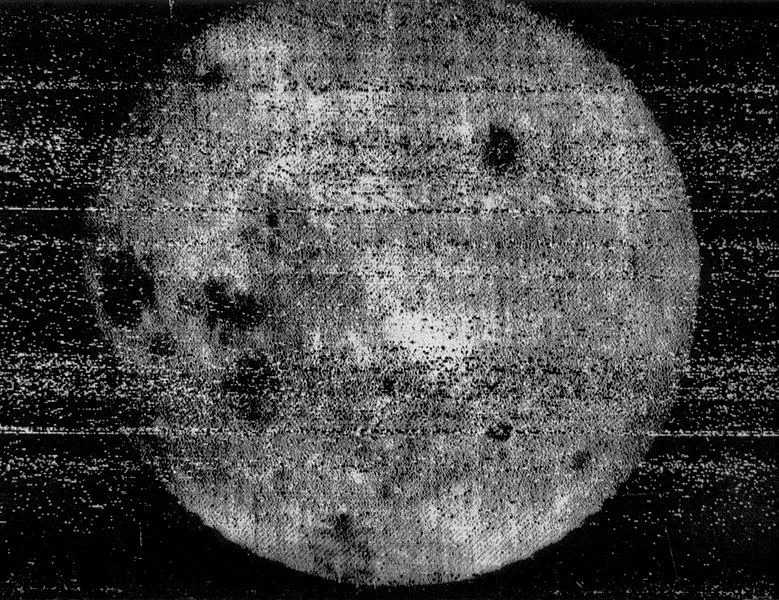
Aside from the political motivations affecting space, and by extension moon exploration, science has gained a great deal from these endeavors, far more than telescopic observations ever could. The moon was uncharted territory and an exciting playing field for scientists to learn not only about the moon, but also about the solar system that lies beyond.
There was so much that scientists did not know about the moon. What was it made of? How was the moon made? How does the Earth look from the moon? What’s the history of the moon?
During the Apollo missions, the 12 astronauts that went to the moon studied the lunar rocks and soil, the meteoroids, magnetism, lunar range, and solar winds. Those Apollo missions brought back 382 kilograms of moon matter to Earth.
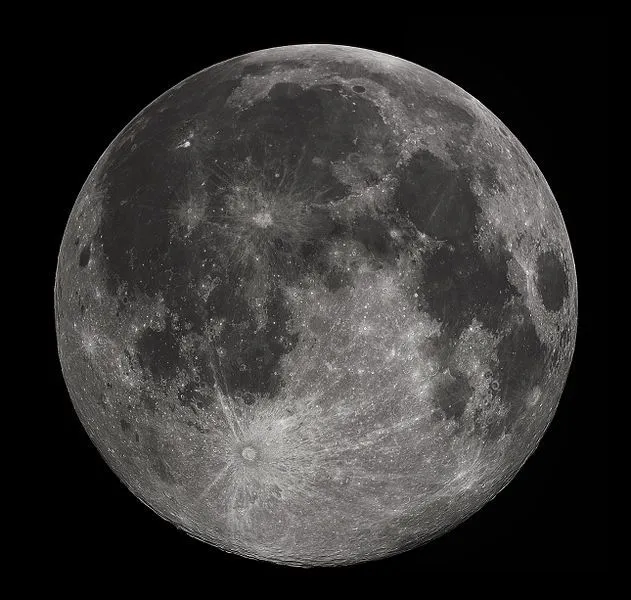
Studying this precious lunar cargo has revealed a great deal about how the moon’s crust must have formed and about what stuff must have been floating around, hitting the moon in our solar system.
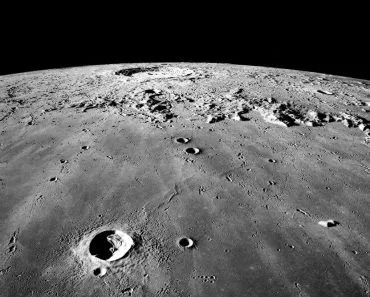
The dark patches on the moon, called maria (sea in latin) were most likely filled with lava 4.2 to 1.2 billion years ago (Source). The moon rocks also support the leading idea that the moon formed from the debris of a colossal collision between the early Earth and a Mars-sized body, sometimes called Theia. NASA deliberately kept some Apollo samples sealed and untouched for decades, saving them for instruments that hadn’t been invented yet. The first of those pristine cores, sample 73001 from Apollo 17, was finally opened in March 2022 to help prepare for the next round of moon missions.
Water ice on the moon was first hinted at in the 1990s by two US robotic missions, Clementine and Lunar Prospector, which spotted signs of hydrogen lurking in the permanently shadowed craters near the poles. It was later confirmed by Chandrayaan-1, which carried NASA’s Moon Mineralogy Mapper, and by NASA’s LCROSS mission in 2009, which slammed a spent rocket stage into a polar crater and detected water ice in the debris plume.
The US once more embarked to study the moon, but this time it was about the gravity there. Two repurposed satellites from the THEMIS mission were used for this journey. They called this project ARTEMIS (short for Acceleration, Reconnection, Turbulence, and Electrodynamics of the Moon’s Interaction with the Sun). GRAIL, in 2012, was the second US study of the moon’s gravity field, which produced one of the highest-resolution gravity maps we had to date.
Why Continue To Go To The Moon?
Where there is water, there is life, or at least the scope for sustaining life there for a while before heading off elsewhere. Water is made of hydrogen and oxygen (H2O).
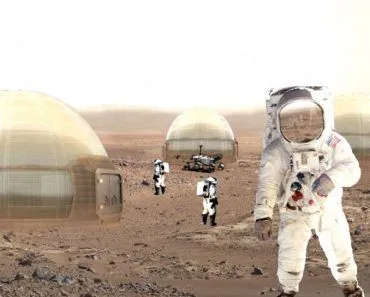
Splitting that water releases hydrogen and oxygen, which can be turned into rocket propellant to refuel spacecraft, while the oxygen could also provide breathable air for astronauts on the moon. That would let the moon serve as an important pit stop before future spacecraft venture into the rest of the solar system.
Artemis
NASA’s flagship return effort is Artemis (named for Apollo’s twin sister in Greek mythology). Artemis I sent an uncrewed Orion capsule around the moon in 2022, and in April 2026 Artemis II carried four astronauts on a crewed loop around the moon and safely home, the first crew to leave low Earth orbit since 1972. The first crewed Artemis landing has slipped to around 2028, and NASA is aiming for the lunar South Pole, where permanently shadowed craters are a promising source of water ice. For NASA’s larger goal of reaching Mars, using the moon as a base to restock, refuel and shed weight along the way is highly desirable.
Aside from the unchartered scientific craters, future geopolitical motivations play a big role in maintaining an interest in the moon.
Chang’e And Chandrayaan
The US and Russia no longer have the moon to themselves. For rising space powers, a landing is a way to show off their engineering and join the same club as the US, Russia, Japan and the European nations.
China has been the most active newcomer. Its Chinese Lunar Exploration Program put the Chang’e 3 lander down in 2013, making China the third country (after the Soviet Union and the US) to soft-land on the moon. Then, on January 3, 2019, Chang’e 4 became the first mission ever to soft-land on the far side, the hemisphere that always faces away from Earth. China followed up by bringing far-side samples back to Earth with Chang’e 6 in 2024.
India joined the club next. Its Chandrayaan-2 lander crashed in 2019, but in August 2023 Chandrayaan-3 touched down safely, making India the fourth country to soft-land on the moon and the first to land near the lunar south pole, the same water-rich region NASA is targeting with Artemis.
SpaceX And Blue Origin
There is also the prospect of making money from the moon. Private companies have moved from sketches to real hardware. Elon Musk’s SpaceX is building Starship, which NASA has chosen as the lander to put astronauts back on the lunar surface, while Jeff Bezos’ Blue Origin is developing its Blue Moon landers for both cargo and crew. SpaceX’s ultimate aim is a colony on Mars; Blue Origin talks about millions of people living and working in space. These are big dreams that still lie some way off, but in the meantime both companies are doing the heavy lifting for NASA’s moon missions.
Mining the moon for helium-3 could pay off too. Helium-3 is a rare, non-radioactive isotope carried by the solar wind, which has peppered the lunar soil with it for billions of years (Earth’s magnetic field shields us from most of it). If a working fusion reactor could ever burn helium-3, it would offer cleaner energy with far less dangerous radiation than conventional fusion. That is still a big ‘if’, and the concentrations in lunar soil are measured in parts per billion, so extracting useful amounts would mean processing enormous quantities of regolith. Even so, the idea is being taken seriously: in 2025 the US Department of Energy made the first government purchase of lunar helium-3, and the startup Interlune signed deals to supply it, so the potential is certainly enough to keep the moon an appealing destination.
A Final Word
It has been more than 50 years since Apollo 11 sent the first humans to the moon, and we are now well into going back. With Artemis II’s crew already having looped around the moon and returned in 2026, the coming years look like an exciting time for space exploration. The plan is to land more astronauts on the moon, tap new sources of water and energy, and turn the moon into a refueling station for missions heading deeper into the solar system. As governments shift their priorities, money flows into space research, and technology keeps advancing, space exploration is only going to get more exciting from here!
References (click to expand)
- Timeline of the Space Race, 1957–69. Encyclopaedia Britannica
- Why Everyone Wants to Go Back to the Moon. The New York Times
- Artemis II. NASA
- Chandrayaan-3: India becomes fourth country to land on the moon. SpaceNews
- China Returns First-Ever Samples from the Moon’s Far Side. Scientific American
- Moon Water and Ices. NASA Science
- Helium-3 mining on the lunar surface - ESA. The European Space Agency
- Overview | Inside & Out – Moon: NASA Science. The National Aeronautics and Space Administration