Crown shyness is a canopy phenomenon in which neighboring trees leave thin, river-like gaps between their crowns rather than touching each other. Scientists have proposed three main explanations: mechanical abrasion in the wind, avoiding the spread of pests and disease through touching foliage, and shade-avoidance signaling via phytochromes sensing the red/far-red light reflected from nearby leaves.
It’s not wrong to say that trees have always been ahead of us in terms of social distancing. Even at such close proximity in a dense forest, the canopies of trees often do not touch each other. Nature is filled with ingenious solutions, and we are merely here to observe, admire, and attempt to understand.
What Is The Crown Of A Tree?
No, it isn’t a jewel-studded ornament of royalty, but rather the leafy head of a single tree. (As we’ll see below, that isn’t quite the same thing as a forest’s canopy, even though the two words often get swapped.)
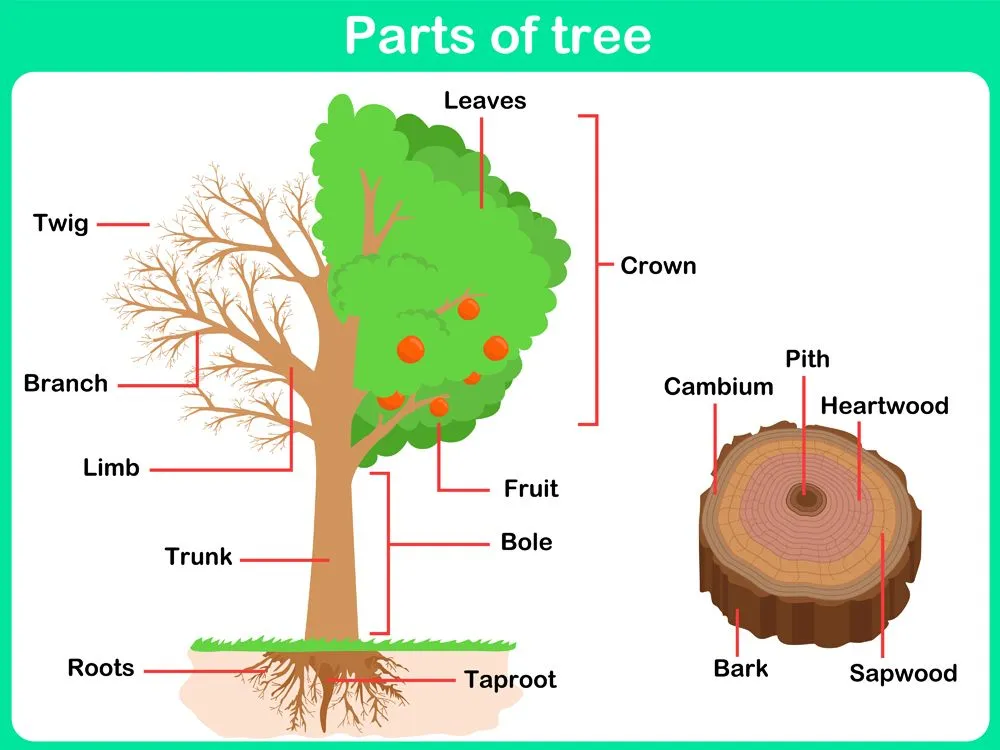
As shown in the figure below, the tree above the ground is divided into the bole (or trunk) and the crown. The green foliage is defined as the crown of the tree and different species of trees have different widths and lengths of crowns.
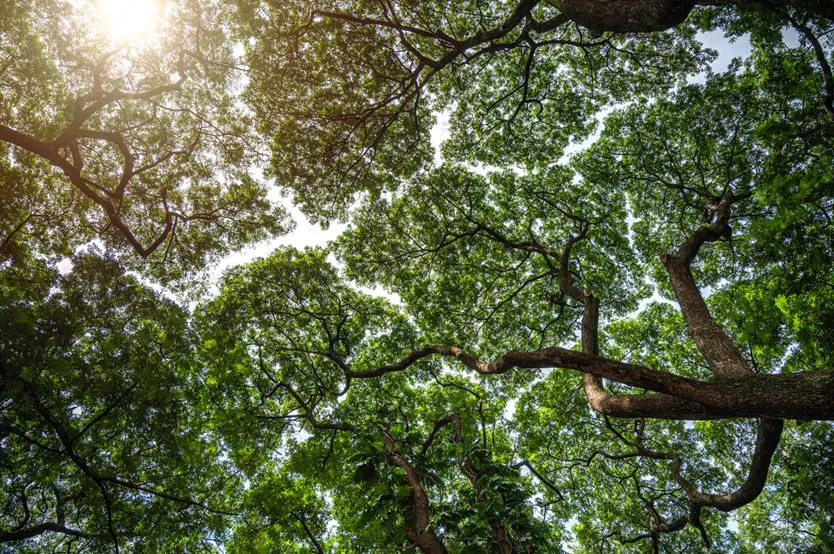
Crown shyness is a phenomenon wherein the crown or canopy of trees will avoid touching other crowns, creating thin gaps between them. Viewed from the ground, these gaps look like a web of rivers or a maze. Species like black mangrove, borneo camphor, eucalyptus species, shorea species, lodgepole pine, japanese larch, and various others display such crown shyness. Crown shyness is not limited to these species, and can also be observed in stands of trees of similar species that are generally of the same age (monospecific stands), or even different species of the same age group occurring in a tree stand.
The reason for this shyness is similar to our own reasons for social distancing: avoiding diseases and threats to keep oneself safe and healthy.
Crown Vs Canopy: What’s The Difference?
People often use “crown” and “canopy” as if they were the same thing, and that’s the trap. They’re related, but they describe different scales. A crown belongs to one tree. The US Department of Agriculture’s agricultural thesaurus defines a tree crown simply as the branches and foliage of a single tree above its main trunk. Think of it as that one tree’s personal head of leaves and limbs.
A canopy, on the other hand, is what you get when many crowns gather together. In forest ecology, the canopy is the upper layer of the forest, the leafy “roof” formed by the collected crowns of all the mature trees in a stand. And it’s not just leaves: the canopy is treated as a whole habitat zone, home to epiphytes (plants such as orchids and ferns that perch on branches), woody climbing lianas, and a busy cast of birds, insects, and other tree-dwelling animals. So a crown is an individual, while a canopy is the community those individuals build overhead. In the tropical rainforests where so many plant species manage to coexist, that canopy stacks into distinct vertical layers, with the tallest emergent crowns poking out above the main canopy roof.
Why does the distinction matter here? Because crown shyness is really a property of the canopy: it’s the pattern you notice when you look up and see that neighboring crowns refuse to merge, tracing those river-like gaps across the shared roof. You need more than one crown for the shyness to show up at all.

Injury: (Don’t) Hit Me Baby, One More Time
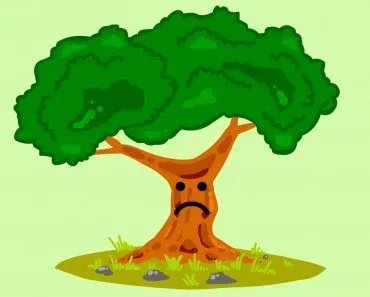
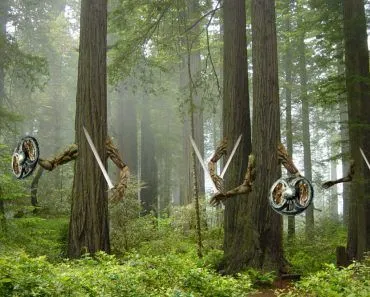
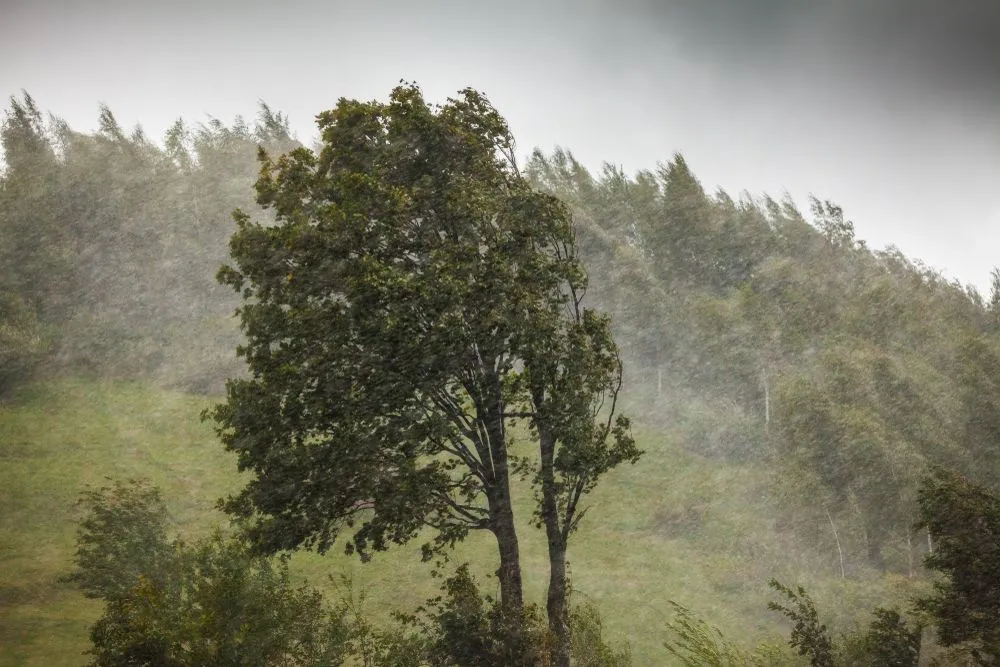
One popular hypothesis is that the trees grow like this to avoid abrasion due to strong winds. A storm or even a gentle breeze can jostle the branches, and the trees end up hitting each other. The hypothesis goes that trees evolved to maintain some distance between themselves to avoid hurting their neighbors.
It takes a lot of energy and resources, as well as many complex processes to generate parts of plants and trees. The tips of the trees, whether they are branches, leaves or even buds, are very delicate and tender; it can be hard to survive rough abrasions and contact against each other, so it makes sense that the plants adapted to keep some distance between their crowns.
Disease: Do Not Pass On The Flu
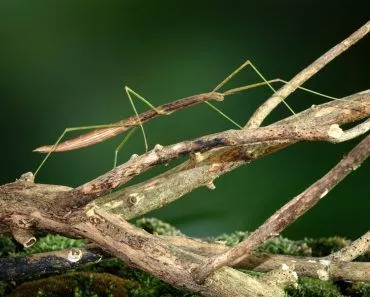
Crown shyness is also helpful for trees to avoid infections, diseases, and illnesses that easily spread through contact. If the leaves don’t touch, parasites, tree borers, and pests can’t infect the neighboring trees. This phenomenon also hinders the movement of arboreal animals and destructive herbivores, all of which can damage the foliage.
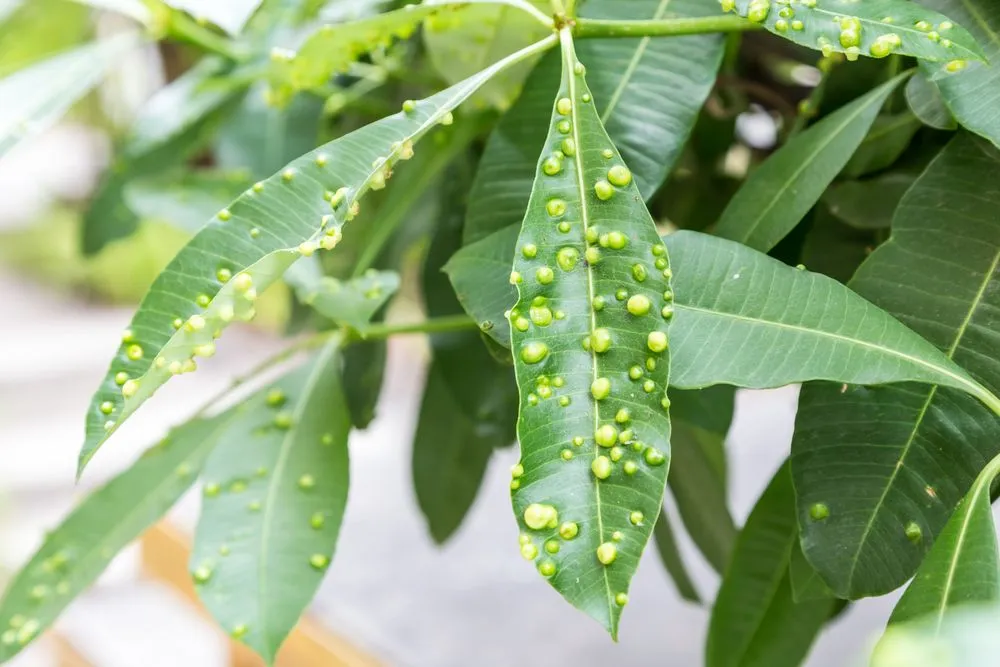 Diseases in trees (Photo Credit: Pj Aun/Shutterstock)
Photosynthesis: Lights Up!
Just as our smart devices optimize themselves for top-notch performance, so do trees! In order to maximize photosynthesis, plants optimize light exposure.
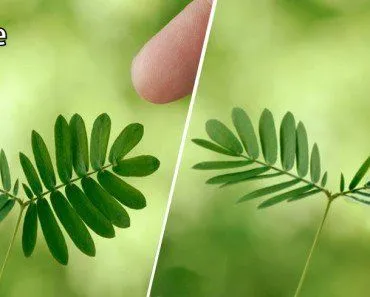
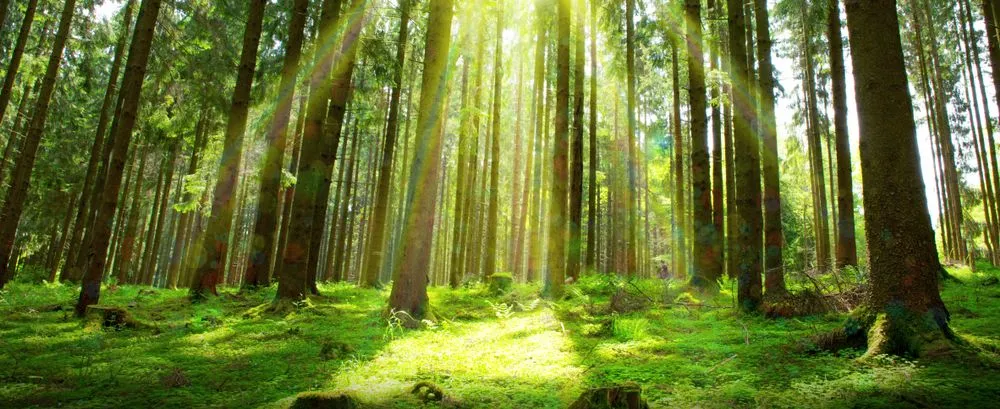
Photosynthesis requires light, and chlorophyll in leaves mainly absorbs blue and red wavelengths. Plants separately monitor their light environment through photoreceptors called phytochromes, which sense the ratio of red to far-red light. When a neighboring tree’s canopy gets too close, its leaves filter out red light and reflect far-red, so phytochromes detect a dip in the red:far-red ratio. That sets off the classic “shade-avoidance” response: the tree limits further growth toward the neighbor and steers outward growth into brighter directions.
Caught In The Chemistry
Another possible reason for this behavior is allelopathy. Allelopathy is a phenomenon wherein plants produce chemical compounds in order to defend themselves or alter the growth and behavior of nearby plants.
According to theories put forward by scientists, trees that exhibit crown shyness must emit some secondary metabolites through their leaves, which then cause this occurrence. These chemicals can be released by the tree’s roots, leaves, branches, or any other part and then hamper the growth of another nearby tree. These chemicals can be volatile and non-volatile in nature, and affect trees of the same species or others.
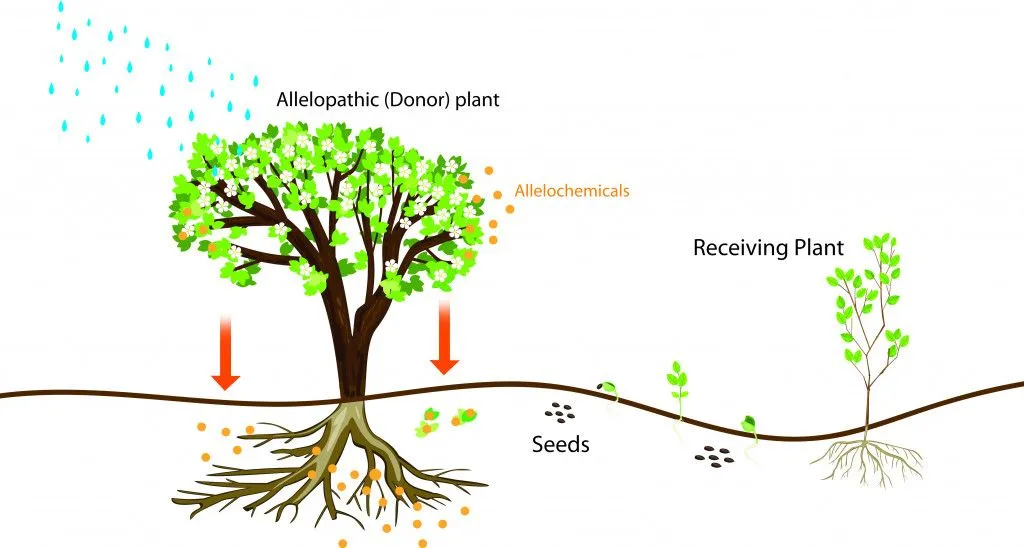
Allelopathy as a phenomenon is a well-researched sub-discipline of chemical ecology, but its connection with crown shyness is still hypothesized and debatable.
Do All Trees Have Crown Shyness?
Short answer: no. Crown shyness is real, but it’s the exception rather than the rule. It has only been documented in some tree species, and it isn’t something every tree in your local park will do. The textbook example is Dryobalanops aromatica, the Borneo camphor tree, whose Malaysian canopy produces those jaw-dropping jigsaw gaps. Other species in which scientists have recorded it include the black mangrove (Avicennia germinans) of Central America and the lodgepole pine (Pinus contorta).

The effect also depends on the company a tree keeps. It tends to be most pronounced in groves of the same species and similar age, where the neighbors are evenly matched competitors. Many common trees, such as oaks and most pines, show only a faint version of it or none at all, which is one reason crown shyness photographs feel so rare and special. In other words, you can’t guarantee you’ll spot it just by tilting your head back under any old tree; you usually need the right species growing in the right kind of stand.
Conclusion
Since this topic has not been extensively studied, rigorous validation of the idea is still needed. However, the justification provided by the aforementioned arguments is sound and opens the door for further specific justification.
The above reasons, however, are very well justified. A positive correlation between wind and crown shyness has been stated, but this elusive shyness needs more of a stimulus than that. What do you have in mind? Could there be any other possible reason? Expand the canopy of your brain and see what you come up with!
References (click to expand)
- Rebertus, A. J. (1988, December). Crown Shyness in a Tropical Cloud Forest. Biotropica. JSTOR.
- crown shyness in various tree species - ijsdr. ijsdr.org
- Putz, F. E., Parker, G. G., & Archibald, R. M. (1984, July). Mechanical Abrasion and Intercrown Spacing. American Midland Naturalist. JSTOR.
- (1973) Plant Succession on Pago and Witori Volcanoes, New Britain. The University of Hawaiʻi System
- van der Zee, J., Lau, A., & Shenkin, A. (2021, March 13). Understanding crown shyness from a 3-D perspective. Annals of Botany. Oxford University Press (OUP).
- Markham, J., & Fernández Otárola, M. (2020, October 19). Wind creates crown shyness, asymmetry, and orientation in a tropical montane oak forest. Biotropica. Wiley.
- Tree crown. NAL Agricultural Thesaurus. United States Department of Agriculture (USDA).
- Canopy (botany). Wikipedia.
- Some trees may ‘social distance’ to avoid disease. National Geographic.