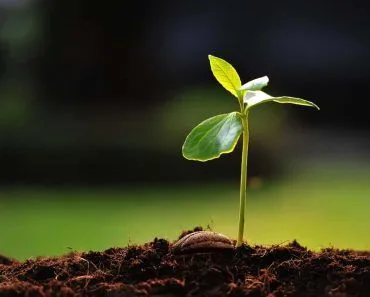
When you touch a Mimosa pudica plant, its leaves fold inwards within a second. This response is called thigmonasty (a seismonastic movement) — any leaf movement triggered by touch. The leaves close because extensor cells in the pulvinus at the base of each leaflet rapidly lose water — driven by potassium and chloride efflux — which collapses their turgor pressure. The behavior is a predator-avoidance defense.
Mimosa pudica is a creeping herb of the Fabaceae pea family — annual or perennial depending on climate — native to Mexico, the Caribbean, and Central and South America. Commonly called the touch-me-not plant, the sensitive plant, or the Tickle Me plant, it is known for folding its leaves inwards when touched.
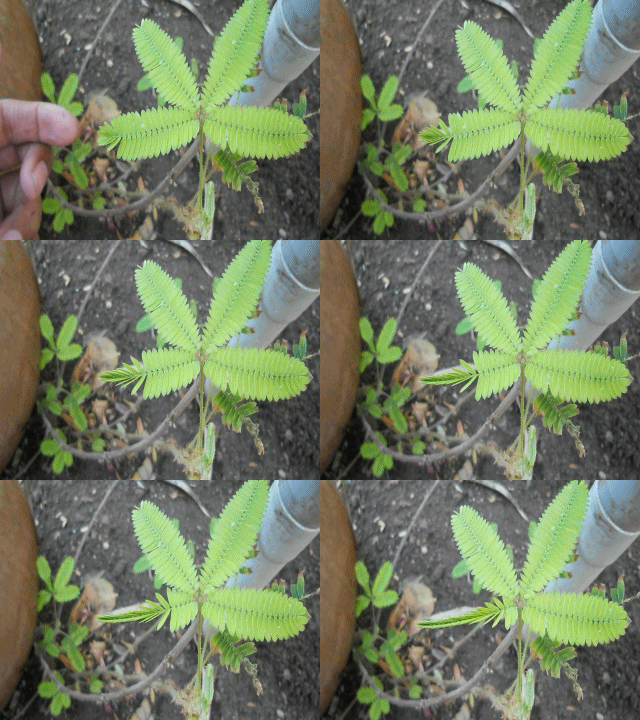
When it comes to playing with plants, there is no greater pleasure than touching the leaves of the “touch-me-not” plant and watching them recoil, shrink, and “go to sleep.” I did this a lot as a child and still do it when the opportunity presents itself. As an adult, I have often wondered what causes such a response from the plant and how it manages to do this.
Mimosa pudica is not the only plant of this species to exhibit ‘rapid plant movement,’ as the behavior is called; it is simply the most popular. In 300 BC, the Greek philosopher Theophrastus mentioned a plant that would ‘wither up and collapse’ and then come to life again and flourish. The plant Theophrastus was referring to was most likely part of the genus Mimosa and, according to some research, could have been the species M. asperata.
The Mimosa Pudica Shows Thigmonasty
These rapid movements aren’t unique to Mimosa species. When the carnivorous Venus flytrap senses an insect between its jaw-like leaves, it clamps the leaves shut to trap its prey. The bunchberry dogwood (Cornus canadensis) catapults pollen from its stamens in under half a millisecond when an insect trips a tiny petal trigger, while the peyote cactus (Lophophora williamsii) has touch-sensitive stamens that slowly curl inward to deposit pollen on a visiting pollinator. Plants in the Cardamine genus (such as hairy bittercress) have seed pods that recoil and fling their seeds metres away when touched.
These are called nastic movements: any movement that occurs in response to a stimulus. If the stimulus is a touch or contact stimulus such as the wind, the resulting movement is called seismonastic movement or thigmonasty. If the stimulus is heat, they are called thermonastic movements. If they are light reactions, the movements are photonastic, while day and night-based movements are called nyctinastic movements.
Nastic movements are different from tropic movements. Tropic movements are directional — bending toward the stimulus. Phototropic sunflowers move to face the light of the sun. Nastic movements, by contrast, are non-directional responses to a stimulus.
Mimosa Pudica’s Leaves Bend Due To A Change In Turgor Pressure Of Its Cells
The touch-me-not plant plant closes remarkably fast for a plant. Within a second, all the leaflets in that section are shut. How does the plant manage to close? The plant wilts on command.
The part of the plant that “wilts” is called the pulvinus, a pad-like swelling at the base of the leaf that is flexible enough to twist.
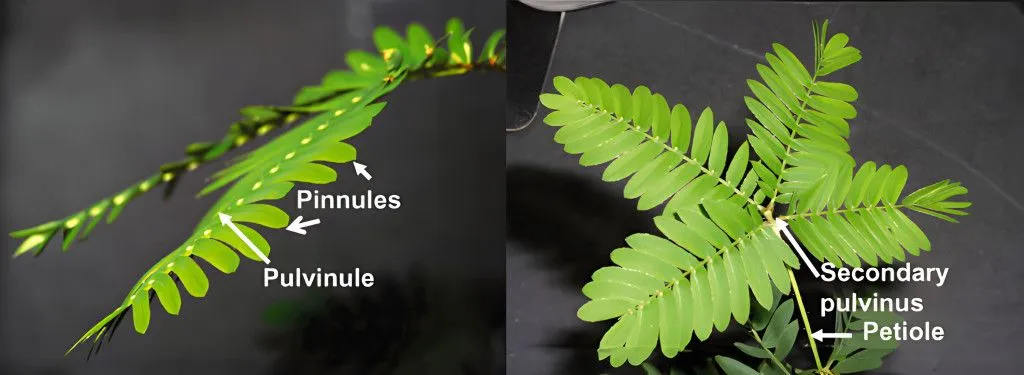
A set of cells in the pulvinus, called the extensor cells, lose water en masse — shedding roughly a quarter of their volume in seconds. This loss of water decreases the turgor pressure of the cells. The turgor pressure is the force that the water within the cells exerts on the cell walls, helping the cells to maintain their shape. Think of a juicy grape compared to a dry raisin.
When you touch the plant, a signal reaches the pulvinus cells, which causes potassium (K+) and chloride (Cl-) ions to exit the cells. This creates a chemical gradient, more ions outside the cell than inside (the outside is “saltier” than the inside). Water molecules also leave the cell through osmosis to balance the concentration of ions inside and outside the cell.
Water leaving the extensor cells leads to decreased turgor pressure, causing the cells to become flaccid and bend.
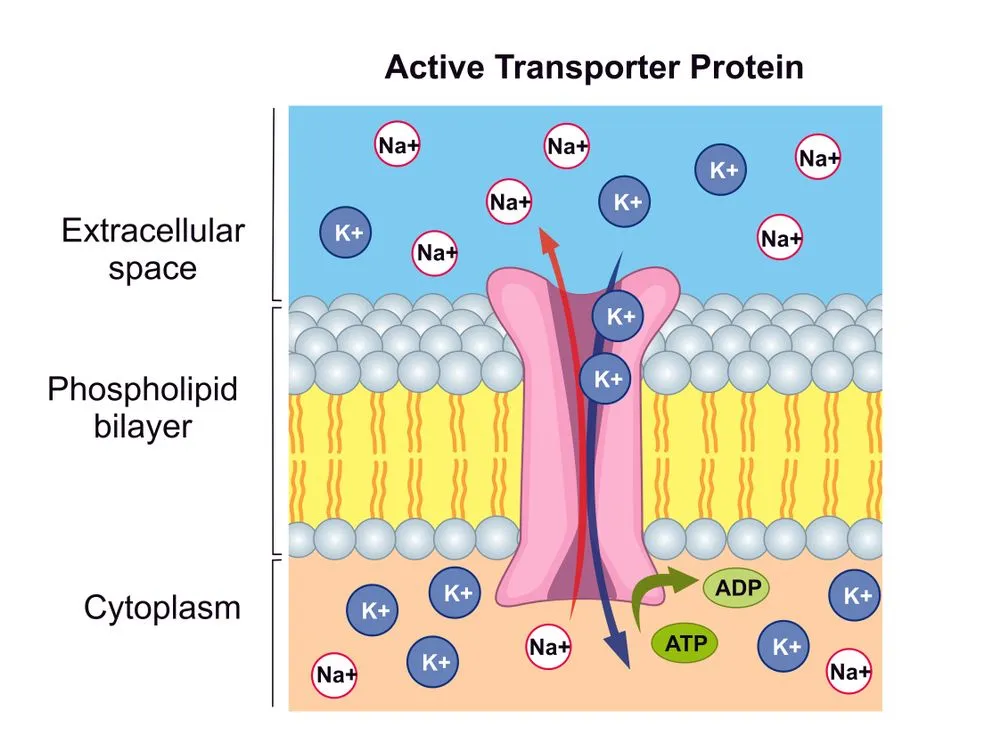
The cells might also lose water because their environment has more sugar. Some evidence suggests that the plant releases sucrose from the phloem into the apoplast, the extracellular area of a plant. This also promotes osmosis.
The pulvinus cells in M. pudica also have a protein “skeleton” that helps the cells maintain their shape. The cells change their skeleton structure, which allows them to flex.
How Does The Entire Touch-me-not Know To Recoil?
For decades, we knew that electrical and chemical signals travelled through the plant, but the actual messenger was elusive. In a 2022 study published in Nature Communications, Hagihara and colleagues finally caught the signal in the act. Using fluorescent calcium sensors, they watched a wave of calcium ions race from the wound site through the plant, reaching the pulvinus in under a tenth of a second — with the leaflets folding immediately afterwards.
Even more telling, the team used CRISPR to engineer Mimosa plants that couldn’t move. Those immobile plants suffered significantly more insect damage than their twitchy cousins — direct evidence that the rapid leaf-folding really is a defence, not just a curiosity.
Do Mimosa Pudica Leaves Also Close At Night?
Here is the part that surprises people: you do not need to touch the plant at all. Every evening, a Mimosa pudica quietly folds its leaflets together and lets its leaf stalks droop, then opens them again at dawn. This nightly folding is a separate trick called nyctinasty, the day-and-night movement mentioned earlier, and it is what people mean when they say the plant "goes to sleep."

The hardware is the same as the touch response. The motor cells in the pulvinus pump out potassium ions, water follows by osmosis, turgor pressure collapses, and the leaflet folds. The difference is timing. Thigmonasty is a fast, one-off reaction to being touched, while nyctinasty is a slow, daily rhythm tied to the cycle of light and dark.
What makes the night-time folding remarkable is that the plant keeps a clock of its own. In 1729, the French astronomer Jean-Jacques d'Ortous de Mairan placed a sensitive plant in a dark cupboard and found that its leaves carried on opening during the "day" and closing at "night" even with no light reaching them. The rhythm was coming from inside the plant, not from the Sun. That single observation is now regarded as the birth of chronobiology, the study of the internal biological clocks that we now know tick away in everything from plants to people.
So why fold up after dark at all? Botanists still argue about it. Charles Darwin thought folded leaves lose less heat to the cold night sky, shielding them from chilling. Others have suggested the movement sheds surface water or limits night-time water loss. A more recent idea proposes that tucking the leaves away exposes nibbling insects to nocturnal predators, turning sleep movements into an indirect defense against herbivores. A 2019 review concluded that, after almost three centuries of study, the true function of plant "sleep" is still unsettled, a humbling reminder of how much remains unknown about even a common weed.
Mimosa Pudica Folds Its Leaves As A Predator Avoidance Mechanism.
As fascinating as we might find this behavior, M. pudica also faces serious costs when it recoils. First, it takes extra energy to recoil. Second, it loses time in the sun photosynthesizing. No photosynthesis, no energy, no survival.
So, if recoiling costs the plant energy and the opportunity to produce more energy, why does it continue this wasteful mechanism?
To evade predators.
If a herbivore comes along and starts nibbling on the Mimosa plant, bending the leaves inwards and drooping makes it difficult for the predator to tear off the leaves, exposing the plant’s thorns.
Drooping also gives predators the impression that the plant is dead or dying, therefore not as appealing as fresher, potentially more nutritious plants. The rapid movement also helps the plant dislodge insects that may threaten the plant.
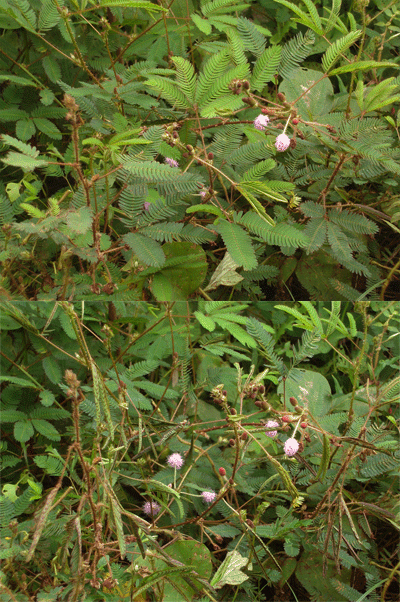
There is always an energy trade-off when it comes to predatory avoidance behaviors, and Mimosa plants take a risk every time they close. Studies on the effect of light intensity have shown that the Mimosa plant takes more time to reopen its leaves under high light conditions, which means that it is willing to take a greater risk to avoid predators when light is abundant.
However, Mimosa’s response isn’t consistent across all stimuli. Just as animal responses become dulled or get habituated to certain repeated stimuli, especially those that aren’t life-threatening (like a loud, repeating sound), research has shown that the movements of the Mimosa plant also show habituation. A study published in 2014 showed that M. pudica shows learning behaviors toward certain stimuli under favorable environmental conditions. Behavioral research in plants is still in its infancy but has exciting potential to teach us about how life “learns” and how such behaviors might have evolved.
References (click to expand)
- Braam, J. (2004, November 17). In touch: plant responses to mechanical stimuli. New Phytologist. Wiley.
- Kameyama, K., Kishi, Y., Yoshimura, M., Kanzawa, N., Sameshima, M., & Tsuchiya, T. (2000, September). Tyrosine phosphorylation in plant bending. Nature. Springer Science and Business Media LLC.
- Jensen, E. L., Dill, L. M., & Cahill, J. F., Jr. (2011, March). Applying Behavioral-Ecological Theory to Plant Defense: Light-Dependent Movement in Mimosa pudica Suggests a Trade-Off between Predation Risk and Energetic Reward. The American Naturalist. University of Chicago Press.
- Gagliano, M., Renton, M., Depczynski, M., & Mancuso, S. (2014, January 5). Experience teaches plants to learn faster and forget slower in environments where it matters. Oecologia. Springer Science and Business Media LLC.
- Sibaoka, T. (1969, June). Physiology of Rapid Movements in Higher Plants. Annual Review of Plant Physiology. Annual Reviews.
- Minorsky, P. V. (2019). The functions of foliar nyctinasty: a review and hypothesis. Biological Reviews.
- An Introduction to Chronobiology, Part I. The BioClock Studio, University of California, San Diego.