Grafting is a technique where two pieces of living plant tissue – the upper "scion" and the lower "rootstock" – are joined so their vascular cambium layers line up and they heal into a single plant. The two parts are usually of the same species or a closely related one. Used for at least 4,000 years, grafting lets growers propagate clones and combine the best traits of two plants into one.
Have you ever heard of a plant called the ‘Pomato’? It is a hybrid plant that bears both potatoes and tomatoes!
History, regardless of location or era, has time and again told the tale of taking two parts of a plant, joining them, and creating a version more suited to the farmer’s desires. Be it citrus fruits in China or the joining of almonds with plums in Rome, this is an ancient and fascinating practice.
This time-honored tradition is more commonly known as the agricultural technique of grafting.
What Is Grafting?
In very simple terms, grafting means taking two pieces of living plant tissue, joining them together, and hoping they fuse and grow as a single plant.
The upper piece, the one that will produce the desired branches, leaves and fruit, is called the scion. The lower piece, which provides the roots and lower stem, is called the rootstock (or simply "stock"). When the two are aligned correctly, their thin layer of dividing cells called the vascular cambium – which lies just under the bark – knits together. The healed cambium reconnects the xylem and phloem, allowing water and nutrients to flow from rootstock to scion as if the plant had grown that way from a seed.
Because the scion keeps its own genetic identity, every fruit, flower or leaf it produces is a clone of the plant that scion was taken from. The rootstock contributes its root system, its lower stem, and often desirable traits like dwarfing or disease resistance.
How Old Is Grafting Technique?
Quite. Botanists trace grafting back roughly 4,000 years to ancient China and Mesopotamia, where farmers were already propagating fruit trees this way. Early Chinese texts say the technique was inspired by the natural sight of two branches of different trees twining together until they fused. The Greeks and Romans wrote about grafting almonds onto plums, figs onto mulberries and apples onto a range of stocks; by 2,000 years ago they had already documented graft incompatibility – the fact that not every pairing works.
Scion-Root Grafting
The most common form is scion-root grafting: the scion (a young shoot with a few buds) is cut to expose its cambium and slotted into a matching cut on the rootstock so the cambium layers touch. The join is wrapped with tape or grafting wax to hold it in place and to keep it from drying out or being invaded by pathogens.
Different cuts are used for different jobs. Whip-and-tongue and cleft grafts are common for fruit trees, budding (inserting a single bud under the rootstock’s bark) is the workhorse of citrus and rose nurseries, and approach grafting – where two living plants are partially cut and held together until they fuse – is used when extra security is needed.
How Do The Two Parts Form A Single Plant?
The magic happens at the cambium. When the two cut surfaces are pressed together, the wounded cells release signalling molecules that recruit nearby cambium cells into a fast burst of division. Within days, a soft mass of unspecialised cells called callus bridges the gap. Over the next few weeks, those callus cells differentiate into new xylem and phloem, restoring the plant’s plumbing across the join. Once water and sugars are flowing between scion and rootstock, the graft is "taken" – and from that point onward, the two pieces behave as one plant.
Can All Plants Be Grafted?
No. Grafting works best between plants that are botanically close – usually the same species, or a closely related species within the same genus or family. Apples are grafted onto apples, citrus onto citrus, tomatoes onto potatoes (both members of Solanaceae, which is how the famous "Pomato" or "TomTato" is made). The further apart two plants are taxonomically, the more likely the graft is to be rejected: the cambium layers fail to fuse, the join never fully heals, and the scion dies. Monocots like grasses, palms and lilies are generally not graftable because they lack a continuous vascular cambium.
Benefits Of Grafting
Grafting is so widespread because it lets growers stack desirable traits in one plant:
- Cloning a particular variety – every apple in a commercial orchard with the same cultivar name is a graft, since apples do not breed true from seed.
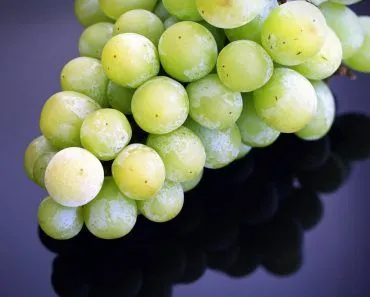
- Adding disease or pest resistance from the rootstock (the classic case: European grapevines were saved from phylloxera in the 1800s by grafting them onto American rootstock).
- Dwarfing – using a small rootstock to keep a tree compact for easier picking.
- Shortening the time to first fruit, since the scion is already mature.
- Combining different scions on the same rootstock to create "family trees" that bear several varieties of fruit at once.
- Producing the occasional ornamental novelty, like the Pomato or arbosculpture (living-tree sculpture).
Can You Graft Plants At Home?
Yes and no. Grafting requires patience, knowledge of botany, environmental maintenance, and an abundance of care.
Therefore, before you go off chopping and joining different plants together, it’s essential to have enough knowledge. One must also be careful, as it’s possible to introduce pathogens from one species to another.
So, next time you see two trees joined together or go to a garden with arbosculpture features, remember that these wonders are a product of the ‘Art of Grafting’!