Table of Contents (click to expand)
Bonsai trees stay small because growers keep them in shallow pots and repeatedly prune the roots, branches, and new shoots, while wiring guides the shape. They are not a dwarf species; they are ordinary trees and shrubs kept miniature. Planted in open ground, the same tree could grow to full size.
While growing up, most children are advised by parents and teachers that they should treat everyone the same, even if they look, act, or speak differently. We are taught that people come in all shapes, colors, creeds, and of course – sizes!
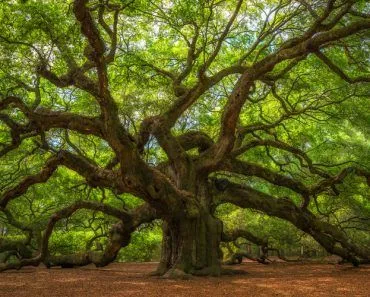
However, we often forget that rule when we turn our eyes out on the natural world. We classify things based on them being different, and we’re fascinated by weird anomalies of nature. For example, when you think a tree, you normally picture a broad canopy above you, with a wide trunk and gnarled bark. Perhaps you imagine sitting under it and reading a book.
I doubt you’re thinking of a tiny tree that can practically fit in the palm of your hand!
We’re talking, of course, about the legendary bonsai trees of Japan. These tiny trees have fascinated scholars, artists, and westerners for centuries, and I’m sure you’ve asked the same question as I have…. why are bonsai trees so small?
What Is A Bonsai Tree?
First of all, what most people don’t know is that bonsai is not actually a species of tiny tree; bonsai is the word that describes the art form itself – growing small trees in a container. A bonsai tree can be any number of different trees that can be appropriately cultivated and shaped in that particular way. These are ordinary trees and shrubs, not hereditary dwarfs, which is the single most important thing to understand about them. The art originated in China, where the practice of growing trees in trays and pots (known as penjing) goes back well over a thousand years. From the 6th century onward, Japanese imperial envoys and Buddhist students returning from China carried these container plantings home, and by the Kamakura period (roughly the 12th and 13th centuries) the Japanese had developed bonsai into a refined art form, often as a vehicle for meditation and personal reflection.
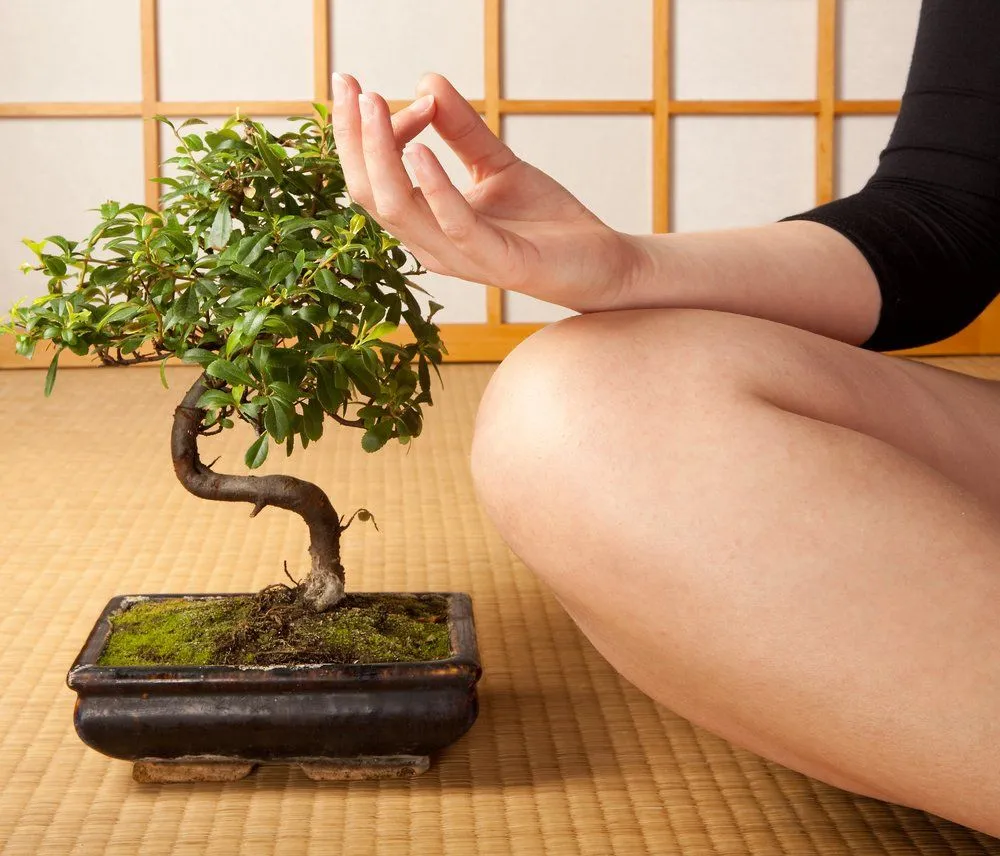
Japanese bonsai is all about taking care of the tree, pruning it and cultivating it to grow strong, albeit small. Other variations of bonsai include creating scenes from nature, but in Japan – the home of bonsai trees – they remain focused on growing those trees. Now, these trees aren’t just some miniature species; that would be far too easy!
Bonsai Tree Facts
When you limit the space in which something has to grow, it must adjust. By placing a tree cutting in a “bon” (a small tray/pot), you significantly limit where its roots can grow; by caring for the tree over the long term, you are able to guide the growth through meticulous pruning and shaping, resulting in these tiny trees. Certain species of tree are better than others, but generally, you want a perennial woody-stemmed tree or a bush with similar characteristics.
So how exactly do you keep a tree this small? Four techniques do the heavy lifting. First, the shallow pot itself: a small container holds only a little soil, which restricts how much water and how many nutrients the roots can take up at any one time. Second, root pruning: every couple of years the tree is lifted out and its roots are trimmed, removing the thick anchor roots and encouraging a dense mat of fine feeder roots that keep the tree healthy without fueling rapid upward growth. Third, branch and shoot pruning: the new buds at the branch tips are regularly pinched or clipped, which redirects the tree’s energy into smaller, finer twigs rather than one thick leader. Fourth, wiring: copper or aluminum wire is wrapped around trunks and branches to bend and hold them in the desired shape while they slowly stiffen into place. None of this changes the tree’s genetics; it simply keeps an ordinary tree from ever reaching its full size.
Small leaves or needles are preferable in a species for a bonsai tree, as this will allow for a comprehensive and appropriately sized tree for the aesthetic of the art form. That is the only way to describe the careful crown and root pruning process – art! Eventually, when the tree has reached its optimal size, the tree is carefully transplanted to the display pot, where it will remain.
The long-term care of a bonsai tree is the whole point of the art form; it is meant to teach practitioners the value of delicate work and the discipline of caring for other things. Bonsai trees are “judged” based on their physical appearance, which is a direct result of the time and energy invested by the gardener.
How Big Do Bonsai Trees Get?
Roots of wild trees spread several meters and tap into huge volumes of soil. For a bonsai confined to its tray, the roots are repeatedly trimmed back so they stay short, on the order of 25 centimeters (about 10 inches) or less. The contrast in the canopy is even more dramatic. The very same species that yields a palm-sized bonsai would, planted in open ground, often climb to 15 to 30 meters (50 to 100 feet) or more. A bonsai, by contrast, rarely tops 1 meter (around 3 feet), and most are far smaller, ranging from the tiny “mame” bonsai of a few centimeters up to the largest “imperial” specimens near that 1-meter mark.
Are All Small Trees Bonsais?
You may come across many other tiny trees in your life, but whether in the wild or some other hobbyists home garden, a bonsai tree is defined by a few key features. The aesthetic design to give the tree a “front”, as well as proper placement within a room to ensure its effect, are both important aspects that set bonsai trees apart.
Furthermore, there should be no trace of the artist left in the creation, it should be asymmetrical in its roots and branch distribution, properly proportional (as though you’re looking at a full-sized tree from a distance), and miniaturized. Perhaps most importantly, a bonsai tree should capture some sense of impermanence or imperfection, reflecting the general Japanese aesthetic and philosophy. This may seem a bit strange, but Japanese people take bonsai cultivation very seriously.
You would too if you spent weeks, months, and years ensuring that the tiny tree in your front room looked beautiful for every visitor to your home!
So, in short, bonsai trees are small because we want them to be. We choose the right material and the best growing conditions, and then carefully manipulate the growth patterns of bonsai trees as we see fit.
This is some serious next-level gardening!