Table of Contents (click to expand)
Sticky rice is sticky because it contains almost no amylose and is nearly all amylopectin, the branched starch that turns gluey and clumps when cooked. A mutation in the Waxy gene blocks amylose production. Ordinary rice keeps more amylose, so its cooked grains stay firm and separate.
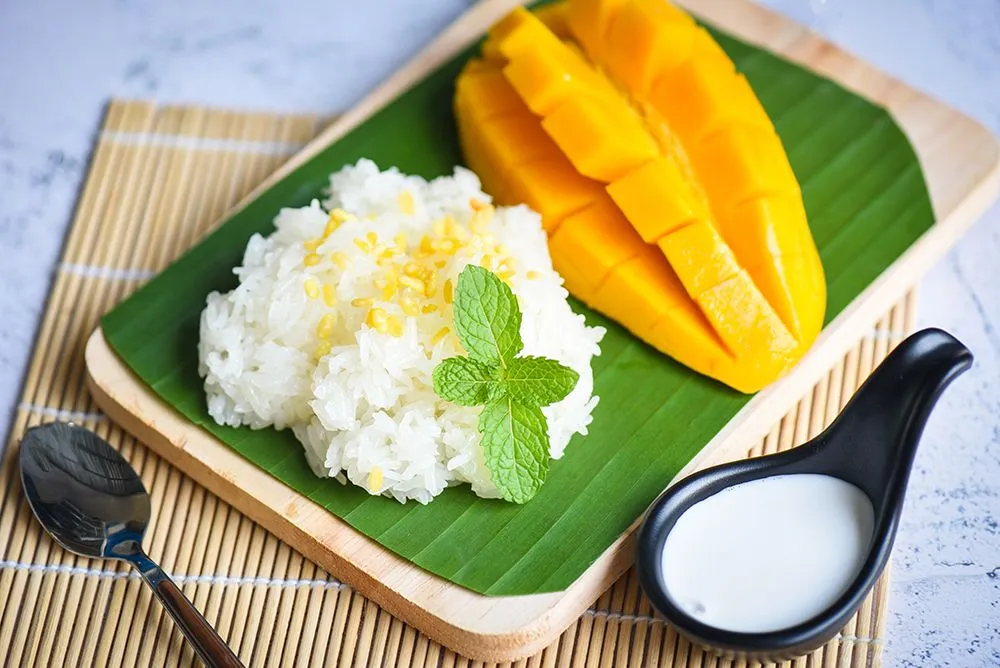
If you either live in Southeast Asia or have visited a country there, you’ve probably tried the popular and delicious dessert called ‘Mango Sticky Rice’ made from fresh mangoes, sticky rice, and coconut milk. Or perhaps you have tried the Assamese pithe (crepe) made with bora saul rice. Both delicacies and many similar rice-based recipes are an integral part of the culture of South, Southeast, and East Asia and are based on one common ingredient: sticky or glutinous rice.
A popular legend among Laotian Buddhists traces glutinous rice back roughly 1,100 years, while Chinese folklore holds that the grain has existed for more than 2,000 years.
What Makes The Rice Grains Stick?
A rice grain consists of an outer coating called the hull, along with the caryopsis or fruit. The fruit consists of outer protective layers, the germ or embryo, and the endosperm. The rice endosperm contains 72-75% starch and 6-15% protein.
The cooking quality of rice depends on how much starch it contains. Glutinous rice is characterized by opaque grains (unlike other rice types, which have translucent grains) and the cooked rice grains stick to each other.
There are two types of starch in a rice grain, amylose and amylopectin, which determine their cooking quality. Herein lies the difference between glutinous rice and non-glutinous rice.
The two types of rice differ in how much amylose they contain. All rice is mostly amylopectin, but the amount of amylose is what sets them apart. Glutinous rice contains almost no amylose at all, while non-glutinous rice (such as basmati) holds a meaningful share of amylose, up to about 30%. Because of this difference, cooked Japanese sticky rice clumps together, while cooked basmati grains stay separate and distinct.
The difference between the two types of rice comes from a gene defect. Glutinous rice varieties have a defect in a gene called the Waxy gene, or more formally, the amylose biosynthesis gene. The Waxy gene encodes the enzyme ‘granule-bound starch synthase I’.
This is a key enzyme that plants need to synthesize amylose in the seed endosperm. A defect or mutation in this gene prevents the plant from making amylose. Glutinous rice varieties, instead, have more than 90% amylopectin. This absence of amylose makes the cooked grains sticky and soft. In contrast, non-glutinous rice has up to 30% amylose.
The amylose content of rice determines the structural integrity of the cooked rice. Rice with high amylose content is firm and fluffy when cooked, while rice with low amylose content is soft and sticky when cooked.
Evolutionary studies have concluded that the glutinous trait originated in Southeast Asia during rice domestication. When early farmers noticed the sticky characteristic of this rice, they saved the seeds to grow more of these glutinous rice varieties over many generations. Thus, the single mutation in the Waxy gene has been preserved to this day.
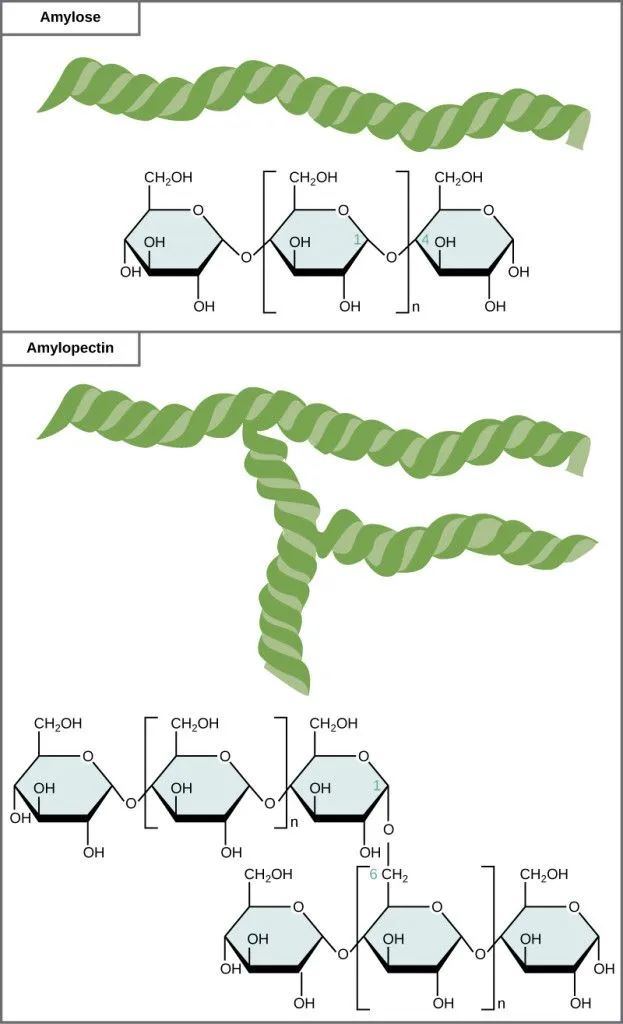
The amylose content also varies among non-glutinous rice varieties. The varieties with a lower amylose content (10-20%) are common in Southeast Asia. These varieties often have the mutation in the Waxy gene, but the function of the gene is partially restored, resulting in low levels of amylose in these types.
On the other hand, varieties with a higher amylose content (20-30%) have discrete grains when cooked and the grains do not stick to each other. High-amylose rice types are common in South Asian cuisines.
A common misconception is that glutinous rice contains gluten. Like all rice types, there is no gluten protein in glutinous rice.
What Is Sticky Rice Used For?
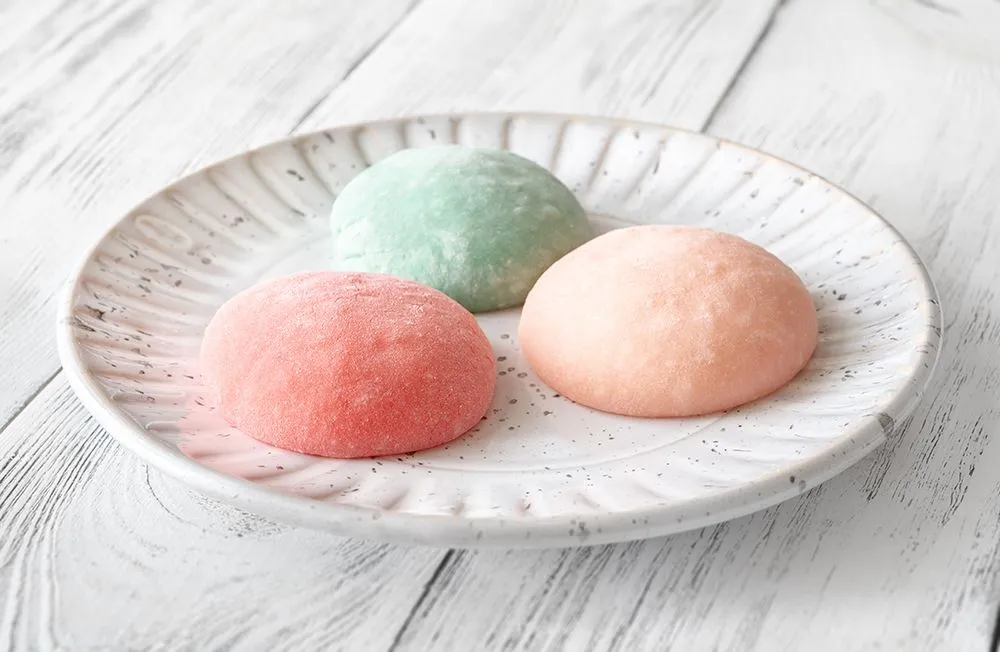
Sticky or glutinous rice is used in East Asian (Chinese, Korean, Japanese), Southeast Asian (Thai, Vietnamese, Laotian, Malaysian, Indonesian, Cambodian, Filipino, Burmese etc), and South Asian (Nepalese, Assamese, Bangladeshi) cuisines. It is used to make dumplings, rice wine, pithe (a crepe-style dessert popular in Assamese and Bangladeshi cuisine), rice cakes, rice puddings, kheer (a type of porridge), and numerous other Asian desserts and savory dishes.
Glutinous rice may be germinated before making it into rice flour (for dumplings) to increase its nutritional value.
Why Does My Regular Rice Turn Out Sticky?
Here is a question that trips up a lot of home cooks: if the bag clearly says basmati or long-grain, why does the rice still come out gummy and clumped? This time the culprit is not the Waxy gene. Even high-amylose rice is, by weight, mostly amylopectin, and that sticky starch can end up coating your grains for two everyday reasons.
The first is surface starch. Milled rice grains rub together in the bag and arrive dusted with loose starch powder. When that powder hits hot water, it gelatinizes into a paste that glues the grains together. Rinsing the rice under cold water until it runs clear washes most of that powder away, which is why a quick rinse is the single easiest fix for sticky rice.
The second is what happens during the boil. As the grains cook, some starch (mostly amylopectin, along with a little leached amylose) escapes into the water and settles back onto the rice as it cools, leaving a tacky film. A sensible water-to-rice ratio, going easy on the stirring, and letting the cooked rice rest off the heat for a few minutes all help keep the grains separate. So unless you actually bought glutinous rice, sticky results usually come down to surface starch and cooking technique, not the grain’s genetics.
Conclusion
Rice grains contain two types of starch: amylose and amylopectin. Glutinous rice varieties have a defect in the Waxy gene, which results in very low amylose production. It is because of this low amylose content that the cooked rice grains stick to each other. The soft and sticky nature of the cooked glutinous rice is what makes it an ideal ingredient in numerous Asian desserts. Contrary to popular belief, glutinous rice does not contain any gluten. Both indica and japonica rice have glutinous versions.
So, the next time you try an Asian dessert, make a note of the texture of the rice. If you find it soft and sticky, you will know that it’s made of glutinous rice with mostly amylopectin and very little amylose. If you find that the grains are distinct and separate, then the rice is most likely non-glutinous.
References (click to expand)
- Olsen, K. M., & Purugganan, M. D. (2002, October 1). Molecular Evidence on the Origin and Evolution of Glutinous Rice. Genetics. Oxford University Press (OUP).
- Wang, Y., Liu, S., Yang, X., Zhang, J., Zhang, Y., Liu, X., … Wang, H. (2022, May). Effect of germination on nutritional properties and quality attributes of glutinous rice flour and dumplings. Journal of Food Composition and Analysis. Elsevier BV.
- Adegoke, T. V., Wang, Y., Chen, L., Wang, H., Liu, W., Liu, X., … Zhang, J. (2021, May 3). Posttranslational Modification of Waxy to Genetically Improve Starch Quality in Rice Grain. International Journal of Molecular Sciences. MDPI AG.
- Li, H., Prakash, S., Nicholson, T. M., Fitzgerald, M. A., & Gilbert, R. G. (2017). The molecular structural features controlling stickiness in cooked rice, a major palatability determinant. Scientific Reports. NCBI PMC.