Table of Contents (click to expand)
Millets are small-grained cereals that grow in heat, drought and poor soils with little water, fertilizer or pesticide. They are nutritious, gluten-free and low on the glycemic index, mature in about 12-14 weeks, and already feed roughly one-third of the world. Those traits make them a strong candidate for a climate-resilient future of food.
Climate change is happening. The 2022 UN climate change conference (COP27) concluded that the world is at a critical state, and that unless global greenhouse gas emissions are cut by at least 43% by 2030, we will not be able to limit global warming to 1.5°C (2.7°F) above pre-industrial levels, the threshold widely regarded as the limit for maintaining ‘livable’ conditions on Earth. Another UN communication warned that the 1.5°C limit may not be achievable unless drastic measures are taken immediately.
Data indicate that the Earth has warmed sharply since the 1800s. In fact, the World Meteorological Organization confirmed 2024 as the warmest year on record, at roughly 1.55°C (2.8°F) above pre-industrial levels and the first calendar year to breach the 1.5°C mark. We are already experiencing the consequences of this rise in temperature in the form of extreme weather events, including droughts, unusually heavy rains, catastrophic storms, floods, fires, extreme heat and rising sea levels.
With growing concern about climate change come questions about whether our crops can survive such changes. Although there are over 50,000 edible plants, the FAO estimates that just three crops (rice, maize and wheat) provide about 60% of the world's food energy intake. A study conducted by NASA predicted that maize crop yields could decline by 24% by 2030 due to increasing temperatures.
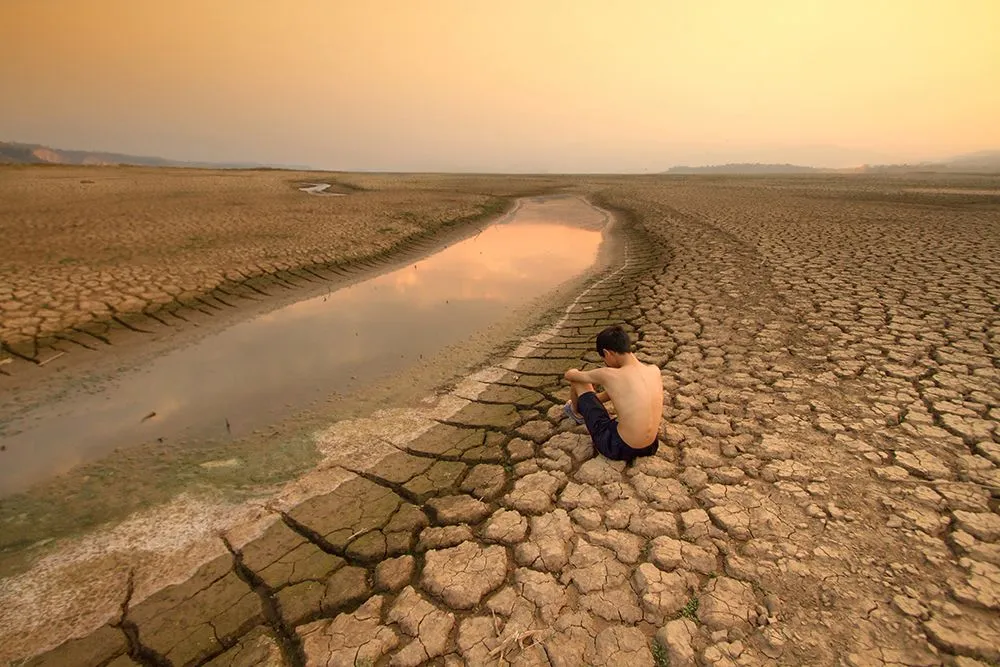
On the one hand, climate change is likely to reduce yields of our major food crops, while on the other hand, the world population is estimated to increase by 2 billion in the next 30 years. There is an urgent need to diversify our food sources and identify crops that will be adaptable to the extreme weather conditions brought about by climate change, while simultaneously providing the essential nutrients.
This is where millets, a type of cereal, come into the story.
Millets are typically grown in Asia and Africa, where they are exposed to less-than-optimal growing conditions with minimal inputs (fertilizers, water, pesticides). They are known for their ability to adapt to harsh environmental conditions, which makes them ideal candidates to diversify our global food supply.
What Are Millets?
Millets are a group of small-grain crops that belong to the grass family Poaceae. They are mostly grown in marginal lands in Asia and Africa and feed one-third of the world’s population.
Some of the more common types of millets include sorghum, pearl millet, finger millet, proso millet and foxtail millet. Sorghum and pearl millets are the most commonly grown types. Although millets are primarily grown for food and fodder, some developed countries also grow them for use as bird feed.
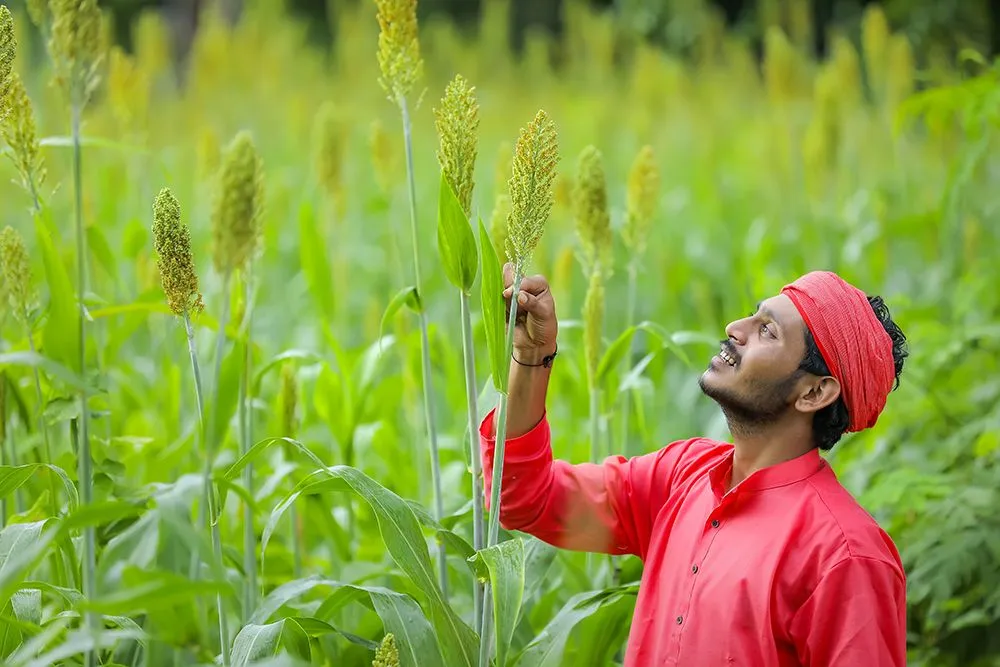
Millets have largely been grown by subsistence farmers and eaten locally. However, in recent years, there has been an increase of awareness about the health benefits of millets at the global level. The United Nations declared 2023 as the International Year of Millets to raise awareness of the health and environmental benefits of these crops.
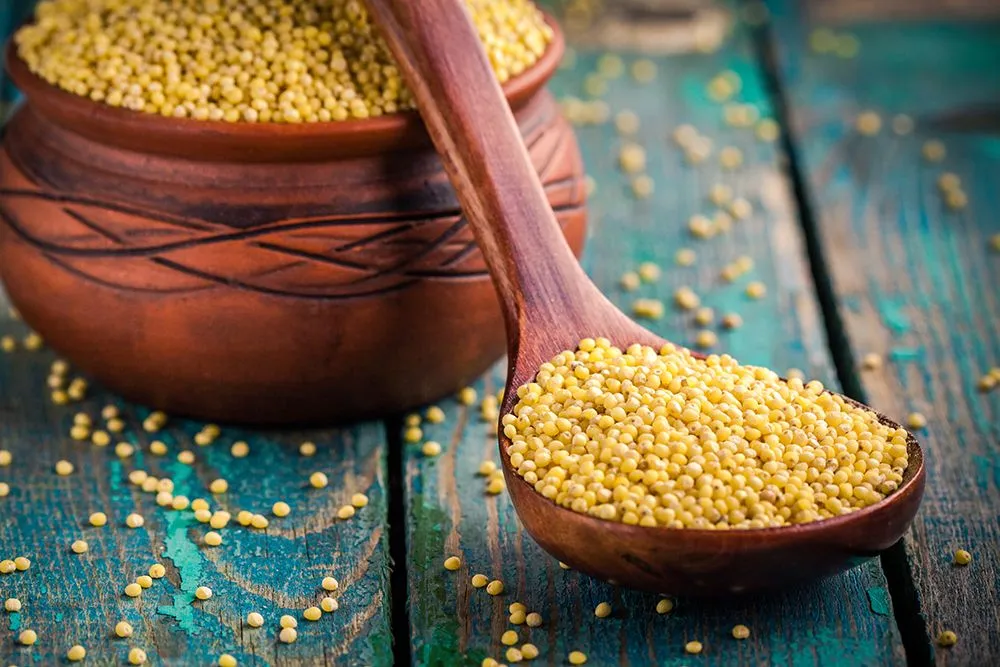
Millets are a good source of carbohydrates (60-70%), fiber (10-12%), protein (6-9%), and minerals (2-4%). They also have higher calcium and polyphenol content compared to the major grain crops. In addition, millets are gluten-free and have a low glycemic index.
Millets And Climate Resilience
The major cereal crops (rice, wheat and maize) were domesticated thousands of years ago and have since undergone hundreds of cycles of breeding and adaptation to grow under ideal cropping systems that are often supplemented with nutrients and water. As a result, they have lost their natural ability to tolerate stress.
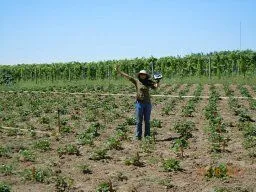
Unlike the three popular grain crops, millets are adapted to growing under harsh conditions. They are typically grown in marginal infertile lands with little or no fertilizer, limited rainfall, no irrigation, and low pesticide use. Consequently, yields of millets are relatively lower and more variable than that of the major cereal crops, but they are better able to adapt to stressful growing conditions.
Millets have diverse adaptation mechanisms that make it possible for them to survive under harsh environmental conditions, such as extreme high temperatures, drought and poor soil conditions. It is this quality of resilience that makes millets “climate smart”.
Millets have deep roots and a short life cycle, allowing them to grow and produce grain when conditions are suitable.
It takes 12-14 weeks to harvest millets from the time of sowing. In contrast, it can take 20-24 weeks to harvest rice or wheat. Some other adaptations found in millets are short height, thick cell walls, and small leaf area. Most millets have improved photosynthetic rates, better water use efficiency, and better nitrogen use efficiency, as compared to the staple cereals.
Most millets have not undergone cycles of selective breeding. There is wide genetic diversity among the different local varieties and enormous potential to identify and select those that are best suited to grow under unpredictable and extreme weather conditions.
Until now, they have been classified as ‘orphan crops’, which means that there has been limited or no investment in research in order to genetically improve these crops.
Climate change will have a direct impact on food security; there is no debating that fact. While it is important to increase yields of the staple cereal crops, it is also critical to realize that these crops are not suited to perform under extreme and unpredictable weather conditions. Therefore, we need to look into crop diversification and introduce crop species that will be able to adapt to changing conditions, while being nutritionally comparable or better than the staple cereals upon which we have grown so reliant.
References (click to expand)
- Introduction.
- Layek, J., Rangappa, K., Das, A., Ansari, M. A., Choudhary, S., Rajbonshi, N., … Shettigar, N. (2023, July 4). Evaluation of millets for physio-chemical and root morphological traits suitable for resilient farming and nutritional security in Eastern Himalayas. Frontiers in Nutrition. Frontiers Media SA.
- Nagaraja, T. E., Nandini C., Bhat, S., & Parveen S., G. (2023, May 9). Artificial hybridization techniques in small millets—A review. Frontiers in Plant Science. Frontiers Media SA.
- Wilson, M. L., & VanBuren, R. (2022, June). Leveraging millets for developing climate resilient agriculture. Current Opinion in Biotechnology. Elsevier BV.
- Choudhary, P., Shukla, P., & Muthamilarasan, M. (2023, April). Genetic enhancement of climate-resilient traits in small millets: A review. Heliyon. Elsevier BV.
- Bandyopadhyay, T., Muthamilarasan, M., & Prasad, M. (2017, July 18). Millets for Next Generation Climate-Smart Agriculture. Frontiers in Plant Science. Frontiers Media SA.