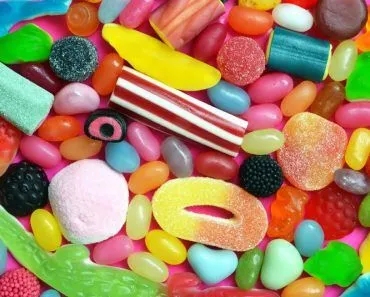
Gummies are made by cooking a syrup of gelatin (or pectin, for vegan versions), water, sugar, corn syrup, flavors and colors, then pouring the hot mix into starch-lined molds shaped like bears, worms or whatever the brand wants. The trays cool overnight, the candies set, and a sugar or wax coating is applied before packaging. The same basic recipe underpins everything from Haribo bears to multivitamin gummies.
Gummy bear candy is a yummy confection made of gelatin, sweeteners, and other ingredients that come in varied shapes and in vibrant colors. Due to its flexible nature, it can be molded into a wide gamut of shapes and sizes, making it one of the most versatile confectionary items. Although it was first developed in Germany in the early 1900s, it was not until the 1980s that it became a fad, especially in the US.
History Of Gummy Candy
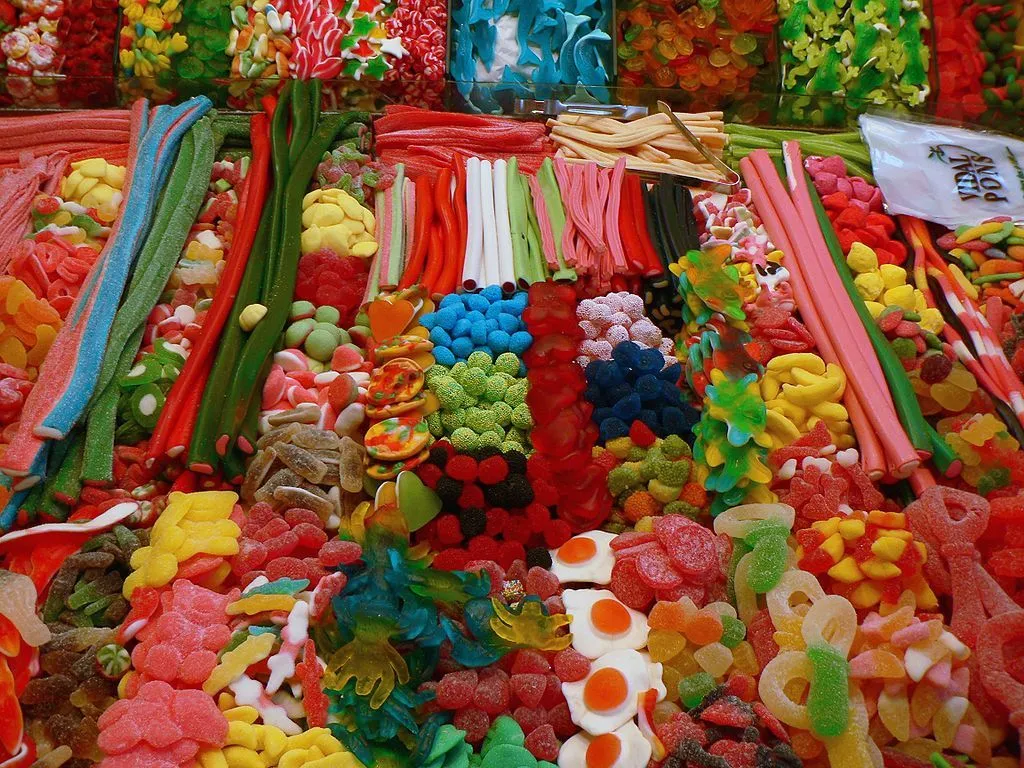
Gummy candy signifies a major advancement in candy technology. The technology used to manufacture gummy candies is derived from early starch and pectin formulations. German entrepreneur Hans Riegel is often credited for mass producing gummy candies first in the 1920s by establishing a company called Haribo. The global expansion of Haribo was restricted by World Wars and the Cold War in the mid-1900s. However, in the 1980s, when Haribo finally entered the shores of the US, its gummy candy product fast became a fad amongst the American consumers. The popularity was so great that even the other players in the sweet and confectionery business, like Hershey and Brach’s, started manufacturing their own gummy candy. Today, this succulent candy is available in countless shapes ranging from different animals to every fruit under the sun.
Raw Materials Needed To Make Gummy Candy
Experienced chemists and food technologists skillfully develop gummy candy recipes that are simply delectable. They blend together an assorted mix of ingredients and control various characteristics of the gummy candy, such as taste, texture and shape.
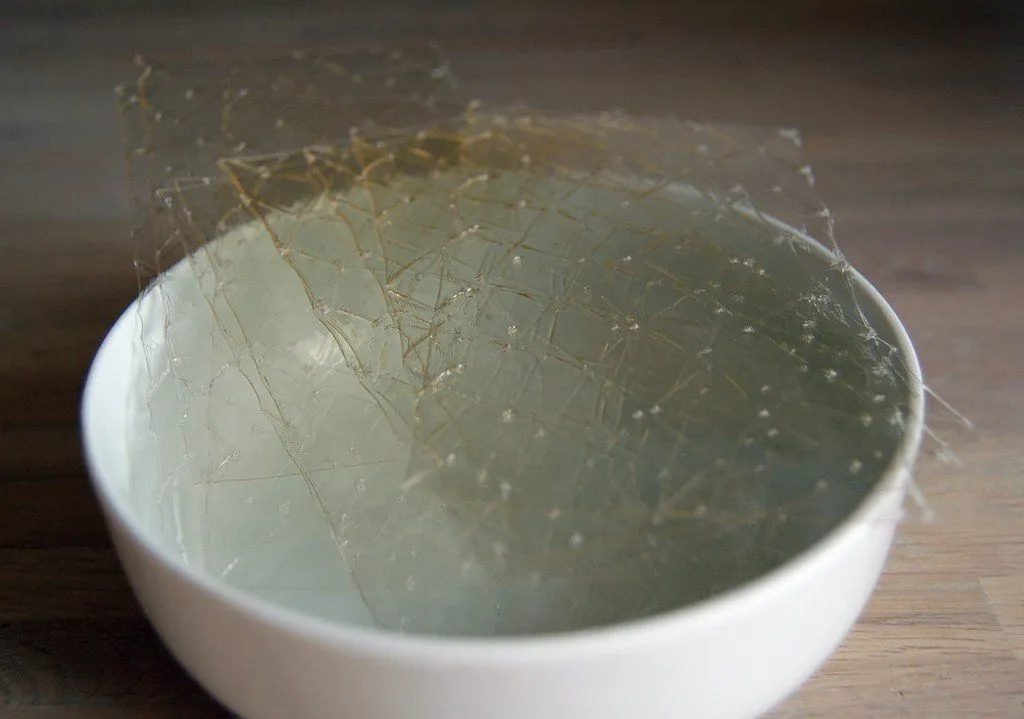
Gelatin is the main ingredient of gummy candy, with secondary ingredients being water, sweeteners, flavors and colors. Gelatin is a protein derived from tissues in animals. It forms a thick, gel-like solution when it is mixed with water. When mixed in an appropriate concentration, the gel takes on the texture of chewy gummy candy.
Gelatin, the main ingredient, is tasteless and odorless, so sweeteners and flavorings are added to give gummy candy its sweet taste. Different types of sugars are added as sweeteners, depending on the gum candy. Derived from sugar cane or beets, sucrose provides a high level of sweetness to most gummy candy. At times, fructose is added, instead of sucrose, as the sugar. Corn syrup is mixed with the candy, which helps in retaining the moisture. Additionally, some additives are added to prevent microbial growth on the gummy candy.
If you have seen "vegan" or "vegetarian" gummies on a store shelf, those are made with pectin (a plant fiber extracted from citrus peel and apples) or sometimes carrageenan or agar in place of gelatin. Pectin tends to give a softer, more delicate texture than gelatin, agar gives a firmer one, and carrageenan behaves much like gelatin, but the rest of the recipe (sugar, corn syrup, flavor, color) is essentially the same. That swap is what makes gummies possible for vegan, halal and kosher markets.
What Makes A Gummy Bear Chewy?
Squash a gummy bear between two fingers and it springs right back. That bounce is a molecular trick borrowed from the animal the gelatin came from.
Gelatin is made from collagen, the structural protein in hides and bones, most commonly from cattle, pigs or fish. Controlled acid or alkaline hydrolysis breaks the collagen down into long protein chains. Those chains are built from a repeating pattern of three amino acids: glycine, followed by two others that are frequently proline and hydroxyproline. In the original collagen, three such chains wind around each other into a rope-like triple helix.

This is where the cooking pays off. Above about 40 °C (104 °F), dissolved gelatin chains drift around as loose, random coils, a bit like strands of cooked spaghetti in a pot. As the mix cools below roughly 36 °C (97 °F), stretches of neighboring chains begin winding back into collagen-like triple helices, held together by hydrogen bonds. These helical junctions link up into a three-dimensional net that traps the syrup inside it. That net is the gel, and it is why a gummy stretches and rebounds instead of flowing. Because the links are physical rather than chemical bonds, the gel is thermoreversible: heat melts it back into a liquid.
Sugar is not just along for the ride. The gelling agent usually makes up only about 10% of a confectionery gel, with glucose syrup and sucrose making up most of the rest. Sugar weakens starch gels, but gelatin networks actually get stronger as sugar levels climb into the 40–60% range, up to a peak beyond which too little water is left to hold the gel together. Gelatin is graded by its Bloom strength, a standard firmness test reported in grams, and a gummy candy patent from gelatin maker Rousselot gives a preferred range of 200 to 300 Bloom.
Vegan gummies build their net differently. The high-methoxy pectin used in jams and gel candies only sets when both sugar and acid are present, while low-methoxy pectin needs calcium instead.
All that sugar also explains the long shelf life. Finished gummies still hold roughly 15–30% water, but the dissolved sugars tie up so much of it that the water activity falls below the level microbes need to grow. Glucose syrup is shelf-stable for the same reason, which is why it needs no added preservatives. (For the bigger picture, here is how food preservatives work.)
The Manufacturing Process
A starch molding process is a common way by which gummy candy is manufactured in an industrial setting. In this process, the candy is first made and then loaded into starched lined trays. These trays are then cooled overnight. Candies formed after cooling are removed from the trays and packaged. Now, let’s look more closely into the steps involved in the industrial production of gummy candy.
The manufacture of gummy candy starts with compounding. Professional factory workers, called compounders, physically pour the correct amount of gummy raw materials into the main mixing container based on the given set of instructions for the candies. Mixing containers are large tanks equipped with heating and cooling capabilities. Upon completion of the compounding process, the batch is sent to QC (quality control) labs to ensure that the candies meet the requisite specifications.

The first step in quality control involves the evaluation of the quality of raw materials. Testing involves assessing various characteristics, such as the form, odor, color and taste of the raw material. Many other characteristics, like the viscosity of the oil, pH of the liquid, and particle size of the solid are also studied by qualified chemists and technicians. The usual testing procedure involves comparing them with the company-specified or industry-specified standards. QC testing ensures that the ingredients produce good quality of gummy candy.
Once the batch passes QC and has been cooked, the flavors, colors and food acid go in last. The timing matters: acid degrades gelatin at high temperature, and flavorings are volatile, so both are added near the end of processing, usually as the mix cools.
The hot liquid candy is then pumped to a starch molding machine called a Mogul. The Mogul fills shallow trays with dry cornstarch, levels it, and stamps rows of bear-shaped (or worm-shaped) impressions into it. The machine then deposits the hot syrup into each cavity. The starch does two jobs at once. It is the mold, and it is a sponge, absorbing a significant amount of water from the candy as it sets.
The filled trays are stacked and moved into drying rooms, a step the industry calls stoving or curing. A gelatin gummy can set at room temperature in about 24 hours, while starch-based jellies are routinely dried for 24 to 72 hours to reach a final moisture of about 14–20%.
Once cured, the trays are emptied and the loose starch is separated from the candy. Pulling the candies out destroys the impressions, so the starch has to be dried, leveled and stamped again before the next round. The cleaned pieces then move along the conveyor for coating and are finally packed.
Starch molding has its downsides: the recycled starch can cause cross-contamination, and a factory needs dedicated drying chambers. That is why some manufacturers skip starch entirely and deposit the syrup into resilient, water-repellent molds made of silicone or PTFE (the material better known as Teflon). Unlike starch, these molds can be reused immediately, with no drying or re-stamping.
Why Are Gummies Shiny, Or Coated In Sour Sugar?
A freshly demolded gummy is dusty and tacky, and sugary surfaces are notoriously clingy (here is why sugary solutions are sticky). So before the bag is sealed, the candy gets one of two finishes.

The first is a thin polish of oil and wax. The ingredient list on a US bag of Haribo Goldbears, for example, ends with sunflower oil, white beeswax and yellow beeswax. The US Food and Drug Administration (FDA) recognizes beeswax as safe to use as a lubricant and a surface-finishing agent, and caps it at 0.1% in soft candy. Carnauba wax, which comes from the leaves and buds of the Brazilian wax palm, is approved for the same kinds of jobs, including as a release agent. In the FDA’s definitions, a release agent keeps food from sticking to surfaces, while a surface-finishing agent preserves gloss. That oil-and-wax polish is what gives a gummy bear its shine.
The second finish is the sour coat of sugar crystals. Compare the labels and the difference is obvious. Regular Goldbears list a single food acid, citric acid, while Haribo Sour Goldbears list citric acid, malic acid, calcium citrate and sodium malate, along with carnauba wax. Citric acid is the most widely used acid in gel candies, and confectioners reach for malic, tartaric or fumaric acid when they want a different kind of tang.
Challenges In Gummy Candy Manufacturing
Presently, the priority of gummy bears manufacturers lies in increasing the speed, efficiency, and safety of the manufacturing process. Especially in the case of the starch molding stage, safety is a major concern, because fine starch dust can explode. The US Occupational Safety and Health Administration (OSHA) lists starch, sugar and candy among the food materials that can be explosive in dust form.
As consumers are always on a quest to devour new tastes and types of gummy candy, the lifeline of the businesses involved in gummy candy manufacturing lies in coming up with new gummy flavors and colors that customers will be drawn to buy and try!
References (click to expand)
- Toasting a Gummy Candy - MIT OpenCourseWare. MIT OpenCourseWare
- Sharma, S., Walia, S., Singh, B., & Kumar, R. (2015, November 23). Comprehensive review on agro technologies of low-calorie natural sweetener stevia (Stevia rebaudiana Bertoni): a boon to diabetic patients. Journal of the Science of Food and Agriculture. Wiley.
- Foundation Food Search Options - FoodData Central - USDA. USDA Rural Development
- Burey, P., Bhandari, B. R., Rutgers, R. P. G., Halley, P. J., & Torley, P. J. (2009). Confectionery Gels: A Review on Formulation, Rheological and Structural Aspects. International Journal of Food Properties, 12(1), 176–210.
- Tarahi, M., et al. (2023). Current Innovations in the Development of Functional Gummy Candies. Foods, 13(1), 76. PMC.
- US11490634B2. Method and composition for the preparation of gelatin based gummy candies. Rousselot BV. Google Patents.
- US4704293A. Gel confections. A. E. Staley Manufacturing Company. Google Patents.
- 21 CFR 184.1973 Beeswax (yellow and white). Electronic Code of Federal Regulations (eCFR).
- 21 CFR 184.1978 Carnauba wax. Electronic Code of Federal Regulations (eCFR).
- 21 CFR 170.3 Definitions. Electronic Code of Federal Regulations (eCFR).
- HARIBO Goldbears (ingredients). HARIBO of America.
- HARIBO Sour Goldbears (ingredients). HARIBO of America.
- Combustible Dust. Occupational Safety and Health Administration (OSHA).
- Starch mogul. Wikipedia.