Table of Contents (click to expand)
K2 is the second highest mountain in the world and is located in the Karakoram Range on the border of China and Pakistan. The name K2 comes from the British surveyor T.G. Montgomerie who was the first to map the area. The “K” comes from the Karakoram Range and the “2” comes from the fact that it was the second peak that Montgomerie listed in his report.
For daring mountaineers around the world, certain peaks have an air of legend about them, along with a well-known history of killing many of those who attempt the climb. Mt. Everest, Denali, Kilimanjaro… these names are known around the world, but one of the most dangerous and famous mountains has a much simpler title – K2.
K2, Chogori, Qogir, And The Savage Mountain
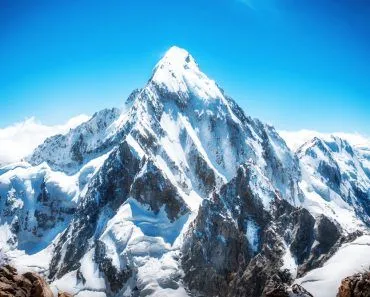
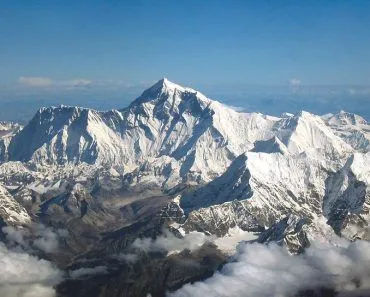
Soaring 8,611 meters (28,251 feet) into the sky, K2 is a mountain in the Karakoram Range that crosses the border of China and Pakistan. As the second-highest mountain in the world, trailing only Mt. Everest (8,848 meters), many people assume that the name K2 is due to its silver-medal standing. However, those people are wrong.
While the simple name K2 is known around the globe, depending on where you hail from, you might have a very different name for this deadly summit. In northwestern India and Pakistan, the Balti language is spoken, where K2 is commonly called Chogori or Kechu. On the other side of the mountain, in China, the mountain is referred to as Qogir. Climbers from all over the world have also agreed on a more informal nickname for the mountain – Savage Mountain – due to the high mortality rate and unpredictable weather conditions found on the ascent.

Even with all those other options, most people still know the mountain as K2, a title that can be traced back more than 150 years ago, when a British surveyor named T.G. Montgomerie was exploring the area and mapping its topography. K2 lies in the Karakoram Range, which is where the “K” comes from, and it was the second peak that he listed in his report, hence the “2”. At that point, the mountain didn’t have a known name outside of the native names, so the simple designation stuck. From Mount Haramukh, more than 130 miles to the south, Montgomerie initially sketched the range, which included K1 (Masherbrum), the 22nd tallest mountain in the world.
In the same stretch of mountains, you can also find K3, K4 and K5, which may not be as famous as K2, but are certainly just as stunning to see. These mountains have alternative names as well (Broad Peak, Gasherbrum II and Gasherbrum I, respectively), but their “K” names are commonly used by experienced climbers.
Was K2 Ever Called Mount Godwin-Austen?
If you have ever seen K2 labeled Mount Godwin-Austen on an old map and wondered whether it was a different peak, it was not. That was a proposed name for the very same mountain. It honors Henry Haversham Godwin-Austen (1834–1923), an English topographer and surveyor who joined the Great Trigonometrical Survey of India in 1856. He explored the remote Karakoram glaciers around K2 and was the first person to fix the mountain’s height and position with any accuracy, often working above 6,000 meters (about 20,000 feet) on terrain few outsiders had ever crossed.
Because of that pioneering work, the name Mount Godwin-Austen was put forward to commemorate him. The Royal Geographical Society ultimately rejected it, on the principle that personal names were not suitable labels for the great peaks of the region. The name never became official, and it largely faded from use. His legacy lives on instead in the Godwin-Austen Glacier, the river of ice that flows down from the southern face of K2 and forms the classic approach route to Base Camp.

So K2 has carried a remarkable cluster of names: the plain survey code K2, the Balti Chogori (from chhogo, “big,” and ri, “mountain,” so literally “big mountain”), the Chinese Qogir, the climbers’ grim nickname Savage Mountain, and the short-lived Mount Godwin-Austen. In the end the surveyor’s code outlasted them all, which is a fitting twist for a peak so much harder to climb than Mount Everest, yet far less famous.
Where Is K2 Located?
K2 sits in the Karakoram Range, a separate mountain system that runs to the northwest of the Himalayas. The summit itself lies right on an international border: the southern and western slopes fall within the Gilgit-Baltistan region of Pakistan, while the northern side reaches into the Taxkorgan area of Xinjiang, China, on the Trans-Karakoram Tract. In other words, the mountain belongs to both Pakistan and China at once, with the dividing line running across its highest point.

This location is a big part of what makes K2 so formidable. It is hundreds of kilometers from the nearest city, and the standard approach is a long trek up the Baltoro Glacier from the village of Askole in Pakistan. The Karakoram is also farther north than the high Himalayan peaks, which leaves it exposed to brutal, fast-moving storms and bitter cold even in summer. If you have ever wondered why high-altitude regions are so cold, K2 is the extreme case study, sitting more than 8.6 kilometers above sea level in one of the most remote corners of Asia.
For the record, K2 is the world’s second-highest mountain at 8,611 meters (28,251 feet), a figure first established by survey work in the 1850s and refined ever since. Despite ranking second in height, it is widely regarded as a far tougher and deadlier climb than Everest, a reputation we turn to next.
The Deadly History Of K2
While the story of K2’s name may not be particularly exciting, the name itself can strike fear in the heart of many amateur climbers. Not only is K2 the second-tallest mountain in the world, and the second mountain in the Karakoram Range, but it is also the second-deadliest mountain on the planet. In terms of fatality rate, only Annapurna in Nepal is more dangerous.
The mountain is mostly attempted in June, July and August. For decades it was considered impossible to climb in winter, until a team of Nepalese climbers led by Nirmal Purja finally summited K2 in winter for the first time on January 16, 2021. Extremely severe weather and storms that can last for weeks still make this a brutal ascent, which is part of the reason for its roughly 20% mortality rate, compared to Everest’s ~3%. The first successful summit came in 1954, by Italian climbers Lino Lacedelli and Achille Compagnoni.
After an unusually successful 2022 season (more than 150 people summited in a single year), the cumulative total has climbed to over 700 successful ascents and around 90 deaths. Despite Everest’s extra 240 meters (~800 feet), Everest has been summited more than 11,000 times since 1953, more than 15 times as many as K2. Even so, Everest is the one that gets all the attention – and the Hollywood treatment.
While the name may not be as imposing or regal as some of the other well-known peaks around the globe, K2 makes up for its simple name by being one of the most rugged, savage and unforgiving areas on Earth. Happy Climbing!
References (click to expand)
- K2 - Wikipedia. Wikipedia
- Karakoram - Wikipedia. Wikipedia
- Thomas George Montgomerie - Wikipedia. Wikipedia
- Why K2 Will Never Become Everest | The Blog on alanarnette .... alanarnette.com
- How Much Does it Cost to Climb Mount Everest? – 2023 Edition. alanarnette.com
- The Eight-Thousanders. NASA Earth Observatory
- Henry Haversham Godwin-Austen. Wikipedia