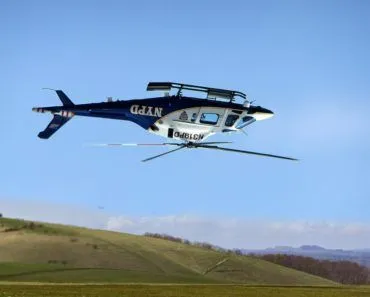
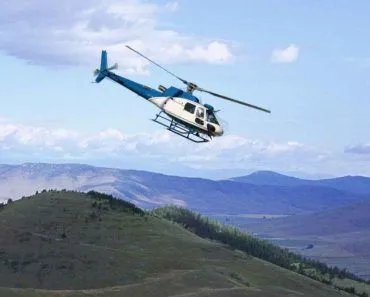
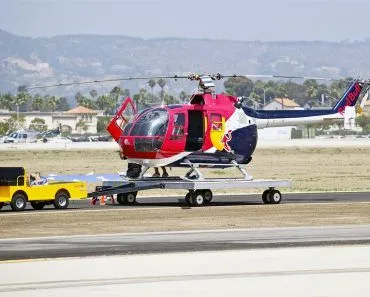
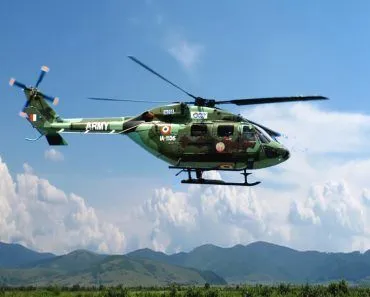
Helicopters can’t fly very high because the thin air at altitude provides less lift for their rotors and less oxygen for their engines. Most helicopters have a service ceiling of around 3,000–4,500 meters (10,000–15,000 feet), so reaching the top of Mount Everest (8,848.86 m / 29,031.7 ft) is beyond the operational capacity of an ordinary machine.
I recently watched Everest, a 2015 movie about the survival attempts of two separate groups stranded on Mount Everest – the tallest mountain on Earth. Without giving away too much of the plot, I’ll just say that the climbers struggle quite a bit in the course of their journey… obviously. In real life, many climbers do face great difficulties in returning safely to the base camp of Everest; many climbers actually die in the process.
The question is, why can’t climbers stranded at the top of mountain peaks be rescued by helicopters?
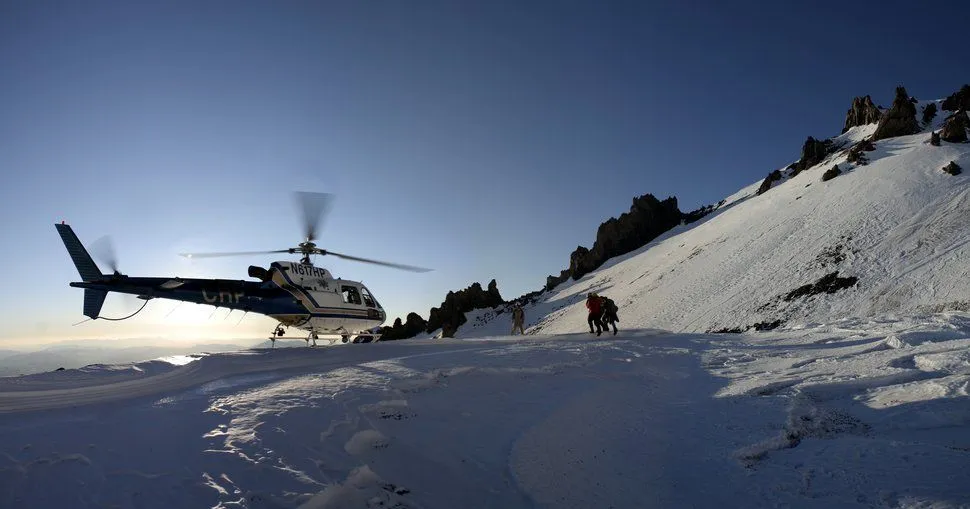
Obviously, people more actively involved in mountaineering expeditions are smart enough to have thought about this issue. The reason why rescue operations aren’t carried out by helicopters is fairly simple: most helicopters aren’t actually designed to fly at such high altitudes. Due to the design of their engines, it’s beyond their operational capacity to undertake typical operational maneuvers, such as landing and hovering, in high-altitude conditions.
So, the real question is… why can’t helicopters fly at high altitudes? Well, before we get into the details of that, let’s try to understand a few things first.
How Do Helicopters Fly?
In one word: lift!
You most likely hear the term ‘lift’ in relation to helicopters and airplanes all the time. It’s essentially the force that opposes gravity and helps keep helicopters (or any object) airborne.
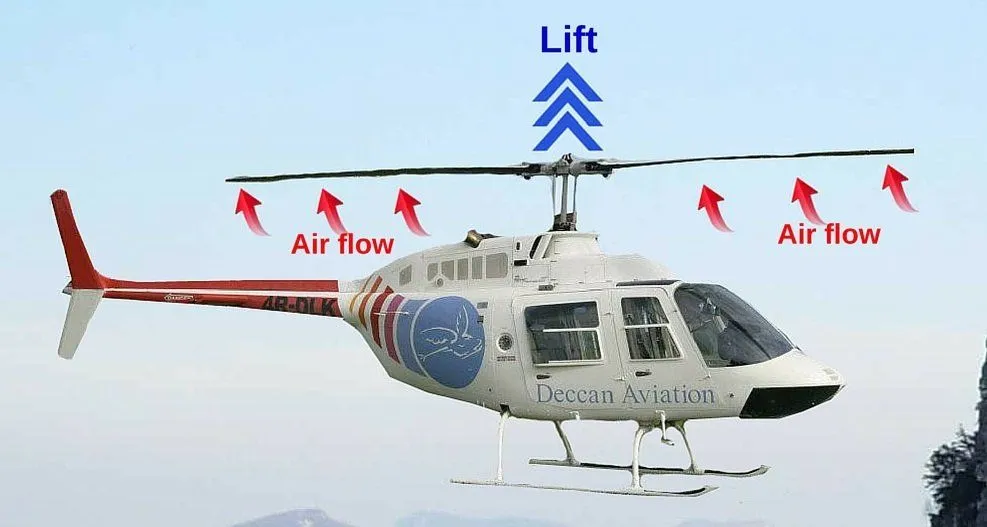
Airplanes fly by generating lift through their wings; similarly, helicopters also need lift to fly and hover in the air. In the latter, rotors (or blades) achieve this impressive feat. The rotors push air downwards, allowing the chopper to move upwards against the force of gravity.
As it turns out, the lift generated by helicopter rotors depends on a number of factors, and the density of air is one of them. Take a look at the formula for lift:
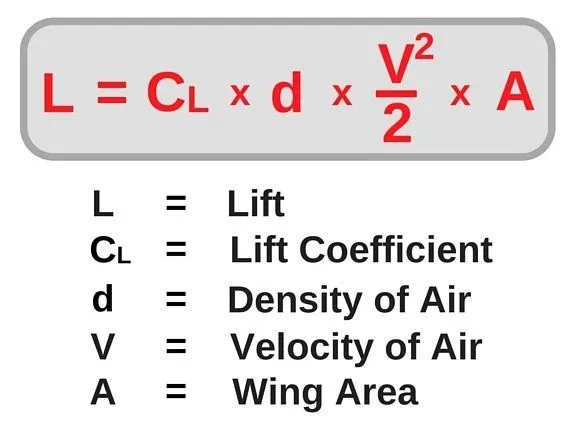
Written out in plain terms, the lift equation is L = ½ × ρ × v2 × A × CL, where L is lift, ρ (rho) is air density, v is the speed of the air over the blade, A is the blade area, and CL is the lift coefficient (a number that captures the blade’s shape and angle). The term in the middle, ½ × ρ × v2, is the dynamic pressure of the moving air.
As you can see, the lift that is produced is proportional to the density of air; the higher the density, the more lift is produced and the more comfortably the helicopter can fly, and vice-versa.
Less Air Density Means Less Lift
The air density at sea level is 1.225 kg per cubic meter (Source). However, as you go higher above sea level, air density begins to decrease. This is why people sometimes have difficulty breathing at higher altitudes in mountainous regions. Since Mount Everest is the highest peak in the world (it stands at a staggering 8,848.86 meters, or 29,031.7 feet, above sea level), the air density up there is only about 0.47 kg per cubic meter, a little over a third of the sea-level value. Therefore, the lift generated by that rarefied air also drops to roughly a third of the amount of lift that’s generated under standard sea-level conditions.
However, you still have to support the weight of the helicopter and its passengers, so you can’t accept that massive drop in lift and still stay in the air.
It’s Not Just Lift: The Engine Loses Power Too
Here’s the part most explanations skip. Thin air doesn’t only starve the rotors of lift; it also starves the engine. A helicopter engine, like any engine, has to mix fuel with oxygen and burn it to make power, and high-altitude air simply has fewer oxygen molecules packed into every cubic meter. The U.S. Federal Aviation Administration puts it bluntly: reduced air density “adversely affects aerodynamic performance and decreases the engine’s horsepower output.” So as you climb, the rotors need more power to claw the same weight out of the sky, while the engine is able to deliver less. The gap closes from both ends at once.

Engineers capture this tug-of-war in a single number called the hover ceiling. As the FAA’s Helicopter Flying Handbook explains, “as density altitude increases, more power is required to hover. At some point, the power required is equal to the power available. This establishes the hovering ceiling.” Climb any higher and the machine literally cannot hold itself up. Loading matters too: the handbook notes that “the heavier the gross weight, the lower the hovering ceiling,” which is exactly why a rescue helicopter that adds fuel, a crew and a stranded climber sees its ceiling sag at the worst possible moment. It also explains why turbine (turboshaft) engines have all but replaced piston engines on serious mountain machines: they hold onto their power far better as the air thins out.
Why Can’t Helicopters Fly As High As Airplanes?
If thin air is the problem, you might wonder how a jet cruises happily at 11,000 meters (about 36,000 feet) while a helicopter gasps at a third of that. The answer is that an airplane cheats the density problem with speed. A jet’s fixed wing makes its lift by flying fast, so even in thin air it can shove enough air over the wing to stay up. A helicopter’s “wings” are its spinning rotor blades, and they run into a hard aerodynamic wall that fixed wings never meet.

As the rotor spins, the blade sweeping forward into the oncoming air (the advancing blade) sees faster airflow than the blade sweeping backward (the retreating blade). To keep lift balanced across the disc, the slow retreating blade has to bite the air at an ever-steeper angle, and eventually it stalls. This retreating blade stall is the main reason even the fastest conventional helicopters top out near 225 knots (about 417 km/h). Thin air makes it worse: with less air flowing over the blades, the retreating side reaches its stalling angle at a lower speed, so climbing higher squeezes the flight envelope from yet another direction. At the same time, the advancing blade tip is already racing near the speed of sound, and pushing it past that brings a wall of drag and shock waves. The current world speed record for a helicopter, set by a modified Westland Lynx in 1986 at 400.87 km/h (216 knots), still stands precisely because of these rotor limits. A fixed wing has none of this lopsided advancing-versus-retreating problem, which is why airplanes can keep climbing into air far too thin for any rotor.
Special Helicopters CAN Go That High
However, helicopters that can go that high do exist. They consist of extremely powerful engines and large rotors, while also being incredibly light. However, manufacturing such helicopters is obviously quite expensive, and since the operational requirements of most helicopters don’t demand flying that high anyway, regular helicopters aren’t designed that way.
Although high-altitude conditions are unfavorable for regular helicopters, exceptions do occur. In May 2005, a French test pilot named Didier Delsalle actually landed a helicopter, a stripped-down Eurocopter AS350 B3 Squirrel, on the summit of Mount Everest, and returned to base after sitting at the summit for 3 minutes and 50 seconds! (Source) To this day it remains the highest helicopter landing ever recorded. Check out the video of his historic landing:
So, How High Can a Helicopter Actually Fly?
For most everyday choppers, the honest answer is: not all that high. Civilian helicopters typically have a service ceiling of around 3,000 to 4,500 meters (roughly 10,000 to 15,000 feet), where the rotors can barely claw out any more climb. High-performance turbine machines can push past 6,000 meters (about 20,000 feet), but that’s already exceptional. The all-time record sits far above any of this: in June 1972, Aérospatiale test pilot Jean Boulet took an SA 315B Lama to a staggering 12,442 meters (40,820 feet) before the engine flamed out in the bitter cold and he autorotated all the way back down. That absolute helicopter altitude record still stands today. (Source)
References (click to expand)
- Theory of Flight. web.mit.edu
- What are the factors that affect helicopter flight?. The Smithsonian Institution
- Helicopter Flying Handbook. Federal Aviation Administration
- Helicopter Flying Handbook, Chapter 7: Helicopter Performance. Federal Aviation Administration
- Density Altitude (FAA-P-8740-2). Federal Aviation Administration
- Retreating Blade Stall. SKYbrary (EUROCONTROL)
- Westland Lynx. Wikipedia