Some beaches glow at night because of bioluminescence in microscopic dinoflagellates such as Noctiluca scintillans (sea sparkle). When the cells are jostled by waves, footsteps or boat wakes, an enzyme called luciferase oxidizes a luciferin molecule and flashes blue-green light. The reaction is highly efficient: more than 80% of the energy is emitted as light, so very little is lost as heat.
Imagine taking a romantic walk on the beach, the soft calming sound of the waves and the sea breeze playing with your hair. The waves touch your feet as you walk along the coast, completely carefree and happy. You can appreciate nature for all its beauty, but just as you are about to walk in deeper, you realize that the water below you is glowing like stars, as if the night sky had fallen down!
You may take a closer look to see what’s going on, and while you won’t be able to see the individual glowing sources, let me tell you that they’re nothing but friendly algae!
However, this is not something that you see at every beach.
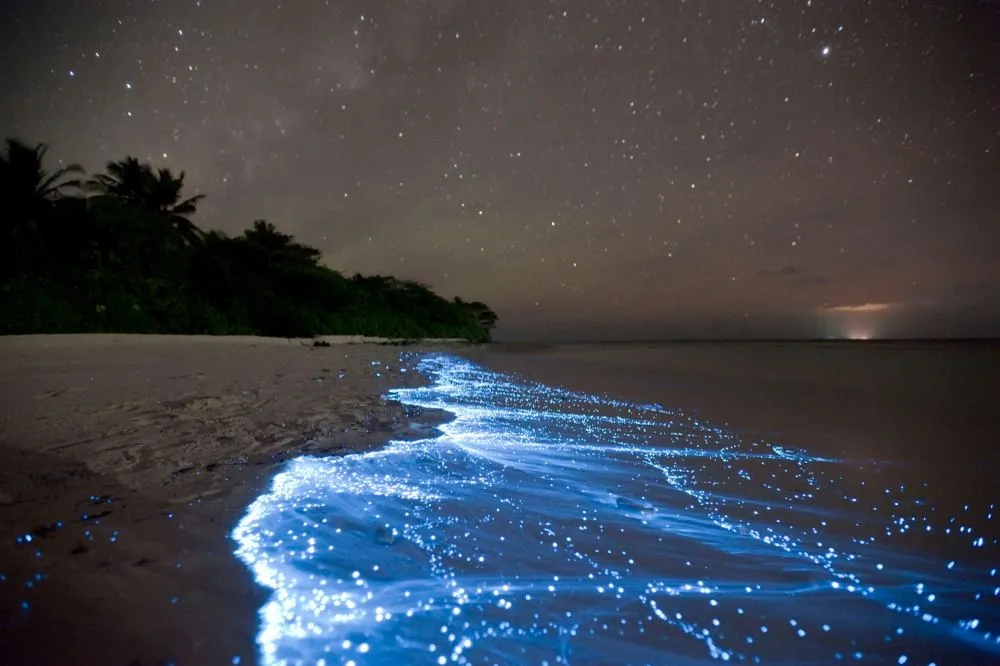
What makes these particular beaches glow like fairy lights? The simple answer is bioluminescence.
A common example of animals that possess this ability to glow are fireflies. Bioluminescence is an important form of communication in the sea and is also widely studied to understand predator-prey interactions. The process of producing light as the result of a chemical reaction occurring within a living organism is called bioluminescence.
Which Marine Organisms Possess Bioluminescence?
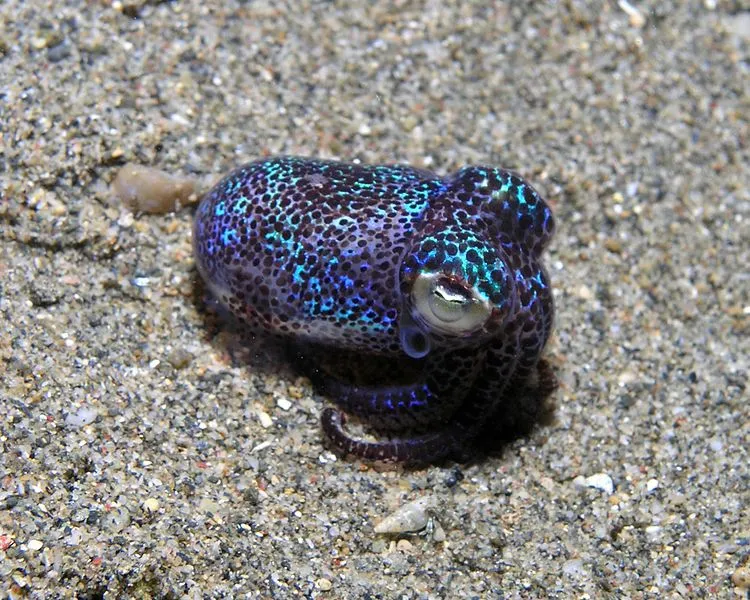
The ability to glow is not limited to algae, but also displayed by other marine organisms like certain species of bacteria, jellyfish, worms, crustaceans and fish that also possess this unique feature. In many cases, some marine animals are known to host bioluminescent bacteria as symbionts and so gain the ability to glow. The Hawaiian bobtail squid is the textbook example, with light-organ symbionts of Aliivibrio fischeri (formerly classified as Vibrio fischeri).
While multicellular organisms are more popularly recognized for this ability, unicellular organisms (algae) called dinoflagellates are marine creatures that are commonly bioluminescent.
The dinoflagellate species Noctiluca scintillans, also known as sea sparkle, is one of the many dinoflagellate species that express bioluminescence when disturbed. Bioluminescence is used as a defense mechanism to startle predators. Dinoflagellates are found all over the world in coastal waters. Contrary to the picture perfect image they create, some of their popular names include ‘sea ghost’ or ‘fire of the sea’. People might think you’re a bit odd if you told them that you saw a couple of sea ghosts at the beach last night, but it’s easier than remembering the name Noctiluca scintillans!
What Color Is Bioluminescence?
Why does the sea look blue-green in color, rather than red, pink or yellow?
Finding this answer requires that we venture into the world of wavelengths. Let’s begin by appreciating the depth of ocean water. The ocean is so deep that the light from the sun is unable to reach the ocean floor, resulting in little or almost no reflection off the ocean bed.
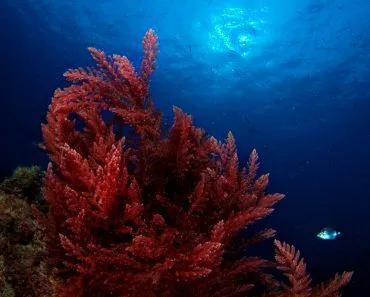
The absorption and scattering of light is what makes all the difference when we talk about the different colors of the sea. The entire visible spectrum of white light touches the sea water, but not all of it is absorbed. Water absorbs the longer wavelengths most strongly: red is absorbed within the first few meters, then orange and yellow, and green is absorbed more weakly. Shorter-wavelength blue light penetrates the deepest and is the colour that scatters back to our eyes. This blue light is reflected back to us due to the scattering effect of the water molecules.
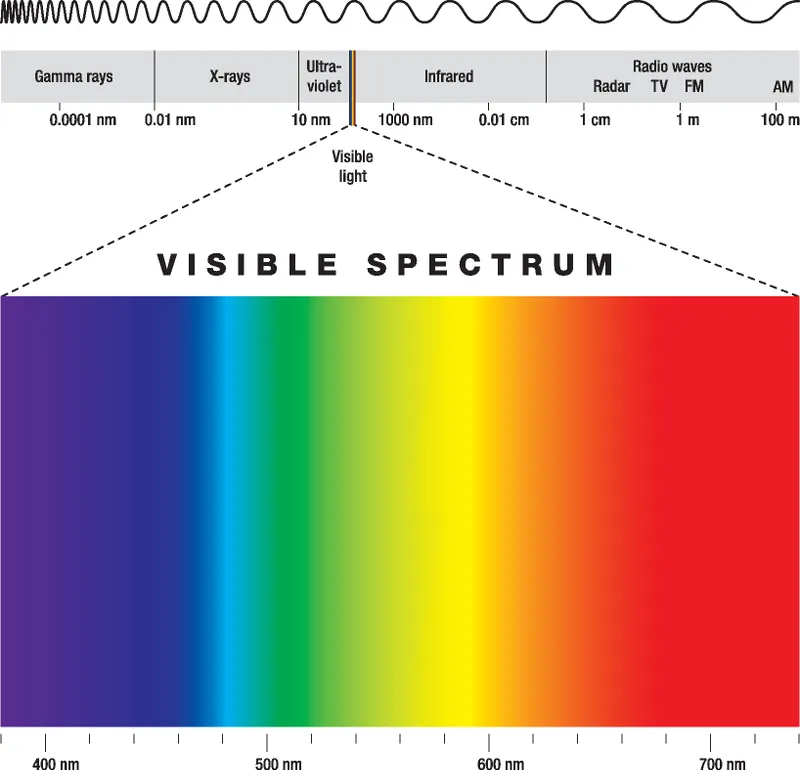
Water molecules at the shore are more scattered due to their interaction with sand and gravel, resulting in additional scattering of light. Some algae (like Noctiluca scintillans) have the ability to absorb certain wavelengths of light and then reflect back the blue light, giving us our fairytale dream of an ocean full of stars!
What Color Is The Ocean At Night?
By day the sea looks blue because water soaks up the longer red and orange wavelengths of sunlight and scatters the shorter blue ones back to our eyes. At night, that trick has nothing to work with. With the Sun gone, there is almost no light for the water to scatter, so the open ocean turns an inky black. The little light that does arrive, a touch of moonlight and starlight, is mostly absorbed rather than bounced back, leaving only a faint silver shimmer on the surface where the moon happens to reflect.
Depth makes the darkness even deeper. According to the National Ocean Service, sunlight rarely reaches beyond about 200 meters (roughly 660 feet) below the surface, and below 1,000 meters (about 3,300 feet) the sea sits in permanent darkness, day and night alike. So most of the ocean is black around the clock.
This is exactly why a glowing beach is such a showstopper. Against a pitch-black sea, a flash of blue-green cold light stands out like a fallen star, which is precisely how our friendly dinoflagellates get to steal the show.
Causes Of Marine Bioluminescence
Bioluminescence is a chemical reaction that takes place inside a living organism. It is called ‘cold light’ because the reaction is extremely efficient: more than 80% of its energy is emitted as light, with less than 20% lost as heat.
The reaction requires the substrate luciferin and the enzyme luciferase. These reactions take place in the presence of oxygen. Some microorganisms are known to produce luciferin on their own. In the presence of oxygen, luciferin reacts with the luciferase enzyme to form the byproduct oxyluciferin and water, resulting in the production of light and rendering the oxidized luciferin inactive.

Where Can You See Beaches That Glow At Night?
Because you need the right dinoflagellates in large enough numbers, only a handful of places on Earth glow reliably enough to plan a trip around. The most dazzling of them all is Mosquito Bay on the island of Vieques, Puerto Rico, which holds the Guinness World Record as the brightest bioluminescent bay on the planet. Its narrow, S-shaped mouth traps the dinoflagellates inside while the surrounding mangroves feed them, so the water can hold up to 700,000 cells in every 4.5 liters (one gallon). The culprit here is Pyrodinium bahamense, whose name fittingly means “whirling fire”, and when you disturb it, each cell flashes blue-green for roughly a tenth of a second.

Halfway around the world, Vaadhoo Island in the Maldives glows so vividly that the beach has earned the nickname the “Sea of Stars”, where our old friend Noctiluca scintillans paints electric-blue trails with every footstep in the wet sand. Closer to home for many readers, the beaches around San Diego light up whenever a “red tide” of the dinoflagellate Lingulodinium polyedra blooms along the Southern California coast, turning the surf neon blue after dark. Scientists at the Scripps Institution of Oceanography have been tracking these blooms since the early 1900s.
Not every glowing sea owes its light to algae, though. In Toyama Bay in Japan, the show is stolen each spring (between April and late May) by the firefly squid, Watasenia scintillans, a creature only about 7.5 centimeters (3 inches) long. Millions of them rise to the surface to spawn and set the bay glowing electric blue from hundreds of tiny light organs called photophores. Whichever beach you choose, aim for a moonless night: the darker the sky, the brighter the glow.
Why Do Organisms Exhibit Bioluminescence?
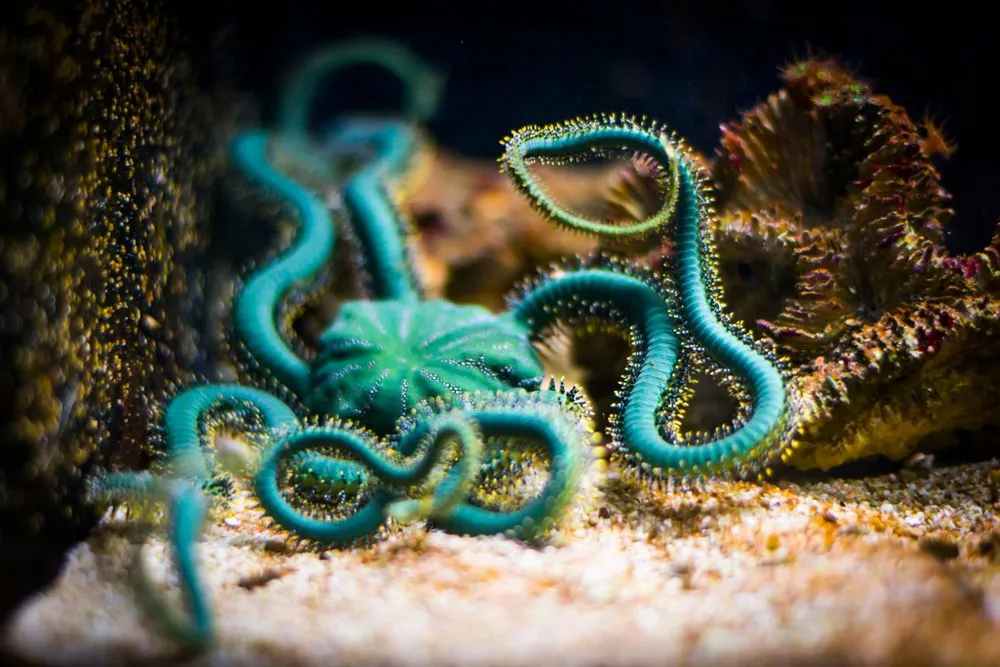
Many organisms light up as a defense mechanism or to confuse predators. The vampire squid is one such example; this squid lacks ink sacks and instead ejects a gluey bioluminescent liquid that startles and confuses potential predators. Some brittle stars (for example, species of Ophiopsila) flash bioluminescent light from their arms to startle or warn off predators. Brittle stars can also shed an arm outright through autotomy, and a detached arm may keep twitching and flashing, distracting the attacker while the rest of the animal makes its escape.
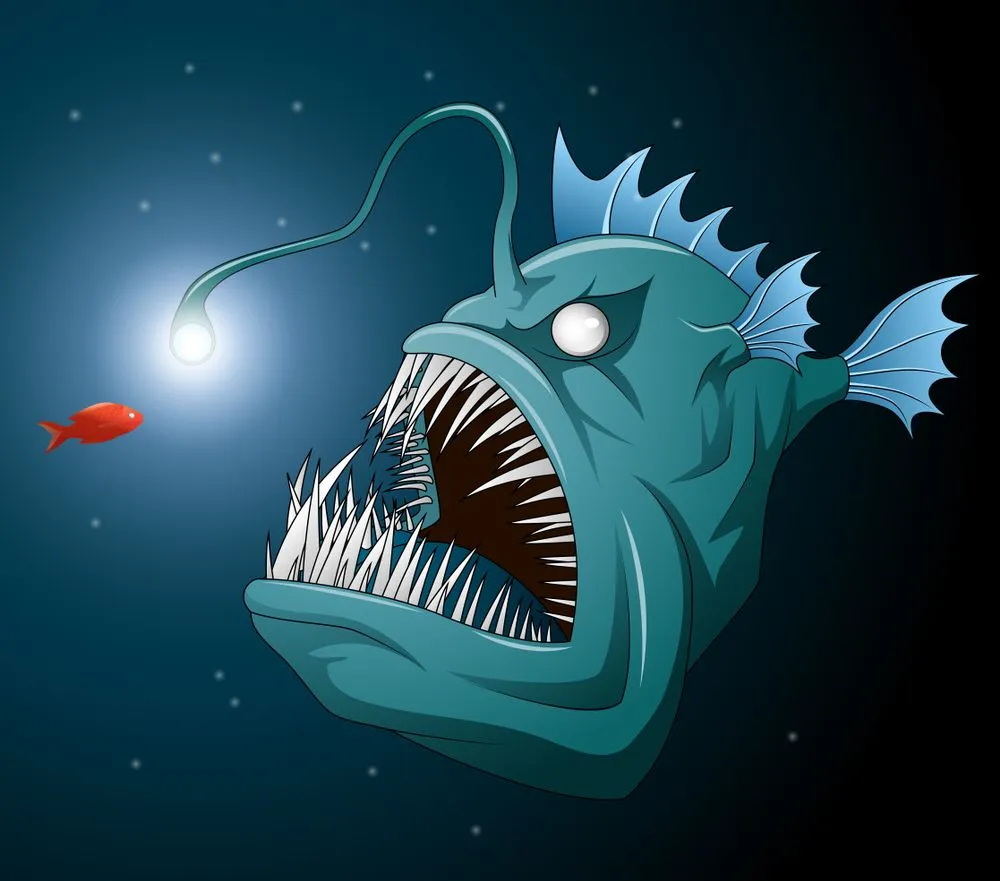
Some marine organisms probably thought they were smarter than their quarry and evolved to light up as a means of attracting prey. The deep-sea anglerfish is one of the most famous predators to use bioluminescence to lure prey. The fish has a modified dorsal-fin spine called the illicium that dangles a bulb-like light organ, the esca, in front of its mouth. The esca glows thanks to symbiotic bioluminescent bacteria living inside it. Smaller fish come close to this glowing dot out of curiosity and quickly end up being eaten by the predator, unable to see the large jaws hidden behind the seemingly innocent glow.
You might want to be careful before you touch any glowing object in the seas, but the brilliant appeal of bioluminescence is certainly understandable. It is a fascinating phenomenon that occurs in certain marine creatures and terrestrial insects, showing us once again how nature never fails to amaze!
And scientists are still finding new puzzles in this glow. In 2025, researchers at Colorado State University compiled four centuries of "milky seas" reports with modern satellite imagery, showing that single bioluminescent events caused by the bacterium Vibrio harveyi can light up tens of thousands of square kilometers of ocean for months at a time, mostly in the northwest Indian Ocean. Far from being a rare beach novelty, large-scale glowing seas may turn out to be a regular feature of our oceans.
References (click to expand)
- Ocean Color | Science Mission Directorate. The National Aeronautics and Space Administration
- Bioluminescence | Smithsonian Ocean. The Smithsonian Institution
- Dispatches from the Deep: Light and Dark in the Sea | AMNH. The American Museum of Natural History
- Why is the ocean blue? - NOAA Ocean Service
- Meet the Tiny Bacteria That Give Anglerfishes Their Spooky Glow - Smithsonian Ocean
- Centuries of "milky seas" surveyed in a new database. Science Daily (2025)
- Brightest bioluminescent bay - Guinness World Records
- Red Tides and Bioluminescence off California - Scripps Institution of Oceanography
- How far does light travel in the ocean? - NOAA National Ocean Service
- Flashes of Brilliance - bioGraphic (California Academy of Sciences)
- Vaadhoo, Maldives: the Sea of Stars bioluminescent beach - Maldives Nomad