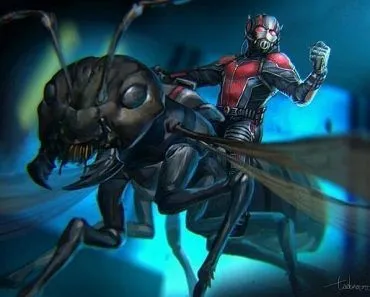
Ant-Man doesn’t turn into a black hole or release an energy blast because his smallest depicted size (around 10-14 cm, roughly the scale of an atomic nucleus) is still about a billion times larger than a human’s Schwarzschild radius of ~10-23 cm. He never crosses the threshold needed for gravitational collapse.
All of us, at some point in our lives, have faced the question: “What superpower would you choose if given a choice?” Ranging from Superman to Captain America, you have some excellent options to choose from.
In this vast list, Ant-Man’s powers are among those that are based heavily on human scientific research.

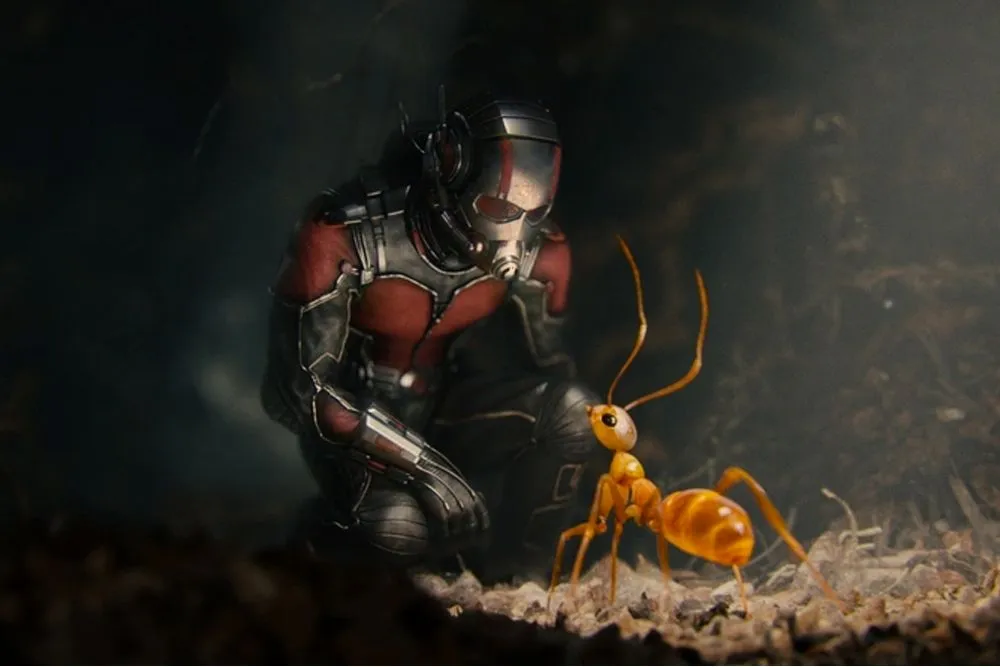
Even though he has possessed quite a few powers throughout the wide array of comics in which he has featured, Ant-Man’s primary power is still true to his name: He can shrink to the size of an Ant. In fact, he can shrink to a size much smaller than an Ant, even being capable of going subatomic!
How Does Ant-Man Shrink?
According to the media, Ant-Man shrinks due to a particle known as the Pym particle. This fictional particle is a rare group of subatomic particles that can alter the space between atoms. When Scott Lang shrinks, his body gets packed into a much smaller form. All the muscle that you’d find in the body of a roughly 5’10” (178 cm), 80 kg (176 lb) man gets crammed into a body the size of an ant (or even smaller).
According to Marvel, his body’s mass stays the same. His volume, however, plummets (it drops with the cube of his height, so shrinking by 10x crushes his volume 1,000-fold). Since density = mass/volume, his density skyrockets in step. That’s why, when he’s smaller, his strength and agility are dramatically amplified. This is why he can jump higher, punch harder, and perform at superhuman levels despite being so tiny.
However, how does this work when he goes subatomic? Wouldn’t he risk turning into a black hole and destroying human life as we know it?
To analyze this possibility, we’re going to delve into the concepts of physics where this idea comes from: How black holes are formed and what a Schwarzschild radius is.
The Formation Of Black Holes
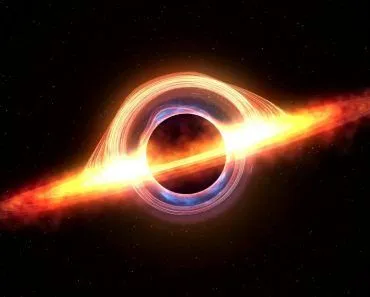
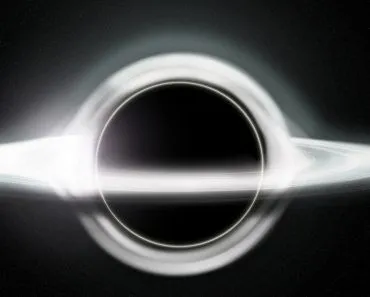
A black hole is formed when the core of a sufficiently massive star (typically one starting out with more than about 20 solar masses) collapses in on itself, crushing all of its remaining contents into a comparatively minuscule area. The outer layers are blasted outward in a supernova explosion. Once that fireworks display fades, if the leftover core is heavy enough (roughly 3 solar masses or more), nothing can stop it from collapsing into a black hole.
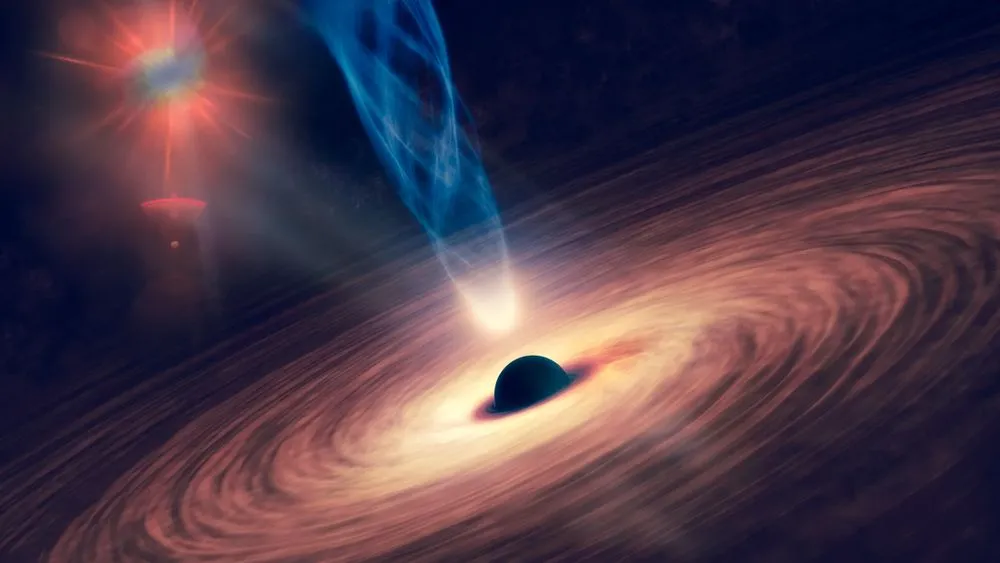
To turn into a black hole, the star must be large enough and contain enough mass to become one. Black holes are formed specifically due to this mass getting packaged into a body with a significantly smaller radius. This radius is known as the body’s Schwarzschild radius.
Schwarzschild Radius
Worked out by German astronomer Karl Schwarzschild in 1916, the Schwarzschild radius (also known as the gravitational radius) of a body of mass M is the radius into which the body must be shrunk to undergo an irreversible gravitational collapse. This radius, represented by RG, is calculated using the formula RG=2GM/c2, where G is the universal gravitational constant and c is the speed of light.
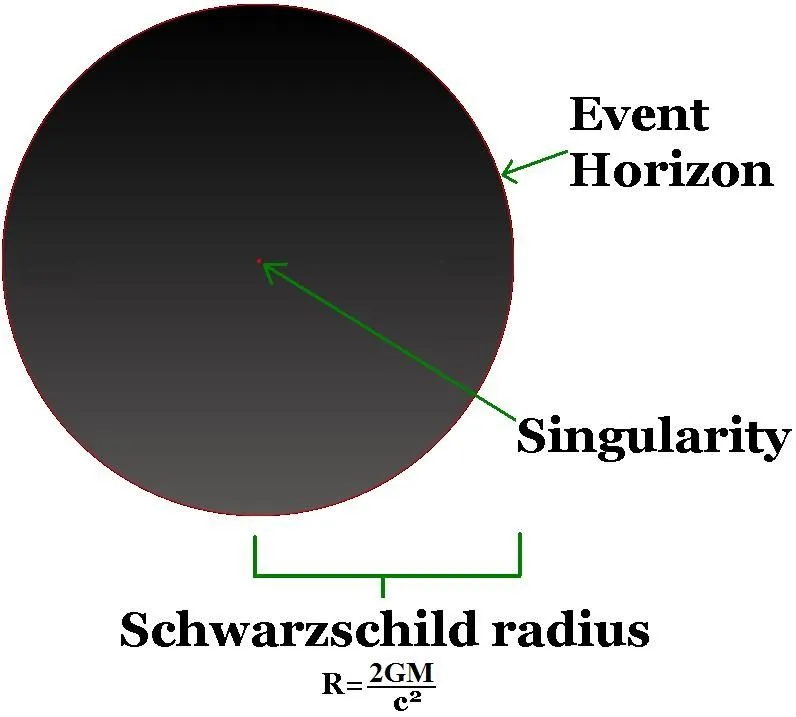
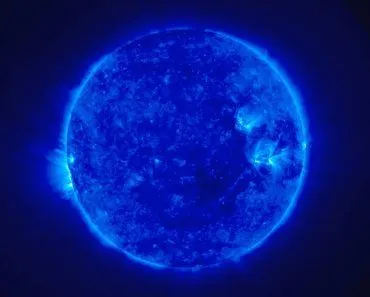
The Sun is a relatively small star, so its Schwarzschild radius is about 3 kilometers. Therefore, for the Sun to turn into a black hole, it would have to shrink into a ball with a radius equaling 3 kilometers or less.
Ant-Man’s Schwarzschild Radius
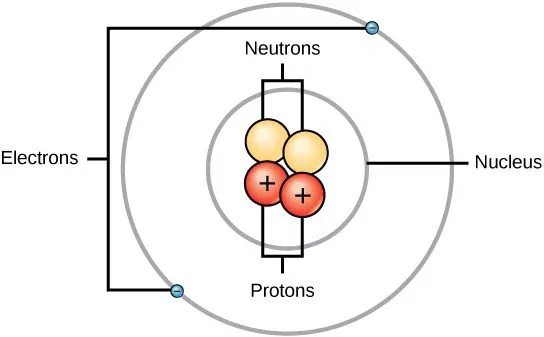
For a human being, this radius would be around 10-23 centimeters. If you remember what the radius of an atom is, you already know the answer to this article. The radius of an atom is about 10-8cm. Furthermore, the radius of an atom’s nucleus is about 10-13cm.
Now, when Ant-Man first goes subatomic, he is roughly the size of an atom. This is the territory Marvel calls the Quantum Realm (explored most extensively in Ant-Man and the Wasp: Quantumania, 2023). Push him further still, and he can plausibly shrink to about 10-14 cm, comparable to the size of an atomic nucleus. That is unimaginably tiny by everyday standards, yet it is still about a billion times larger than a human body’s Schwarzschild radius of 10-23 cm. This is also why there is no massive blast of energy when he shrinks.
However, owing to Scott Lang’s nature and the fact that he can’t control exactly how much his size changes, if he could shrink below 10-23 cm, there’s a high probability that he’d have done it already. What could that have led to?
What If Ant-Man Does Shrink Below His Schwarzschild Radius?
The concept of the Schwarzschild radius is based on Einstein’s field equations. The Schwarzschild metric is an exact solution to these equations, but they’re still just an assumption based on our limited data on black holes.
The assumption is that since heavenly bodies act as they do when subjected to such drastic changes in mass, that’s how a human body would work as well. There is simply no way to determine whether this assumption holds true.
Furthermore, the Schwarzschild metric is considered accurate because it is a solution to Einstein’s field equations. However, an interesting catch about these equations is that, according to physicists, they break down at quantum scales (precisely the regime Ant-Man is supposedly playing in).

These equations require the energy and momentum of all quantum particles to be defined at the time of calculation. However, according to research considered accurate today, obtaining the precise position and momentum of a quantum particle is impossible. This is known as Heisenberg’s uncertainty principle.
What all of this means is that even if Ant-Man were to surpass his body’s Schwarzschild radius, there would be no way to know whether he’d turn into a black hole or not.
Is It Possible For Ant-Man To Turn Into A Black Hole?
Human beings simply do not possess enough information about black holes or energy to accurately determine the nature of these incredible phenomena. All we have is assumptions, and according to these assumptions, Ant-Man hasn’t turned into a black hole yet because he has never shrunk to a size small enough to cause the gravitational collapse a black hole requires.
Even if he was capable of crossing that threshold, we would have no way to predict what would happen. For a layperson like you and me, that basically means that we hope there’s no actual Ant-Man out there who could shrink to a size that small, just to be on the safe side.
References (click to expand)
- Measuring Density. Goddard Institute for Space Studies
- What Is a Black Hole?. NASA
- Black Holes. Georgia State University
- The Schwarzschild Metric. University of California, San Diego
- 18.1 Final thoughts on the Einstein field equation. web.mit.edu
- What Is the Uncertainty Principle and Why Is It Important?. California Institute of Technology