The Alpha Magnetic Spectrometer on the ISS has detected high-energy positrons and a few antihelium nuclei in space, more than ordinary sources can explain. One leading idea is that they come from antimatter stars surviving in globular clusters in our galaxy. Such antistars are still hypothetical, and none has been confirmed.
Let’s talk about antimatter for a bit, as it remains a mysterious subject for most people.
Antimatter is like the alter ego of matter. It is exactly the same as its matter counterpart, except for having the opposite sign of charge. And like any dramatic alter ego, the matter-antimatter combination leads to the annihilation of both, releasing a massive amount of energy.
Surprising Discovery
The detected number of positrons (antiparticles of electrons) and antihelium has rattled scientists in recent years. These antimatter particles were detected by the Alpha Magnetic Spectrometer (AMS-02) attached to the International Space Station (ISS). It was installed in 2011 with the purpose of catching cosmic-ray particles and measuring their electric charge, momentum, velocity, and energy. By reading the sign of a particle’s charge as it bends through the instrument’s magnet, AMS can tell matter from antimatter.
The brains behind this detector, Sam Ting, was also eagerly awaiting the day when it detected a substantial amount of antimatter. When that happened, it left everyone speechless.

The first surprise was when the AMS detected an unusually high number of positrons. It was even more surprising that these positrons were highly energetic. Positrons have reasons for being in space, but such a large number with such high energy does not have an obvious explanation. Their high energy level meant that they were being produced by some high-energy source.
This is the surprising part of the story… because there is no high-energy source of antimatter, as far as we know.
An even more baffling surprise was when the AMS detected antihelium nuclei.
You see, the production of antihelium requires an excessively large amount of energy and the subsequent particles are extremely unstable. So even the handful that was detected (roughly eight candidate events, a couple of which look like antihelium-4 and the rest antihelium-3) meant that something somewhere was producing it on a large scale.
The question is, what are these sources of antimatter?
To answer this, scientists came up with many theories, ranging from dark matter to primordial black holes. Of course, not all of these were entertained as viable explanations. Let’s take a look at some of the most interesting ideas that didn’t make the cut.
Dark Matter And Black Holes
Some theorists suggest that the decay and annihilation of dark matter leads to the formation of antiparticles.
However, this theory is unconvincing because not much is known about dark matter, let alone its manner of decay. The theory about primordial black holes (the OGs of black holes) is more convincing.
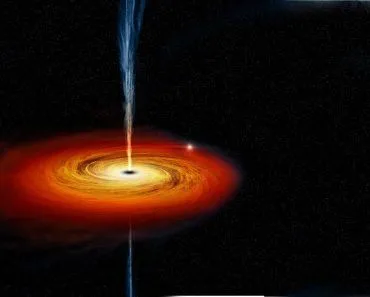
As Stephen Hawking explained, pairs of particles and antiparticles can be radiated away from just outside the event horizon of a black hole. Thus, primordial black holes could be perceived as the sources of positrons and antiprotons, but this theory falls short of explaining the source of high-energy antihelium.

There is another theory that has drawn renewed attention in recent years, and it has been taken rather more seriously. This is the theory of globular clusters that consist of antimatter stars!
Antimatter Stars
There is a simple reason why antimatter stars serve as the best candidate for sources of antihelium, namely, these are the only large-scale “labs” where antihelium could be cooked up in large amounts.
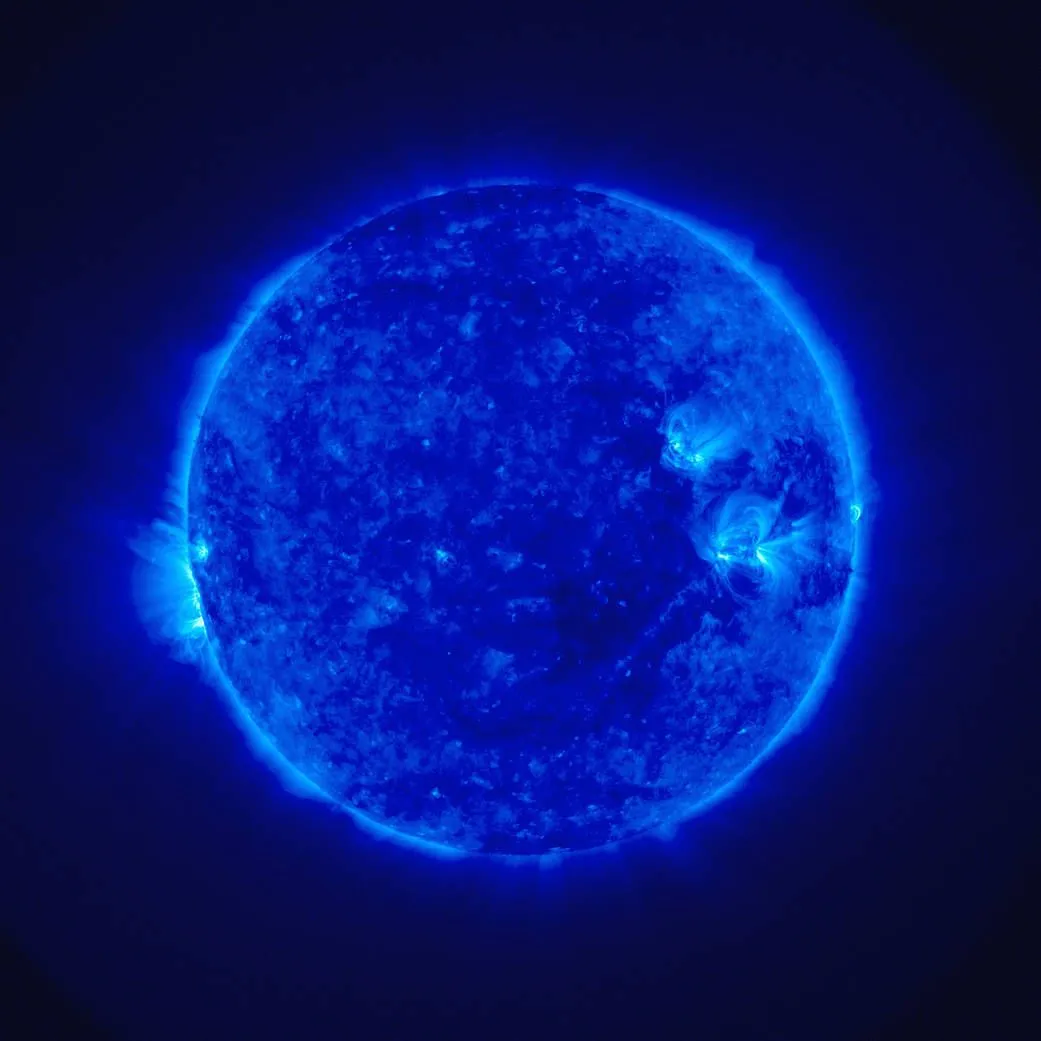
So what are antimatter stars? The way antimatter is the alter ego of matter, antimatter stars are the alter ego of our matter-composed stars. They are simply composed of antimatter, instead of regular matter, and thus emit antimatter instead of matter.
The planets surrounding them are composed of antimatter too, and if there is life on one of those planets, the creatures would be made of antimatter, and would consume antimatter. Just remember, it would be their version of matter, while we would be “antimatter” to them.
Globular Clusters Of Antimatter Stars

The theory suggests that these antimatter stars exist in structures no less than the size of globular clusters. And what are globular clusters? They are collections of older stars congregating in spherical clusters. They also are extremely densely populated with stars and located in the galactic halo. They don’t show active star formation and are generally free of gas and dust. But how are globular clusters related to antimatter stars?

The theory suggests that the source of antimatter is the remainder of primordial antimatter, i.e., antimatter of the early universe. No theory has been successful in explaining what happened during the time of birth of the universe that led to matter-antimatter asymmetry.
However, it was shown that in the process of the formation of matter, large domains of antimatter persisted. These domains must have remained beyond the antimatter annihilation, with their size kept in check by gamma radiation. Gamma rays are the most energetic waves and can act as barriers, shielding different domains.
These domains are what might have evolved into globular clusters. These clusters could have formed during galaxy formation and remained in the halo of the galaxy.
The question that persists is how did the antimatter from these distant halos end up in our detector? Keep in mind that our solar system is in the galactic disk, far away from the galactic halo.
How Did Antiparticles End Up Here?
There are a few ways this could have happened. One is through the outflow of mass from the stars, and Solar flares. Throughout their lifetime, stars consistently lose chunks of their mass via these mechanisms. Antimatter stars are no different, and could have lost some mass that propagated out of the clusters. Then, upon crossing the galactic disk, it could have entered the solar system.
That may sound good, but there are problems with these mechanisms. One is that most of the particle energies would be low and the galaxy’s magnetic field wouldn’t allow them in. In other words, the high-energy antimatter detected by the AMS was probably not because of these mechanisms.
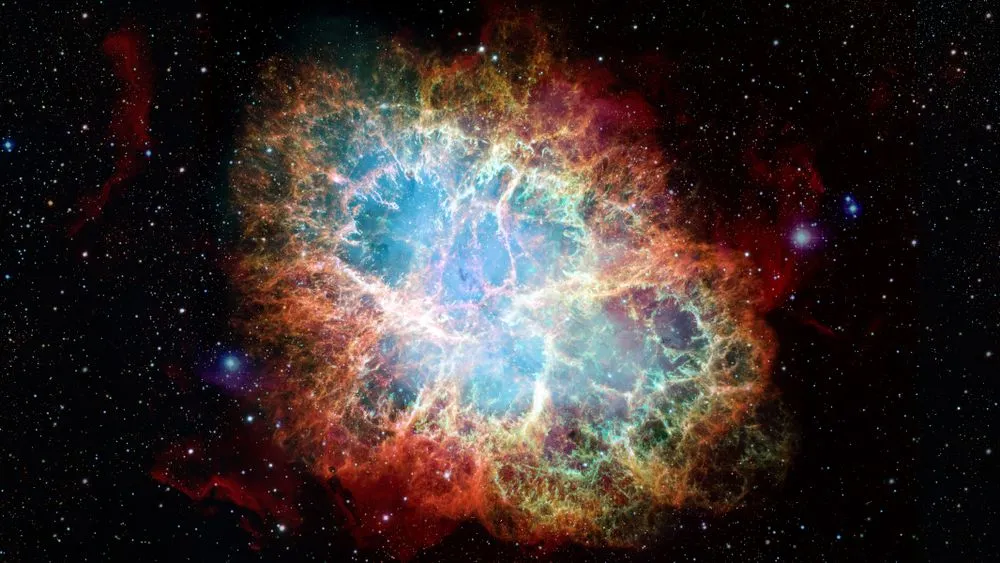
Another exciting explanation comes in the form of supernovae. These are exploding stars that have reached the end of their lifetime. In this case, the explosions would be of antimatter stars. Antihelium present deep inside the stars is purged out into the interstellar medium when the star explodes. The energy of the explosion is so high that the antimatter would have enough to overcome the magnetic barrier of the galactic disk and reach the Solar system.
Conclusion
So how do we know if this theory is possible? For confirmation, scientists performed simulations and concluded that there really might be globular clusters of antimatter stars hanging out in our Milky Way galaxy. It’s insane to think such things might exist, and now that the AMS has picked up these tantalizing antihelium signals, researchers are eager to spot the stars themselves.
In fact, the hunt has already begun. In 2021, a team at the University of Toulouse combed through ten years of data from NASA’s Fermi Gamma-ray Space Telescope, looking for the faint glow an antistar would give off as nearby ordinary matter rained down and annihilated against it. Out of 5,787 gamma-ray sources, they flagged 14 candidates whose spectra looked the part. None has been confirmed as a genuine antistar, and the more likely explanations for these sources are mundane objects like pulsars or distant galaxies. The same study set a tight ceiling on how common antistars could be in our cosmic backyard: at most a few per million ordinary stars in the Sun’s neighborhood. So while antimatter stars remain firmly hypothetical, the search for them is very much underway.
References (click to expand)
- Stars Made of Antimatter Might Be Lurking in the Universe. Scientific American
- Giant space magnet may have trapped antihelium ... - Science. Science
- Khlopov, M. Y., Kirichenko, A. O., & Mayorov, A. G. (2020). Anihelium flux from antimatter globular cluster (Version 1). arXiv.
- Dupourqué, S., Tibaldo, L., & von Ballmoos, P. (2021). Constraints on the antistar fraction in the Solar System neighborhood from the 10-year Fermi LAT gamma-ray source catalog. Physical Review D.