Africa produces about half of the world’s rough diamonds by both weight and value, thanks to ancient cratons, deep-mantle conditions and kimberlite pipes that ferry diamonds to the surface.
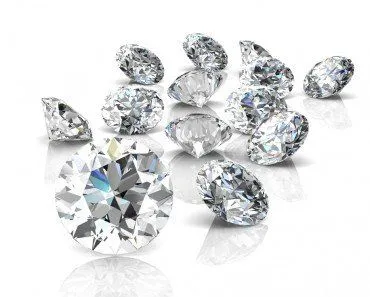
Diamonds are some of the world’s most valuable minerals, and Africa is the go-to destination for those seeking the most exquisite and valuable gems.
Africa was once called the “dark continent” by Victorian-era explorers — a colonial-era label rooted in European unfamiliarity, not in any inherent quality of the continent itself. One of the most intriguing mysteries is the continent’s vast wealth of diamonds. Do you know that these diamonds are often referred to as “blood diamonds” because they have resulted in violence and conflict in the lives of countless Africans?
Despite the fact that Africa is rich in diamonds, the continent is economically impoverished, which seems strange…
Have you ever wondered why Africa is so rich in diamonds, more so any other part of the world?
Africa’s Diamond Richness
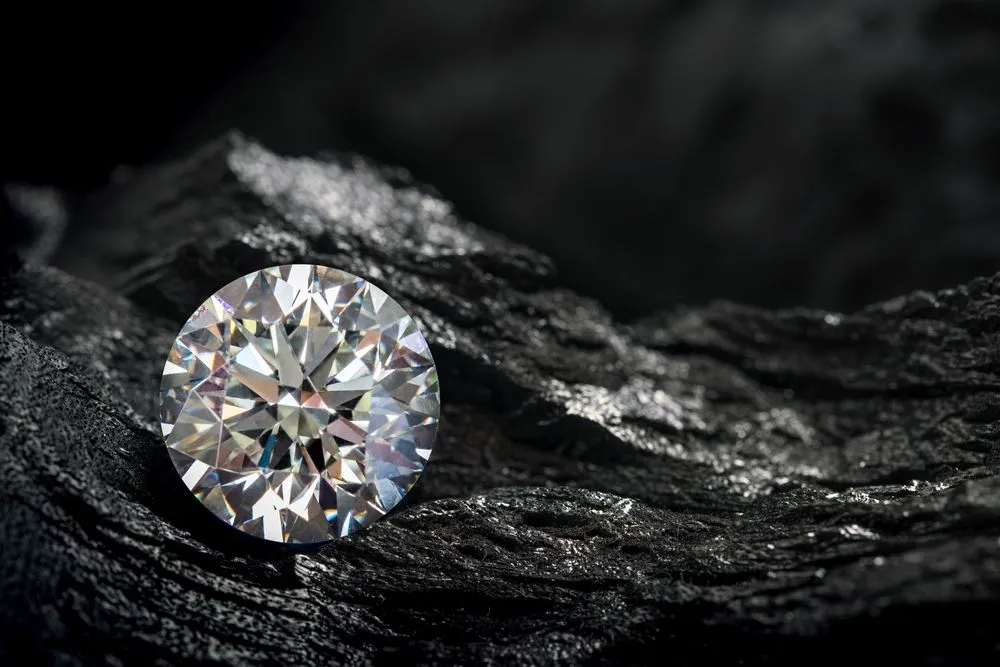
Africa is incredibly rich in diamond deposits, with several countries on the continent being major diamond producers. Africa is the world’s largest diamond-producing region: it accounts for roughly half of all rough diamonds by both carat weight and value, with Russia the only single country that consistently rivals Africa as a whole.
Let’s put it this way… consider a large pizza with a variety of toppings, but the majority of the toppings are concentrated on one slice – that slice represents Africa’s diamond deposits.
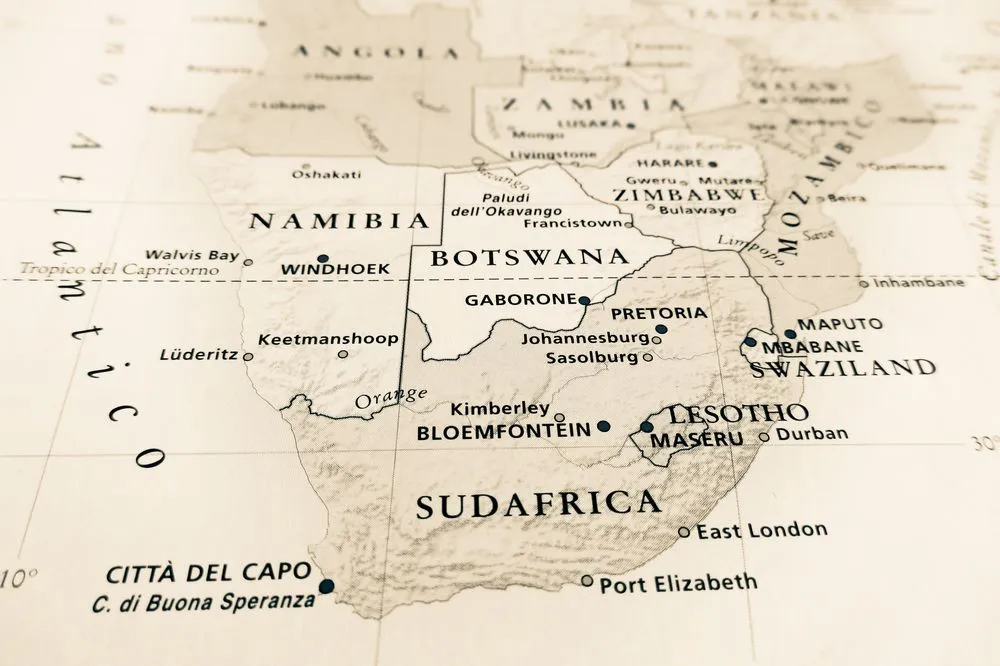
Botswana, the Democratic Republic of the Congo, Angola, South Africa, Namibia and Zimbabwe are the largest diamond producers on the continent, with Botswana and Angola vying as the continent’s top producers by value.
Despite the abundance of diamond deposits, diamond mining and trading have frequently been linked to exploitation, conflict, mass killings, and human rights violations. Sadly, all of these are manifestations of the dark side of Africa’s diamond wealth, a grisly history that overshadows the glittering promise of riches.
The Geology Of Africa’s Diamond Riches
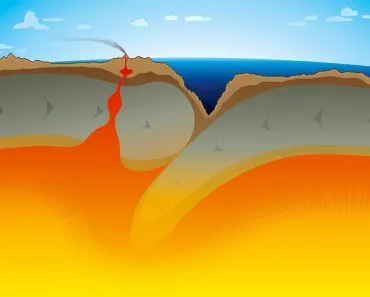
The African continent has a vast geological history that has contributed to its diamond richness. Tectonic activity has played a significant role in Africa being so rich in diamonds.
Think of tectonic plates as massive slabs of rock that function as puzzle pieces, constantly and slowly moving and shifting around the planet over time. The tectonic plates that make up Earth’s crust are depicted here. When they collide, it’s like a clash of titans, resulting in breathtaking mountains to rise from the sea and raging volcanoes to explode. But wait… there’s more! These collisions can also create ideal conditions for diamond formation.
Concentrated in southern and central Africa, where tectonic activity has produced ideal conditions for diamond formation, are the continent’s most diamond-rich regions.
Diamonds form deep inside the earth’s mantle, where high temperatures and pressures cause carbon to crystallize into a diamond structure. The diamonds are then transported to the earth’s surface via kimberlite pipes, which are volcanic pipes that transport magma and diamonds to the surface.
Kimberlite Pipes And Diamond Formation
Kimberlite pipes are the world’s primary source of diamonds, and they are plentiful in Africa. Kimberlites are volcanic rocks rich in magnesium, potassium, and other elements necessary for diamond formation. When magma from deep within the Earth rises up through the crust and erupts on the surface, these pipes form.
Diamonds form deep within the Earth’s mantle, where the pressure and temperature are ideal for their formation. When kimberlite magma erupts, it brings diamonds to the surface along with it. Diamond deposits are formed when these diamonds are subsequently deposited in the surrounding rock.
Diamond formation is similar to baking a cake. The earth’s mantle is analogous to an oven, while carbon-rich magma is analogous to cake batter. The high temperatures and pressures within the earth’s mantle are analogous to oven heat, causing carbon to crystallize into diamonds the same way that cake batter solidifies into a cake.
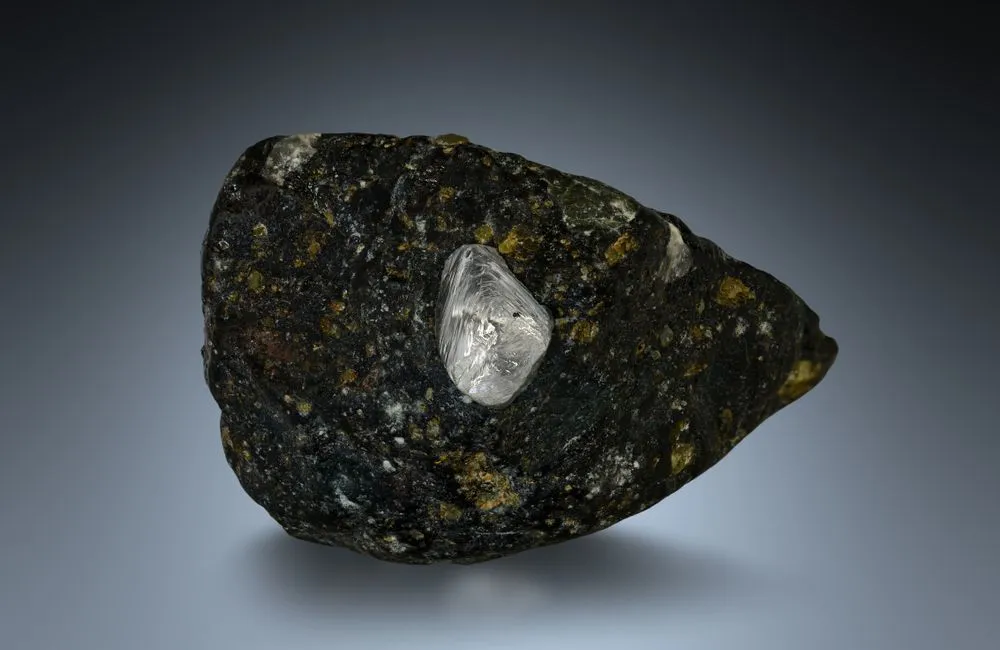
Kimberlite pipes work similarly to oven doors, in that they bring diamonds to the surface in the same way that an oven door opens so we can remove a cake from the oven.
Erosion and weathering wear away the surface layers over millions of years, eventually exposing the diamonds. The diamonds are then mined and processed, resulting in the stunning gemstones known and loved around the world.
Which African Countries Produce The Most Diamonds?
"Africa" is a useful shorthand, but the diamonds are not spread evenly across the continent. A handful of countries do almost all of the heavy lifting. In 2024, the single largest diamond-producing country in the world was actually Russia, which mined roughly a third of all rough diamonds by weight. Africa's standout is Botswana, which accounted for about 17% of global output by carat and ranked second in the world.

Behind Botswana come Angola (around 13% of world production by weight), the Democratic Republic of the Congo (about 9%), South Africa (close to 5%) and Namibia (roughly 2%), with Zimbabwe and several smaller producers filling out the list. Add them together and African nations supply close to half of the world's rough diamonds, which is why the continent as a whole still rivals Russia.
Carat weight only tells half the story, though, because a diamond's worth depends on its quality, not just its mass. Russia mines enormous volumes of smaller, lower-value stones, while some African producers punch far above their tonnage. Namibia is the classic example: its diamonds were tumbled and sorted by rivers and ocean waves before settling along the coast and seabed, a natural quality-control process that shatters flawed crystals and leaves mostly gem-grade survivors. That is why Namibia ranks near the top by value despite a small share by weight, and why Botswana and Angola lead African production in dollar terms.
The scale of these operations is hard to overstate. Botswana's Orapa mine, for instance, is the largest diamond mine on Earth by area, sprawling across more than a square kilometre (about 0.5 sq mi) of open pit.
When Were Diamonds First Discovered In Africa?
For most of recorded history, the world's diamonds came from India and, later, Brazil. Africa's diamond story is surprisingly recent. It began in 1867, when a 15-year-old boy named Erasmus Jacobs picked up a glittering pebble on a farm near Hopetown, beside the Orange River in what is now South Africa. That pebble turned out to be a 21.25-carat diamond, later cut and named the Eureka, the first diamond officially recorded on the continent.

The real frenzy started two years later. In 1869, an 83.5-carat stone known as the Star of South Africa was found in the same district, and word of fortunes lying in the dirt triggered a stampede. In 1871, prospectors struck astonishingly rich ground on the De Beer brothers' farm near present-day Kimberley. Tens of thousands of diggers swarmed in, and their picks and shovels eventually carved out the "Big Hole," one of the largest hand-excavated pits ever dug.
Out of that chaos rose one of the most powerful companies in mining history. A young Englishman, Cecil Rhodes, began buying up and merging claims, and in 1888 he and rival magnate Barney Barnato founded De Beers Consolidated Mines. The firm came to control the overwhelming majority of the world's diamond supply, and the De Beers name still dominates the trade today.
The search did not end at South Africa's borders. In 1967, a century after the Eureka, De Beers geologists tracked telltale minerals across the Kalahari to a buried kimberlite pipe near Orapa in Botswana. The mine that opened there in 1971 helped turn a newly independent, largely agricultural nation into one of Africa's economic success stories, funding schools, roads and hospitals from diamond revenue.
Conclusion
It’s incredible that Africa is so rich in diamonds. It is as if the continent itself was bestowed upon us as a gift from the earth. The earth has decorated Africa with diamonds in the same way that a baker might decorate a cake with icing. These valuable gemstones are symbols of beauty and wealth, as well as proof of the complexities of geological processes.
Despite Africa’s incredible diamond wealth, poverty remains a reality for far too many. It’s the equivalent of having a stunning diamond necklace, but being unable to afford food or shelter. However, it is critical to understand that the diamonds themselves are not the issue. The issue is the greed and violence displayed by those who exploit them.
Africa’s diamond wealth is the result of millions of years of complex geological processes that have shaped the continent. While the exploitation of these diamonds has resulted in conflict and poverty, we must acknowledge the natural beauty and wonder of the geological processes that created them. Diamonds are a symbol of the incredible power and complexity of the earth’s natural processes, but the human cost to procure them must not be forgotten.
References (click to expand)
- M Field. (2008) Kimberlite-hosted diamond deposits of southern Africa. ScienceDirect
- S Flury. (2016) Controls on subsurface methane fluxes and shallow gas .... ScienceDirect
- Kjarsgaard, B. A., de Wit, M., Heaman, L. M., Pearson, D. G., Stiefenhofer, J., Janusczcak, N., & Shirey, S. B. (2022, July 1). A Review of the Geology of Global Diamond Mines and Deposits. Reviews in Mineralogy and Geochemistry. Mineralogical Society of America.
- DIETRICH, C. (2001, January). Blood Diamonds. African Security Review. Informa UK Limited.
- Wit, M. de ., Bhebhe, Z., Davidson, J., Haggerty, S. E., Hundt, P., Jacob, J., … Ward, J. (2016, June 1). Overview of Diamond Resources in Africa. Episodes. International Union of Geological Sciences.
- Global Rough Diamond Production Since 1870 | Gems & .... Gemological Institute of America
- Diamond (Industrial). Mineral Commodity Summaries 2025. U.S. Geological Survey.
- Diamond facts. Natural Resources Canada.
- First recorded discovery of diamonds in the colonial period of South Africa. South African History Online.
- De Beers Consolidated Mines Ltd. is founded. South African History Online.
- Diamonds are forever. Journal of the Southern African Institute of Mining and Metallurgy.
- Our History. Debswana Diamond Company.