Earth’s gold is, in a real sense, an alien element. It was forged not by chemistry but by nuclear reactions in the cosmos: most of it appears to come from kilonovae (the merger of two neutron stars), with smaller contributions from supernovae, via a process called rapid neutron capture (the r-process). It later arrived on Earth’s crust in a hail of meteorites about 3.9 billion years ago.
Gold is one of the most sought after metals on Earth. It has been prized for its beauty, malleability and non-corrosive nature for thousands of years.
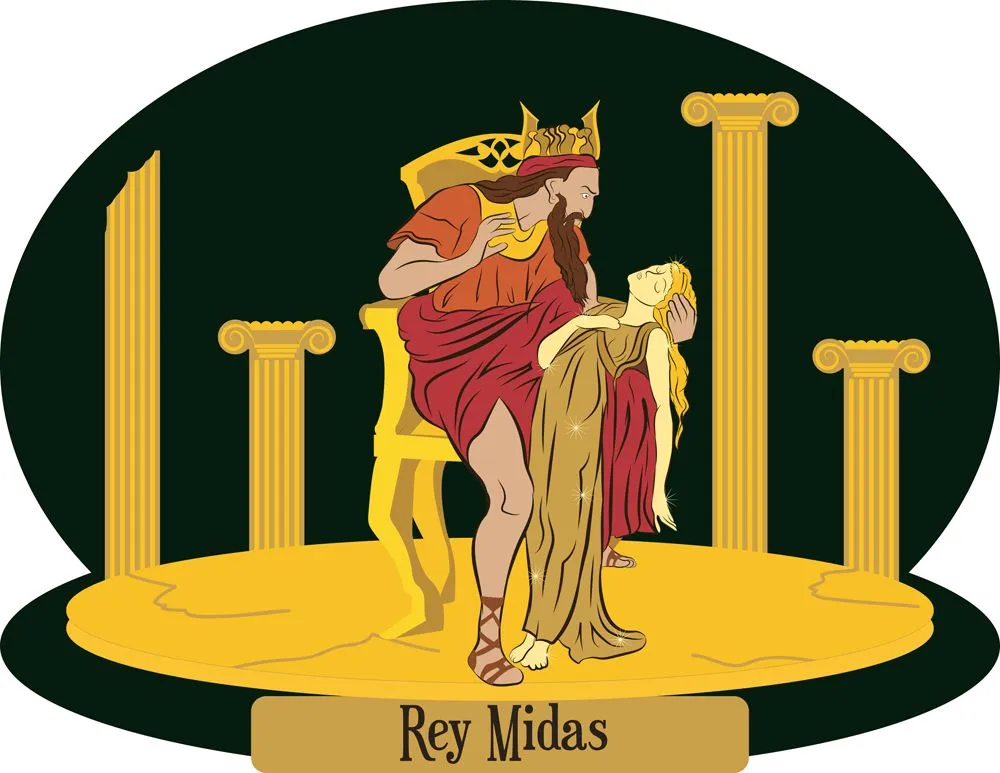
It has also played an important role in numerous ancient civilizations. The Egyptians called gold the “breath of God.” Gold also finds mention in Greek mythology, where King Midas was given the boon of a “golden touch” by Dionysus for saving his life. Midas could turn anything to gold by mere touch.
Gold is typically buried deep inside the earth’s crust. According to the USGS, we have discovered roughly 244,000 metric tons of gold worldwide, of which around 216,000 tons have already been mined. China, Russia and Australia are currently the three largest gold-producing countries (with Canada and the United States rounding out the top five); South Africa, the historical leader, no longer makes the global top ten. (Source)
But how exactly did we end up in these gold mines?
Origins Of Gold
Gold in its pure form is not ‘made’; it occurs naturally deep within the earth. The Incan civilization believed that gold was “the sweat of the sun”. Though it was a superstitious belief, they got one thing right: gold does originate from a star (just not our star).
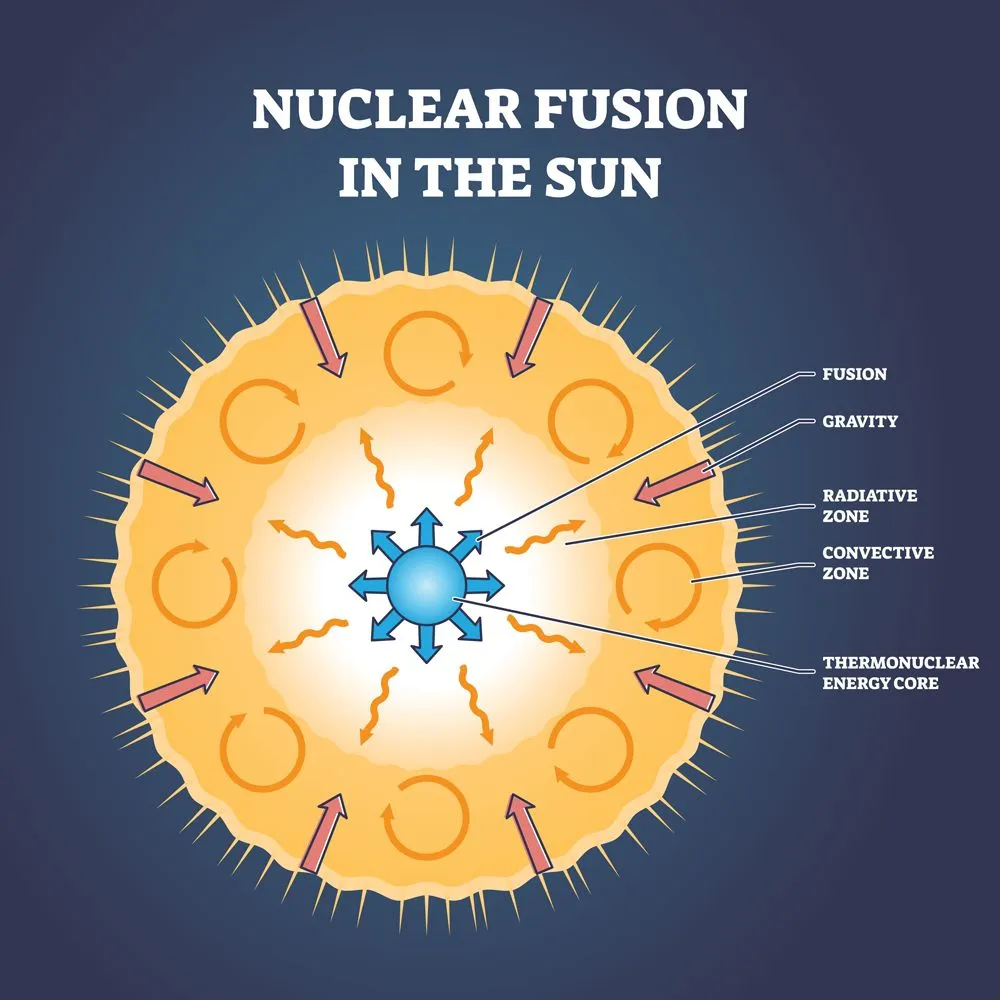
Thanks to nuclear fusion, our Sun is currently turning hydrogen into helium, and when it eventually swells into a red giant it will fuse helium into carbon (and a little oxygen). That’s about as far as it can go. Heavier elements like iron, nickel and calcium are forged inside much more massive stars, and anything heavier than iron (gold, uranium and the rest) requires the truly violent environments of supernovae and the colossal collisions of neutron stars.
In fact, since the 2017 detection of gravitational waves and a glowing ‘kilonova’ flash from the GW170817 neutron-star merger, astronomers now think colliding neutron stars are the leading source of the universe’s gold, with supernovae playing a supporting role.
Gold Is Extraterrestrial
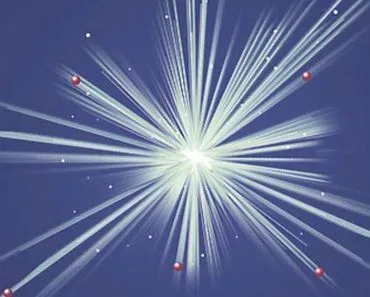
Cataclysmic celestial events, mainly kilonovae (the merger of two neutron stars) and to a lesser extent supernovae, are responsible for the gold scattered through the universe. Stars are mainly composed of hydrogen, but when a massive star runs out of fuel, it collapses in on itself due to the pressure from its own gravity.
As the dying star expands into a red giant, hydrogen transforms into helium. As the helium atoms fuse, it leads to the formation of carbon, followed by oxygen.
Along with energy, a dying star (or a neutron-star collision) releases a flood of free neutrons. The atomic nuclei in and around the explosion don’t ‘fuse’ those neutrons; instead they capture them, one after another, in a chain reaction.
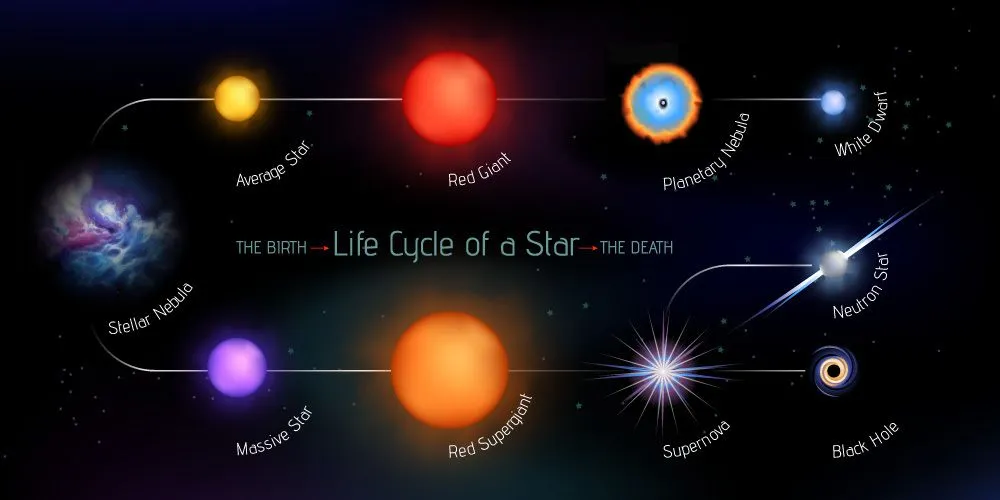
Under truly extreme conditions, this same process can produce the heaviest metals (gold, platinum and uranium) through what is known as the rapid neutron capture process, or r-process.
Here, an atomic nucleus swells to a very unstable size as neutrons bombard it. The formation of the heaviest elements like gold and uranium takes place within seconds. The whole thing happens so fast that the unstable, neutron-bloated nucleus doesn’t have time to split apart before it sheds excess neutrons (via beta decay) and settles into a stable heavy element.
As the dying star explodes as its last hurrah, it sends out shockwaves, propelling mineral-rich debris throughout space.
This tells us where and how the formation of gold occurs, but what explains its abundant presence on Earth?
Gold Hitched A Ride To Earth With Meteors
The gold formed out in the universe ended up deep inside the earth’s core. The only logical explanation for the arrival of an extraterrestrial element on Earth is that… it might have taken a lift from meteoroids.
Billions of years ago, during the initial formation of Earth, heavy elements like iron sank into the center of the earth to form its core.
If gold had come here when the earth was still forming its core, then the molten iron would have dragged other heavy elements, such as the gold, along with it to the core. However, we can easily find gold deposits in the earth’s crust.
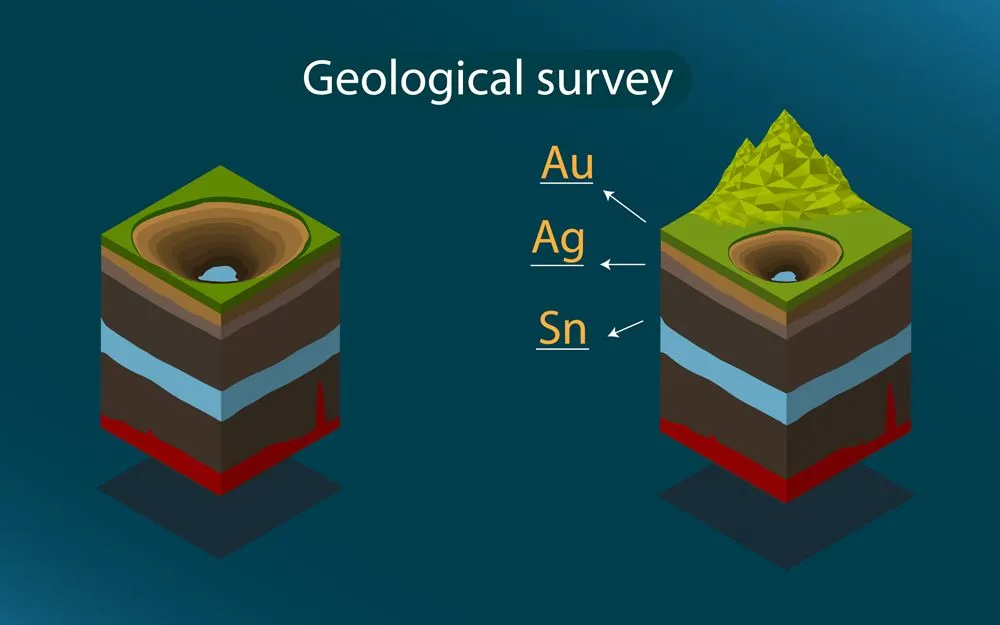
A study conducted by the University of Bristol gives us insights into the period when gold sunk to the earth’s core. They studied the isotope concentration of rocks from different ages, which gives evidence that gold landed on Earth after the formation of the planet’s core.
Earth’s mantle saw a change in its composition after the planet was hit by meteors 3.8 billion years ago. These meteors also brought with them loads of precious gold. The bombardment lined the planet’s crust and mantle with a thick layer of gold.
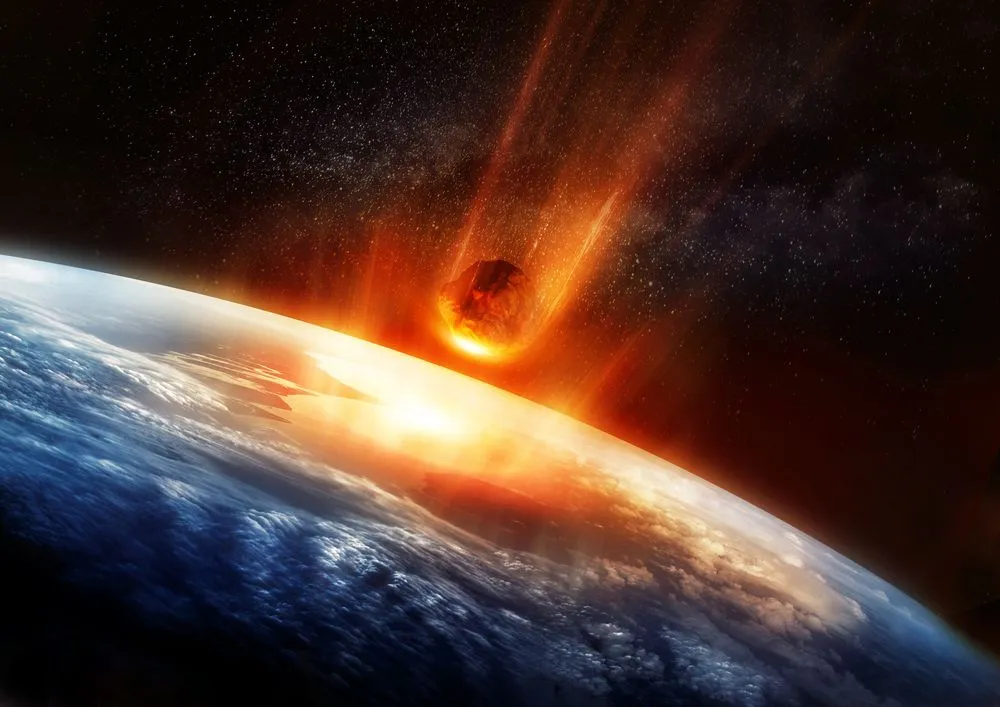
Turns out, the gold that we lavish today has a very ‘explosive’ history. Life on Earth had to suffer the assault of meteors weighing billions of kilos just for us to enjoy some of this fancy gold.
Did Earth’s Gold Really Come From Asteroids?
People often use the words meteor and asteroid as if they mean the same thing, but they don’t. Asteroids are the rocky, sometimes metal-rich leftovers from the birth of the solar system, most of them circling the Sun in the belt between Mars and Jupiter. When a fragment of one plunges through our atmosphere and survives the fall to the ground, we call that surviving lump a meteorite (you can read more about the difference between asteroids, meteors and meteorites here). So the gold-bearing meteorites that peppered the young Earth were essentially shards of asteroids. In that sense, yes, a great deal of Earth’s accessible gold really did arrive courtesy of asteroids.

Some asteroids are astonishingly metallic. The best-studied example is 16 Psyche, a lumpy world about 280 kilometers (173 miles) across that orbits in the asteroid belt. Scientists estimate that metal makes up somewhere between 30 and 60 percent of its volume, and they suspect it may be the battered, exposed core of an early planetesimal (one of the building blocks of a planet) that never finished forming. NASA was intrigued enough to send a spacecraft, also named Psyche, which launched on 13 October 2023 and is due to slip into orbit around the asteroid in late July 2029.
Naturally, people have crunched the numbers on all that metal. One widely quoted estimate values the iron, nickel, gold and platinum locked inside Psyche at more than the entire global economy. Before you start planning a mining rig, though, there is a catch: those metals are millions of kilometers away, and we have neither the technology nor a sound economic case to haul them home. Even if we could, suddenly flooding Earth’s markets with that much gold would send its price crashing (which is one reason asteroid mining is trickier than it sounds). For now, Psyche is far more valuable as a window into what planetary cores are made of than as a treasure chest.
Why Is Gold Found As A Pure Metal And Not An Ore?
Here is a curious detail about gold: unlike iron, aluminum or copper, which we usually dig up as ores and then refine, gold is often found as the metal itself, glinting as nuggets, flakes and grains in rocks, veins and streambeds. That is exactly why gold panning works. You are sieving out flecks of the actual element, not a compound you later have to smelt.

The reason comes down to chemistry. Gold is a noble metal, one of the least reactive elements there is (only platinum is more reluctant to react). It is famously inert: it does not react with oxygen at ordinary temperatures and shrugs off most acids, dissolving only in aggressive mixtures such as aqua regia (a blend of nitric and hydrochloric acids). Because it refuses to bond readily with oxygen or sulfur, gold does not rust, tarnish or corrode away.
Most metals are not so aloof. Given enough time, oxygen and water react with them, locking them up in the oxides, sulfides and other compounds we call ores. Only a handful of elements resist this weathering well enough to survive as native metal in large amounts, chiefly gold, silver, copper and the platinum-group metals. Gold’s sheer indifference to its surroundings is also why ancient artifacts pulled from tombs still gleam thousands of years later, and it neatly explains why the gold forged in dying stars is still sitting in Earth’s crust as shining metal rather than dissolved away into some dull mineral.
Is It Possible To Synthesize Gold On Earth?

Many alchemists in the past have tried reacting different chemicals together with the hope of making gold. In principle, yes, we can create gold from other elements, but the process of creating gold would cost way more than it’s worth.
The atomic number of Gold (Au) is 79, so by default, any element containing 79 protons will be gold. In theory, gold can be created by adding or removing protons from copper (Cu) and mercury (Hg), respectively. The removal or addition of protons to an atom is a form of a nuclear reaction, and as you may have guessed, it’s an expensive job to conduct a nuclear reaction.
Many alchemists have tried and failed in their endeavors to create gold from other elements. Some scientists even tried turning lead into gold!
To learn how that turned out, check out this article.
Conclusion
From being an integral part of jewelry to being used as a garnish for some delicacies, we use gold all over the world for various purposes.
Many might assume that, like any other element, chemical reactions within our planet might cause gold formation, but as scientists have found out, gold is an alien element. After being forged in cosmic collisions of neutron stars (and to a lesser extent in supernovae), it burst through our atmosphere riding on meteors to bedazzle our lives!
References (click to expand)
- How is gold made? - UCSB Science Line. The University of California, Santa Barbara
- Willbold, M., Elliott, T., & Moorbath, S. (2011, September). The tungsten isotopic composition of the Earth’s mantle before the terminal bombardment. Nature. Springer Science and Business Media LLC.
- Croswell, K. (2021, January 20). Tracing gold’s cosmic origin story. Proceedings of the National Academy of Sciences. Proceedings of the National Academy of Sciences.
- Can gold be created from other elements?. West Texas A&M University
- Meteorites Delivered Earth's Mineable Gold. Scientific American.
- Asteroid Psyche. NASA Science.
- Metal asteroid Psyche has a ridiculously high 'value.' But what does that mean? Space.com.
- Gold - Element information, properties and uses. Royal Society of Chemistry.
- Native metal. Wikipedia.