Diamonds sparkle because of three optical effects working together. Their unusually high refractive index (2.417) bends light sharply on entry and traps it through total internal reflection, which we see as bright white shine (brilliance). Strong dispersion (0.044) then splits that light into rainbow flashes (fire), and the 58 angled facets of the brilliant cut send those flashes back through the top of the stone.
I went to a jewelry store recently, and as probably happens to everyone, one of the first things that immediately caught my eye was a diamond ring shining in its velvet display box. That flash of beauty in the corner of my eye got me thinking…why do diamonds sparkle?
How does a rock that is carved out of the earth achieve such brilliance?
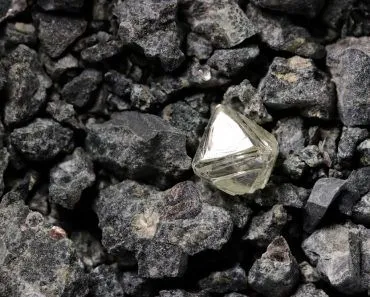
A natural diamond isn’t actually as shiny as you might think. That sparkle all depends on how the stone is cut and how light strikes it.
A diamond appears to be so brilliant as a result of three things: reflection, refraction and dispersion.
When lit from above, light enters the diamond and bounces from one internal face to another through a process called total internal reflection, before exiting back out the top. This is what gives a diamond its bright white shine, which gemologists call brilliance. To a viewer, however, it looks as if light is simply streaming out from inside the stone.
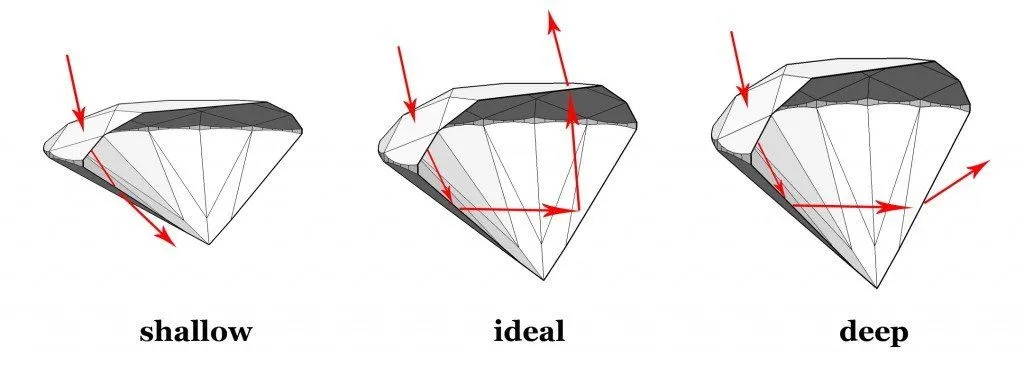
If a diamond is cut too shallow, then light will exit from the bottom, but if it is cut too deep, the light will exit from the side. While reflection is occurring, only a small portion of the light hitting the diamond is reflected; the rest passes through it.
When light passes through the diamond, it also gets scattered and fractured. Basically, that light bends, which creates the unforgettable sparkle that has captivated us for generations.
The final component is what really gives the diamond its ‘fire’ – that rainbow effect that finally compels you to mortgage the house and buy the stunning stone.
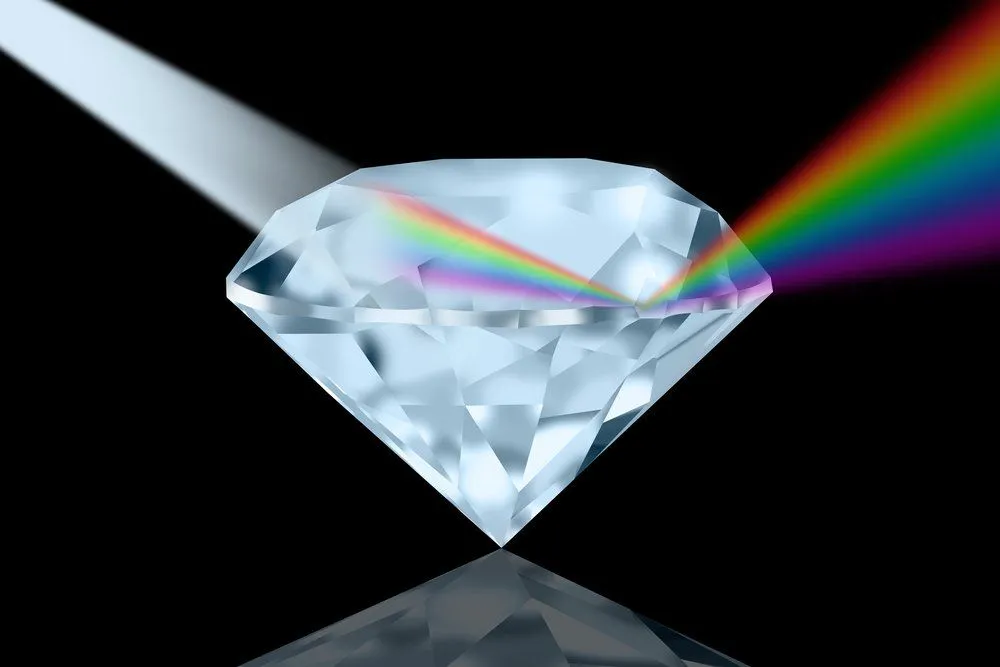
Diamonds are essentially tiny prisms. Light enters the top, bounces around the facets, and eventually exits back out from the top, leaving us with this gleaming fire on our fingers.
You might think that all the glory a diamond gets is because of light, but what you don’t know is that the dark areas of a diamond also play an important role.
Unless the diamond is illuminated equally from all the sides, all the facets won’t light up. Dark objects in the stone’s surroundings will also be reflected, so to our eye, some parts of a diamond appear dark.
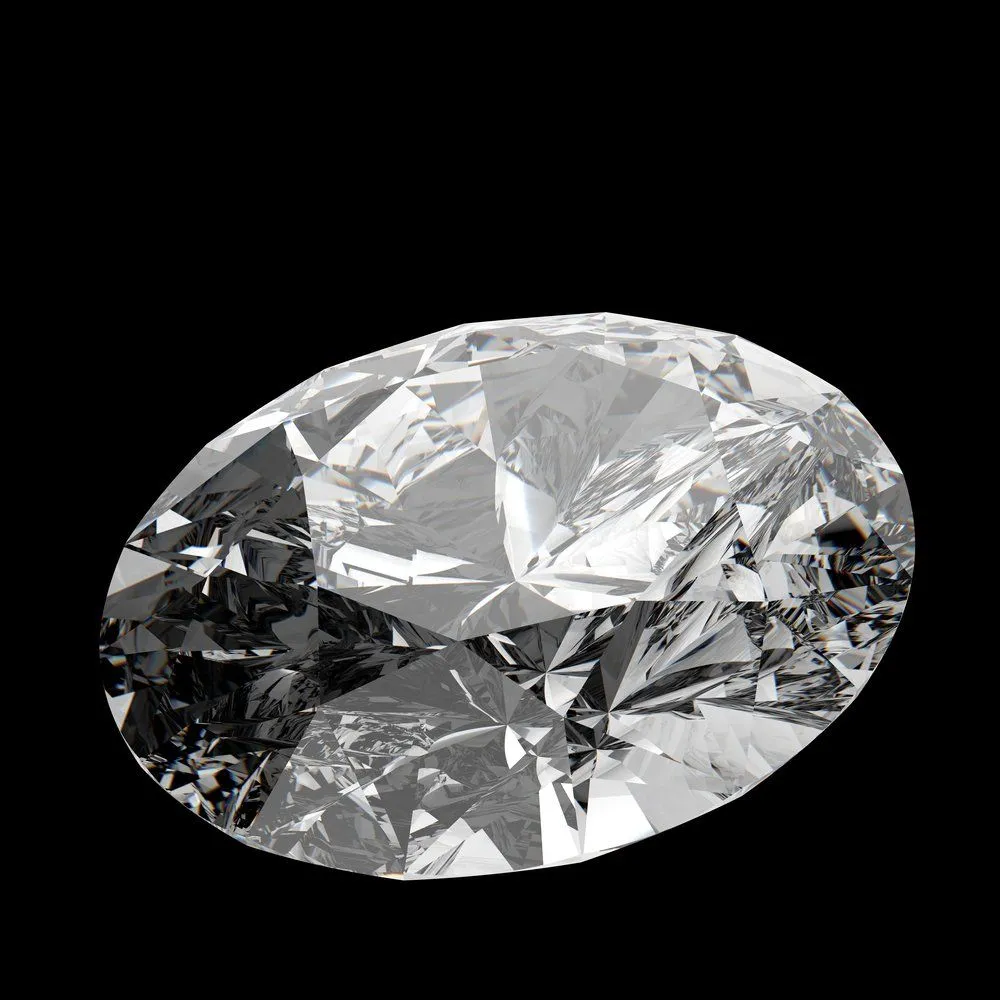
This provides a sort of contrast, you might say. For example, doesn’t the moon appear brightest against an inky black sky? Doesn’t the flame of a candle seem much more intense in a dark room as compared to a well-lit one?
Obviously, a diamond will still sparkle without contrast, but it won’t be quite so captivating or irresistible!
Another interesting reason why our eye is so drawn to the sparkle of a diamond can be explained by our brain. It has been found that some parts of the visual cortex respond to objects with high-intensity contrast edges. Therefore, due to the closeness of the dark and light facets in the diamond, our eye enhances the perceived brilliance!
This can be further enhanced if you move the stone slightly to create a dramatic flashing effect, causing different facets to light up and dim as the light source changes its angle of impact. Clarity in a diamond also affects its shine. If there are some inclusions present or some blemishes on the surface, it will affect the amount of light entering and exiting the stone, thereby affecting the amount of sparkle.
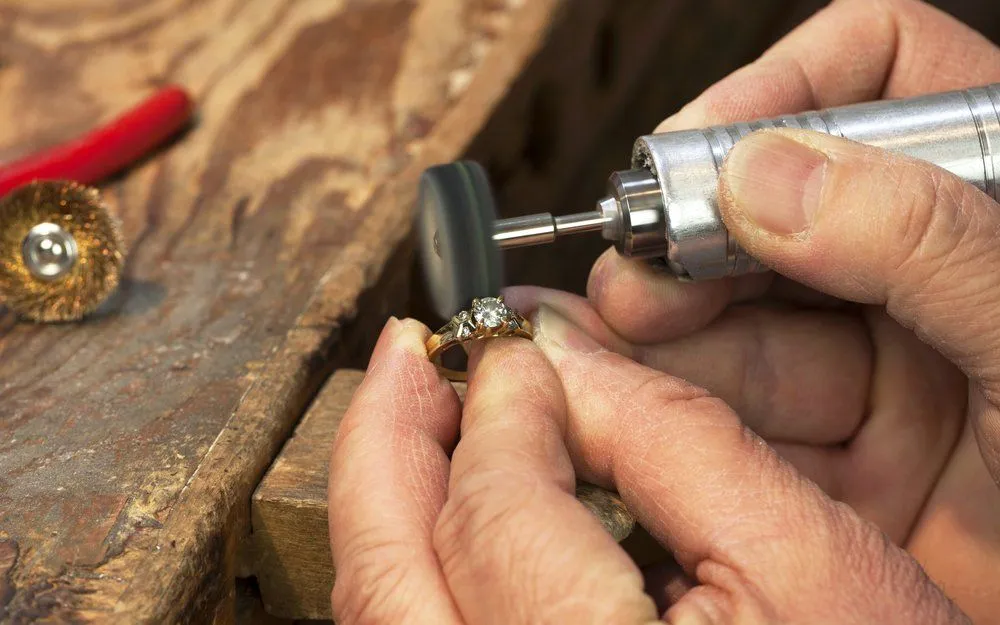
The final step for a perfect stone is to polish it. Polishing has a significant and lasting effect on the brilliance of a diamond.
So, now that you know what makes diamonds the most sought-after stone in the world, don’t you have some shopping to do?
Why diamonds shine so much more than glass or water
Diamond’s sparkle isn’t really about being a “rock” at all. It’s about how stubbornly the stone refuses to let light back out. The optical property doing most of the work here is the refractive index, a number that tells you how sharply a material bends light. Water has a refractive index of 1.33, ordinary glass sits around 1.50, and even cubic zirconia (the cheap stand-in for diamond) is about 2.15. Diamond is 2.417 (at the 589 nm sodium line), which is one of the highest values you’ll find in a transparent natural material.
That high index has a striking consequence: the critical angle for total internal reflection inside a diamond is just 24.4°. In plain English, almost any ray of light that hits an inside facet from below gets bounced back into the stone instead of escaping. Glass, with its larger 42° escape cone, lets light slip out far more easily, which is exactly why a glass imitation looks dull next to the real thing. Mineralogists even have a special name for the surface shine that this extreme refractive index produces, calling it adamantine lustre, after the Latin adamas (diamond).
Brilliance, fire, and scintillation: the three faces of sparkle
When the Gemological Institute of America (GIA) grades how well a diamond is cut, it splits the visual effect into three distinct things, and it’s worth knowing which is which.
- Brilliance is the total amount of white light returned to your eye from internal and external reflections. This is the bright, almost wet-looking shine of a well-cut stone in everyday light.
- Fire is the rainbow of spectral colors you see when the diamond is held up to a point source like a halogen bulb or sunlight. It comes from dispersion, the way the refractive index varies slightly across the spectrum. Diamond’s dispersion value of 0.044 is high for a natural gem, well above sapphire (0.018) or quartz (0.013), which is why diamonds flash colored sparks where those stones do not.
- Scintillation is the pattern of bright and dark flashes you see when the diamond, the light, or your head moves. The contrast between the white-light reflections and the dark areas (which often come from your own reflection) is part of what makes the stone feel alive in motion.
Most articles treat “sparkle” as a single thing, but a gemologist looking at the same diamond is grading all three at once.
The brilliant cut: 58 facets engineered for sparkle
The reason a modern engagement ring sparkles so reliably is that the shape on top of the band isn’t accidental. Almost all round diamonds you’ll see today are cut to a design called the round brilliant cut, which has 58 facets in total (33 on the crown above the girdle, 24 on the pavilion below, plus the tiny culet at the bottom point).
Those proportions were nailed down in 1919 by a Belgian engineering student named Marcel Tolkowsky, who wrote his doctoral thesis Diamond Design at the University of London. Tolkowsky calculated that crown angles near 34.5° and pavilion angles near 40.75° would, in combination, send most of the light entering the table back out the top of the stone instead of leaking through the sides. The math behind the modern engagement ring is, in other words, more than a century old. Stones cut to looser “fish-eye” or “nail-head” proportions break those angles and leak light, which is exactly the dullness shoppers are warned about when a cut is rated below Excellent.
Do diamonds shine on their own, or only reflect light?
This is one of the most common things people get wrong about diamonds: a diamond does not make its own light. Every flash you see is borrowed. Light from a window, a lamp, or the sun enters the stone, bounces around inside by total internal reflection, and leaves again through the top, which is why a well-cut diamond looks as though it is lit from within even though it is only handing your own light back to you. Put the same stone in a completely dark room and it does nothing at all. No light going in means no sparkle coming out, so the popular idea of a diamond that glitters in pitch blackness is a myth.
There is one genuine exception worth knowing about. Between 25% and 35% of gem diamonds fluoresce, meaning they glow when struck by long-wave ultraviolet light, the kind present in sunshine and in nightclub black lights. In roughly 95% of those stones the glow is blue. Even this is not the diamond shining by itself, though, because the ultraviolet energy comes from outside, and the instant you switch the UV source off, the glow vanishes. A diamond is fundamentally a reflector and a bender of incoming light, not a source of it, and that bending is governed by its refractive index.

Do diamonds really reflect rainbow colors?
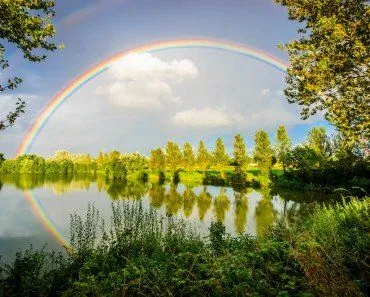
Yes, and it is completely normal. Those flashes of red, blue, green and violet are what gemologists call fire, and they come from dispersion: diamond bends violet light a little more sharply than red, so a single ray of white light gets fanned out into its component colors on the way through, much the way a glass prism or a rainbow splits sunlight. You will see it best under a single point of light, such as direct sunshine or one bright bulb, rather than under soft, even lighting. So if a stone throws rainbow sparks in the sun, that is a sign it is behaving like a diamond, not evidence that it is fake.
The catch is that fire is a matter of balance. In a real diamond, most of what reaches your eye is crisp white light (brilliance), with the rainbow colors appearing as occasional, vivid accents. Diamond’s dispersion value is 0.044, which is high for a natural gem but still restrained. Cubic zirconia, the cheap diamond simulant, has a dispersion of roughly 0.058 to 0.066, noticeably higher than diamond. Because it splits light far more aggressively, a cubic zirconia throws so much colored light that it can look like a tiny disco ball. Jewelers turn this against it: held in daylight, a real diamond returns mainly white brilliance with flashes of fire, while a stone gushing nonstop rainbow is a classic tell of a simulant rather than the real thing.
References (click to expand)
- Diamond Cut: Brightness, Fire and Scintillation - Gemological Institute of America
- Brilliant Cut (Diamond) - Encyclopaedia Britannica
- Adamantine Lustre - Encyclopaedia Britannica
- Fire in Round Brilliant Diamonds - GIA Gems & Gemology, Winter 2009
- What Makes Diamonds Sparkle? - NOVA, PBS
- Refractive Index of Diamond - Physics Van, University of Illinois Urbana-Champaign
- Diamond Fluorescence: A Fascinating Hidden Advantage - Natural Diamond Council
- Cubic Zirconia (dispersion and refractive index) - Wikipedia