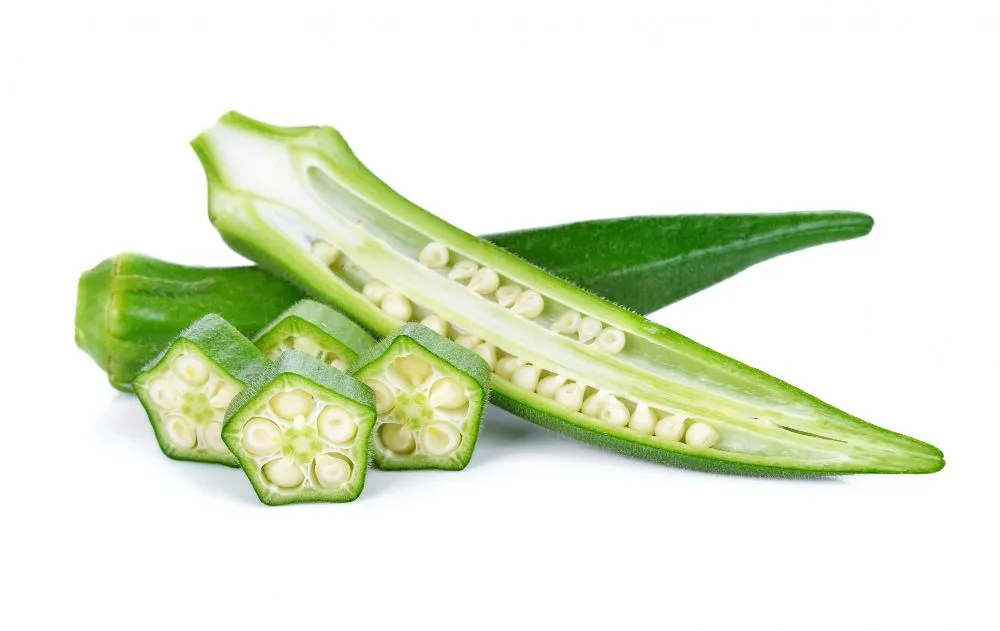
The reason for the sliminess of okra is the mucilaginous fiber present in okra pods, which dissolves in water and becomes slimy. For plants, mucilage is a tool to protect the plant by preventing the loss of water, especially when the plant is young.
If you’ve ever cut and cooked okra, then you know about the gooey and slimy ‘juice’ of the okra that sticks to the knife and your hand. This slippery and sticky mass only gets slipperier and stickier when the okra touches water.
Some of us absolutely dislike this slime and try to find ways to get rid of it. Others enjoy its texture and use it in recipes like soups and sauces to get just the right consistency.
Apart from food, okra slime actually has many uses in the food processing, pharmaceutical, and sewage treatment industries.
What Is Okra?
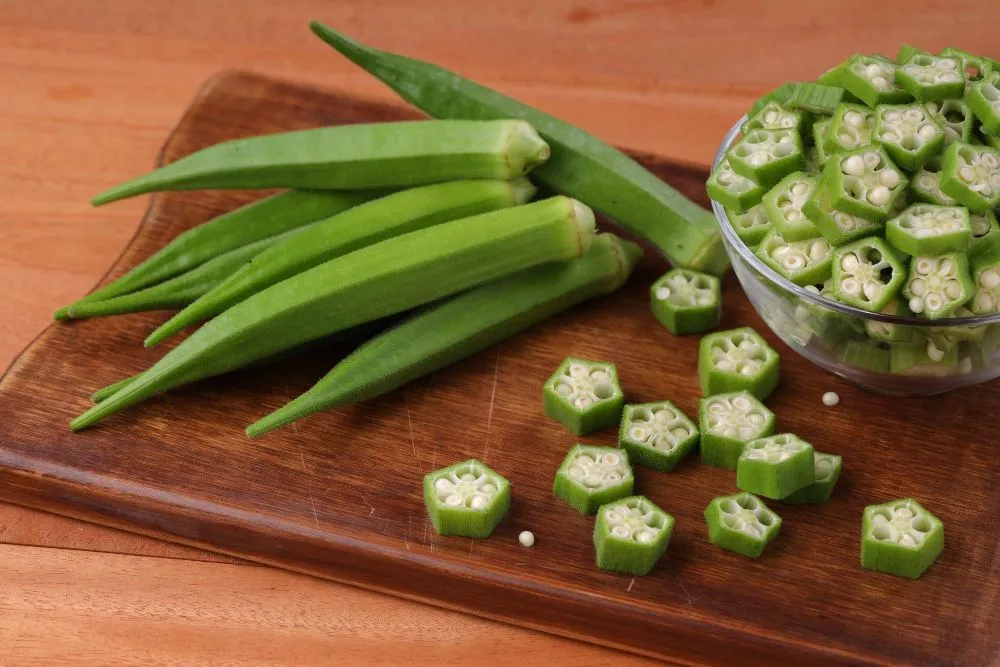
Okra (Abelmoschus esculentus) belongs to the family Malvaceae, along with cotton, cocoa, and hibiscus. It is also known by the names gumbo (in the southern US) and lady’s finger (in the UK).
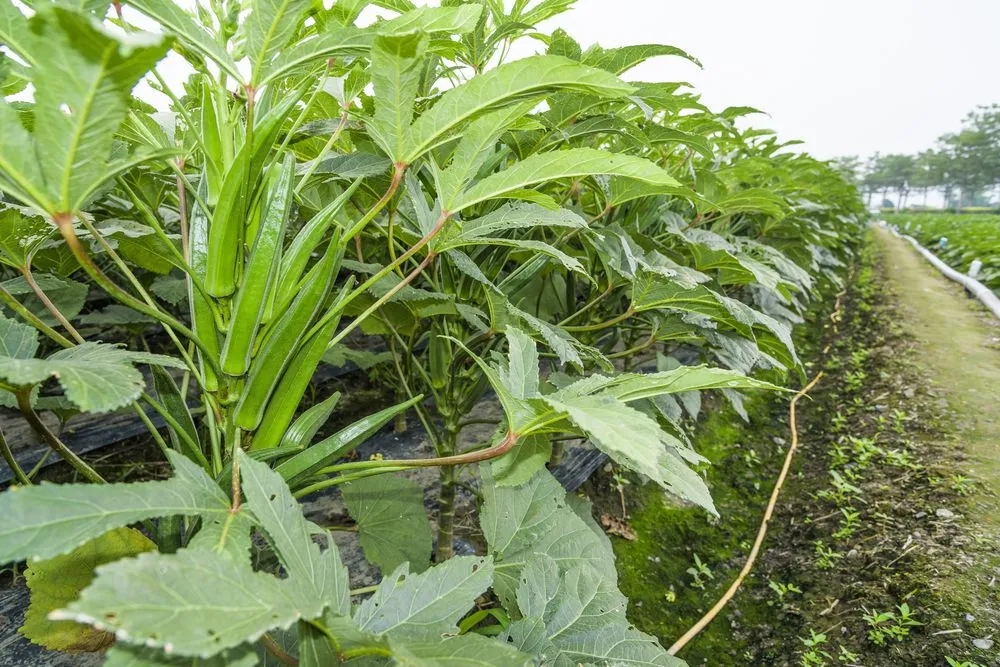
Okra is believed to have originated in Africa. The plant grows primarily in the warm tropical and subtropical areas of the world. Okra is mostly popular because of its immature edible green pods (fruits). However, its seeds, mucilage, and stem fiber also have various industrial uses.
It ranks high in nutritional value and is a rich source of dietary fiber, vitamin A, vitamin C, and minerals (calcium, potassium, copper, iron, phosphorus, magnesium, zinc, and manganese). Okra seed meal contains 16-17% protein.
Okra is used in traditional medicine and is known for its antidiabetic, antioxidant, and cholesterol-lowering activities. It is also used to treat gastrointestinal issues, such as worms and dysentery.
What Makes It Slimy And Does The Sliminess Have Any Use?
Okra pods contain a viscous substance called mucilage or gum. The mucilage is actually the soluble fiber and is made of polysaccharides, such as galactose, rhamnose, and galacturonic acid.
Some people dislike the slime and try to find ways to get rid of it, or at least reduce it while cooking. Others, however, take advantage of its viscous properties. African and Southern US cuisines take advantage of the sliminess and use okra to make soups and stews.
Due to its perceived medicinal properties, okra mucilage also has applications in the nutraceutical industry.
Since it is sourced from a plant and is non-toxic, it is used in the food processing industry as an emulsifier. In the pharmaceutical industry, it’s used as a coating for drugs, as well as a thickener, stabilizer, gelling agent, granulating agent, suspending agent, binder, and sustained release agent. It is also used to make biodegradable films for food.
Okra mucilage has been tested as a low-cost and eco-conscious way to handle wastewater treatment, as it can help to separate out solids from liquids to make the water less turbid.
Why Do Plants Produce Mucilage?
Okra is not the only plant that produces mucilage. Other common plants that produce mucilage include aloe vera, chia, some varieties of cactus, and taro.
Some plants, including okra, produce mucilage from the seed coat, the outer protective layer of the seed. This mucilage helps prevent premature seed germination. The mucilage also protects the germinating seedling from drought stress and serves as an energy source.
When mucilage is produced from leaves and buds, it helps the leaves retain water during times of water scarcity. It also helps with food storage. When the roots produce the mucilage, it helps to lubricate the root tips, which improves water content, water uptake and the absorption of ions from the soil.
Can You Avoid The Sliminess?
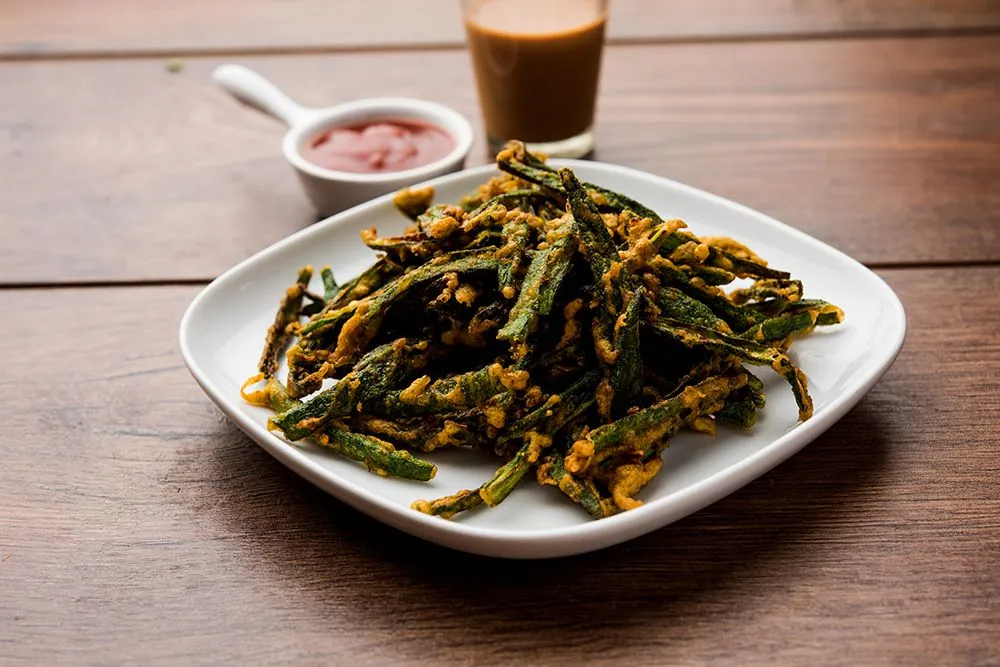
The mucilage is a part of the okra pod, so there’s no way to completely avoid it. However, chef-recommended ‘tips and tricks’ to reduce the sliminess include keeping the pods intact while frying them, adding acidic ingredients, such as vinegar, tomato, or lemon, slicing the pod while keeping the stem intact, leaving cut okra to dry overnight, and using high heat, such as deep frying, before adding other ingredients.
The viscosity of the okra mucilage is highest when the pH is neutral, which is why marinating or cooking with an acidic ingredient helps to reduce the sliminess. However, if your recipe needs thick slime, then you might want to add baking soda.
Is Okra Supposed To Be Slimy, Or Is It Spoiled?
Here’s where a lot of cooks get worried. If a sliced or cooked pod turns gooey, that’s completely normal: it’s just the natural mucilage doing what it does in water and heat, and it’s safe to eat. The slime you meet after you cut or cook okra is not a sign that anything has gone wrong.

The story is different for raw, whole pods sitting in your fridge. A good pod should be firm, crisp and bright green, ideally about 5–10 cm (2–4 inches) long, with no dark streaks. If a raw pod has turned soft, slippery or sticky on the outside, that’s mold and bacterial breakdown rather than mucilage, and it should be thrown out. Other warning signs are blackening ridges and tips, a dull or yellow-brown color, visible mold, or a sour smell in place of the usual mild, grassy one.
Okra is highly perishable and keeps for only about two to three days in the fridge. Because moisture is what triggers that surface slime and mold, the trick is to keep the pods dry: store them unwashed in a paper bag, or wrapped in a paper towel inside a loosely closed bag in the crisper, and wash them only just before cooking. So the rule of thumb is simple, slimy once cut or cooked is normal, but slimy on a raw, uncut pod means it’s past its prime.
Is Okra Slime Actually Good For You?
It turns out the very thing many people try to rinse away may be one of okra’s healthiest features. The mucilage is essentially soluble fiber, the kind of dietary fiber our gut enzymes can’t break down. Soluble fiber slows how quickly sugar is absorbed in the intestine, and it binds cholesterol and bile acids so the body clears more of them.

This isn’t just folklore. A 2024 systematic review and meta-analysis in Frontiers in Nutrition, pooling 9 randomized controlled trials with 540 people who had prediabetes or diabetes, found that adding okra to the diet significantly lowered fasting blood glucose (by roughly 39.6 mg/dL) and HbA1c, a marker of long-term blood sugar (by about 0.5 percentage points). The same analysis reported falls in total cholesterol (about 14.4 mg/dL) and in LDL, the “bad” cholesterol (about 7.9 mg/dL).
None of this turns okra into a medicine, and most of those trials used concentrated okra powders or extracts rather than a single serving on your plate. But it does mean the slimy gel is doing more than annoying you on the chopping board. If you don’t mind the texture, leaving some of the mucilage in (and going easy on the deep-frying) keeps more of that fiber where it can do some good.
Conclusion
Love it or hate it, there’s no way to avoid it. Okra will come with mucilage. However, okra has high nutritional value, and that slimy gel is largely soluble fiber that may help with blood sugar and cholesterol, so instead of avoiding okra because of the slime, you can try out some ‘tricks’ to reduce the sliminess. Just remember that slime is only a worry on a raw, uncut pod, where it points to spoilage rather than mucilage. The mucilage has numerous industrial uses in food processing, pharmaceutical and sewage treatment as well, so it’s probably a good thing that we still have to deal with it in the kitchen!
References (click to expand)
- Araújo, A., Galvão, A., Filho, C. S., Mendes, F., Oliveira, M., Barbosa, F., … Bastos, M. (2018, October). Okra mucilage and corn starch bio-based film to be applied in food. Polymer Testing. Elsevier BV.
- Dantas, T. L., Alonso Buriti, F. C., & Florentino, E. R. (2021, August 16). Okra (Abelmoschus esculentus L.) as a Potential Functional Food Source of Mucilage and Bioactive Compounds with Technological Applications and Health Benefits. Plants. MDPI AG.
- Foundation Food Search Options - FoodData Central - USDA.
- Tosif, M. M., Najda, A., Bains, A., Kaushik, R., Dhull, S. B., Chawla, P., & Walasek-Janusz, M. (2021, March 28). A Comprehensive Review on Plant-Derived Mucilage: Characterization, Functional Properties, Applications, and Its Utilization for Nanocarrier Fabrication. Polymers. MDPI AG.
- How to cook okra that tastes great and isn't slimy. The Washington Post.
- Bahari, H., et al. (2024). The cardiometabolic benefits of okra-based treatment in prediabetes and diabetes: a systematic review and meta-analysis of randomized controlled trials. Frontiers in Nutrition.
- Michigan Fresh: Using, Storing, and Preserving Okra. Michigan State University Extension.
- Okra Storage and Preparation Tips. University of Arkansas Cooperative Extension Service.