Pi is a finite number (roughly 3.14159), not an infinite one. Its value sits between 3 and 4. What never ends is its decimal expansion: in 1761 Johann Lambert proved pi is irrational, so its digits go on forever without ever repeating, and in 1882 Ferdinand von Lindemann proved it is transcendental.
The sixteenth letter of the Greek alphabet in mathematics holds as much significance in this universe as pepperoni in pizza holds for the average reader. From determining the size of your frisbee to calculating the expanse of our universe, this symbol has changed the world.
Any guesses on what it is?

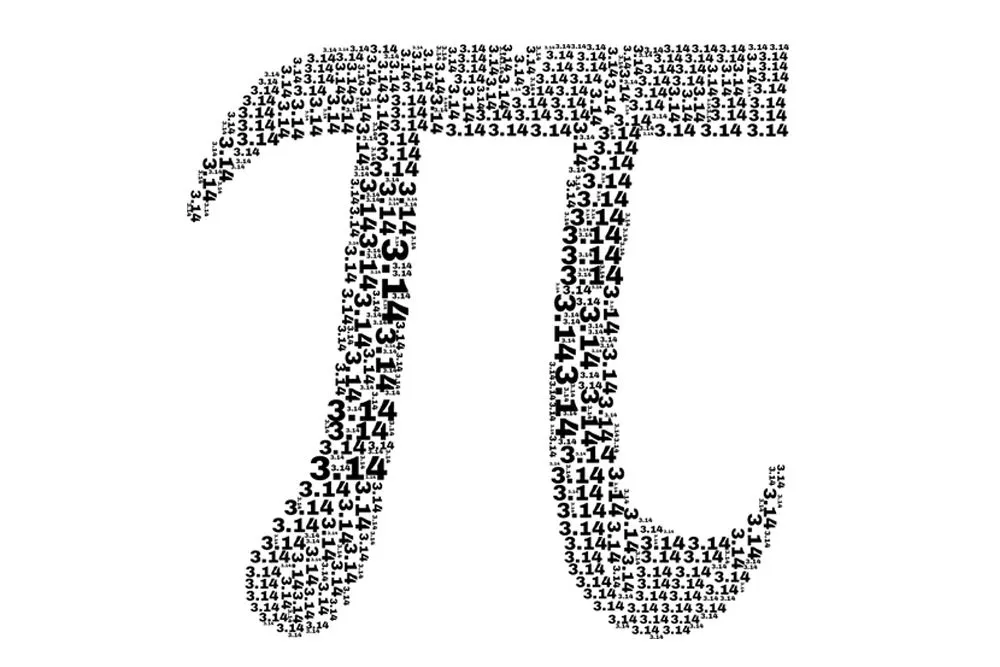
π.
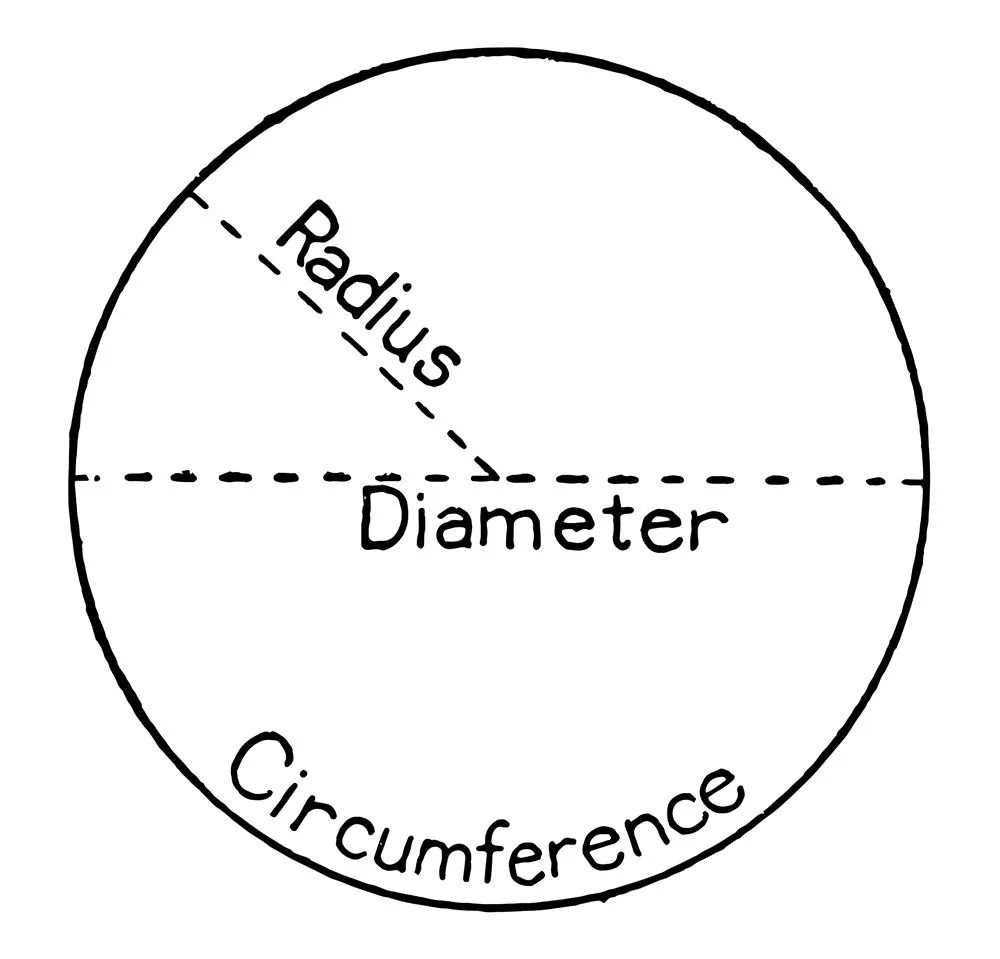
Two vertical lines flagged by one horizontal line: π (pi). You’ve probably heard or even used this symbol in your math class. The circumference of a circle is 2πr, where r is the radius of the circle.
Have you ever wondered about the origin of pi? And when people say pi is "infinite," is it the number itself that is endless, or just the string of digits we use to write it down? Moreover, is pi really what we think it is?
The Origin Of Pi
Our life has been dominated by circular objects from the very beginning. Wooden wheels back then, Hot Wheels today.
The same discovery cropped up independently in ancient civilizations all over the world, from India and Greece to Egypt and China: the circumference of a circle is always proportional to its diameter, no matter how large or small the circle is.
That is, the ratio of the circumference of a circle to its diameter always yielded a constant that was independent of the dimensions of the circle. The Welsh mathematician William Jones was the first to denote this proportionality constant by the symbol π in 1706, picking it as the first letter of the Greek word for perimeter (περίμετρος, perimetros) and for periphery (περιφέρεια, periphereia). The notation was popularised by Leonhard Euler in the 1730s and 1740s, and it has stuck ever since.
No, Pi Isn’t 22/7 – Here’s Why
Many of us were taught in school that pi is twenty-two divided by seven. However, that's only an approximation. Pi is something more subtle than that, and it definitely isn't equal to 22/7.
Pi is an irrational number.
So in essence, it cannot be expressed as the ratio of two integers that have no other common factor other than one. Then, why 22/7 you ask?
Well, this is actually just an approximation.
22/7 ≈ 3.142857, whereas pi ≈ 3.141592 (the two agree to the second decimal place and diverge at the third). For its highest-precision interplanetary navigation, NASA uses only the first 15 or 16 digits of pi (3.141592653589793); even at the scale of the solar system, more digits than that don't appreciably change the answer.
Imagine if they had done the Apollo calculations with 22/7: that ~0.04% error, over a quarter of a million miles to the Moon, would have been enough to make Neil Armstrong and Buzz Aldrin miss the lunar surface by more than 150 km.
Is Pi Infinite? Why?
When Swiss mathematician Johann Heinrich Lambert proved, in 1761, that pi is irrational, the fact that its decimal representation is infinitely long came along at the same time. The reason is that all irrational numbers, by definition, have infinite, non-repeating decimal expansions. Roughly a century later, in 1882, Ferdinand von Lindemann went further still and proved pi is transcendental, meaning it isn't the root of any polynomial equation with rational coefficients.
Pi belongs to the group of transcendental numbers (numbers that are not the root of any non-zero polynomial equation with rational, or equivalently integer, coefficients). Every transcendental number is automatically irrational, because any rational number p/q is the root of the simple polynomial qx − p = 0 and is therefore algebraic of degree one.
We just noted that irrationals can't be expressed as a ratio of two integers, and that's exactly why their decimal expansions are both non-terminating and non-recurring (the digits never end and never settle into a repeating pattern). The argument runs the other way too: any finite decimal, say 0.2378, can be written as 2378/10000 or 1189/5000.
So a finite decimal can always be expressed as a fraction, which makes it rational. A repeating decimal (e.g. 0.333… = 1/3) is also rational. For a number to be irrational, then, its decimal expansion has to be both infinite and non-repeating.
Don't confuse pi's infinite decimal expansion with an infinite value. Pi itself is a finite number; its value is bounded between 3 and 4 (in fact between 3.14 and 3.15), but the decimal string we write down to describe it never terminates.
3 < π < 4
Hence, pi is a real number, but since it is irrational, its decimal representation is endless, so we call it infinite.
How Did We Actually Prove Pi Is Irrational?
It's one thing to say pi is irrational, and quite another to prove it. So how did Johann Heinrich Lambert pull it off back in 1761? His trick was to look not at pi directly, but at the tangent function. Lambert showed that the tangent of an angle can be written as a never-ending "continued fraction":

tan x = x / (1 − x2 / (3 − x2 / (5 − x2 / (7 − …)))). From this expression, he proved that whenever x is a non-zero rational number, tan x has to be irrational. Now comes the clever finish. We know that tan(π/4) = 1, and 1 is about as rational as a number gets. If π/4 were rational, Lambert's result would force tan(π/4) to be irrational, which flatly contradicts it being a tidy whole number. The only way out is that π/4, and therefore π itself, is irrational.
And once a number is proven irrational, its endless, non-repeating decimal tail comes free with the package. Lambert's argument leaned on some heavy continued-fraction machinery, so for nearly two centuries mathematicians hunted for something simpler. In 1947, Ivan Niven delivered it: a celebrated one-page proof that uses nothing beyond first-year calculus. He assumed π = a/b for whole numbers, built a carefully chosen integral, and showed it would have to equal a positive whole number that is also smaller than 1, which is impossible. Contradiction, case closed. So yes, the mathematical proof you came here for genuinely exists, and it has been nailed down in more than one way.
How Do We Calculate Pi?
There are numerous ways of calculating pi. You can draw a circle, then measure its diameter using a ruler and its circumference using a piece of string. Now, divide the circumference of the circle by its diameter and there you have it: the value of pi! Voila!
The above method only gives us an approximate value of pi that is somewhere near 3. When I said that NASA only uses about 40 digits of pi, the simplest question that must have popped up in your head must be how did we come up with those 40 digits of pi?
Mathematicians all over the world have worked over the centuries to develop theorems and formulae that help us in calculating pi. The most respected methods for finding pi are:
- Gregory- Leibniz
- Newton
- John Machin
- Wallis
- Ramanujan
The Gregory- Leibniz, Newton and Machin series are simpler to grasp and easier to comprehend, whereas the other means of calculating π involve higher level of mathematics. A fun fact about pi
Are Pi's Digits Random? And Does Pi Ever Truly End?
Pi never ends and never settles into a repeating loop, but that raises a juicier question: are its digits actually random? Mathematicians have a precise word for the gold standard here, a "normal" number. In a normal number, every digit from 0 to 9 turns up equally often in the long run, and so does every possible pair, every triple, and every longer block you can name. If pi turns out to be normal, then every finite string of digits you can imagine, your birthday, your phone number, even this whole article encoded as numbers, would appear somewhere in its endless tail.

So is pi normal? Here's the surprise: nobody knows. It is one of the most famous open problems about pi. We have not even managed to prove that all ten digits show up infinitely often, however absurd the alternative sounds. What we do have is mountains of evidence. Among the first trillion decimal places, each digit appears roughly 100 billion times, give or take less than a million, exactly the evenness you would expect from a fair lottery. When Peter Trueb analyzed the first 22.4 trillion digits in 2016, the frequencies of every one-, two- and three-digit block came out consistent with pi being normal, in base 10 and in base 16 alike.
That said, "random-looking" still throws up startling clusters. Starting at the 762nd decimal place, pi produces six 9s in a row, a run nicknamed the Feynman point. It looks suspiciously deliberate, yet a genuinely random sequence is supposed to cough up streaks like that eventually. So the honest verdict is that pi's digits pass every test for randomness we have thrown at them, while a watertight proof that they truly are random stays tantalizingly out of reach.
How Pi Is Related To ‘G’ – The Gravitational Constant
Take out your calculator and compute the square root of the acceleration due to gravity.
√g = √9.8 ≈ 3.13, which is close to π ≈ 3.14
The square root of g comes out tantalizingly close to pi! Is that a coincidence?
There is an equation that typically depicts the relation between the time period and the length of a pendulum.
T = 2π√L/g
For an ideal pendulum of length one meter, the time period is 2 seconds. Boom! Using T=2 and L=1, we get,
π2 = g
So is pi secretly woven into gravity? Not really. This is a numerical coincidence that depends entirely on the units we chose, not a law of physics. It works only because g happens to be about 9.8 when measured in meters per second squared, and the reason for that traces back to history: early definitions of the meter were tied to the "seconds pendulum," a pendulum that takes exactly one second to swing each way (a two-second period). Plug a length close to one meter and a period of two seconds into the pendulum formula and you are essentially forced to get π2 ≈ g. Switch to feet per second squared (g ≈ 32.2), and the tidy relationship vanishes. So π2 ≈ g is a fun artifact of the metric system, not a deep link between pi and gravity.
The Life Of Pi

As you can see, pi is indeed an influential part of our lives! So influential, in fact, that it has a day of its own, pi day.
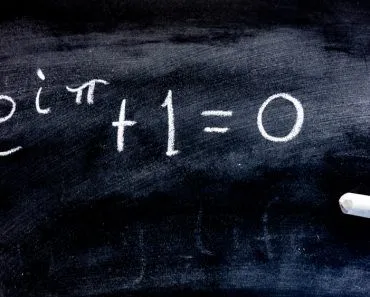
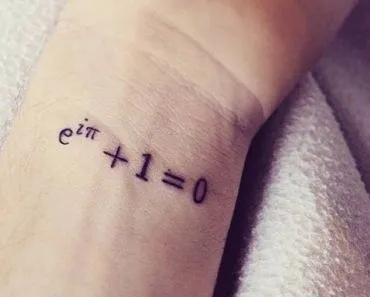
Celebrated on the 14th of March every year since its date stamp is 3.14, pi also features alongside 0, 1, e, and i in Euler's identity (eiπ + 1 = 0), often called the most beautiful equation in mathematics for tying five of its most important constants into a single line. Even the speed of computers is decided by how fast they can calculate the value of pi. The current world record for the most computed digits of pi stands at about 202 trillion digits, achieved in June 2024 by Jordan Ranous and the StorageReview team using a single high-end server running the Y-cruncher algorithm.
The life of pi is as endless as its decimal expansion. The journey of pi has just begun and there are plenty of mysteries still to be unravelled!
References (click to expand)
- How Many Decimals of Pi Do We Really Need? - Edu News. The Jet Propulsion Laboratory
- Reynaldo Lopes: The infinite life of pi | TED Talk. TED Conferences, LLC
- Pi - The Gregory-Leibniz Series. Stanford University
- pi-ref.txt - Princeton University Computer Science. Princeton University
- Wästlund, J. (2007, December). An Elementary Proof of the Wallis Product Formula for pi. The American Mathematical Monthly. Informa UK Limited.
- Pi | Definition, Symbol, Number, & Facts. Encyclopaedia Britannica
- Transcendental number. Encyclopaedia Britannica
- Conrad, K. Irrationality of π and e. University of Connecticut.
- Proof that π is irrational. Wikipedia.
- Trueb, P. (2016). Digit Statistics of the First 22.4 Trillion Decimal Digits of Pi. arXiv.
- Is Pi normal? St John's College, University of Oxford.
- Feynman Point. Wolfram MathWorld.