Yes, most yeast-leavened bread contains a small amount of ethanol, typically between 0.04 percent and 1.9 percent by weight. Baker’s yeast (Saccharomyces cerevisiae) ferments glucose into ethanol and CO2 via the Crabtree effect, in which yeast keeps fermenting even when oxygen is plentiful, provided glucose is abundant. Most of the ethanol boils off during baking (ethanol’s boiling point is 78.4 °C, well below oven temperatures); the residual amount is far too low to intoxicate or register on a breathalyzer.
The main player in the production of bread is yeast. A single-celled unicellular organism called Saccharomyces cerevisiae is the star, and needs food, warmth, and moisture to live. But what about oxygen? How do they manage that?
Believe it or not, they can respire with or without oxygen, so long as food is available.
Now, let’s take a deeper look to better understand the presence of alcohol content in bread.
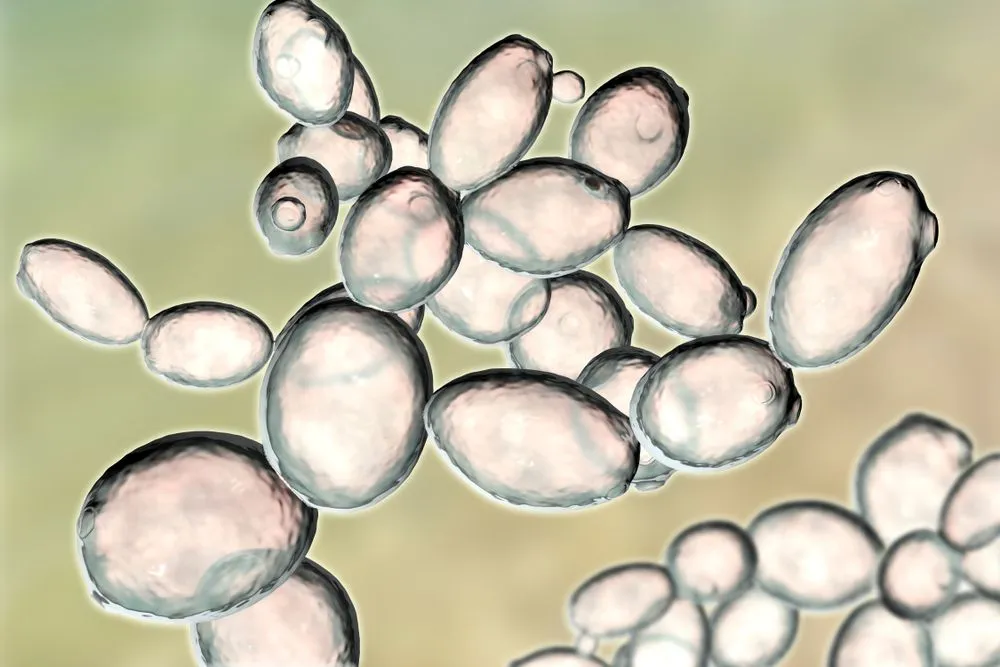
Respiration And Energy Production
Respiration is a chemical process that happens at the cellular level to produce energy in the form of ATP molecules. The process of respiration happens predominantly in the mitochondria.
However, a less energy-efficient process can happen in the cytoplasm (the fluid present inside a cell).
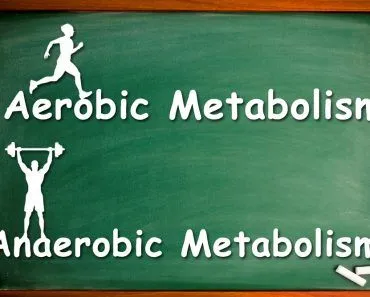
Types Of Respiration
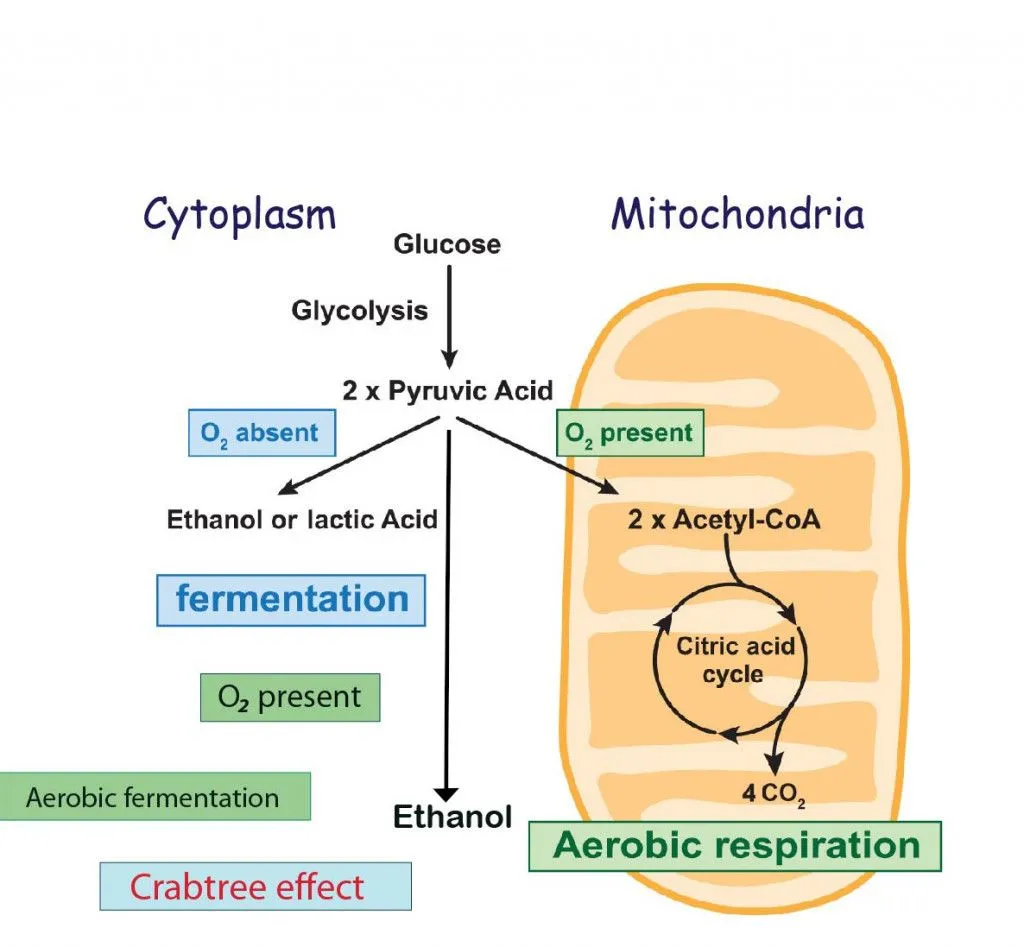
Glucose has two destinations inside the cell: one in the cytoplasm, the other in the mitochondria.
In the cytoplasm, the 6-carbon molecule (C6H12O6) can undergo anaerobic fermentation to form lactic acid and 2 molecules of ATP. This is called the Pasteur effect, shown as:
C6H12O6 → 2C3H6O3 + 2 ATP Muscles
(Glucose) (Lactic acid)
The glucose in the presence of excess oxygen still undergoes fermentation by a process called aerobic fermentation to form ethanol and carbon dioxide. This is called the Crabtree effect.
Anaerobic fermentation has been regarded as yeast’s way of life, whether it is in rising bread or frothing beer. However, is it true that anaerobic fermentation is the reason for the formation of ethanol and carbon dioxide?
Let’s try to understand yeast anaerobic metabolism through the Pasteur effect and the Crabtree effect.
Understanding The Pasteur Effect
According to Pasteur, oxygen inhibits the fermentation process. He demonstrated that aeration in yeast increases the oxygen concentration, which increases cell growth, but decreases fermentation rate, i.e., the production of alcohol.
This is not true for fermentation in yeast, which is elegantly hypothesized by the Crabtree effect.
Understanding The Crabtree Effect
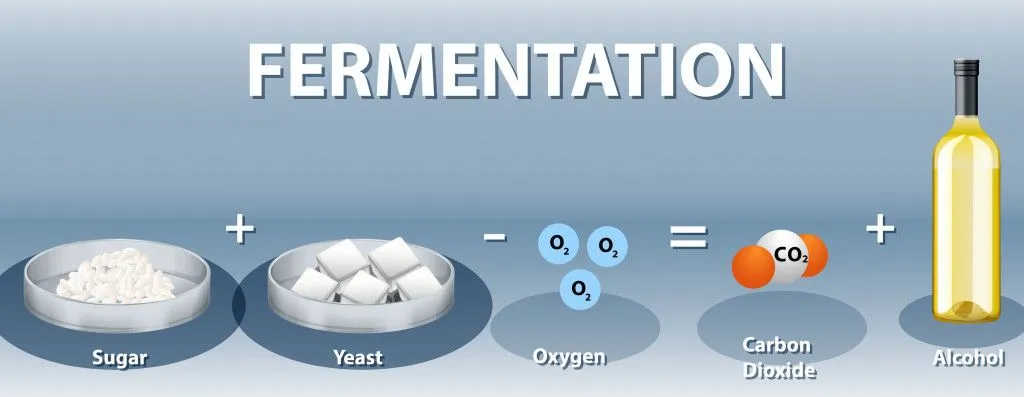
In Saccharomyces cerevisiae, the Pasteur effect only holds when sugar is scarce. With glucose in excess, the yeast keeps fermenting even with the air on, settling for the 2 ATP that fermentation yields per glucose instead of the 32 ATP it could harvest through full aerobic respiration. The leading evolutionary explanation is competitive: yeast floods its environment with ethanol, which is toxic to most other microbes but which yeast itself tolerates well, so the ethanol acts as a built-in antiseptic clearing the table of competitors.
So yes, both bread and beer use the same Saccharomyces cerevisiae and the same Crabtree-driven fermentation. The dough that rises overnight on your kitchen counter is producing ethanol the entire time, just in much smaller quantities than a bottle of beer.
What happens to that ethanol during baking? Most of it boils off (ethanol’s boiling point is 78.4 °C, well below oven temperatures of 180–230 °C). Measured residual ethanol in baked bread typically ranges from about 0.04 percent to 1.9 percent by weight, with the crumb retaining more than the crust because the outer surface dries and heats faster. The leftover ethanol is one of dozens of volatile compounds (along with esters, aldehydes, and Maillard reaction products) that give fresh bread its aroma.
Yes, our bread may contain traces of ethanol, which makes our sniffing experience worthwhile.
The fermentative performance of yeast cells, along with the Maillard reaction, leads to the final bread quality. The CO2, ethanol, and other metabolites make the bread undeniably delicious.
Quick Breads, Halal, And Kosher
Not every bread contains alcohol. Quick breads such as banana bread, soda bread, biscuits, cornbread, and most baking-powder-leavened muffins skip yeast entirely. Carbon dioxide for the rise comes from a chemical reaction between baking soda or baking powder and an acid (buttermilk, vinegar, cream of tartar). Without fermentation, there is no ethanol.
The residual alcohol in yeast breads is also far too low to cause intoxication or register on a breathalyzer in any meaningful way. Most halal and kosher authorities consequently treat bread as permissible, since the residual ethanol is an unavoidable baking byproduct rather than an added intoxicant, and the level is well below any threshold of concern. (Recovering alcoholics or anyone who needs to avoid ethanol completely can stick with quick breads, which are reliably alcohol-free.)
How Much Alcohol Is In Bread, And Could It Get You Drunk?
The honest answer to the second part is no, and the numbers make it obvious. When researchers actually measured the ethanol in everyday foods, they found that ordinary bread carries only a trace. In a 2016 study published in the Journal of Analytical Toxicology, Gorgus and colleagues measured roughly 0.14 g of ethanol per 100 g in wheat rolls and 0.18 g per 100 g in rye bread. The outliers were soft, sugar-rich rolls: American-style burger buns reached about 1.28 g per 100 g and French-style sweet milk rolls about 1.21 g per 100 g, because their extra sugar gives the yeast more to ferment.

Now put that against what it takes to feel anything. A US standard drink contains about 14 grams of pure alcohol, as defined by the National Institute on Alcohol Abuse and Alcoholism (NIAAA). At an average of 0.18 g per 100 g, a typical 30 g slice of bread holds only around 0.05 g of ethanol. You would need to eat roughly 250 slices, the better part of ten loaves, in a single sitting just to take in the alcohol of one beer.
And that ceiling is purely theoretical, because your body never lets the ethanol pile up. The liver oxidizes alcohol at a steady pace of roughly one standard drink per hour using the enzyme alcohol dehydrogenase, so the few hundredths of a gram in a sandwich are broken down faster than you could ever eat your way to a measurable blood alcohol level. That is also why bread will not betray you on a roadside test, a point we cover in our piece on how a breathalyzer detects alcohol. The ethanol is real, but it is a flavor note, not a buzz.
Does Sourdough Bread Contain Alcohol?
Sourdough is the bread people ask about most, and the answer comes with an interesting twist. Yes, sourdough dough contains ethanol, but it is made by a small ecosystem rather than a single organism. A sourdough starter is a symbiosis of lactic acid bacteria (mostly Lactobacillus species such as L. sanfranciscensis) living alongside wild yeasts like our familiar Saccharomyces cerevisiae. The bacteria pump out lactic and acetic acid, which is exactly what gives sourdough its tang, while the yeasts ferment sugars into CO2 and ethanol just as they do in any other risen dough.

How much ethanol ends up in the raw dough? A survey of 19 traditional Italian sourdoughs found a median ethanol concentration of about 0.24 mol/L (molar), ranging from roughly 0.05 to 0.50 mol/L across the samples. In those starters the bacteria outnumber the yeasts by ten to a hundred to one, which is why sourdough tastes sour rather than boozy even though both microbes are busy fermenting.
The crucial part is what happens next. Sourdough goes through the same hot bake as any loaf, and ethanol boils at 78.4 °C (173 °F), far below the 180 to 230 °C (356 to 446 °F) of the oven, so most of it escapes with the steam. The baked loaf keeps only a residual trace, no more able to intoxicate you than a regular slice. If you enjoy the flavor of bread at all, you can thank the same yeast chemistry that powers how beer is made, just dialed down to a whisper.
Conclusion
It is amazing that single-cell yeast can make wine, beer and bread. It is important to understand this anaerobic fermentation is achieved through the Crabtree effect. The CO2, ethanol, and Maillard reaction are the reason behind the delightful and appealing aroma of bread.
References (click to expand)
- Pfeiffer, T., & Morley, A. (2014). An evolutionary perspective on the Crabtree effect. Frontiers in Molecular Biosciences, 1, 17.
- Hagman, A., & Piškur, J. (2014). A Study on the Fundamental Mechanism and the Evolutionary Driving Forces behind Aerobic Fermentation in Yeast. PLOS ONE (PMC4240471).
- De Deken, R. H. (1966). The Crabtree Effect: A Regulatory System in Yeast. Journal of General Microbiology.
- Pasteur effect overview. ScienceDirect Topics.
- Otterstedt, K. et al. (2004). Switching the mode of metabolism in the yeast Saccharomyces cerevisiae. EMBO reports.
- Ethanol formation during wheat dough fermentation. Journal of Agricultural and Food Chemistry.
- Gorgus, E., Hittinger, M., & Schrenk, D. (2016). Estimates of Ethanol Exposure in Children from Food not Labeled as Alcohol-Containing. Journal of Analytical Toxicology, 40(7), 537-542 (PMC5421578).
- Minervini, F. et al. (2012). Lactic Acid Bacterium and Yeast Microbiotas of 19 Sourdoughs Used for Traditional/Typical Italian Breads. Applied and Environmental Microbiology (PMC3273004).
- What Is A Standard Drink? National Institute on Alcohol Abuse and Alcoholism (NIAAA).