Table of Contents (click to expand)
Food preservatives are substances added to food to slow spoilage and extend its shelf life. They work in two main ways. Antimicrobial preservatives (such as salt, sugar, nitrites, benzoates, sorbates, and sulfites) kill spoilage microbes or stop them from growing, while antioxidant preservatives (such as BHA and BHT) keep fats and oils from going rancid.
While profusely pouring ketchup on my plate for a sandwich I was recently making, I happened to notice the ingredients label. One ingredient that struck me as unusual was “preservative E211”.
It is not unusual, per se, but what comes to mind if I ask you to list the ingredients of ketchup? It would usually be tomato, sugar, salt, and water. However, food preservatives are always there in the background, guarding our favorite foods against microbes.
From a packet of chips to jams and butter that we love spreading on our slices of bread, every food item that lasts longer than a day or two seems to have added preservatives. So what exactly is a preservative? In simple terms, a food preservative is any substance added to food to slow down spoilage and keep it safe to eat for longer.
Broadly, they fall into two camps. Antimicrobial preservatives target the bacteria, molds, and yeasts that make food go bad, either killing them or stopping them from multiplying. Antioxidant preservatives, on the other hand, fight a chemical enemy rather than a living one: they stop oxygen from turning fats and oils rancid. These preservatives come in different types, and all of them work differently!
Salt And Sugar
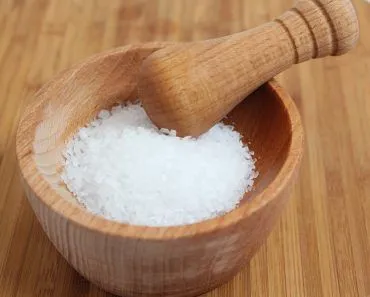
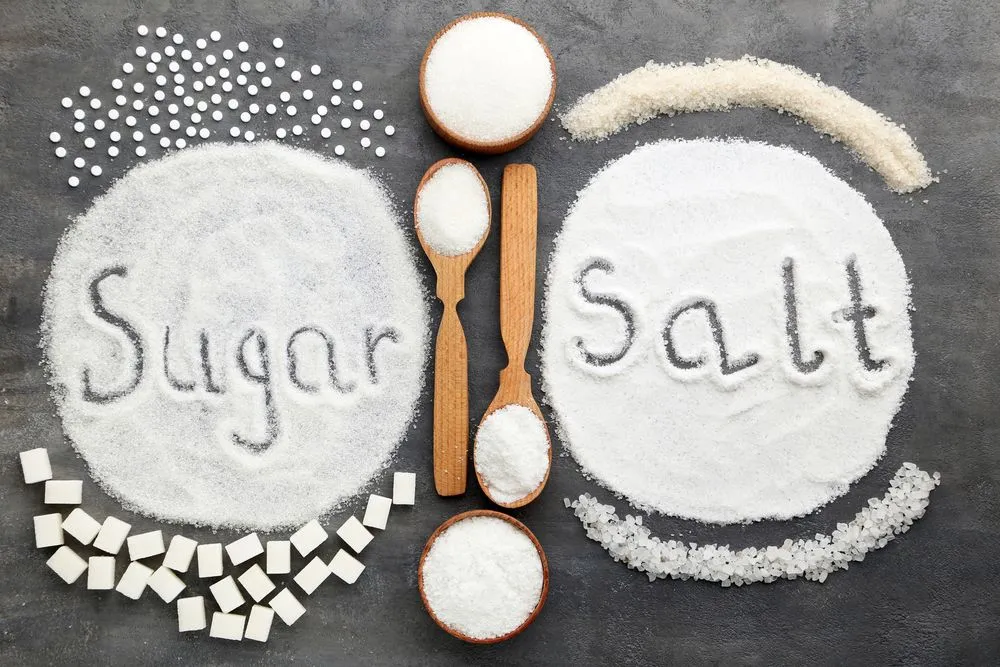
Salt and sugar are the most historic preservatives for food. These two have been around since ancient times to preserve our food.
Salt is used on vegetables, fish and meat in a process called salting, salt curing, or corning. Sugar is used in jams and jellies and in meats like sugar-cured ham. Vegetables are usually preserved by pickling them in brine, which is a mixture of salt and water. On the other hand, meat can be rubbed with salt and dry-cured, or a salt solution might be injected into it.
How salt and sugar work is as simple as ABC. The addition of salt and sugar makes the surrounding medium hypertonic. This means that it has a higher concentration of solute, as compared to the solute concentration inside a microbial cell. When a bacterial cell lands on the food that has been cured, its insides have more water (or solvent) molecules, as compared to the outside medium, which is hypertonic.
What then happens is a simple process called plasmolysis. The water molecules move from their higher concentration to their lower concentration. This means that they move from the inside of the bacterial cell to the outside environment. This happens to maintain equilibrium, but it leaves the bacterial cell dehydrated. It then dies in the absence of an appropriate amount of water.
A higher concentration of salt or sugar molecules in such scenarios might sometimes even rupture the microbe’s one-cell body. The reason is the pressure differences between the outside and inside of the cell.
In another mechanism, sugar and salt can interfere with the enzymatic activity of a microbe. They might also weaken the molecular structure of the microbe’s DNA, rendering it incapable of functioning normally.
Sugar is also known to act as a food preservative indirectly. It accelerates the buildup of other antimicrobial substances from the growth of certain microorganisms. For instance, sugar is converted into ethanol in wine due to fermentation by the yeasts.
Nitrates And Nitrites
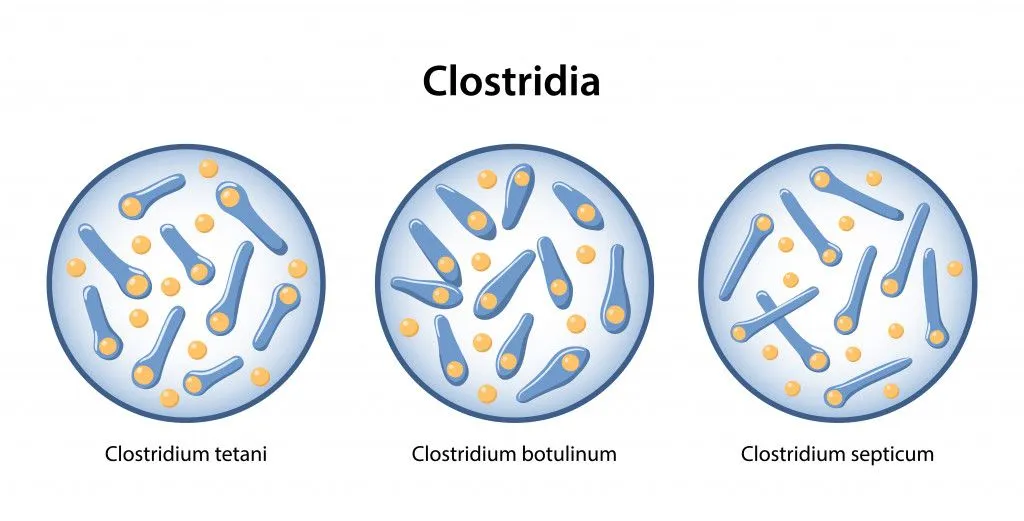
This is another class of food preservatives naturally found in water, fresh fruits, and vegetables. Nitrates and nitrites are primarily added to ham, bacon, salami, and some hard cheeses. In cheese, they hold off the "late blowing" defect, in which gas-producing Clostridium bacteria bloat the wheel and ruin its texture. Nitrates and nitrites are used in the form of their salts.
These prevent the spoilage of food by microbes, particularly Clostridium botulinum, which causes botulism, a deadly form of food poisoning. It is suggested that nitric oxide (formed from nitrite) reacts with the iron-sulfur proteins of bacteria (such as ferredoxin), which are essential for their metabolism. With the metabolism of the bacteria inhibited, the nitrite functions as a preservative.
Experiments have also revealed that the addition of nitrate to a glucose medium containing C. botulinum caused a large and rapid decrease of intracellular ATP concentration of the bacteria. Not only that, but there was a significant excretion of pyruvate too. With ATP reduced and iron-sulfur proteins inhibited, the nitrite does its work of protecting our food from this bacterium.
Nitrite retards the development of unpleasant odors and flavors of meat during storage. Both nitrates and nitrites give cured meat its reddish-pink color and add to its umami flavor. The chemistry runs through nitrite: it is reduced to nitric oxide, which then binds the iron at the center of meat’s myoglobin pigment to form nitrosylmyoglobin. On cooking, this becomes the stable pink nitrosyl haemochrome seen in ham and bacon. (Nitrate itself has no color effect until microbes in the meat reduce it to nitrite first.)
BHA And BHT
BHA and BHT stand for Butylated Hydroxyanisole and Butylated Hydroxytoluene, respectively. Cereals, gums, fast food, processed potato, drink mixes, snack foods, etc., all use BHT and/or BHA as food preservatives.
These are considered food preservatives because of their antioxidant properties. It is a well-known fact that exposure to air or oxygen causes food to spoil. This happens because oxygen promotes the growth of aerobic bacteria in the food. Moreover, oxidizing enzymes naturally present in food catalyze reactions between oxygen and food ingredients, making the food go stale earlier.
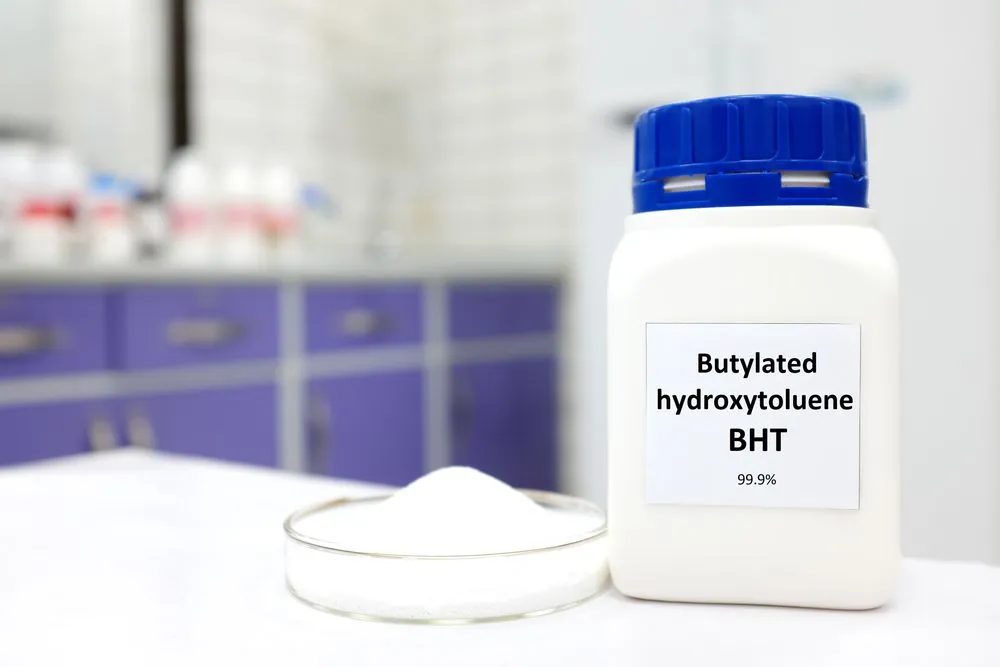
Oxidation is responsible for the fats in food turning rancid. Discoloration of light-colored fruits is also due to this oxidation. BHA prevents the fats present in food from going rancid. It also acts as a de-foaming agent for yeast. BHT does the same, with an additional function of retaining the food’s smell, color, and flavor.
Since BHA and BHT are antioxidants, the oxygen preferentially reacts with them. Thus, the fats and oils of food are protected against going rancid due to reacting with Oxygen. BHA and BHT contribute hydrogen atoms from the phenolic hydroxyl group (-OH attached directly to a benzene ring) to interrupt the chain of free radical oxidative reactions.
In this process, they form stable free radicals that do not initiate or propagate further reactions with the lipids of the food. This is not just for food though; BHA and BHT also preserve oils and fats present in cosmetics and pharmaceuticals.
Benzoic Acid And Benzoate Salts
These are a group of commonly used preservatives, especially in carbonated beverages. They also preserve food salads, syrups, jams, jellies, mincemeat, pickles, pie, pastry fillings, fruit cocktails, soy sauce, and many other common food items. The “preservative E211” is sodium benzoate, often added to acidic foods such as pickles and ketchup.
Benzoic acid and benzoates are anti-bacterial and thus prevent the spoilage of food. They also prevent the growth of yeast.
The antimicrobial activity of benzoic acid is best at a lower pH range, from 2.5 to 4.0. What happens at this pH range is that the unionized form of benzoic acid has an advantage in entering the microbe’s plasma membrane.
When the intracellular pH falls below 5, the anaerobic fermentation of glucose decreases severely, which in turn inhibits the growth and survival of most microbes that spoil food.
Benzoic acid is also used as a preservative in cosmetics.
Sorbic Acid And Sorbates
If you have ever checked the label on a tub of yogurt, a wedge of cheese, or a baked good and spotted "potassium sorbate," you have met another workhorse preservative. Sorbic acid and its salts (mostly potassium sorbate, but also sodium and calcium sorbate) are the go-to defense against molds and yeasts. Bakers, cheesemakers, and winemakers all lean on them.
Sorbates are weak-acid preservatives, so they play by rules much like benzoates. They work best in acidic foods, roughly at a pH below 6, where a good fraction of the preservative stays in its undissociated (uncharged) form. That uncharged form slips easily across the microbe’s membrane. Once inside the more neutral cell, it releases hydrogen ions, acidifying the interior and jamming the enzymes the microbe needs to break down sugars for energy. Starved of usable energy, the mold or yeast simply stops growing.
Potassium sorbate is the form you will see most often, mainly because it dissolves in water far more readily than sorbic acid itself, which makes it easier to mix into a syrup or a brine. The active ingredient, though, is the acid it turns into once it is in the food.
Sulfites
Sulfites are the reason your dried apricots stay orange instead of turning a sad brown, and they are part of why a bottle of wine carries a "contains sulfites" warning. This group includes sulfur dioxide gas (SO2) along with salts like sodium sulfite, sodium bisulfite, and sodium metabisulfite. They show up in dried fruits, fruit juices, wine, and some processed potato products.
What makes sulfites unusual is that they pull double duty. As antimicrobials, they cross microbial cell membranes and interfere with enzymes and metabolism, holding back unwanted yeasts and bacteria (which is why winemakers value them so highly). As antioxidants, they mop up oxygen and block the enzymatic browning reactions that would otherwise darken cut or dried fruit, keeping its color and flavor intact.
There is a catch, though, and it is an important one. A small share of people, especially some with asthma, can react badly to sulfites. For that reason, regulators keep them on a tight leash: the US FDA banned sulfites on fresh fruits and vegetables meant to be eaten raw back in 1986, and any packaged food containing 10 parts per million or more must declare them on the label.
Conclusion
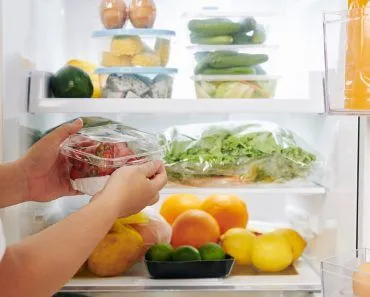
Various food preservatives circulate in the food industry and are extremely essential in protecting our favorite foodstuffs. However, preservatives are not the only answer; refrigeration can also protect your food from microbes. So, the next time you open a packet of instant popcorn before you pull up that movie on your laptop, scan the ingredient label to find which preservatives have been used!
References (click to expand)
- How do salt and sugar prevent microbial spoilage?. Scientific American
- Preservatives – Exploring nitrate & nitrite safety. Michigan State University
- Cammack, R., Joannou, C. L., Cui, X.-Y., et al. (1999). Nitrite and nitrosyl compounds in food preservation. Biochimica et Biophysica Acta (BBA) - Bioenergetics. Elsevier BV.
- Cured meat color: Part 3. Michigan State University Extension
- Domingos, A. K., Saad, E. B., Vechiatto, W. W. D., et al. (2007). The influence of BHA, BHT and TBHQ on the oxidation stability of soybean oil ethyl esters (biodiesel). Journal of the Brazilian Chemical Society. FapUNIFESP (SciELO).
- BHA and BHT: A Case for Fresh? Scientific American
- Benzoic Acid - an overview. ScienceDirect Topics
- Potassium Sorbate - an overview. ScienceDirect Topics
- Sulfites: Separating Fact from Fiction. University of Florida IFAS Extension