Light bulbs have been around for quite a while now, but you may not know that they work on complex principles of electrodynamics and thermodynamics.
Before the era of electrical lighting, it was quite a task to summon bright and long-lasting lighting. The only options available were candles and oil lamps, which were not very efficient at doing their job.
Conceived and patented by Thomas Alva Edison in the 1800s, incandescent light bulbs have continued to light up our world for generations.
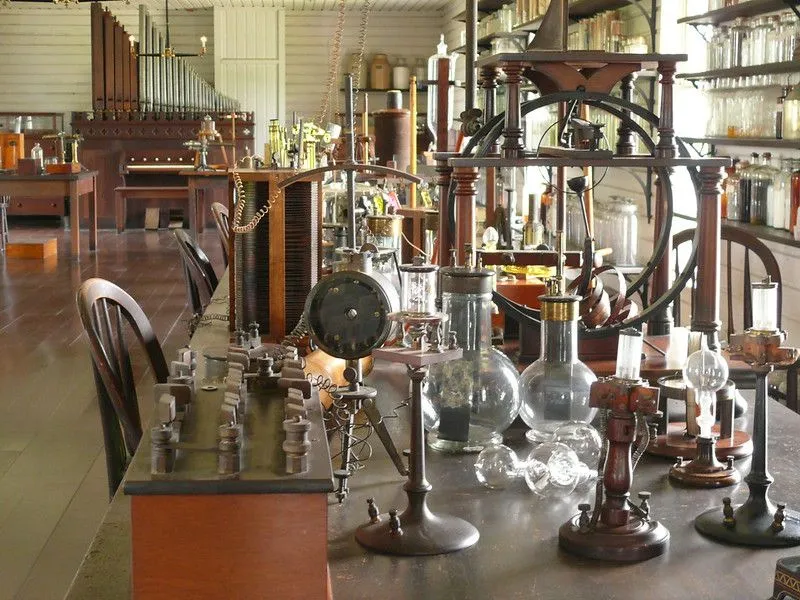
Incandescent light bulbs have been such a hit that the original technology hasn’t undergone any drastic changes. It’s interesting to note that such a minute (but also critical!) part of our existence is based on important aspects of physics.
In this article, we’ll find the answers to some general questions regarding incandescent light bulbs.
How Is Light Produced In Light Bulbs?
An incandescent bulb mainly consists of two parts: the bulb and the filament.
The bulb is generally made of glass, within which is a vacuum. The vacuum helps in extending the life of the light bulb; if air particles are present inside the bulb, it will heat up quickly and the glass will break easily.
The filament inside the bulb is where the actual light is produced. It is made of a long and coiled material that is a good conductor of electricity, such as tungsten. Sometimes, the inside of the bulb is also filled with an inert gas, like argon. Inert gases help in slowing the process of tungsten filaments wearing out.
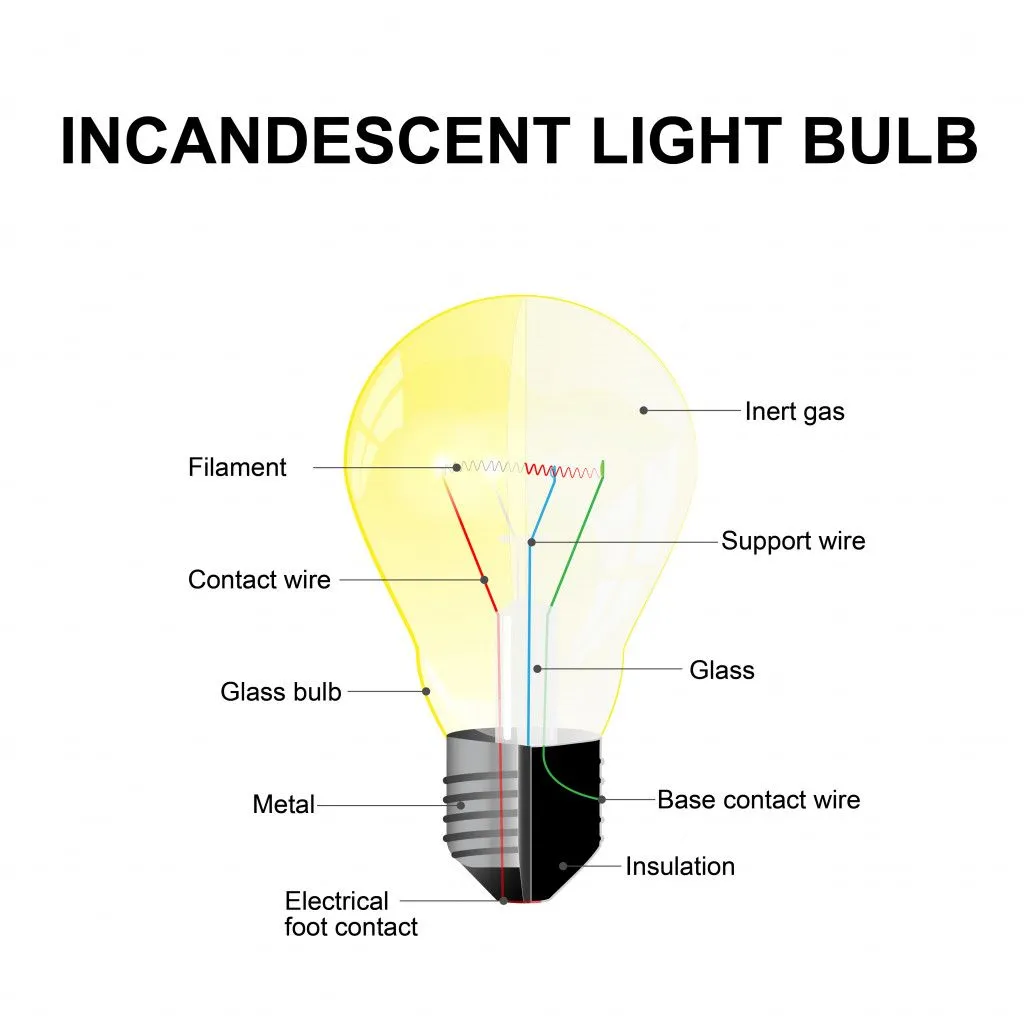
The filament is attached to metal contacts that are hooked to a power supply so electricity can flow through it.
When the electric current flows through the filament, it runs into electrical resistance, and that resistance heats the thin, tightly coiled tungsten wire to around 2,500 °C (about 4,500 °F). At such a high temperature the charged particles inside the metal (its atoms and the sea of free electrons) jostle and accelerate furiously, and any accelerating electric charge sheds energy as electromagnetic waves. The filament therefore radiates a broad, continuous spread of wavelengths, and the slice of that spread our eyes can detect is the warm glow of the bulb (the tiny packets of light energy it emits are called photons).
In this way, the light bulbs glow!
What Parts Make Up A Light Bulb?
For such a small object, an incandescent bulb is a tidy little package of carefully chosen components. Take one apart and here is what you would find:
- Glass envelope (the “bulb”): the sealed glass shell that keeps air out and holds everything together. The inside is often given a fine silica frosting to soften the glare.
- Fill gas: most modern bulbs are filled with an inert mixture of argon and nitrogen rather than left as a pure vacuum. The unreactive gas slows the rate at which the scorching filament evaporates away.
- Tungsten filament: the coiled wire that actually glows. Tungsten is chosen because it has the highest melting point of any metal, about 3,414 °C (6,177 °F).
- Support wires: fine molybdenum wires that cradle the delicate filament so it cannot sag into, or touch, the glass.
- Lead-in wires: the pair of wires that carry the current up to the filament and back down to the base.
- Glass stem (mount): the central glass support, pinched tightly around the lead-in wires, that lets electricity pass into the bulb without letting the gas leak out.
- Base (cap): the metal fitting that screws or clips into the socket. The two everyday designs are the Edison screw and the bayonet cap.
- Foot contact: the small metal tip at the very bottom of the base, separated from the screw thread by a ring of insulation, which forms the second electrical connection.
Follow the path of the current and the whole layout makes sense: electricity enters at the base, climbs one lead-in wire, crosses the filament where it makes light, and returns down the other lead-in wire to complete the circuit.
What Does “Incandescent” Actually Mean?
The word incandescent simply means glowing because of heat. It comes from the Latin incandescere, “to glow white,” and it describes anything that gives off visible light purely because it is hot. A poker left in a fire, a river of molten lava and the filament in an old-style bulb are all incandescent for exactly the same reason.

Heat almost any solid enough and it begins to radiate visible light. In a darkened room the first faint red glow appears at around 525 °C (977 °F), a threshold known as the Draper point. Push the temperature higher and the glow brightens and changes color, marching from red through orange to yellow and finally to a bluish white. That orderly progression is the heart of black-body radiation: the spectrum a hot object emits depends only on its temperature. Planck’s law describes the full curve, and Wien’s displacement law captures how the brightest wavelength slides toward the blue end as the object gets hotter.
This is exactly why a bulb’s filament has to run so fiercely hot, at roughly 2,500 °C (4,500 °F). At cooler temperatures an object radiates almost entirely in the invisible infrared, which we feel as warmth but cannot see. Only when the filament is white-hot does a worthwhile slice of its radiation land inside the narrow band of wavelengths our eyes register as light. It also explains why an ordinary incandescent bulb is such a wasteful lamp: the great majority of its output is still invisible heat, and only a small fraction escapes as visible light.
Why Do Light Bulbs Get Hot?
One important point to consider here is that the filament of the light bulbs burns itself to produce light. This means that the electric current flowing through the filament heats it to the level where it starts emitting photons. The agitation and vibration of the atoms within the material of the filament produces heat energy.
Most of the electric current flowing through the light bulb is used for agitating the atoms. This generates heat energy, but only a small fraction of this electrical energy gets converted into light.
Also, the inside of the bulb is not completely vacuum-sealed and air particles conduct heat energy to the glass. The inert gas inside the bulb also conducts heat energy to the glass. Thus, when you touch a light bulb that is glowing for a long while, it’s hot.
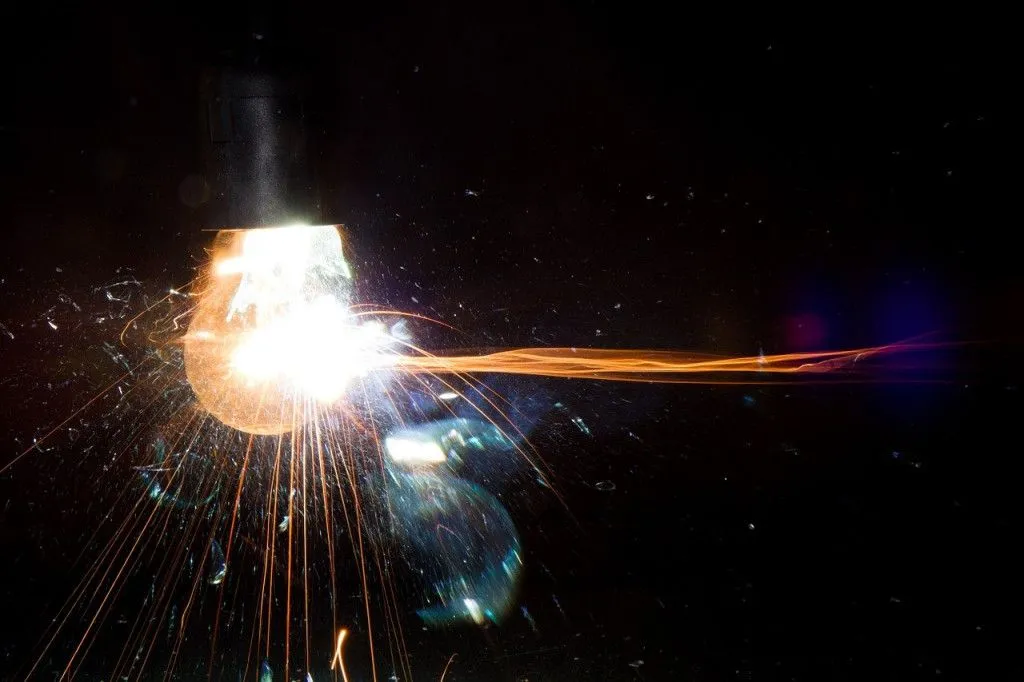
For this reason, the filament eventually breaks, so incandescent bulbs don’t last long.
Hence, we can say that an incandescent light bulb is not particularly efficient in converting electrical energy into light energy, wasting energy in the form of heat.
How Are Light Bulbs Made?
Given how little a bulb costs, the way it is manufactured is surprisingly clever, and almost entirely automated.
It begins with the filament. Tungsten starts life as a powder that is pressed into bars, baked solid and then drawn out through a series of ever-smaller dies until it becomes a ductile wire finer than a human hair. That thread is wound into the tight coil (often a “coiled coil”) that gives the filament its compact, springy shape.

The glass envelopes are made separately, and astonishingly fast. A device called the ribbon machine, developed at Corning Glass Works in 1926, sends a continuous ribbon of molten glass past a line of molds and air blowheads that puff each soft blob down into a bulb shape. At full speed a single ribbon machine can turn out as many as 2,000 bulbs a minute, a staggering leap from the two bulbs a minute a skilled glassblowing team managed in the 1890s.
Then the pieces come together. The coiled filament is welded onto the lead-in wires of a glass stem, which is fused into the neck of the envelope. The air is pumped out and replaced with the argon-and-nitrogen mixture, the metal base is cemented on and the lead-in wires are soldered to the base contacts. After a quick electrical test, the finished bulb is ready to be boxed.
Say Hello To The Brighter Competitors!
Due to humankind’s perpetual thirst for better options, the incandescent light bulb now has better competitors: the halogen bulb, fluorescent bulb, and LED (Light-emitting diode) bulb.
These different kinds of bulbs work on different mechanisms where the wastage of energy as heat energy is less and a more significant part of electrical energy is converted into light energy. They are economical, long-lasting, and more energy-efficient.
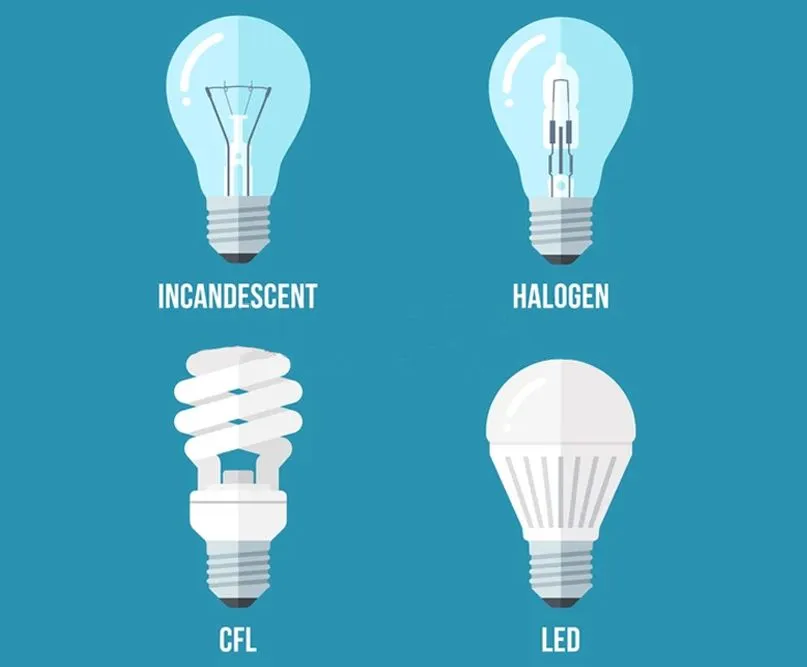
Halogen bulbs are an advanced version of incandescent bulbs where the tungsten filament is enclosed within a bulb-shaped quartz capsule, filled with a mixture of inert gas and a tiny amount of halogens, such as iodine or bromine. The “halogen cycle” redeposits the tungsten particles into the filament, allowing them to be reused and effectively elongating the life-span of the bulb.
Fluorescent bulbs use the principle of fluorescence, where the mercury vapor is energized using the electric current flowing through the bulb. This energized mercury vapor emits ultraviolet radiation to the phosphor coating on the inner walls of the bulb, causing it to emit light energy. It’s approximately four times more efficient and ten times more long-lasting than incandescent light bulbs.
LED bulbs emit light energy when they are forward-biased. They are made of LEDs, which are composed of semiconductor material. They are the most energy-efficient option on the market.
To know more about the mechanism of an LED bulb, check out the article ‘Why are LED lights so energy-efficient?’
Towards An Energy-efficient Future
With the depletion of energy resources, the world is trying its best to conserve them and shift to more sustainable solutions. The best artificial lighting option that one can opt for is LED lighting, due to the many advantages it has over all the other traditional lighting methods. LED light bulbs emit negligible heat energy, last up to 25,000 hours, and are available in a variety of colors.

The future of household and commercial lighting is very bright, thanks to humanity’s brilliant inventors, who are always on the hunt for new technologies!
References (click to expand)
- The History of the Light Bulb. The United States Department of Energy
- Learn About LED Lighting - Energy Star. Energy Star
- Enlighten yourself about energy-efficient light bulbs! - www.nrcan.gc.ca
- Light Bulbs | NASA Climate Kids. The National Aeronautics and Space Administration
- Tungsten. Royal Society of Chemistry, Periodic Table
- Blackbody Radiation. University Physics III (OpenStax), Physics LibreTexts
- Incandescence. Encyclopaedia Britannica
- Corning Ribbon Machine. The American Society of Mechanical Engineers