Lighters are containers that use a fuel to produce a flame. The first lighters were fueled by hydrogen gas, but modern lighters use butane. When the lighter is depressed, the butane is released and vaporized. The vaporized butane is then ignited by a spark.
Lighters are to smokers what sunlight is to trees, but lighters aren’t merely used to light cigarettes. They’re also quite common at any party that involves a cake adorned with candles. However, have you ever wondered how lighters produce a flame so perfectly ovate, as if it materializes from a candle, out of thin air?
The First Lighter
The first aspect is obvious: the fire produced is the result of the combustion of a fuel. The lighter is nothing but a vessel for this fuel. One of the very first lighters, whose invention is credited to a quirky German chemist named Johann Wolfgang Döbereiner, stored hydrogen gas. The gas – a gaseous product of a chemical reaction – would waft over a heated platinum catalyst, which would set it ablaze.
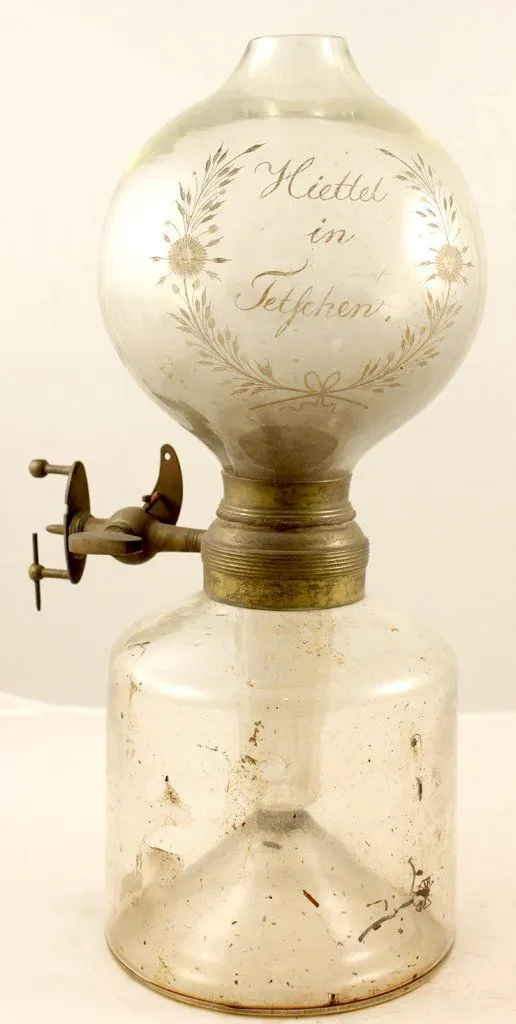
The flame was gentle, but exuded an unpleasant odor. Still, Johann’s invention made igniting fires to cook food or burn pipes extremely quick and convenient. His invention was hugely popular in the early 19th century, with an estimated one million units sold across Europe by the 1830s.
The Modern Lighter
The modern lighter couldn’t have been born if Austrian chemist Carl Auer Von Welsbach hadn’t invented ferrocerium, an alloy of iron and cerium, a rare metal, that emanates sparks when oxidized rapidly. One way to achieve this is to strike it against an object. The sparks, which reach temperatures of up to 3,000 ᵒC, can be used to ignite lighter fuels and cutting torches.
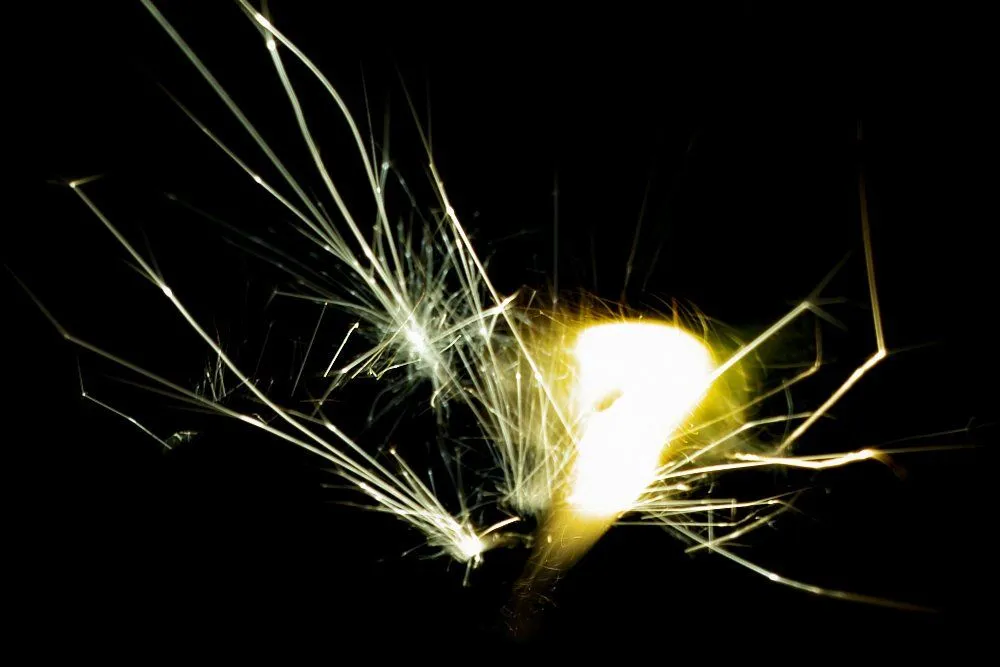
The modern lighter doesn’t store hydrogen, but butane. It initially stored naphtha, until we realized that butane produces a more controlled flame and exudes the least amount of unpleasant odor. Butane in a lighter is pressurized and stored, which causes it to exist as a liquid. When depressurized, the liquid will immediately vaporize to form gaseous butane. The gaseous butane, being flammable, will catch fire even when incited by the slightest of sparks.
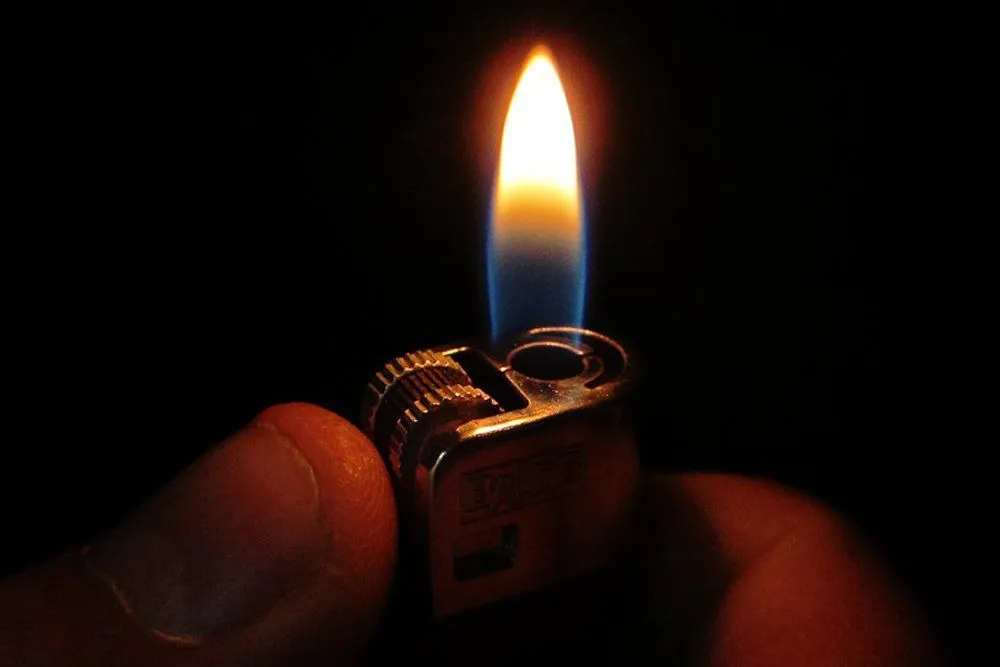
The metallic wheel on the lighter, when pushed down by one’s thumb, will rub against the ferrocerium to produce a scorching spark. Simultaneously, a valve opens, from which the butane is released, which is vaporized (depressurized) as soon as it exits the container. Lighters work by releasing pressurized butane that vaporizes instantly. A ferrocerium spark or piezoelectric arc ignites the gas, producing a controlled flame.
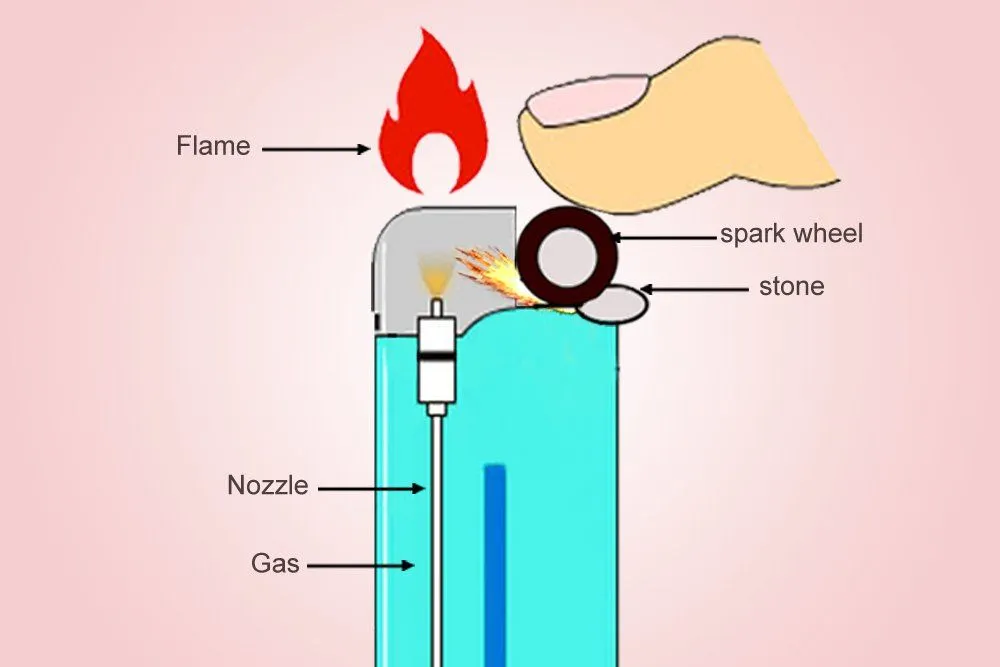
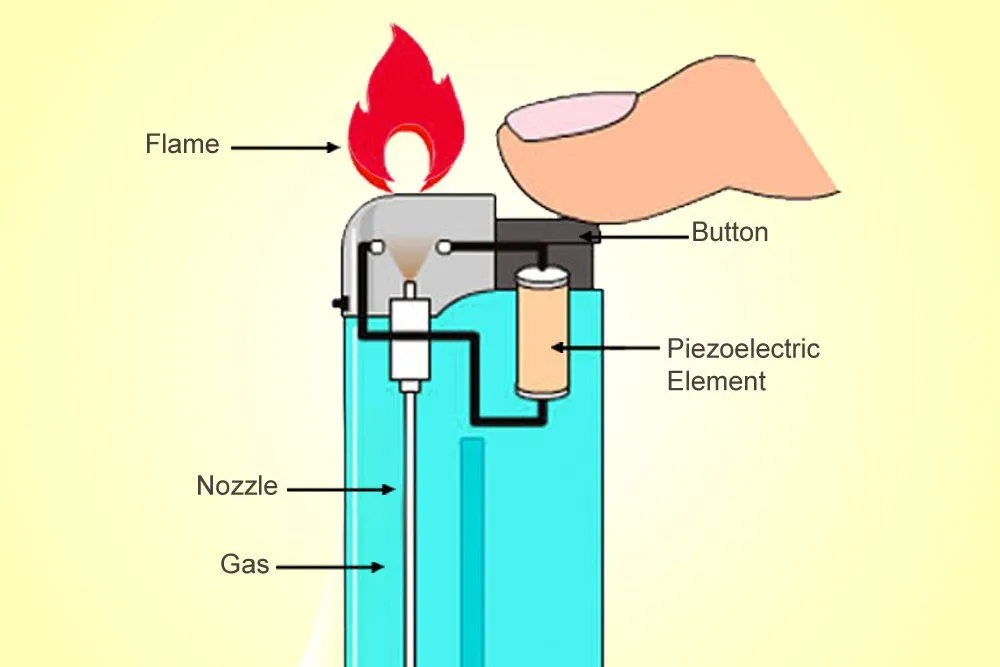
The ‘Clippers’ or ‘Zippos’ that implement this mechanism are a delight for an aesthete, but are also more expensive. Cheaper lighters use a piezoelectric material that converts mechanical energy to electric energy. Unlike ferrocerium, a piezoelectric material isn’t pyrotechnic, but it generates a high voltage when deformed by mechanical force (the piezoelectric effect).
When you “click” such a lighter, the piezoelectric material deforms and generates a high voltage. Above the valve through which the butane exits, two separated wires produce between them an electric arc (a small but intense electrical discharge) that ignites the gas. The result is a clean, candle-like flame.
What Are the Parts of a Lighter?
Strip a disposable lighter down and there’s surprisingly little to it. Nearly every flint lighter, from the cheapest gas-station variety to a refillable metal one, is built from the same handful of pieces:
- Fuel reservoir: the body itself, a small tank holding pressurized liquid butane.
- Spark wheel: the serrated metal wheel your thumb rolls. Its grooves bite into the flint to shave off sparks.
- Flint: a tiny rod of ferrocerium (often just called the “stone”), pushed against the wheel by a spring. This is what actually throws the spark.
- Valve and jet: a spring-loaded valve sits beneath the lever. Press it and a measured jet of butane escapes through the nozzle.
- Wind guard: the slotted metal hood around the flame that stops a stray breeze from snuffing it out.
- Adjuster: the small wheel or lever that widens or narrows the valve to give you a taller or shorter flame.
Pressing down does two jobs at once. The wheel scrapes the flint into a shower of sparks while the valve opens to release the gas, and the two meet at the nozzle to produce a flame.

What’s Inside a Lighter? The Fuel
Hold a translucent lighter up to the light and you’ll see liquid sloshing around inside. That liquid is butane (chemical formula C4H10), the fuel that does all the work.
Here’s the catch: butane boils at roughly 0 °C (32 °F), so at room temperature it would much rather be a gas than a liquid. Lighters get around this by sealing the butane under a couple of atmospheres of pressure, which squeezes it back into a liquid. That is why such a tiny reservoir lasts so long; a small volume of liquid butane expands into hundreds of times that volume of flammable vapor once the pressure is released.
When you open the valve, the liquid flashes into gas, rushes out of the nozzle, and meets the spark. The butane then burns in air to give carbon dioxide and water vapor:
2 C4H10 + 13 O2 → 8 CO2 + 10 H2O
Not every lighter runs on pressurized gas. Older wick lighters, like the classic Zippo, soak a cotton wad in naphtha (a light petroleum distillate sold as “lighter fluid”) and burn the vapor that wicks up to the top. Butane simply proved cleaner, more controllable, and far less smelly.

How Do Plasma (Electric Arc) Lighters Work?
Some modern lighters carry no butane at all. Click a plasma lighter, sometimes sold as an arc, electric, or USB lighter, and instead of a flame you get a faint violet thread crackling between two metal prongs.
There is no fuel and no flint here, just electricity. A rechargeable lithium battery feeds a small circuit that steps its modest 3.7 volts up to several thousand volts. Air is normally an insulator, but pile on enough voltage (roughly 3,000 volts across a single millimeter) and it gives way. The high voltage rips electrons off the air molecules in the gap, turning that sliver of air into a glowing, electrically conductive plasma. That is the arc you see and hear, and it is hot enough to light a cigarette, a candle, or a stove burner just as a flame would.
Because there is no flame, an arc cannot be blown out, which makes these lighters genuinely windproof. There is also nothing to refill; when the battery runs down, you recharge it over USB. Dual-arc models simply stretch two of these plasma bridges across a wider gap.

The invention of an igniter is regarded to be as crucial to the progress of our civilization as the invention of the wheel, perhaps, even more important. Without fire, cooking food would have been impossible, without which we would have been unable to kill its harmful germs and leverage its nutrients. It’s no wonder that Stephen Fry believes the lighter to be our greatest gadget. It allowed us to summon a member of the pantheon, at our whim, or as Fry said, with merely “the flick of our fingers.”
References (click to expand)
- Reinhardt, K., & Winkler, H. (2000, June 15). Cerium Mischmetal, Cerium Alloys, and Cerium Compounds. Ullmann's Encyclopedia of Industrial Chemistry. Wiley.
- Lighter - Wikipedia. Wikipedia
- Loveless, G. M. (1988). Child Resistant Lighter, US Patent 4,717,335. United States Patent and Trademark Office.
- Butane (CID 7843). PubChem. National Library of Medicine.
- n-Butane. NIST Chemistry WebBook, SRD 69. National Institute of Standards and Technology.
- Electric arc. Encyclopaedia Britannica.