When you switch off a lamp, the photons already in the room don’t hang around; they bounce off the walls, furniture and your skin, losing energy at every reflection until they are all completely absorbed. Their energy doesn’t disappear; it’s converted into a tiny, imperceptible amount of heat in those objects. The whole process plays out in microseconds, which is why the room appears to go dark instantly.
If you paid attention in your science class when the teacher explained the basics of optics, you likely know that light is made up of millions of extremely tiny (as in, “invisible-to-the-naked-eye” tiny) particles known as photons. These are the fundamental particles that carry all kinds of electromagnetic radiation, including radio waves, UV rays, microwaves, and of course, visible light.
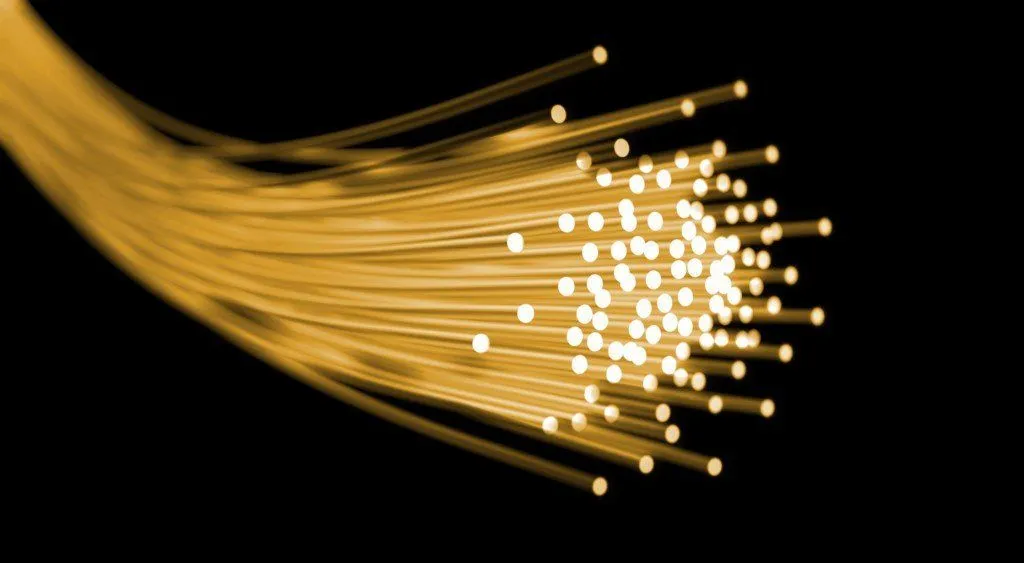
When you enter a room and switch on a lamp, the room is instantly flooded with light. More specifically, the room is filled with millions upon billions of photons, which help us see what is inside the room. However, when you turn off the lamp, where does the light really go? What happens to those billions of photons present inside the room? Do they die off or cease to exist?
Before we answer that, let’s do a quick recap of a few basic concepts.
Photons: Elementary Particles That Carry Light
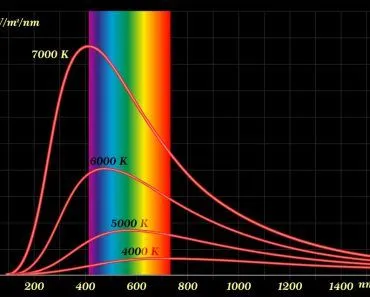
You might already know that visible light is a type of electromagnetic radiation and a small component of the electromagnetic spectrum – the same group that contains radio waves, infrared rays, UV rays, gamma rays etc.
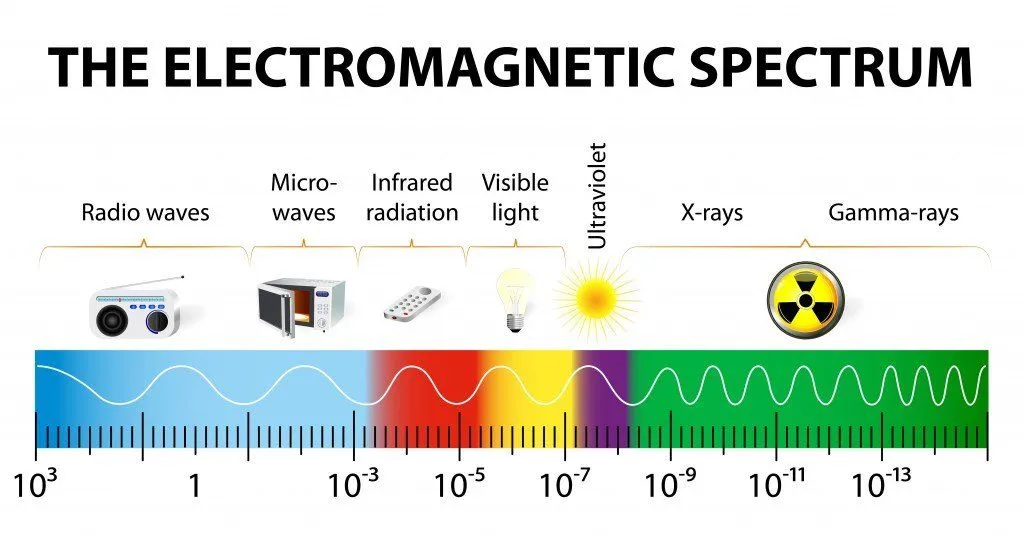
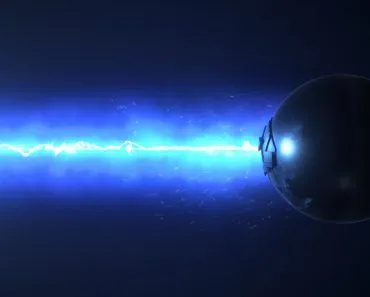
A photon is the most fundamental particle of any type of electromagnetic radiation, be it radio waves that carry WiFi signals, microwaves that heat up food inside an oven, or visible light that helps us see the world around us. With a rest mass of zero, a photon moves at a mind-boggling speed of almost 300,000 kilometers per second in a vacuum (note that the speed of photons represents the speed of light).
How Do Photons Illuminate Things?
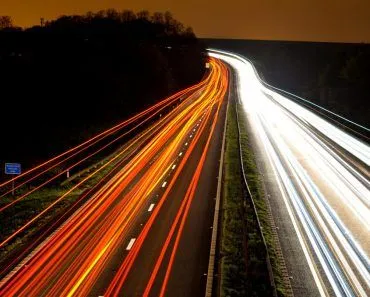
A light source (say, a lamp) kept inside a room emits millions of photons that scramble in all directions after the lamp is switched on. Since the lamp is kept in a room (i.e., an enclosed space), the photons that it emits will hit everything that comes in their path, thus illuminating everything kept inside the room.
Here’s a cool video of how a packet of photons light up a small, enclosed space.
Believe it or not, the camera has actually captured light in motion!
The above video is a TED video by Ramesh Raskar – an MIT professor and researcher who talked about femto photography – a state-of-the-art imaging technique that captures one trillion frames per second and is therefore able to capture moving light!
Where Do Photons Go When A Light Source Is Turned Off?
As long as the lamp is glowing, the room will have a constant supply of photons. Out of the countless photons that strike an object (say, a table) kept inside the room, some will get absorbed, while others will get reflected and lose a certain amount of energy in the process. These reflected photons will strike something else in the room, and lose a bit more energy. Basically, a photon keeps bouncing off objects until it’s completely absorbed by something.
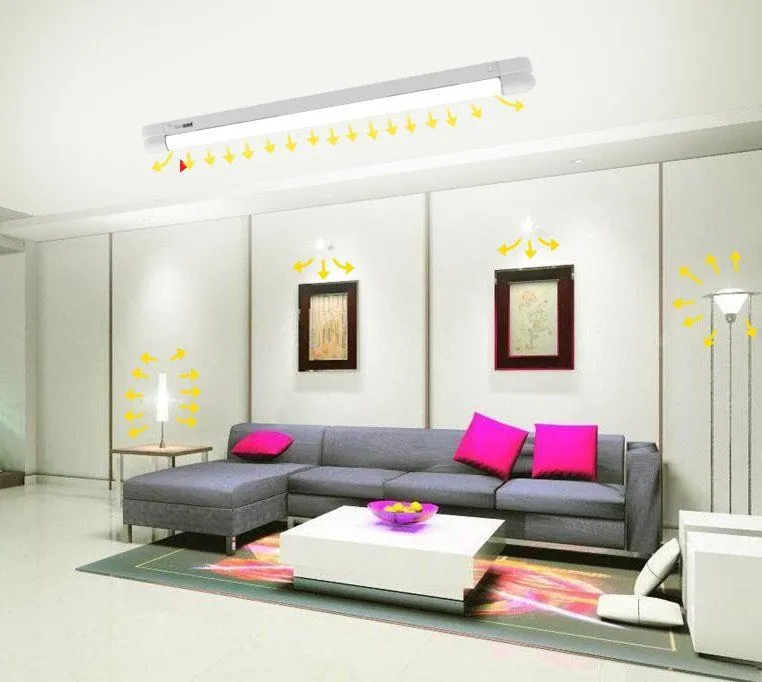
In this way, the room stays illuminated as long as the lamp glows. However, the moment it’s turned off, things change quite rapidly.
The photons – those that were emitted before the lamp was turned off – continue bouncing off objects until they’re completely absorbed by stuff inside the room. In a fraction of a millisecond, all the photons are completely absorbed within the room.
If the lamp were glowing, the rapid absorption of these photons wouldn’t make any difference, since the lamp would constantly keep pouring fresh photons into the room. However, now that it’s turned off, with no fresh supply of photons, the photons (emitted when the lamp was on) are eliminated as they get absorbed by objects in the room. The energy of these absorbed photons is used in heating up objects by a negligibly small amount, because as we know…
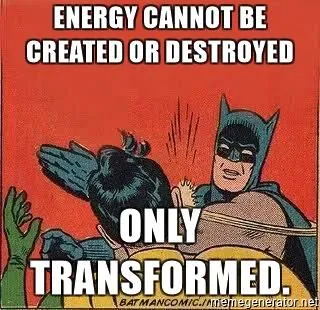
All of this, i.e., the emission of photons by the lamp, their reflection and absorption by other objects, happens in around one-millionth of a second, which is insanely fast for us ordinary humans to perceive or even conceptualize. That’s why a room plunges into darkness the moment its lights are turned off.
Interestingly, turning off a lamp in outer space wouldn’t be the same as in a room on Earth, because unlike in a normal room, the photons emitted in outer space would go on and on in the vast vacuum of space without actually hitting anything for a very long time!
Can Light Be Destroyed, Or Does It Just Disappear?
Here’s the question lurking behind all of this: when the room goes dark, has the light been destroyed? The honest answer is yes and no, depending on what you mean. The photons themselves really do cease to exist. A photon isn’t like a billiard ball that gets tucked away in a drawer; when an atom absorbs one, that photon is simply gone. So in the sense of “are there still photons of visible light flying around the dark room?”, the answer is no, every last one has been snuffed out.

Their energy, though, is a different story. The law of conservation of energy says energy can never be created or destroyed, only converted from one form into another (the same first law of thermodynamics that governs engines and stars alike), as NASA puts it. So when a photon is absorbed, its energy doesn’t vanish; it gets handed over to the atom that swallowed it. Physicist Christopher Baird of West Texas A&M University explains that this energy goes into things like nudging an electron up to a higher energy level, making the atom vibrate or rotate faster, or simply speeding the atom up. Those tidy little excited states then de-excite in a random, jumbled fashion, and that jumble of random atomic motion is exactly what we call heat. In other words, the light doesn’t “disappear” so much as it gets demoted into a vanishingly tiny amount of warmth, spread across your walls, furniture and skin.
How tiny, and how fast? Baird works a neat example: picture a room 5 meters (16 ft) across with walls made of excellent mirrors that reflect 97% of the light hitting them. Even then, a beam bounces back and forth roughly 200 times, covering about 1,000 meters, before only around 0.2% of the original light is left unabsorbed. Because light travels at nearly 300,000 kilometers per second (186,000 mi/s), all of that bouncing wraps up in about 4 microseconds, or 4 millionths of a second. With ordinary, far-less-reflective walls, it happens even quicker. So light can’t be “stored” sitting still in a dark room, and it doesn’t slowly fade out like an echo either. It’s converted into heat almost the instant the switch flips, which is why darkness feels instantaneous.
References (click to expand)
- The Basics of Light - William P. Blair. Johns Hopkins University
- Why does my room get dark when I turn the lights off even if .... West Texas A&M University
- How are photons created and destroyed? (Advanced) - Curious About Astronomy? Ask an Astronomer - curious.astro.cornell.edu
- Conservation of Energy - Glenn Research Center. NASA