Soap cleans dirty clothes because each soap molecule has a water-loving hydrophilic head and a grease-loving hydrophobic tail. The tail latches onto oily dirt particles while the head bonds to water; this also lowers water’s surface tension so it wets the fabric properly. When the clothes are agitated, the encapsulated dirt is lifted off the fibers and rinsed away.
Soap is great for washing clothes, and everyone knows that,
But does anyone really know why? Why is soap the magical substance that can wash clothes? Why can’t anything else do the job, from tomato ketchup to a bottle’s worth of Coca-cola? What’s so special about soap that makes it able to clean our clothes to the point that (in some cases) they look as good as new?
Before we get into that, we should probably answer a more basic question…
What Is Soap?
It might sound like a silly question, given that soaps are so common. You might know what soap is, and even use it every day, but what about the actual composition?
Soaps And Detergents
Soaps are made by reacting fats or oils (from animal or plant sources, such as tallow, palm, coconut or olive oil) with a strong alkali like sodium hydroxide or potassium hydroxide. Chemically, the products are sodium or potassium salts of fatty acids, produced by the base-catalyzed hydrolysis of triglycerides in a process called saponification. Saponification also releases glycerol as a byproduct.
A detergent, on the other hand, is a chemical that you use to remove grime and grease. More technically, it is a mixture of ‘surfactants’ (more about them in the next section) that possess cleaning properties in diluted solutions. It’s interesting to note that washing powders are not the only situations where detergents are used. Hair shampoo, stain removers, shaving foam and many others all contain some amount of ‘detergent content’. In simple terms, soap is a ‘type’ of detergent.
How Does Soap Help Us Wash Clothes?
Now for the big question: how does soap remove grime and dirt from our clothes?
Surface Tension
Water molecules have a tendency to stick together, as opposed to losing their fellow water molecules’ company and sticking to other surfaces. This happens as a result of something known as the ‘surface tension’ of water. Surface tension is the reason why water droplets are spherical in shape, as a sphere is the shape that minimizes surface tension among water molecules.
In order to make water molecules spread/diffuse on a given surface, you have to reduce their surface tension. But how is it done?
This is where surfactants enter the picture. Surfactants are substances that help lower the surface tension of water molecules, thus ‘persuading’ them to wet things more uniformly.
Now, can you guess where you might find a decent amount of surfactants?
Soaps, of course! Soaps (which are a type of detergent) contain surfactants in significant amounts, which help water spread uniformly over clothes. However, this is only one thing about soaps that help clean clothes; the other is…
The Chemical Structure Of Soap
Take a look at the chemical structure of soap in the following image:
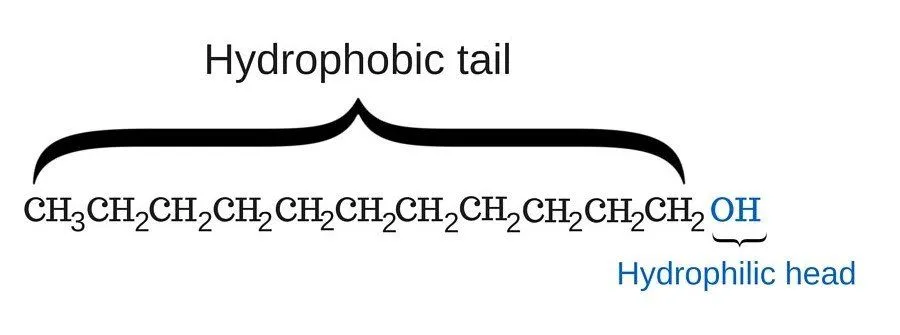
As you can see, one end (the head) of the soap molecule is hydrophilic; this part has a strong affinity for water molecules (in other words, it loves water). The other end (the tail) of the soap is hydrophobic; this part tries to stay away from water molecules, as it has a strong aversion to it. However, it does love dirt and grime. These two parts of a soap molecule, given that they have a contrasting disposition towards water molecules, is why soap is so effective for washing clothes.
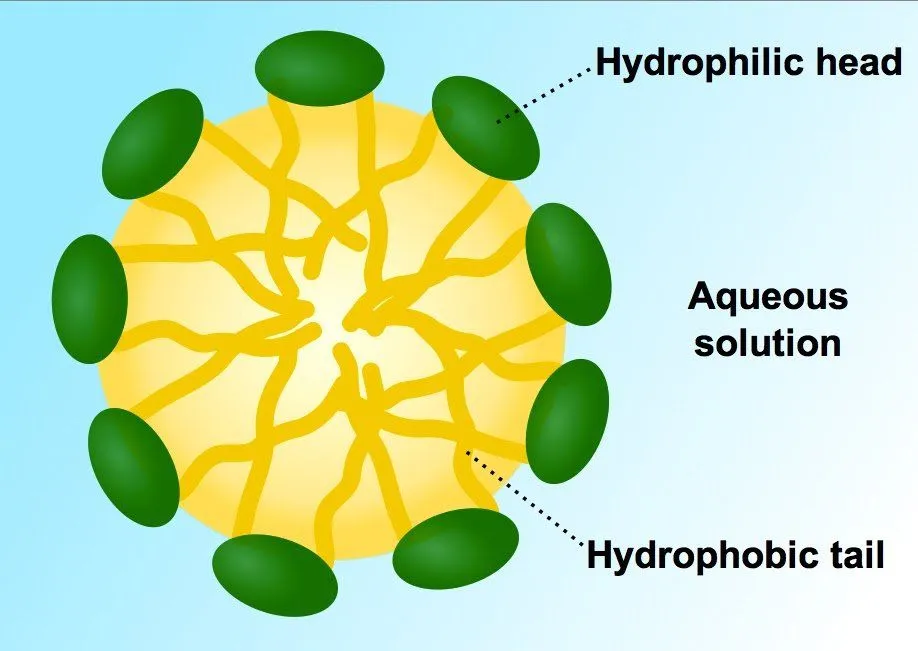
The hydrophobic tail attaches itself to grime and dirt, while the hydrophilic head gets affixed to water molecules. Therefore, when the dirty clothes are put inside a washing machine or swished vigorously by hand, dirt is pulled away from the cloth and washed away in the water, leaving the cloth sparkling clean.
It turns out that a mixed relationship with water, in some cases, can be a good thing. It’s more beneficial for some, particularly the entire washing machine and detergent industries, which cash in big on soap’s loving-and-loathing attitude towards water!
Is Soap Hydrophobic Or Hydrophilic?
This is one of those questions where the honest answer is a slightly annoying “both”. A single soap molecule is amphipathic (you’ll also see it written as amphiphilic), which simply means it carries a water-loving part and a water-hating part on the same molecule. The ionic carboxylate head (the –COO− end) is hydrophilic, so it happily dissolves in water. The long hydrocarbon tail is hydrophobic, so it would much rather hang out with grease and oil than with water. Soap isn’t one or the other; the whole trick is that it is both at once.

Because of this split personality, soap belongs to a family of molecules called surfactants (short for “surface-active agents”). In water, surfactant molecules don’t drift around at random. Once enough of them are present, they huddle together into tiny spheres called micelles, with all the hydrophobic tails tucked into the center, away from the water, and all the hydrophilic heads facing outward into the surrounding water. Drop a bit of oily dirt into that solution and the tails grab it, parcelling the grease inside the oil-friendly core of the micelle while the water-friendly outer shell keeps the whole package suspended in the rinse water. That is the real reason soap shifts grease that plain water can’t touch: not because soap is hydrophilic or hydrophobic, but because it is cleverly, usefully both.
Why Does Soap Fail In Hard Water (But Detergents Don’t)?
Ever noticed a grimy ring around the bathtub, or a thin white film on glasses that won’t lather no matter how much soap you use? Blame hard water. Hard water is simply water carrying dissolved calcium and magnesium ions. Those doubly-charged ions are bad news for ordinary soap. The carboxylate head of a soap molecule latches onto a calcium or magnesium ion and the pair drop out of solution as an insoluble solid, the greyish curd we call soap scum (chemically, calcium and magnesium salts of fatty acids). Instead of cleaning your clothes, a chunk of your soap is busy being wasted as scum that clings to fabric, tubs and pipes.
This is exactly the problem synthetic detergents were invented to solve, and the fix lives in the head group. Most laundry detergents use a sulfonate head (a –SO3− group, as in linear alkylbenzenesulfonate, or LAS) in place of soap’s carboxylate. The sulfonate is derived from a much stronger acid, so its calcium and magnesium salts stay dissolved rather than precipitating out. In plain terms, a detergent keeps lathering and cleaning in hard water where soap would just turn to scum. To squeeze out even more performance, detergents also include builders, water-softening helpers that mop up the hard-water ions before they can interfere. The classic builders were sodium phosphates; because phosphates fed algal blooms (eutrophication) in lakes and rivers, many regions banned them and switched to alternatives like zeolites and citrates. One more upgrade you can’t see: early branched detergents built up as stubborn foam on rivers, so manufacturers moved to linear chains, which microbes break down in roughly one to three weeks.
References (click to expand)
- Detergent - Wikipedia. Wikipedia
- How do detergents and soaps work? - Explain that Stuff. explainthatstuff.com
- soap - www2.gsu.edu:80
- Saponification - Britannica
- Soap, Detergents, and Surface Tension - American Chemical Society
- Soaps and Detergents - Chemistry LibreTexts
- Synthetic Detergents - Chemistry LibreTexts
- Synthetic Detergents: Builders and Biodegradability - Chemistry LibreTexts