Table of Contents (click to expand)
A bubble is a thin film of soap and water trapping a pocket of air. Surface tension pulls the film into a sphere because that shape encloses the air with the smallest possible surface area. Bubbles pop when the film thins out (gravity drains the water downward and the surrounding air evaporates it), or when something dry like a finger or a blade of grass punctures it.
When I was kid, I used to blow bubbles (to be honest, I still do now). It was my favorite thing to do, and what’s not to love? As soon as the bubbles burst out of that little plastic ring, I used to jump like only an excited six-year-old can and watch them float and dance until they touched something and burst. Now that I think about it, though, how did that bubble form in the first place? And more importantly, why did it burst?
Bubble Formation
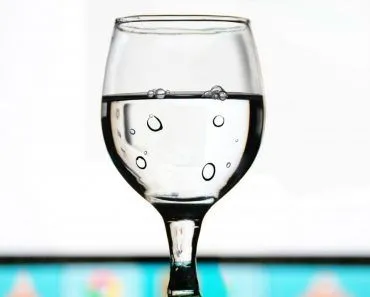
Bubbles are basically pockets of air filling up an extremely thin layer of soap and water. Soap bubbles aren’t the only kind of bubbles. There are bubbles made in water too, but they don’t float in the air; they’ll just remain in the water (and won’t last long). You can also have bubbles from carbonated drinks too. The most interesting ones, however, are those glimmering soap bubbles.
A special thing about soap bubbles is that they don’t have to be touching water or any other liquids to float; they float freely.
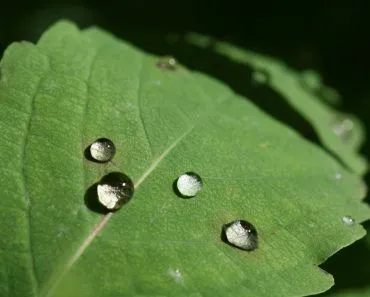
Therefore, water molecules at the top stick tightly to each other in order to create a force called surface tension. Now, when you add soap to the water, the surface tension reduces and air becomes trapped in this soap-water layer.
The soap will form a thin skin that is more flexible than water, which will stretch out in the shape of a sphere – our bubble!
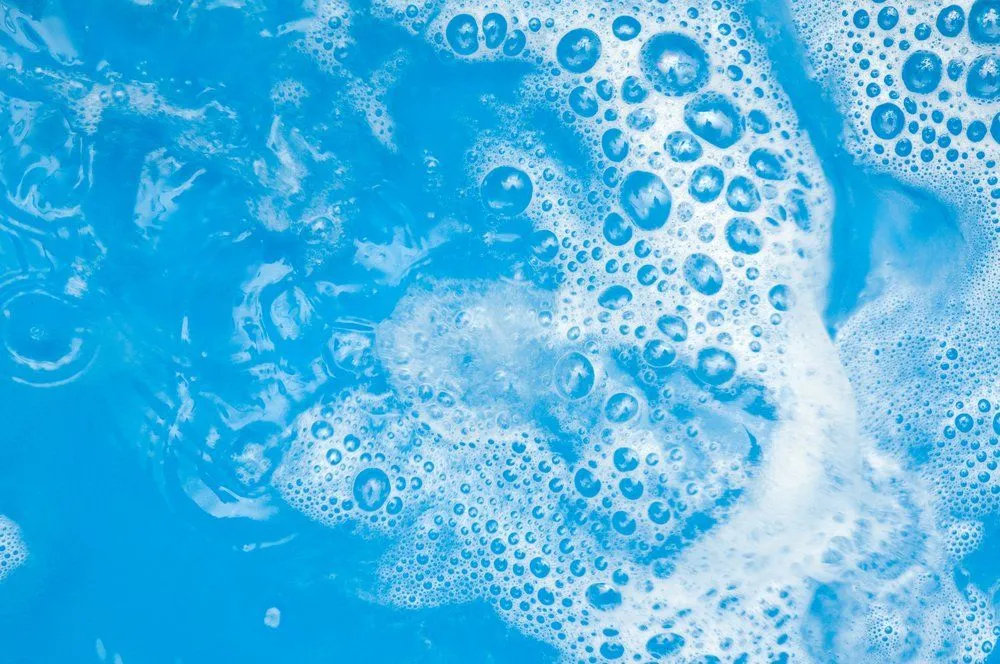
But why is it round? Why not a square or a triangle?
Bubbles that are free and not attached to anything are always round because there are forces pushing on the bubble from the inside and the outside in equal directions. This causes the surface to be completely smooth and uniform, without any corners and edges. Spheres are the strongest and most efficient shape in nature, which is the basic reason why bubbles form like that.
For any given volume of air, a sphere has the smallest possible surface area, which is the ‘least amount of soapy skin’ the bubble has to maintain and the most energy-efficient configuration.
Pop Goes The Bubble!
As you now know, the skin of a bubble is very fragile, which means that it can pop easily. Why? Anything that could puncture that skin can pop the bubble – and it doesn’t take much!
Since bubbles are made up of soap and water, they’ll only last as long as the water does. In other words, when you break the surface tension, you burst the bubble!
In dry air, the water evaporates quickly, meaning that the dry air will soak up the water inside the bubble and the skin will gradually grow thinner and thinner and eventually pop!
There are other factors that can also cause a bubble to burst. Anything dry will pop it immediately! A blade of grass, our hands, pet fur… anything will do it.
When something sharp and dry touches the bubble, the air will escape instantly – and POP!
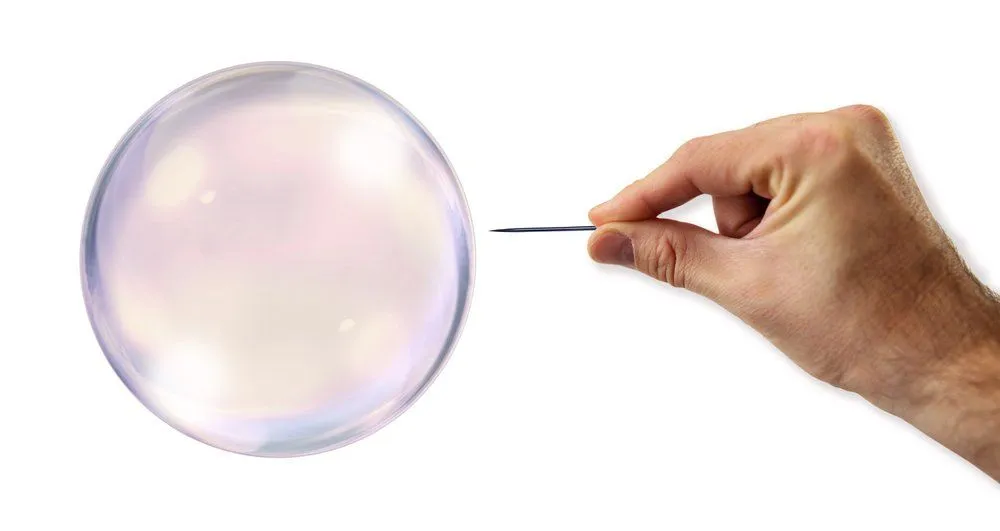
Oh, another interesting fact is that if a bubble bursts, it doesn’t disappear! It simply breaks down into smaller bubbles. Cool, right?
Even though bubbles are easy to pop, they’re also very easy to make! So sit back, relax, and bubble away.
Why Are Bubbles Always Round (And Never Square)?
This is the question I get asked most: why does a free-floating bubble always pull itself into a ball? Why not a cube, or a star, or anything more exciting? The honest answer is that the bubble isn’t trying to be pretty – it’s just being lazy, in the best physics sense of the word. The soap film is held together by surface tension, and surface tension always tugs the film inward to shrink its area as small as it can possibly go.

Here is the neat bit of geometry behind it: for any fixed pocket of air, the shape with the smallest possible surface area is a sphere. A cube holding the same amount of air would need more skin to wrap around it, and so would a pyramid. More skin means more stretched film, which means more stored energy – and nature hates wasting energy. So the film keeps relaxing until every part of it curves by exactly the same amount, with no corners or flat faces left to trim. That perfectly even curve is a sphere. A square bubble would have to fight surface tension at every sharp edge, and it would lose almost instantly.
Those swirling rainbow colors on the surface are a bonus clue to how thin the film really is. A bubble’s wall is only about 10 to 1000 nanometers thick, roughly a hundredth the width of a human hair. Light bouncing off the front and back of that ultra-thin layer overlaps and interferes, brightening some colors and cancelling others, which is why the surface shimmers and shifts as the film drains and thins. So the next time someone bets you they can blow a square bubble, you can smile – physics has already settled that argument.
Why Do Bubbles Float (Or Actually Sink)?
Here’s something that surprised me when I first looked it up: an ordinary soap bubble blown with plain breath doesn’t really float at all – it slowly sinks. We picture bubbles drifting upward because they dance around on the slightest breeze, but in perfectly still air a regular air-filled bubble drifts gently down. The reason is simple weight: the bubble is mostly air, but it also carries that thin shell of soap and water around it. That shell is light, yet it’s still heavier than nothing, so the bubble as a whole is a touch denser than the air it’s sitting in. Denser things fall, so down it goes.

So how do people get bubbles to genuinely hang in the air or rise? You have to make the bubble lighter than its surroundings, and there are a few tricks. Fill it with a light gas like helium and it floats up like a tiny balloon. Blow it with warm breath on a cold day and the hot air inside is less dense than the cool air outside, giving the bubble a brief lift before it cools and settles. Or flip the problem around: pour a heavy gas such as carbon dioxide into a tank, and an ordinary bubble will rest on top of it like a beach ball on water, because now the gas underneath is denser than the bubble. (Leave it sitting there and the carbon dioxide slowly seeps through the film, fattening the bubble until it finally sinks.)
The everyday version of all this is humidity. A bubble blown in warm, damp air holds a little extra water vapor inside, and water vapor is actually lighter than dry air, so a fresh bubble can linger a few seconds longer before gravity wins. None of these bubbles are defying physics – they just tip the density balance one way or the other, which is exactly why a bubble’s drift is such a delicate, breeze-driven thing.
References (click to expand)
- Surface Tension and Bubbles - Hyperphysics. Georgia State University
- SURFACE TENSION. The Santa Cruz Institute for Particle Physics
- Bubble Physics: Properties of Bubbles. Virginia Tech Department of Physics
- F2-10. Buoyant Bubbles. Stony Brook University Physics Lab Demonstrations
- Floating bubbles. Soapbubble.dk