Prime numbers (whole numbers greater than 1 whose only factors are 1 and themselves) are central to nature, popular culture and the internet. In nature, periodical cicadas emerge on 13- and 17-year prime cycles to dodge predators. In popular culture, primes inspire books and films like Contact and A Beautiful Mind. Online, the difficulty of factoring large primes secures passwords, banking and almost every encrypted transaction.
What Are Prime Numbers?
A whole number, which is greater than 1, and which has only 2 factors – 1 and itself, is called a prime numbers. Another way of saying it is that a prime number is defined as a whole number which has only 2 factors – 1 and itself. Some examples of prime numbers are 2, 13, 53, 71 etc.
Why Are Prime Numbers Important?
From cyber security to movies, prime numbers have made their mark in every aspect of life. Chances are that you’re using prime numbers right now, but you just don’t know it yet! In this article, we have included some of the amazing ways in which prime numbers impact our lives, and why mathematicians are still fascinated by them.
Prime Numbers Keep Your Money Safe
Did you know that the security of many encryption algorithms is based on a single important fact? These security measures have everything to do with prime numbers. Mathematicians say that it is very easy to multiply two large prime numbers and get a certain result, but it is extremely computer-intensive to do the reverse of that process. When you have a number that is the product of two primes, finding the two prime numbers is very hard. This problem is called prime factorization and finding an algorithm that does this quickly is one of the biggest unsolved problems of computer science.
So, if passwords or security numbers are made to be long and complex, and the product of two prime numbers, it could take the fastest computer in the world decades to decode the information behind it. This gives online security firms the time they need to protect your data and apprehend the criminals. Encryption is also the life blood behind all sorts of online monetary transactions. To put it briefly, prime numbers protect your money and information from being stolen.
Prime Numbers In Nature
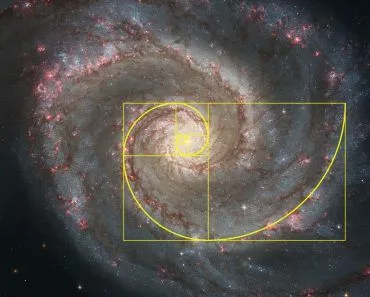
One of the amazing things about mathematics is how its presence can be felt in nature. Many of the patterns we admire, though, are not about primes at all. The spirals on a pineapple, the seed head of a sunflower and the petals of a rose follow the Fibonacci sequence (1, 1, 2, 3, 5, 8, 13, 21…) rather than prime numbers. The genuinely prime-driven example in the wild is stranger still, and it belongs to an insect.

Prime numbers make their own, far stranger appearance in nature. According to scientific research, periodical cicadas (the Magicicada genus of eastern North America) use prime numbers to come out of their burrows and lay eggs. These cicadas only leave their burrows at intervals of 13 or 17 years, both prime. It has been theorized that they use prime cycles so that predators with shorter, more typical life cycles cannot evolve in sync and prey on them. As a bonus, a 13-year and a 17-year brood only meet up once every 221 years (13 × 17), so the two populations rarely have to compete for food. In other words, these insects use prime numbers to ensure their survival. How incredible is that!
Prime Numbers In Popular Culture
We already know that prime numbers fascinate mathematicians and scientists. However, it has also inspired writers, singers and other artists. The science fiction and astronomy legend, Carl Sagan, wrote a book titled Contact about using prime numbers to communicate with aliens. The Academy Award winning film, A Beautiful Mind, also makes extensive use of prime numbers while telling the story of the gifted mathematician John Nash, whose work on game theory earned him the 1994 Nobel Prize in Economics. These books and movies prove that prime numbers are a source of inspiration to people outside the realm of science and mathematics.
Prime Numbers In Candy Crush
Mathematical theories might sound boring, but you can’t even begin to imagine how important they are. Many ground-breaking scientific discoveries have been fueled by these theories. Even Candy Crush, the popular gaming app, is based on certain theories and principles of mathematics.
The majority of these theories wouldn’t exist without the use of prime numbers. That’s right, theories, such as the number theory, would never have seen the light of day without the help of prime numbers. So, every time you hit a combo on Candy Crush, remember to say a little thank you to prime numbers (or not, it’s up to you).
Prime Numbers Are Practically Everywhere!
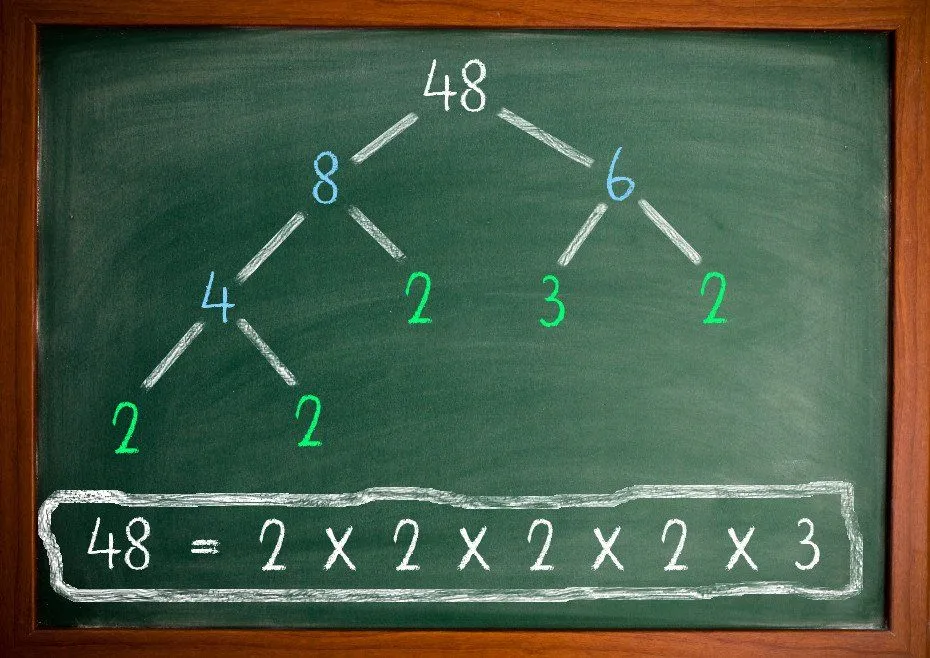
Apart from the number 1, every other integer is either a prime, or consists of prime numbers. 1 was once considered to be the smallest prime number, but currently, 1 is neither a prime nor a composite number. Let’s take a random number, 26. If we break 26 down into its prime factorization we get 2 × 13, both of which are prime numbers. So, no matter what number you use, you are using a combination of primes. If you think about it, this means that you are always using prime numbers. Interesting, right?
And the hunt for new primes is still on! As of late 2024, the largest known prime is the Mersenne prime 2136,279,841 − 1, a monster 41,024,320 digits long, discovered by GIMPS volunteer Luke Durant on October 12, 2024, using a network of GPUs. It’s the 52nd known Mersenne prime, and the first ever found with graphics cards instead of CPUs.
Prime numbers carry within themselves an incredible potential and are regularly used for amazing projects. By learning about these numbers, we can educate ourselves about the world and countless technological advancements. With that in mind, next time you teach prime numbers to children, how about mentioning a few of these startling facts? Who knows, they might even unravel new mysteries of prime numbers that were never known before!
Why Are Prime Numbers So Important In Mathematics?
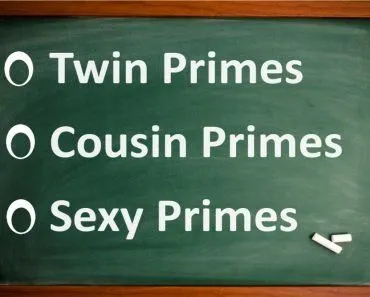
Long before encryption or cicadas, mathematicians prized primes for a simpler reason: they are the building blocks of every other number. The Fundamental Theorem of Arithmetic states that every whole number greater than 1 is either a prime itself or can be written as a product of primes in exactly one way, apart from the order of the factors. Primes are to arithmetic what atoms are to chemistry. The number 60, for example, is always 2 × 2 × 3 × 5, and no other set of primes will ever build 60. Mathematicians even sort the gaps between primes into curious families like twin, cousin and sexy primes.
Another reason primes fascinate mathematicians is that they never run out. Around 300 BCE, the Greek mathematician Euclid proved that there are infinitely many prime numbers. His argument is beautifully simple: assume there is a largest prime, multiply every known prime together and add 1, and you get a number that none of those primes divides evenly, which forces yet another prime to exist. The hunt has no finish line.
Yet for all their importance, primes scatter along the number line in a way nobody has fully explained. Plot the whole numbers in a spiral and shade in the primes, and they stubbornly cluster along diagonal streaks (a pattern known as the Ulam spiral) that still has no complete theory behind it. Pinning down exactly how primes are distributed is so hard that the Riemann Hypothesis, which describes that distribution, remains one of mathematics' great unsolved problems and carries a US$1 million Millennium Prize from the Clay Mathematics Institute. The atoms of arithmetic still keep some of their secrets.

How Are Prime Numbers Used In Real Life?
Encryption is the most famous everyday use of primes, but it is far from the only one. Once you start looking, these numbers quietly keep a surprising amount of modern life running smoothly.
- Faster computer searches. Programmers store data in structures called hash tables that scatter entries across a fixed number of slots. Making that number a prime spreads the entries more evenly and cuts down on "collisions", so lookups stay fast. A textbook table of size 100 is quietly swapped for 101, a prime, for exactly this reason.
- Catching typos in code numbers. The last digit of an old 10-digit ISBN on a book is a check digit, worked out with a weighted sum taken modulo 11. Because 11 is prime, the scheme is guaranteed to flag every single mistyped digit and every accidental swap of two digits, errors that a non-prime modulus would let slip through.
- Longer-lasting machinery. Engineers often give a pair of meshing gears tooth counts that share no common factor, a trick called a "hunting tooth" (frequently a prime number of teeth). Any given pair of teeth then meets only rarely, so wear is spread evenly across every tooth instead of grinding down the same few. It is the cicada's survival trick borrowed for the workshop.

From the moment you log in to your bank to the gears turning inside your car, prime numbers are doing invisible work. Not bad for numbers whose only quirk is having no factors but 1 and themselves.
References (click to expand)
- Richie Khandelwal, Sahil Sahni - Patterns In Nature - CiteSeerX
- The beauty, mystery, and utility of prime numbers - www.math.unl.edu
- Mathematics for Computer Science - www.seas.harvard.edu
- The Poetry of Prime Numbers - www2.math.uconn.edu
- Prime and Composite Numbers - sites.csn.edu:80
- How many primes are there?. The PrimePages
- Free Printable Math Worksheets for Kids - Logic Roots. logicroots.com
- Fundamental Theorem of Arithmetic - Wolfram MathWorld
- Riemann Hypothesis - Clay Mathematics Institute
- Prime time for cicadas: what a bug surge tells us about prime numbers and gears - The Conversation
- Secrets of the ISBN: An Error Detection Method - University of New Brunswick
- Minimizing the Number of Collisions (hash tables) - University of Alberta
- Fibonacci Numbers of Sunflower Seed Spirals - National Museum of Mathematics