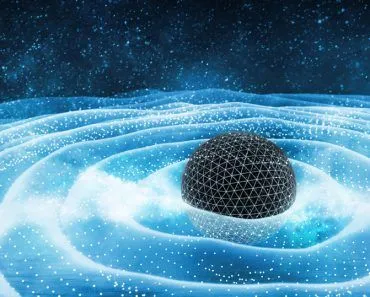
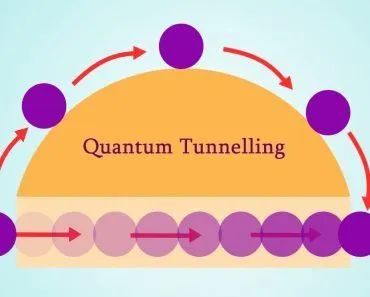
Quantum mechanics is the study of how particles at the atomic and subatomic level interact with each other and their environment. The observer effect is the phenomenon in which the act of observation alters the behavior of the particles being observed. This effect is due to the wave-like nature of matter, which means that particles can exist in multiple states simultaneously. When an observer measures a particular property of a particle, they are effectively collapsing the wave-function of that particle, causing it to assume a definite state.
When you observe something in the world, such as a tree or a bird, you know that regardless of where and when you observe the object, it will always remain the same. However, what if I told you that the time and manner you looked at a particular bird would affect its appearance? It sounds quite absurd, but absurdity is normal when it comes to the bizarre laws of the quantum realm. The laws of quantum mechanics work very differently than the physics of the regular-sized world. Before we get into understanding the observer effect, let’s first take a look at the fundamentals of quantum physics.
The Fundamentals
The field of quantum mechanics was primarily founded on three pillars. The first of these pillars is known as Quantized Properties. Quantized properties give the position, speed, color and other properties of a particle that can only occur in set amounts of time and instances. This is in direct contrast to the belief held in the well-established field of Classical Mechanics, namely that everything happens in a smooth and continuous spectrum. This was something that scientists found to be highly novel and ended up naming these particles Quantized Particles. The second pillar of Quantum Mechanics refers to the particle nature of light. At first, the notion that light could behave and be classed as a particle ran into colossal criticism, as it ran against the well-established principle that light had a wave-like nature to it.
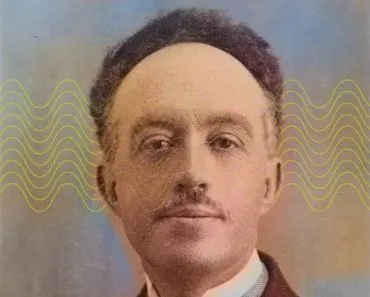
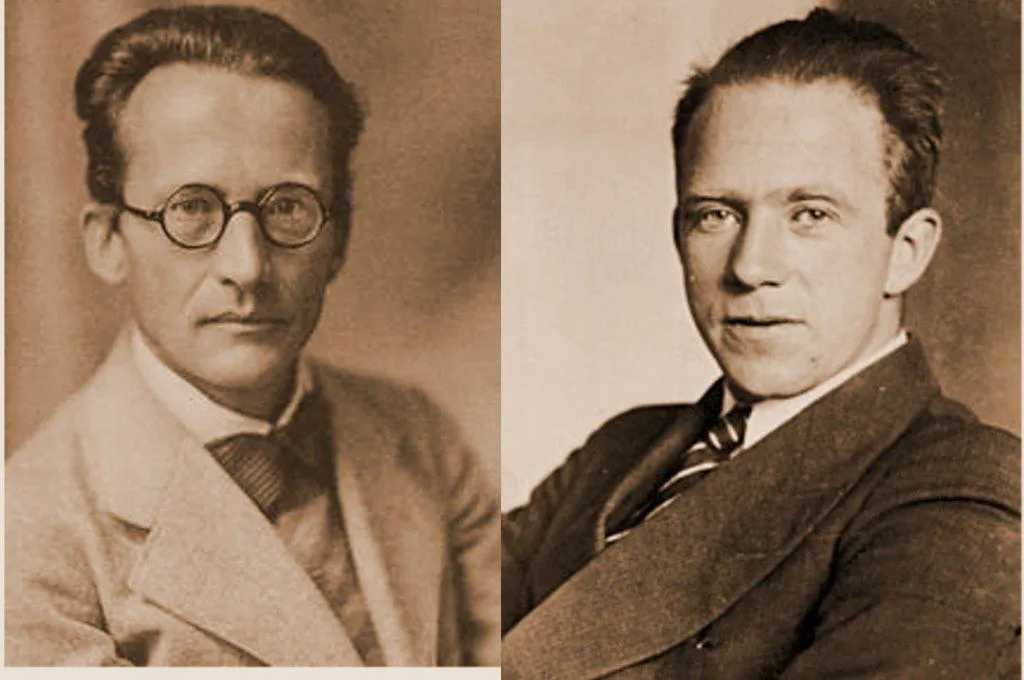
However, the particle nature of light brought in a fundamental unit that could represent tiny energy packets, known as quanta. This was proposed by none other than Albert Einstein himself. Einstein hypothesized that a packet of energy could either be generated or absorbed, as a whole, specifically by an electron that wants to jump from one quantum state to another. The third and final fundamental pillar of Quantum Mechanics is the wave nature of matter. Although this might be hard to digest, matter also exhibits a wave-like nature. The wave-like nature of matter was proposed by two scientists independently, at nearly the same time, despite being oblivious of each other’s work. The idea was first proposed by French physicist Louis de Broglie in 1924, who suggested that any particle of matter also has a wavelength. Two years later, in 1926, Erwin Schrodinger captured de Broglie’s insight mathematically in the famous wave equation that now bears his name, giving physicists a way to calculate how these matter waves evolve. (Around the same time, Werner Heisenberg arrived at an equivalent description using a different mathematical formalism known as matrix mechanics.) Heisenberg did make one more crucial contribution to Quantum Mechanics. While not as essential as the fundamental pillars, it did play a significant role and is known as Heisenberg’s Uncertainty Principle. He reasoned that since the nature of matter is wave-like, some properties, such as the velocity and position of electrons, are complementary to one another. In simpler terms, there is a limit up to which each property of an electron can be simultaneously measured with a degree of accuracy.

Observation Affects Reality
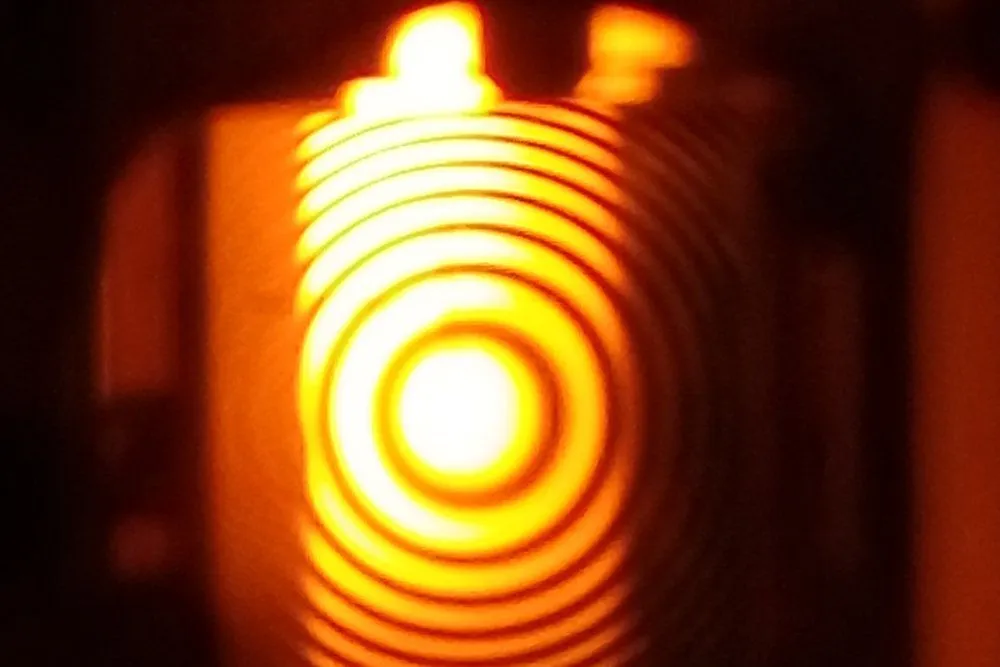
When a quantum ‘observer’ is watching, Quantum Mechanics states that particles can also behave as waves. This can be true for electrons at the sub-micron level, i.e., at distances measuring less than one micron, or one-thousandth of a millimeter. When behaving as waves, electrons can simultaneously pass through several openings in a barrier and then meet again on the other side. This meeting is known as interference. Now, the most absurd thing about this phenomena is that it can only occur when no one is observing it. Once an observer begins to watch the particles going through the opening, the obtained image changes dramatically: if a particle can be seen going through one opening, it is clear that it did not go through another opening. In other words, when under observation, electrons are more or less being forced to behave like particles instead of waves. Thus, the mere act of observation affects the experimental findings.
To demonstrate this phenomena, the Weizmann Institute built a tiny device, less than one micron in size, that had a barrier with two openings. They then sent a current of electrons towards the barrier. The observer in this experiment was not human. Instead, they used a tiny electron detector that could spot the presence of passing electrons. The quantum “observer’s” capacity to detect electrons could be altered by changing its electrical conductivity, or the strength of the current passing through it. Apart from “observing,” or detecting the electrons, the detector had no effect on the current. Even so, the scientists found that the very presence of the detector “observer” near one of the openings caused changes in the interference pattern of the electron waves passing through the openings of the barrier. In fact, this effect was dependent on the “amount” of observation: when the “observer’s” capacity to detect electrons increased, in other words, when the level of the observation went up, the interference weakened; in contrast, when its capacity to detect electrons was reduced, and the observation slackened, the interference increased. Thus, by controlling the properties of the quantum observer, the scientists managed to control the extent of its influence on the electrons’ behavior!
The Double-Slit Experiment: Quantum Mechanics’ Defining Demonstration
The setup described above has a famous name: the double-slit experiment. It is the single most important demonstration of the observer effect, and the physicist Richard Feynman called it a phenomenon “impossible to explain in any classical way” that holds “the heart of quantum mechanics.” The basic version is simple to picture: fire particles (electrons, or even single photons of light) one at a time at a barrier with two narrow slits, and record where each one lands on a screen behind it.

If you let the particles through without checking which slit each one used, the dots slowly build up into a striped interference pattern, the unmistakable signature of a wave passing through both slits at once. The image above shows exactly this: each electron arrives as a single dot, yet after enough of them the stripes appear. Now add a detector at the slits to record which one each particle actually goes through. The instant you can know the path, the stripes vanish and you are left with two plain bands, the result you would expect from ordinary particles. The wave behaviour and the “which-path” knowledge cannot coexist. This is the observer effect in its purest form: gaining information about the route the particle took changes the outcome on the screen.
How Does a Particle “Know” It’s Being Watched?
This is the question almost everyone asks, and it is also where the most popular myth about quantum mechanics takes hold. The crucial point: the “observer” does not need to be a conscious mind, a person, or even a living thing. A particle does not “know” anything and is not responding to your awareness. In physics, to “observe” simply means to measure, and to measure you must physically interact with the thing being measured.
To find out which slit an electron used, your detector has to do something to that electron, typically bounce a photon off it or couple it to an electric field. That interaction unavoidably nudges the electron and entangles its path with the state of the detector. It is this physical disturbance, not anyone’s attention, that erases the delicate interference. Werner Heisenberg put it plainly: the observer “has only the function of registering decisions… it does not matter whether the observer is an apparatus or a human being.” In the Weizmann Institute experiment described earlier, the “observer” was a tiny electronic detector with no consciousness at all, and it still collapsed the pattern.
So the widely repeated claim that “consciousness creates reality,” or that the universe behaves differently because a human happens to be looking, is not supported by physics. There is no credible peer-reviewed research behind it. An electron interacts with a stray air molecule in exactly the same way it interacts with a billion-dollar laboratory detector. The lesson of the observer effect is humbler and stranger: at the quantum scale, you cannot look at something without touching it, and touching it changes it.
Observer Effect vs. the Uncertainty Principle: Not the Same Thing
The observer effect is often confused with Heisenberg’s Uncertainty Principle, and even Heisenberg himself originally explained his principle using an observer-effect style argument. They are, however, two distinct ideas, and the difference matters.
The observer effect is about measurement disturbing a system: the act of detecting a particle physically changes it. In principle, a gentler measurement disturbs the system less. The Uncertainty Principle, by contrast, is a mathematical theorem of quantum mechanics itself. It states that certain pairs of properties, such as a particle’s position and its momentum, simply cannot both have sharply defined values at the same time, no matter how clever or gentle your apparatus is. The fuzziness is baked into the wave-like nature of matter, and it would still be there even if no one ever performed a measurement.
Put simply: the observer effect says “looking changes things,” while the Uncertainty Principle says “some things were never sharp to begin with.” One is about the practical limits of measuring; the other is a fundamental limit on what nature allows to exist simultaneously. Both are real features of the quantum world, but conflating them is one of the most common mistakes in popular accounts of quantum physics.
References (click to expand)
- Observer effect (physics) - Wikipedia. Wikipedia
- Quantum Behavior. The Feynman Lectures on Physics, Vol. III, Ch. 1. California Institute of Technology (Caltech).
- Buks, E., Schuster, R., Heiblum, M., Mahalu, D. & Umansky, V. Dephasing in electron interference by a ‘which-path’ detector. Nature 391, 871-874 (1998).
- Quantum Theory Demonstrated: Observation Affects Reality. ScienceDaily / Weizmann Institute of Science.
- Observer (quantum physics) - Wikipedia. Wikipedia
- The Uncertainty Principle. Stanford Encyclopedia of Philosophy.