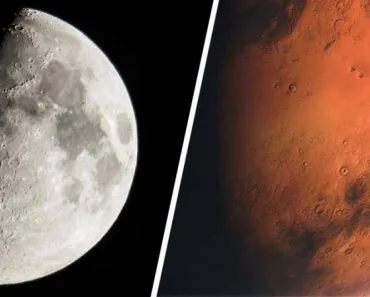
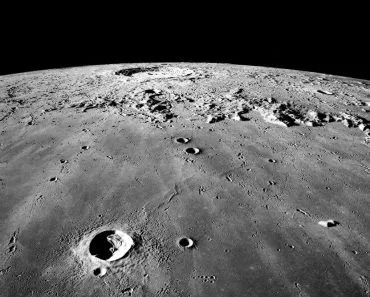
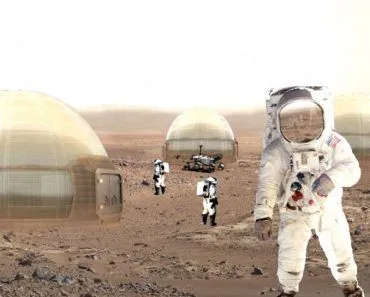
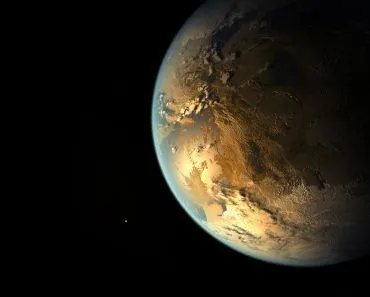
Mars is called a “dead planet” because its global magnetic dynamo shut down around 4 billion years ago and its surface is now frozen, dry and bombarded by radiation. Its core is not solid, though: NASA’s InSight lander showed Mars still has a liquid iron core. No life has been confirmed, but in 2025 the Perseverance rover found a potential biosignature in Martian rock.
Mars, often referred to as the “Red Planet,” has long captured humanity’s imagination with its crimson hue and intriguing mysteries. This pursuit for signs of ancient life on Mars has been an important driving force in modern science and space research. The mere possibility of another habitable planet existing in our own solar system has led to more than half a century of ground-breaking missions, from the Viking landers of the 1970s to the Perseverance rover roaming Jezero Crater today. The results scientists have gathered so far reveal a rather different Mars than the one we had long imagined.
The Lifeless Planet
The extremely harsh and inhospitable environment of Mars has earned it the title of the “dead planet.” Nonetheless, it does make one wonder why this planet is considered so lifeless and uninhabitable. Well, there are multiple reasons why Mars is called the “dead planet,” and one of the biggest is its wisp-thin atmosphere. The surface pressure on Mars is only about 0.6% of Earth's, which makes the air roughly 100 times thinner than ours.
That thin air is also the wrong kind for breathing: it is about 95% carbon dioxide, with only a trace of oxygen and nitrogen. With so little gas overhead, there is almost nothing to absorb incoming cosmic rays and solar radiation, so they reach the surface largely unchecked.
One cannot possibly imagine sustaining life on a planet that is consistently bombarded by harmful solar and space radiation. The feeble atmosphere also provides almost no greenhouse warming, so temperatures swing wildly and average around -60 °C (-80 °F), far too cold for liquid water to last on the surface. However, not all hope is lost, as scientists and engineers are working hard on the problem of making this planet habitable.
Water Scarcity
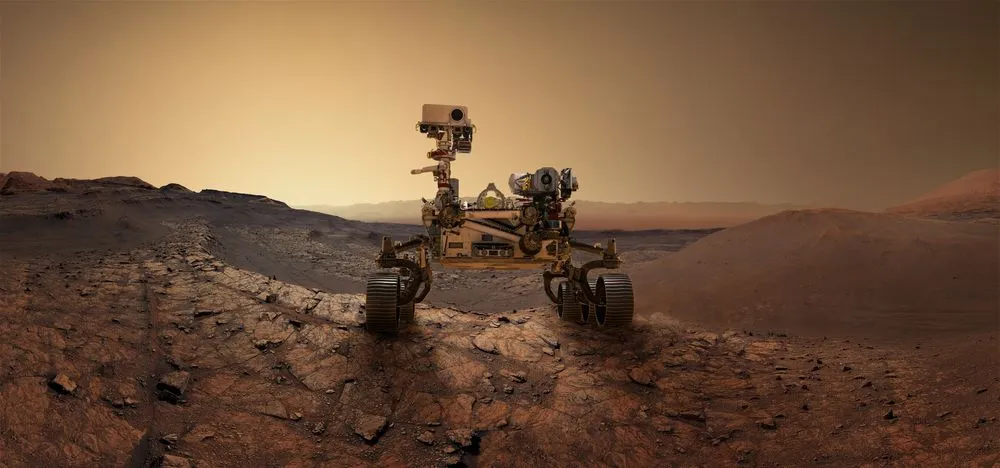
Scientists are now confident that Mars once held lakes, rivers and possibly vast oceans, just like Earth, but it is a dry and barren land today. The water that remains near the surface is mostly locked up as ice at the polar caps and just beneath the ground. Back in 2015, NASA's Mars Reconnaissance Orbiter spotted dark streaks on warm slopes that were first interpreted as flows of briny liquid water.
An orbiting spectrometer detected hydrated salts called perchlorates at these sites. Perchlorates are highly soluble and can keep water liquid even at the freezing temperatures found on Mars, so they seemed like a promising sign of present-day water.
Later studies have tempered that excitement. Detailed analysis of these recurring slope lineae suggests many of them behave like dry, sand-like avalanches rather than true liquid flows, so any water involved is likely tiny in amount. The bigger surprise came in 2024, when researchers reanalyzing seismic data from NASA's retired InSight lander found evidence for a huge reservoir of liquid water trapped in fractured rock roughly 11.5 to 20 km (7 to 12 mi) down. There may be enough of it to cover the whole planet in an ocean, but it sits far too deep to reach with current technology.
Absence Of A Magnetic Field And Its Consequences
Mars lacks a global magnetic field, and the absence of this protective shield is one of the reasons why the surface of the planet is so frequently hit by intense radiation. A planet's magnetic field is generated by the churning of molten iron in its core.
This churning core acts like a dynamo, producing electric currents that in turn create a magnetic field. Mars ran such a dynamo early in its history, but it switched off around 4 billion years ago. Importantly, this does not mean the core itself froze solid. Seismic readings from NASA's InSight lander confirmed that Mars still has a liquid iron core, surrounded by a roughly 150 km thick layer of molten rock. So the planet's heart is not literally dead, it simply stopped generating a magnetic field.
What changed is the flow inside. Earth's core keeps stirring vigorously enough to sustain a dynamo, whereas Mars, being smaller, cooled faster and its core convection eventually fell below the level needed to power one. The exact reasons are still debated, but the loss of the dynamo is well supported by the magnetic record frozen into ancient Martian rocks.
Tectonic activity can also play a role in generating or sustaining a magnetic field. On Earth, the movement of tectonic plates creates friction and stress, leading to the circulation of molten materials in the core, helping to maintain the magnetic field. Mars, however, lacks significant tectonic activity, as compared to Earth. Without the same level of plate movement and related geological processes, there is less energy available to power a magnetic dynamo on Mars.
An important point to note here is that while Mars lacks a global magnetic field, it does have localized magnetic regions on the surface. These regions are also called magnetic anomalies, and are remnants of the planet’s ancient magnetic history. Scientists continue to put effort into understanding these anomalies, as they also give information about the planet’s evolution over the years.
What Does It Actually Mean To Call A Planet “Dead”?
“Dead planet” is a popular phrase rather than an official scientific category. Planetary scientists usually describe a world as geologically active or inactive, and the word “dead” gets stretched across two rather different ideas. The first is being biologically dead: a world that holds no living organisms, which is exactly Mars’ situation, as nothing alive has yet been confirmed there. The second is being geologically dead: a world whose interior has cooled so far that the heat-driven machinery of a planet (widespread volcanism, shifting crust and the churning core that powers a magnetic dynamo) has largely shut down, so the surface is no longer renewed from within.

Mars is often described as dead in both senses at once, and that is really why the label sticks. It has no confirmed life, a magnetic dynamo that switched off billions of years ago and a frozen, barren surface. Yet, as we saw earlier, it is not literally dead on the inside, since its iron core is still liquid. The “dead planet” tag is best read as shorthand for a world that has lost the internal engine and the protective shield that keep a planet’s surface active and habitable, not as a claim that everything inside it has stopped moving.
Is Mars The Only “Dead” Planet In The Solar System?
Mars gets singled out as the dead planet, but it is not the only rocky world to have worn the label. Both Mercury and Venus have been called dead at one time or another, and both have since surprised scientists by showing that they are anything but completely inert.

Mercury, the smallest planet, was long assumed to be geologically dead. Then NASA’s MESSENGER spacecraft spotted small, young fault scarps, cliff-like steps in the crust, that point to the little planet still contracting as its interior slowly cools. That makes Mercury, like Earth, a tectonically active planet, with new faults likely forming even today. Venus, meanwhile, is almost Earth’s twin in size and is sometimes called our dead sibling because it has no global magnetic field, its internal dynamo having long since stopped running. In 2023, however, researchers reanalyzing radar images from NASA’s Magellan mission caught a vent on the volcano Maat Mons changing shape over roughly eight months in 1991, the first direct evidence of an active volcanic eruption on Venus. A follow-up study in 2024 turned up further eruption sites, confirming that Venus is still volcanically alive.
The lesson is that “dead” is rarely absolute. Mars keeps a liquid core, Mercury is still cracking as it shrinks, and Venus still erupts. Mars earns its reputation mainly because it combines a lost magnetic shield, a thin and frozen atmosphere and no confirmed life, rather than because its interior has ground to a complete halt.
How Can We Possibly Turn Mars Into A Habitable Planet?
One of the proposed ways of turning this planet's environment into something habitable is terraforming, the process of deliberately altering a world's climate and surface. Rovers have already detected organic molecules (carbon-based compounds) in Martian rocks, confirming that the raw chemical ingredients of life are present. Building on that, scientists have floated ideas for thickening the atmosphere and warming the planet enough to melt buried ice and release liquid water, though such schemes remain firmly in the realm of theory for now.
Interest in past life took a dramatic turn in September 2025, when NASA announced that its Perseverance rover had found a potential biosignature in a mudstone sample nicknamed “Sapphire Canyon,” drilled from the Cheyava Falls rock in Jezero Crater. The rock holds organic carbon alongside mineral textures that, on Earth, are usually produced by microbes. It is not proof of life, as the same patterns can sometimes form without it, and confirming the find will likely require returning the sample to Earth for laboratory study.
Summing Up
The accuracy of the “dead planet” label will not change for quite some time, but despite its lifelessness, Mars will continue to remain an essential destination for research, exploration and potential space tourism (whenever that happens!). It holds scientific knowledge of great importance, which will only aid our understanding of the origin of life and the possibilities of extraterrestrial habitats. The quest to unlock Mars’ secrets continues, and as technology advances, who knows what other surprises this enigmatic neighbor might reveal to us in the future!
References (click to expand)
- Why did Mars dry out? New study points to unusual answers.
- Martian atmosphere - Mars Education - Arizona State University.
- NASA Confirms Evidence That Liquid Water Flows on Today's Mars.
- Liquid water in the Martian mid-crust. PNAS.
- Scientists discover molten layer covering Martian core. ScienceDaily.
- NASA Says Mars Rover Discovered Potential Biosignature Last Year. NASA.
- The Incredible Shrinking Mercury Is Active After All. NASA.
- NASA's Magellan Data Reveals Volcanic Activity on Venus. NASA JPL.
- In Search of an Ancient Global Magnetic Field on Venus. NASA Astrobiology.