Table of Contents (click to expand)
The moon is a better option to colonize than Mars because it is closer to Earth, has a similar geology to our planet, and may contain water. However, Mars is still the better option in the long run because it has an atmosphere and gravity that is more similar to Earth.
Earth’s resources are depleting at a frightening rate. The planet is currently being ransacked for its resources by its skyrocketing population like a herd of children ambushing an ice cream truck. The increase in the population further widens the social and financial cracks, allowing a stench of distrust to creep in. That same population is boiling the planet by burning coal and simultaneously suffocating it with the dense, grey smoke that combustion releases. We must find a new home.
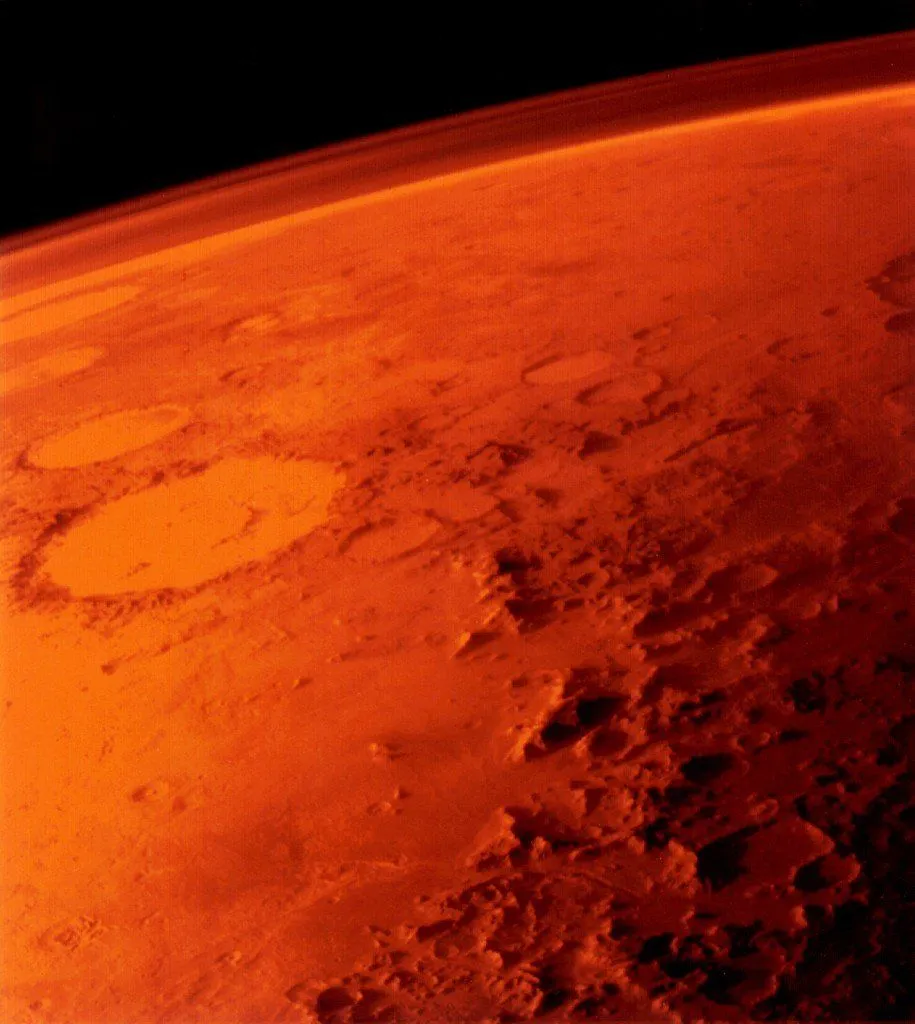
Mars seems to be a good alternative. Elon Musk is a huge proponent of not merely exploring Mars, but terraforming it. However, a journey to Mars takes months, and even that is dependent on its alignment with our planet. The one-way light delay between Earth and Mars ranges from about 3 minutes at closest approach to roughly 22 minutes when the two planets are on opposite sides of the Sun, which means radio round-trips of anywhere from 6 to 44 minutes. In the case of a fatal emergency, abandoning a mission and retreating home or summoning help is just a forlorn attempt at rescuing. Furthermore, two-way trips to our red neighbor are extremely strenuous. Even delivering small machines requires larger, fuel-hungry rockets, so exchanging infrastructure to build entire colonies, at least currently, is impossible.
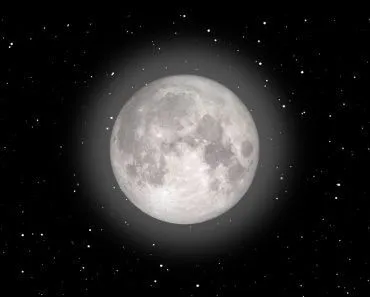
The prospect of colonization seems far more feasible on a celestial body that is closer to our planet, so close that we feel and witness its gleaming presence every night. The moon, so devoted to its orbit around us, is only 3 days away, such that the communication delay is mere seconds. These aspects could allow the contingencies of immediate retreat or summoning help to be more successful. Exchanging infrastructure isn’t a big deal either; in fact, catapulting an object from the moon at a suitable angle would cause it to drop pleasantly into the hands of our planet.
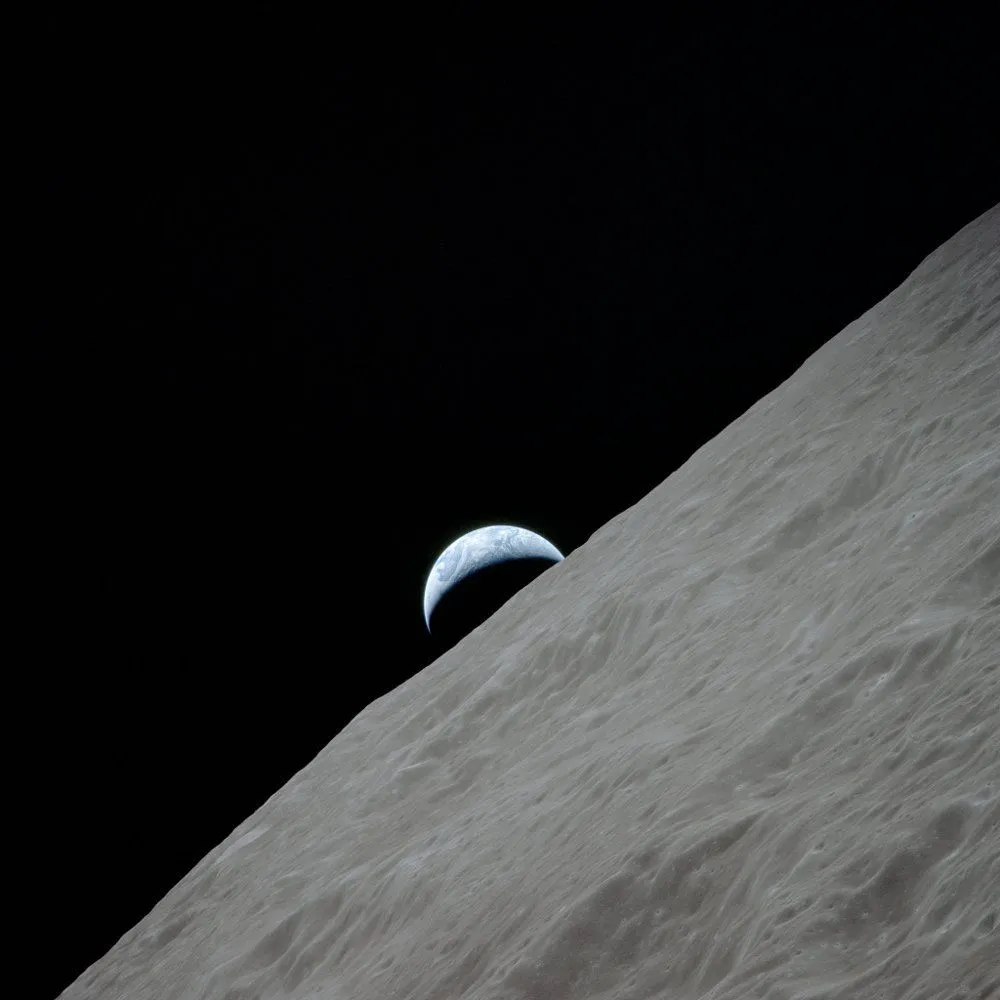
Despite these amenities, why do space explorers persist to favor Mars instead?
Lack Of An Atmosphere
The Apollo missions conducted between 1969 and 1972 ferried around 840 pounds of moon rock and soil back to Earth. These samples revealed that the moon’s geology is quite similar to Earth’s, suggesting that the moon could have been formed by the coalescence of a splintered chunk of Earth’s mass blown into space due to a catastrophic collision with another celestial body.
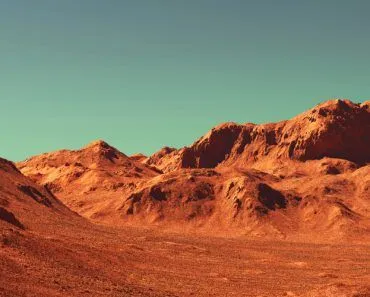
On the other hand, Mars’ core constitutes quite different elements. Inhabiting Mars is more promising, because like our planet, it is engulfed and protected by an atmosphere. Even though its atmosphere doesn’t sustain pressurized oxygen like ours, which is imperative to live, it still protects the planet from the destructive shower of meteoroids, a phenomenon ubiquitous on the moon. The atmospheric layer would also protect us from the sun’s UV rays, without which we would be fried in seconds on the moon.
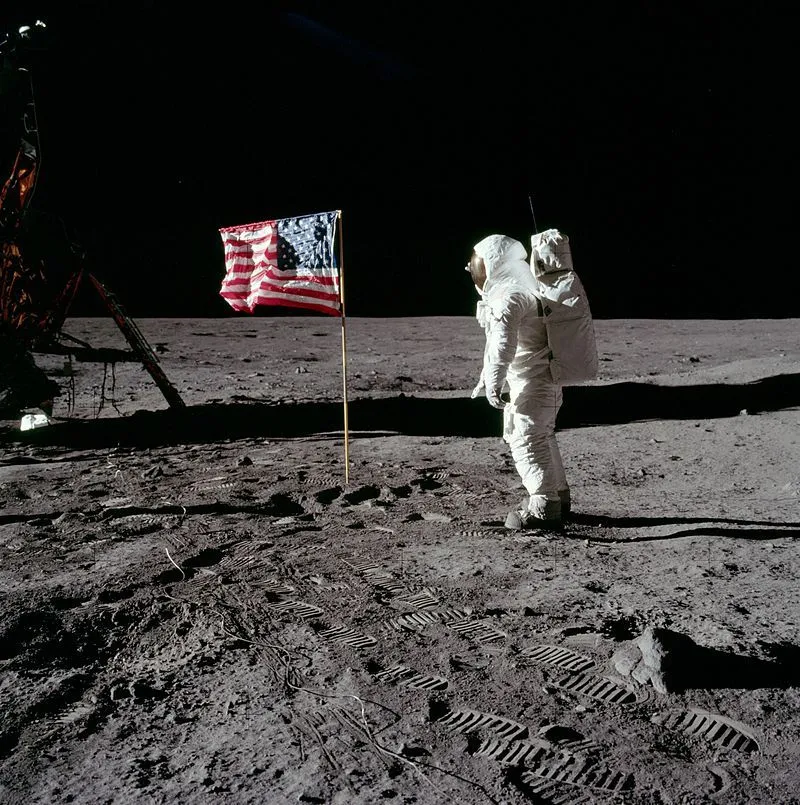
Mars is also subject to winds and seasons, whereas the equatorial temperatures on the Moon can swing from roughly 121 °C (250 °F) in direct sunlight to around -130 °C (-208 °F) at night in a single day. The moon’s lack of an atmosphere is the result of its paltry mass and weak gravity. Mars’ gravity is less than Earth but large enough to lure gases and form an atmosphere. Its gravity is one-third than gravity is on Earth, a slump in weight that will require its colonists some time to get accustomed to. Compare that time to the protracted time colonists of the moon would require getting accustomed to its gravity, which is just one-sixth of gravity on Earth.
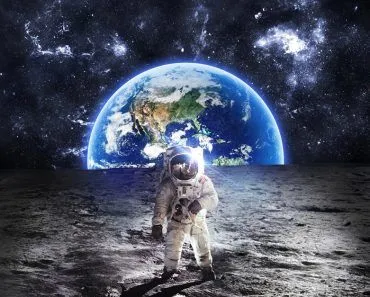
Furthermore, the cratered and craggy surface of the moon is thoroughly suffused by lunar dust. The abrasive powder clings to everything it acquaints. Known as regolith, the dust is fine enough to slip through narrow crevices and cause mechanical failures. These failures could cause permanent damage to expensive exploration machinery and cost us entire missions, but more importantly, a life.
However, like the overused plot of nearly every romantic comedy, the moon is believed to be hiding beneath its grey dust and craggy exterior, a heart filled with an ocean of hope.
The Presence Of Water
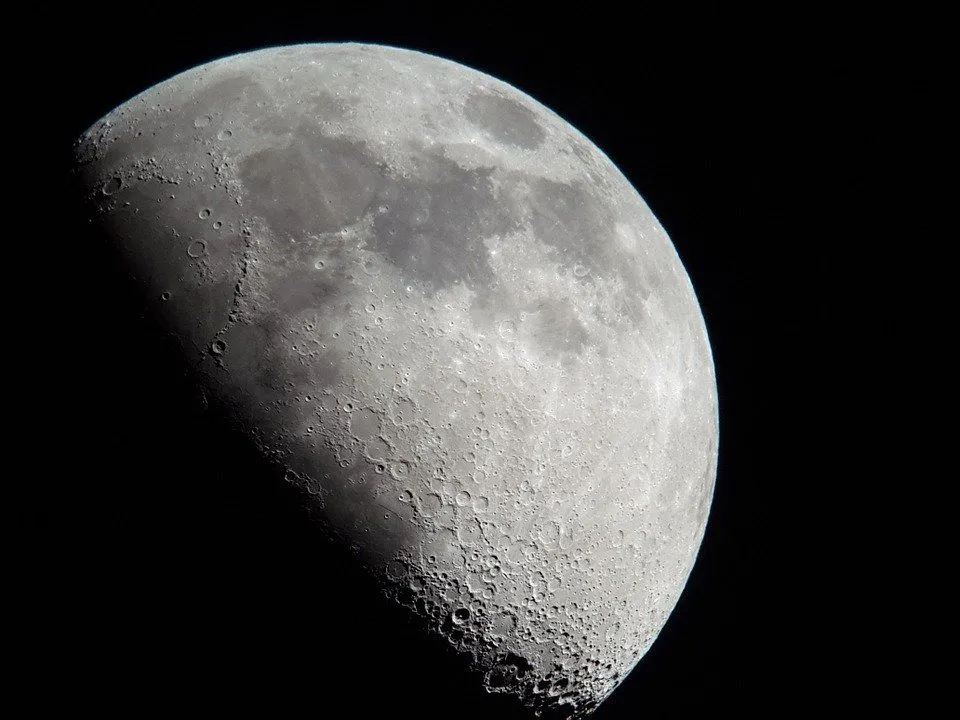
The Lunar Prospector and Clementine Probe hinted that the moon was home to an ocean of water, some billion metric tons, that was cold and solidified beneath the thick crust of dust and ice. The water can be consumed, mixed with food, and could even mediate sanitation. The water could also be broken up into its constituent components to extract oxygen to breathe!
Furthermore, the roaring energy generated by the recombination of these elements could propel rockets. In fact, propellants fueled by the combination of hydrogen and oxygen are the most powerful propellants we’ve ever developed. It is no wonder that water is regarded as the most important substance in space.
Oxygen, by some miraculous technological feat, can also be extracted from regolith, which is 42% oxygen. This oxygen can then be inhaled and combined with hydrogen to form water and fuel. A thick cloak of this dust may also protect the inhabitants from radiation. Or, colonists anxious about their jeopardized fashion could also take shelter in the moon’s deep caves, just as the first people on Earth inhabited its caves through the past millennia.
The most promising dwelling place seems to be the lunar poles, which are not only believed to rest upon large slabs of ice, but are also subject to comparatively calmer temperatures. The low levels of sunlight falling on them for prolonged periods maintain temperatures of up to 32 degrees Fahrenheit. Rather than a blazing lunar noon, the poles experience more of a solemn sunset.
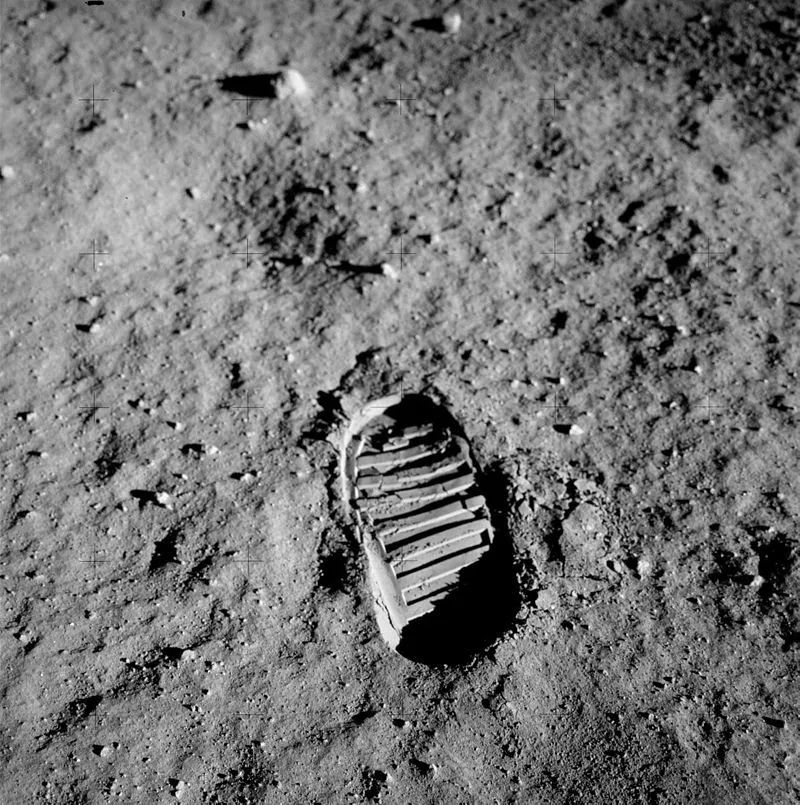
When this article was first written, the picture was still murky. After detecting hydrogen near the poles, the Lunar Prospector was deliberately nosedived into a south polar crater in 1999 in the hope that the impact would kick up a visible water plume; the result was inconclusive at the time. However, the picture has since changed dramatically. NASA's LCROSS mission successfully detected water vapor in the plume from its 2009 impact at Cabeus crater. SOFIA confirmed molecular water in sunlit lunar soil in 2020. India's Chandrayaan-3 lander touched down near the south pole in August 2023 and confirmed elemental signatures consistent with water ice. And China's Chang'e 5 (2020) and Chang'e 6 (2024) sample-return missions brought back lunar material containing measurable water content. We're now confident that there is water on the Moon, especially in the permanently shadowed craters at the poles.
Another downside is that even if the poles did obscure water, landing on their surface poses an arduous challenge. The poles are craggier than the other areas of the moon. In practice, the answer is no longer either/or. NASA's Artemis program is explicitly using the Moon as a near-term proving ground (Artemis I flew uncrewed around the Moon in late 2022; Artemis II is the planned crewed lunar flyby, and Artemis III aims to put astronauts back on the lunar south pole within the next few years), while NASA, ESA, China, and SpaceX all work toward Mars in parallel. So the honest answer is: we ARE going back to the Moon first, because it is cheaper, closer, and a near-term test bed for water extraction, habitats, and life support. Mars remains the long-term destination because of its atmosphere, more Earth-like 24.6-hour day, and stronger gravity. The Moon is the rehearsal stage; Mars is the show.
Mars Vs Moon: Which World Is More Habitable?
Stack the two worlds side by side and the contest stops being close. The Moon wins on the things that matter for a first trip, since it is roughly 3 days away rather than 6 to 9 months and its surface is already mapped in detail. But Mars wins on almost everything that matters for actually staying. The red planet hands you a thin shield of air, a day that feels familiar, and gravity more than twice as strong as the Moon’s.

| Factor | The Moon | Mars |
|---|---|---|
| Travel time from Earth | About 3 days | About 6 to 9 months |
| Surface gravity | 1.62 m/s2 (about 1/6 of Earth’s) | 3.71 m/s2 (about 0.38 of Earth’s) |
| Length of day | About 29.5 Earth days (roughly 2 weeks of light, then 2 weeks of dark) | 24.6 hours |
| Atmosphere | Essentially none (a wispy exosphere) | Thin, about 95% CO2, roughly 0.6% of Earth’s pressure |
| Surface temperature | About 120 °C (250 °F) by day to -130 °C (-208 °F) at night near the equator | Average about -60 °C; roughly +20 °C down to -153 °C |
| Surface radiation | High (no air or magnetic field for shielding) | About 0.7 mSv per day (some atmospheric shielding) |
| Water ice | In permanently shadowed polar craters | At the poles and locked in the soil |
The single biggest divider is the day-night cycle. A spot on the lunar equator bakes in sunlight for about two Earth weeks and then freezes in darkness for two more. Mars simply spins, completing one rotation every 24.6 hours, so its temperature extremes are gentler and its solar panels see the Sun every day. Curiosity’s radiation detector clocked the Martian surface at about 0.7 millisieverts per day, high by Earth standards but partly blunted by that thin carbon dioxide blanket, whereas the airless Moon offers no such cushion at all. Factor in the more Earth-like gravity, and the red planet edges ahead as the more habitable long-term address, even though it is far harder to reach.
Could We Ever Terraform The Moon Or Mars?
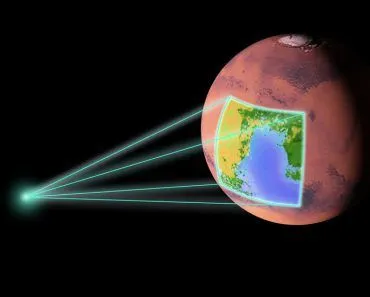
Colonizing a world and transforming it into a second Earth are two very different ambitions. Terraforming means thickening the atmosphere and warming the surface until liquid water and breathable air become possible. Elon Musk has long floated the idea for Mars, but a 2018 NASA-sponsored study by Bruce Jakosky and Christopher Edwards, published in Nature Astronomy, poured cold water on the dream. After tallying every accessible carbon dioxide reservoir on the planet, including the polar ice caps, the dust, and carbon locked inside minerals, they found there simply is not enough of it. Vaporizing the entire polar caps would only double the air pressure to about 1.2% of Earth’s, and every reachable source combined falls short of 5%. To warm Mars enough for stable liquid water you would need to roughly match Earth’s pressure. Their verdict was blunt: terraforming Mars is not possible with present-day technology.

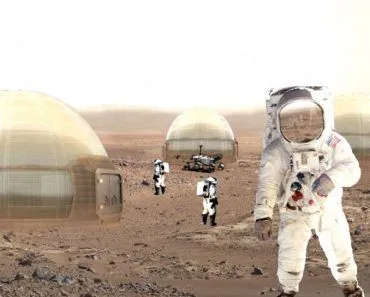
The Moon is an even tougher case, and the reason is simple physics. Its escape velocity is just 2.4 km/s and it has no global magnetic field, so any atmosphere you tried to give it would leak away into space and be stripped by the solar wind. You cannot terraform a body that cannot hold on to air. For the foreseeable future, then, settlers will not be remaking these worlds in Earth’s image. They will be doing the opposite, sealing themselves inside pressurized habitats and adapting to the Moon and Mars exactly as they are.
References (click to expand)
- New data about the Moon may help create lunar bases. The Solar System Exploration Research Virtual Institute
- Is it better to live on the moon or on Mars? A scientific ... - Quartz. qz.com
- What Would It Be Like to Live on the Moon? - Space.com. Space.com
- What It Will Take for Humans to Live on the Moon - Gizmodo. Gizmodo
- Mars: Facts. NASA Science
- NASA Curiosity: First Mars Age Measurement and Human Exploration Help. NASA Jet Propulsion Laboratory (JPL)
- Mars terraforming not possible using present-day technology. Laboratory for Atmospheric and Space Physics (LASP), University of Colorado Boulder